Public Steam disclosure research25,394 disclosures tracked
Where do games disclose AI use?
Search developers’ Steam disclosures, compare classified AI use across
games, and follow recorded changes.
This index adds cross-game classifications and statistics to
statements published on individual store pages.
Groups reflect automatic analysis of public disclosures; mature records are excluded. These counts do not measure AI use across all of Steam.
Missing or unclear statements cannot establish whether a game uses AI.
Parts of the written text on this store page were drafted with the help of an AI assistant and then reviewed and edited by us before publishing.
No generative AI is used inside the game itself. The artwork, audio and video in Dubbed are made by us or performed by the players, and nothing is generated at runtime.
We use generative AI across all disciplines of game development with heavy amounts of human editing. That involves audio and visual art. We use it as a productivity tool so we can achieve a higher level of quality, faster, than we would have been able to.
We used AI image-generation tools to help create some 2D art assets in the game, such as in-game banners, posters, and signage. All AI-assisted content was reviewed and edited by the developer.
Some visual assets, audio, voice-over and cinematic elements were created with the assistance of generative AI tools, then selected, edited, refined and integrated by the developer. No generative AI is used live during gameplay.
The game's surface textures — the colour and relief maps applied to parts,
buildings, terrain and visual effects — and its sound effects were created
with generative AI tools during development. They are generated ahead of
time, reviewed and integrated by hand, and ship with the game as ordinary
image and audio files.
Nothing is generated while you play, and the game never connects to an AI
service.
The simulation itself — orbital mechanics, aerodynamics, the production chains — is written by hand.
Generative AI was used to write, edit, and translate text on this Steam store page. It is not used during gameplay, and no AI-generated images, audio, or in-game assets are included.
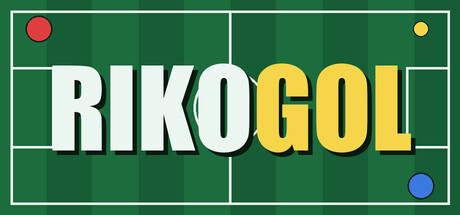
The written text for Rikogol — this store page, its marketing copy and the game's in-game text — was drafted with AI assistance. No generative AI model produced any of the game's visuals or audio: everything you see in a match is drawn at runtime by our own code from plain geometric shapes, every sound effect is synthesised procedurally in code, and the store artwork comes from a deterministic drawing script. The game generates no content while you play and connects to no AI service.
Generative AI technologies were utilized during the development of this project in the following ways:
1. Visual Art: AI tools were used to assist in generating and optimizing certain visual assets (such as table backgrounds, card backs, and UI elements).
2. Translation: AI was used to assist in the multi-language localization of in-game text and rule descriptions.
This game uses an open-source language model (Qwen2.5) bundled with the game to generate real-time NPC dialogue and ambient chatter entirely offline on the player's own machine via llama.cpp. No external server, no third-party API, and no internet connection are required. Players can toggle this feature on or off. The model runs locally using the player's CPU — no data is uploaded, collected, stored, or used for training.
Generative AI is used to assist with research or as rough internal placeholders. No AI-generated art, animation, music, text, or in-game live generation is used. All game content is created, shaped, reviewed, and approved by our team.
Some visual assets in the game, including certain card illustrations and UI elements, were created with the assistance of generative AI tools. These assets were generated during development and are included as pre-generated content in the game.
The text on this game's Steam store page was drafted with the help of generative AI and then edited by the developer. All in-game art, models, sounds and the game's logo are made by hand. No AI-generated content is produced while the game is running.
The game does not use AI while you play. Every sentence and every drawing you see in a match is made by the players in the room with you.
Some assets in this game were created with generative AI during development. The music was made with Suno as to avoid in copyright issues for streamers/clippers who play the game. Several pieces of cabin furniture and set dressing were generated with Meshy, and the logo and one in-game painting came from OpenAI image generation. The game's 13 language translations were AI-assisted.
Portions of this game's code were written with the assistance of an AI coding tool, working under the developer's direction, with all output reviewed, tested, and integrated by hand. All artwork, animation, music, and sound effects are human-created licensed assets — no AI-generated art or audio is used. The game does not generate any content with AI at runtime; computer opponents use traditional hand-written game logic.
We integrate artificial intelligence solely as a creative assistance tool during pre-production and artistic exploration phases.
Specifically, we use image generators to produce preliminary concept art, explore different visual directions, and accelerate iteration on our graphic ideas.
AI serves only as a source of inspiration, while the entire final content is fully created, curated, and refined by our human team.
Generated images are never used as-is in the final product.
Every visual element in the game (textures, characters, environments, illustrations, etc.) is recreated, retouched, painted, recomposed, or manually validated by our artists to ensure:
originality of the content,
respect for copyright,
artistic consistency,
and compliance with Steam/Valve guidelines.
AI does not contribute to the generation of final assets, 3D models, animations, sounds, or any other elements directly integrated into the game.
Its role is strictly limited to providing visual references, aesthetic guidance, and starting points to help our team work more efficiently.
This approach allows us to maintain a strong and authentic artistic identity while benefiting from a more fluid, inspiring, and innovative creation process — directly reflected in the quality, coherence, and originality of our game.
Generative AI may have been used in creating pre-rendered content for this game. All such content is the result of a human-led artistic and creative process
Generative AI was used to create some temporary artwork for the Steam store page and related marketing materials while the game is still in production. These assets are reviewed and curated by the development team and WILL be replaced with final production artwork before release. Generative AI is not used to generate content during gameplay.
We use generative AI to assist with writing and localizing the game's text. All art and audio are procedurally generated by our own code or sourced from CC0 libraries. No content is generated by AI in real time during gameplay.
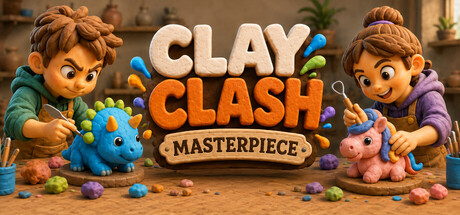
Generative AI tools were used during development to assist with the creation of selected promotional and visual assets. During gameplay, an AI-based analysis service may also be used to evaluate submitted player-created clay sculptures and determine how closely they match the given challenge.
Generative AI tools were used during development to create initial concepts for background music tracks and 2D loading screen artwork. These concepts were heavily reworked, re-edited, and finalized by human artists before being integrated as static files into the game build.
Players who prefer a completely traditional experience can completely disable all AI-assisted art and music via a toggle in the game's settings menu.
This game does not use any real-time or live generative AI. No content is generated dynamically during gameplay.
The game's core visual presentation is built around human-created playable character sprite sheets and map artwork, while the level layouts and game design are created by the developer. Generative AI was used for selected pre-generated audio, localization, and supporting visual content such as the logo and key art. No generative AI content is generated during gameplay.
AI was used to create textures, some of the code, create a player model and rig it for animation. The sounds of footsteps, goals and ball bounces, albeit mastered, started as AI generated before being edited and mastered. Localization languages were also created by AI. (Therefore any corrections will be welcome)
Animations, music, game design, and all other elements of creativity are the work of a human exclusively.
Badgerworks Studios will never rely on AI for creativity, music, ideas for games, and once an artist has been hired, AI models either. Due to lack of in-house ability to rig models or create them from scratch, the current player model was generated and rigged (skeleton matched to model) by AI. Animations were hand made, but on the AI created and rigged model.
No AI, LLM, of frontier models are being called during game play nor will any introduced features be allowed to do so.
Generative AI was used during development to create all visual art assets and music featured in the game. The generated content was reviewed, selected, and integrated by the developer. The game does not generate AI content during gameplay.
During the development process, we may use procedural- and AI-based tools to assist with content creation. In all such cases, the final product reflects the creativity and expression of our own development team.
Some store-page text and marketing images (capsules, screenshots, and similar key art) were drafted or generated with generative AI, then selected and edited by the developer.
The game itself is a hand-authored Unreal Engine title. Combat, physics, and play are not generated by AI while you play. There is no live generative AI in the build.
If later updates include AI-assisted in-game art or audio, this notice will be updated.
Some of Powdertron's development and marketing materials were produced with AI assistance. The store page text was drafted with an AI writing tool and edited by hand, and the capsule images and trailer were rendered by procedural code written with AI assistance, using the game's own artwork and captured gameplay footage.
The game itself contains no generative AI. Nothing is generated at runtime, no AI service is contacted while you play, and all in-game content — the materials, reaction rules, simulations and interface — is authored and deterministic.
Generative AI was used during development to assist in the creation of certain pre-generated visual assets, including some UI artwork, icons, textures, and other 2D art. All AI-assisted content was reviewed and integrated by the developer before being included in the game. The game does not use live-generated AI during gameplay.
Generative AI was used during development to assist in creating some of the fixed decorative sculptures and decorative mosaic elements that appear within the game environment. These assets were created prior to release and are static parts of the game.
Generative AI is not used to generate content during gameplay, and players do not interact with any live generative AI systems.
Parts of this game's 2D art were created with the help of generative AI, and every generated asset was reviewed, edited and approved by us before it shipped.
Specifically:
• In-game UI icons (weapon and stat icons) start as AI-generated flat silhouettes, which we then clean up, recolour and integrate by hand.
• Some marketing and store page imagery — background and atmospheric layers of our capsule art — is AI-generated.
• Parts of the source code and some store page text were written with AI assistance and then reviewed, edited and tested by the developers.
Everything else is made by hand, without generative AI: the logo, the app icon and mascot, all 3D models, materials, shaders and visual effects, level layouts.
No generative AI runs while you play. The game does not create content or code at runtime, and it never connects to an external AI service.
I use generative AI as a tool during development:
• Some 3D models (characters, creatures and props) were created with AI generation tools, then edited, rigged and animated by hand for use in the game.
• Some sound effects were generated with AI audio tools, then edited and mixed by hand.
• Some store page and marketing artwork was created with AI image generation.
Everything produced this way is reviewed and reworked by me before it ships. The game generates no content while you play and connects to no AI service at runtime.
I’m a broke college student and don’t have the budget to hire a professional artist for everything, so generative AI was used to help create some marketing and promotional artwork for the game do forgive me.
Generative AI was used only for a small set of supporting assets — some interface icons, a few decorative visuals and some sound effects. It is not used while the game is running, and no part of the gameplay or the paintings depends on it.
Parts of the written text on this store page were drafted with the help of an AI assistant and then reviewed and edited by us before publishing.
No generative AI is used inside the game itself. The artwork, audio and video in Dubbed are made by us or performed by the players, and nothing is generated at runtime.
We use generative AI across all disciplines of game development with heavy amounts of human editing. That involves audio and visual art. We use it as a productivity tool so we can achieve a higher level of quality, faster, than we would have been able to.
We used AI image-generation tools to help create some 2D art assets in the game, such as in-game banners, posters, and signage. All AI-assisted content was reviewed and edited by the developer.
Some visual assets, audio, voice-over and cinematic elements were created with the assistance of generative AI tools, then selected, edited, refined and integrated by the developer. No generative AI is used live during gameplay.
The game's surface textures — the colour and relief maps applied to parts,
buildings, terrain and visual effects — and its sound effects were created
with generative AI tools during development. They are generated ahead of
time, reviewed and integrated by hand, and ship with the game as ordinary
image and audio files.
Nothing is generated while you play, and the game never connects to an AI
service.
The simulation itself — orbital mechanics, aerodynamics, the production chains — is written by hand.
Generative AI was used to write, edit, and translate text on this Steam store page. It is not used during gameplay, and no AI-generated images, audio, or in-game assets are included.
The written text for Rikogol — this store page, its marketing copy and the game's in-game text — was drafted with AI assistance. No generative AI model produced any of the game's visuals or audio: everything you see in a match is drawn at runtime by our own code from plain geometric shapes, every sound effect is synthesised procedurally in code, and the store artwork comes from a deterministic drawing script. The game generates no content while you play and connects to no AI service.
Generative AI technologies were utilized during the development of this project in the following ways:
1. Visual Art: AI tools were used to assist in generating and optimizing certain visual assets (such as table backgrounds, card backs, and UI elements).
2. Translation: AI was used to assist in the multi-language localization of in-game text and rule descriptions.
This game uses an open-source language model (Qwen2.5) bundled with the game to generate real-time NPC dialogue and ambient chatter entirely offline on the player's own machine via llama.cpp. No external server, no third-party API, and no internet connection are required. Players can toggle this feature on or off. The model runs locally using the player's CPU — no data is uploaded, collected, stored, or used for training.
Generative AI is used to assist with research or as rough internal placeholders. No AI-generated art, animation, music, text, or in-game live generation is used. All game content is created, shaped, reviewed, and approved by our team.
Some visual assets in the game, including certain card illustrations and UI elements, were created with the assistance of generative AI tools. These assets were generated during development and are included as pre-generated content in the game.
The text on this game's Steam store page was drafted with the help of generative AI and then edited by the developer. All in-game art, models, sounds and the game's logo are made by hand. No AI-generated content is produced while the game is running.
The game does not use AI while you play. Every sentence and every drawing you see in a match is made by the players in the room with you.
Some assets in this game were created with generative AI during development. The music was made with Suno as to avoid in copyright issues for streamers/clippers who play the game. Several pieces of cabin furniture and set dressing were generated with Meshy, and the logo and one in-game painting came from OpenAI image generation. The game's 13 language translations were AI-assisted.
Portions of this game's code were written with the assistance of an AI coding tool, working under the developer's direction, with all output reviewed, tested, and integrated by hand. All artwork, animation, music, and sound effects are human-created licensed assets — no AI-generated art or audio is used. The game does not generate any content with AI at runtime; computer opponents use traditional hand-written game logic.
We integrate artificial intelligence solely as a creative assistance tool during pre-production and artistic exploration phases.
Specifically, we use image generators to produce preliminary concept art, explore different visual directions, and accelerate iteration on our graphic ideas.
AI serves only as a source of inspiration, while the entire final content is fully created, curated, and refined by our human team.
Generated images are never used as-is in the final product.
Every visual element in the game (textures, characters, environments, illustrations, etc.) is recreated, retouched, painted, recomposed, or manually validated by our artists to ensure:
originality of the content,
respect for copyright,
artistic consistency,
and compliance with Steam/Valve guidelines.
AI does not contribute to the generation of final assets, 3D models, animations, sounds, or any other elements directly integrated into the game.
Its role is strictly limited to providing visual references, aesthetic guidance, and starting points to help our team work more efficiently.
This approach allows us to maintain a strong and authentic artistic identity while benefiting from a more fluid, inspiring, and innovative creation process — directly reflected in the quality, coherence, and originality of our game.
Generative AI may have been used in creating pre-rendered content for this game. All such content is the result of a human-led artistic and creative process
Generative AI was used to create some temporary artwork for the Steam store page and related marketing materials while the game is still in production. These assets are reviewed and curated by the development team and WILL be replaced with final production artwork before release. Generative AI is not used to generate content during gameplay.
We use generative AI to assist with writing and localizing the game's text. All art and audio are procedurally generated by our own code or sourced from CC0 libraries. No content is generated by AI in real time during gameplay.
Generative AI tools were used during development to assist with the creation of selected promotional and visual assets. During gameplay, an AI-based analysis service may also be used to evaluate submitted player-created clay sculptures and determine how closely they match the given challenge.
Generative AI tools were used during development to create initial concepts for background music tracks and 2D loading screen artwork. These concepts were heavily reworked, re-edited, and finalized by human artists before being integrated as static files into the game build.
Players who prefer a completely traditional experience can completely disable all AI-assisted art and music via a toggle in the game's settings menu.
This game does not use any real-time or live generative AI. No content is generated dynamically during gameplay.
The game's core visual presentation is built around human-created playable character sprite sheets and map artwork, while the level layouts and game design are created by the developer. Generative AI was used for selected pre-generated audio, localization, and supporting visual content such as the logo and key art. No generative AI content is generated during gameplay.
AI was used to create textures, some of the code, create a player model and rig it for animation. The sounds of footsteps, goals and ball bounces, albeit mastered, started as AI generated before being edited and mastered. Localization languages were also created by AI. (Therefore any corrections will be welcome)
Animations, music, game design, and all other elements of creativity are the work of a human exclusively.
Badgerworks Studios will never rely on AI for creativity, music, ideas for games, and once an artist has been hired, AI models either. Due to lack of in-house ability to rig models or create them from scratch, the current player model was generated and rigged (skeleton matched to model) by AI. Animations were hand made, but on the AI created and rigged model.
No AI, LLM, of frontier models are being called during game play nor will any introduced features be allowed to do so.
Generative AI was used during development to create all visual art assets and music featured in the game. The generated content was reviewed, selected, and integrated by the developer. The game does not generate AI content during gameplay.
During the development process, we may use procedural- and AI-based tools to assist with content creation. In all such cases, the final product reflects the creativity and expression of our own development team.
Some store-page text and marketing images (capsules, screenshots, and similar key art) were drafted or generated with generative AI, then selected and edited by the developer.
The game itself is a hand-authored Unreal Engine title. Combat, physics, and play are not generated by AI while you play. There is no live generative AI in the build.
If later updates include AI-assisted in-game art or audio, this notice will be updated.
Some of Powdertron's development and marketing materials were produced with AI assistance. The store page text was drafted with an AI writing tool and edited by hand, and the capsule images and trailer were rendered by procedural code written with AI assistance, using the game's own artwork and captured gameplay footage.
The game itself contains no generative AI. Nothing is generated at runtime, no AI service is contacted while you play, and all in-game content — the materials, reaction rules, simulations and interface — is authored and deterministic.
Generative AI was used during development to assist in the creation of certain pre-generated visual assets, including some UI artwork, icons, textures, and other 2D art. All AI-assisted content was reviewed and integrated by the developer before being included in the game. The game does not use live-generated AI during gameplay.
Generative AI was used during development to assist in creating some of the fixed decorative sculptures and decorative mosaic elements that appear within the game environment. These assets were created prior to release and are static parts of the game.
Generative AI is not used to generate content during gameplay, and players do not interact with any live generative AI systems.
Parts of this game's 2D art were created with the help of generative AI, and every generated asset was reviewed, edited and approved by us before it shipped.
Specifically:
• In-game UI icons (weapon and stat icons) start as AI-generated flat silhouettes, which we then clean up, recolour and integrate by hand.
• Some marketing and store page imagery — background and atmospheric layers of our capsule art — is AI-generated.
• Parts of the source code and some store page text were written with AI assistance and then reviewed, edited and tested by the developers.
Everything else is made by hand, without generative AI: the logo, the app icon and mascot, all 3D models, materials, shaders and visual effects, level layouts.
No generative AI runs while you play. The game does not create content or code at runtime, and it never connects to an external AI service.
I use generative AI as a tool during development:
• Some 3D models (characters, creatures and props) were created with AI generation tools, then edited, rigged and animated by hand for use in the game.
• Some sound effects were generated with AI audio tools, then edited and mixed by hand.
• Some store page and marketing artwork was created with AI image generation.
Everything produced this way is reviewed and reworked by me before it ships. The game generates no content while you play and connects to no AI service at runtime.
I’m a broke college student and don’t have the budget to hire a professional artist for everything, so generative AI was used to help create some marketing and promotional artwork for the game do forgive me.
Generative AI was used only for a small set of supporting assets — some interface icons, a few decorative visuals and some sound effects. It is not used while the game is running, and no part of the gameplay or the paintings depends on it.