Public Steam disclosure research27,027 disclosures tracked
Where do games disclose AI use?
Search developers’ Steam disclosures, compare classified AI use across
games, and follow recorded changes.
This index adds cross-game classifications and statistics to
statements published on individual store pages.
Groups reflect automatic analysis of public disclosures; mature records are excluded. These counts do not measure AI use across all of Steam.
Missing or unclear statements cannot establish whether a game uses AI.
The developer used generative AI tools during the development process to assist in creating visual assets and concept art. All content in the final game is pre-rendered and static; the game does not generate new content in real-time or connect to external AI services during execution.
Some of the background images and environmental artwork in this game were created with the assistance of generative AI tools. All generated images were subsequently edited, adjusted, and integrated manually to match the game's post-apocalyptic aesthetic.
This game utilizes generative artificial intelligence tools in its development to assist our small team. Specifically, AI was used to help localize our Steam store listing text into multiple languages to reach a broader audience. Additionally, AI tools were used to help refine and format certain store promotional images and icons, which are strictly based on and adapted from our original, human-created hand-drawn concept art. No live-generated AI content is used during active gameplay.
Art assets in this game, such as achievement icons, were created with the assistance of GPT-based image generation tools. The background music was composed using Suno AI. All AI-generated content has been reviewed and approved by human developers.
This game uses text-to-speech to generate character voices, image-to-3D tools to create ship models, and image-to-video tools to produce cinematic sequences you may encounter during gameplay.
AI-generated content has been used to enhance and enrich the in-game experience.
Some store page and branding assets for Corner Gallery may have been created with assistance from generative AI tools. The application itself does not generate images, text, audio, code, or other AI content during normal use, and it does not connect to external AI services.
The promotional images, image graphics, and library asset images of the game are rendered using AI, with the main elements being in-game content and only rendering the atmosphere.
Other game models, scenes, and music did not use AI.
Track-select card thumbnails (one image per race track) are AI-generated, pre-rendered JPEGs included in the bundled web build. These are static decorative thumbnails, not generated at runtime. No other in-game content uses generative AI.
As a small independent development team, we used generative AI as a supporting production tool during development.
All creative direction, game design, asset selection, editing, integration, and final approval were handled by the development team. AI-generated material was reviewed and modified by the developers before being included in the game.
The game does not generate AI content during gameplay.
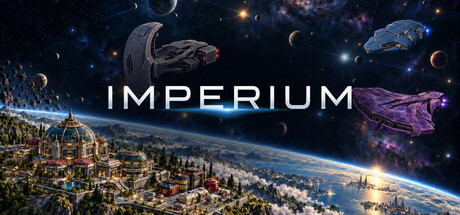
Imperium is a solo-developed game that makes extensive use of generative AI to create its content:
• Visual art and graphical assets — planet surfaces, buildings, species and ship artwork, interface art, and store/marketing imagery — were generated using Midjourney and ChatGPT, then extensively edited, composited, and refined by hand in Photoshop (including Photoshop's AI tools) to fit the game's art direction.
• Music was generated using Suno.
• Sound effects were generated using ElevenLabs.
Every asset is reviewed, edited, and approved by the developer before it ships, and the game's design, systems, and balance are the developer's own. Imperium's in-game opponents use traditional algorithmic AI, not generative AI.
Generative AI tools (Gemini) were used to assist in creating marketing materials and capsule images for the Steam store page. Additionally, AI was utilized for in-game text translation and localization. No in-game visual assets were generated by AI, and there is no live AI generation during gameplay.
Generative AI was used as an assistive tool during certain stages of visual asset creation. The overall design, direction, editing, and final composition of the work were created and managed by the developer.
Generative AI tools were used during the creation of certain marketing and promotional materials for the game, including concept artwork, logos, store page assets, and text drafts. All AI-generated content was reviewed, edited, and integrated by the developer before publication.
Cogfall was developed solo by Nodding Panda Studios. To bring the steampunk Clockwork Kingdom to life, AI tools were used to generate artwork and music under the creative direction of the developer. Every image and track was intentionally prompted, selected, and refined to fit the game's vision — AI served as a creative tool, not a replacement for creative decisions. All gameplay systems, code, game design, writing, and balancing were created entirely by the developer.
"AI tools (Leonardo AI) were used to generate some concept art and UI textures during development. AI tools (Gemini) were used to generate background music assets. All assets were pre-generated before being integrated into the game."
AI tools were only used in the development phase for code, textures, texts, audio and music production. There is no player-accessible AI generation feature or external AI service connection in the released game, and all built-in content has passed full manual compliance review.
Some visual/audio assets, text content, and development assistance were created with AI tools and then reviewed, modified, and integrated by the developer.
Checkpoint64 has used AI to assist with development & styling.
Checkpoint64's dev team are Senior developers in their day jobs and know the code inside and out.
All art & assets where created by a Human graphic artist.
"Generative AI was utilized to assist with the initial translation and localization of the game's text assets. All AI-assisted content underwent thorough manual review, editing, and refinement by our development team to ensure cultural accuracy and a high-quality narrative experience for players."
VoxelForge includes local generative AI features for user-assisted 3D and voxel asset creation.
Users can provide their own source images and use the application to generate 3D models, voxel assets, meshes, textures, and related production assets. This generation runs locally on the user’s computer using model files bundled with the application.
VoxelForge does not connect to an external AI service during normal use. It does not require a Hugging Face account, API key, cloud generation service, or external server connection at runtime. User input images and generated outputs are not uploaded to our servers.
The AI features are intended as creative tools for asset production. Users are responsible for ensuring that they have the necessary rights to any images or source material they import, and for reviewing generated outputs before using or distributing them.
Generative AI is only used as a programming assistant (like code completion or text localization). It’s not used to create the art, audio, or other content that players actually see. Enemy AI and procedural map generation are done with traditional game logic, not generative AI. The art and audio released come from third-party licensed materials on itch.io, with credits given in-game. The game doesn’t call any generative AI services while running.
Generative AI tools were used to provide secondary assistance in creating some 2D concept art, background images, and UI texture components during the development process.
Generative AI tools were used during the development process to assist in writing code, creating speech, sound effects, and 3D assets. No generative AI is used during actual gameplay.
Some puzzle illustrations and promotional visual assets were created with AI-assisted tools and then edited/curated by the developer. No real-time generative AI is used during gameplay.