Public Steam disclosure research25,394 disclosures tracked
Where do games disclose AI use?
Search developers’ Steam disclosures, compare classified AI use across
games, and follow recorded changes.
This index adds cross-game classifications and statistics to
statements published on individual store pages.
Groups reflect automatic analysis of public disclosures; mature records are excluded. These counts do not measure AI use across all of Steam.
Missing or unclear statements cannot establish whether a game uses AI.
Some of the art assets in this game were created with the assistance of generative AI. All assets have undergone manual selection and post-production adjustments to ensure consistency with the overall game style.
Generative AI was not used to create any in-game content resources. AI was utilized solely for the translation of certain in-game dialogue and external content, such as our Steam page and community posts.
“AI tools are used to assist in the creation of some visual assets for marketing and presentation purposes. All gameplay content and core systems are developed by the creator.”
Some visual and audio assets in this game were created with the assistance of generative AI tools. All content was reviewed, edited, and integrated by the developer to ensure quality and consistency.
The background music in this game was created using generative AI (Suno AI). Every audio track has been personally reviewed and edited by the developer. Furthermore, all content is used in full compliance with the commercial usage rights provided by the tool's official licensing.
Some visual assets, such as UI elements and artwork, were created with the assistance of generative AI and then reviewed, edited, and implemented by the developer. The game does not use live-generated AI content during gameplay.
Generative AI tools were used to assist in the conceptual design of the game's logo, as well as for translating and polishing in-game text and store page descriptions into multiple languages. All core visual assets, including the pixel art, character designs, and cover illustrations, are strictly and entirely hand-crafted by the human developer.
A few images have been generated, where it make sense that the AI in the game would use generic stock photos, but the overwhelming majority of art is handmade.
Artificial Intelligence was used as a supportive tool in the creative process to generate or refine certain 2D graphical elements, such as UI icons, background textures, and concept art. All assets have been manually reviewed, edited, and finalized by the development team to ensure quality and artistic consistency.
Translation and Localization: Parts of the text localization were processed with the assistance of AI-based translation tools. Every text string was subsequently reviewed by human editors to ensure terminological accuracy, proper grammar, and cultural adaptation.
This project leverages generative AI to assist in software development and documentation processing, covering data retrieval and synthesis, localization, modular script implementation, and code logic optimization. By utilizing AI for cross-disciplinary knowledge integration and performance refactoring, all outputs undergo manual review and adjustment. This ensures that core creativity remains developer-led while enhancing development efficiency under the premise of maintaining system stability.
Generative AI has been used to create some music and a small number of textures (in a limited way). It has also been used for translations and character voices.
Regarding the use of AI, the game scenes images, character designs, and animations of monsters were generated using AI.
We will replace these with manually created resources in the official version later
Generative AI was used to help create some assets for the store page and game placeholders, such as concept images and promotional visuals. No AI-generated content appears in the final gameplay itself.
AI tools were used only during development for tasks such as code assistance and partial media creation (e.g., some music elements).
No AI systems run in the game itself, and AI does not affect gameplay or player experience
Of course, we used some artificial intelligence technologies to speed up our business processes and produce higher quality and better-performing games. We used Claude for code development, ChatGPT for visual production, created the game's cover art with ChatGPT, and wrote the game's overall code architecture with the help of Claude. These AIs significantly sped up our work, but absolutely do not think: "the developers produced this game without any hassle, using only a single prompt." This thought is completely wrong. What actually happened was that we gave these AIs some of the tasks we would have done ourselves, and they did them in stages to speed up the process. Even with this setup, it still took 6 months to finish the game.
This game was developed with AI assistance for visual assets, sound effects, localization, and code. All AI-generated content was pre-generated during development and reviewed by the developer. No real-time AI content generation occurs during gameplay.
Generative AI was used in a limited capacity to create initial drafts for certain visual assets, including some pre-rendered artwork and cutscene materials. These assets were then manually retouched, revised, and finalized by the development team.
For some cutscenes, AI-assisted video tools were also used to help animate pre-made visual materials.
AI is not used for real-time content generation, gameplay systems, or story generation.
All visual assets within this game—including scenes, characters, and interface-related visuals—were created using the Doubao generative AI tool and constitute AI-generated visual content. The developer carefully curated, refined, and optimized these AI-generated assets to ensure they align seamlessly with the game's overall artistic style and gameplay requirements. Conversely, the game's core gameplay design, programming, logical architecture, sound effect selection, and store listing copy were developed entirely by the developer independently, without the use of generative AI tools. We hereby provide this full and honest disclosure to our players to ensure complete content transparency.
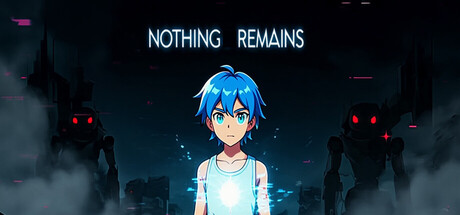
Some store and promotional artwork for Nothing Remains has been created or enhanced using AI-assisted tools. All gameplay systems, mechanics, and in-game content are fully original and developed without the use of generative AI.
Some visual assets used in the game's store presence (such as capsule images) were initially generated with the help of AI tools and then significantly modified and refined by the developer.
No AI-generated content is used during gameplay. All in-game assets and mechanics are handcrafted.
This game uses AI-generated audio for select in-game dialogue, designed to achieve a synthetic, machine-like sound aesthetic. Certain in-game artwork, including hint posters and environmental paintings, was also created with AI generation tools.
Generative AI was sporadically used to create initial references and placeholder assets, which have been or will be replaced with hand-crafted content during production.
Some visual and textual elements of this game were initially created using generative artificial intelligence tools as part of the development process. All content has subsequently been reviewed, edited, and manually refined by the team to ensure its quality, consistency, and suitability for the final game experience.
This game includes some AI-generated visual assets, such as certain in-game images and store page artwork like the logo are ai. These assets are used for visual design purposes and do not impact gameplay or player interaction.
This game was made using tools like Photoshop, Chat GPT and Grok. As a solo developer it is useful to have these tools available to create games like this one.
This game uses generative artificial intelligence as part of its development process. AI tools were used to assist in creating early concept art, drafting dialogue, generating ideas during brainstorming, producing some 3D assets, and supporting debugging and problem-solving during development.
All AI-assisted content and outputs were reviewed, edited, and refined by our development team. Final assets, writing, and implementation were curated to ensure consistency, quality, and alignment with the game’s vision.
AI is not used to generate content dynamically during gameplay; all in-game content is pre-created and finalized by the developers.
We are committed to using these tools responsibly and transparently, with strong human oversight across all aspects of the game.
Voice overs, translations and character busts are currently being handled by AI.
As a budget limited studio, we want to have everything in place before an artist to work on. These placeholders would reduce the amount of back and forth, rework and hours invested. Everything is directed and supervised by humans.
Voice overs and character busts will be completely replaced by the work of artists by the 1.0 release.
AI Content Disclosure (Or: Why Your Eyes Aren't Bleeding)
Steam requires me to formally disclose that I used AI tools to help create the visual assets for this game, and honestly, you should be thanking them for it. My personal artistic abilities peak at drawing lopsided stick figures, and if I had to hand-draw the assets myself, this wouldn't be a co-op horror game—it would be a tragedy.
To spare you from my awful programmer art, I used Meshy AI to generate the 3D models and Nano Banana Pro to handle the textures. The gameplay, the panic-inducing 90-second timers, and the terrifying undead Grandma mechanics are all me. The art, however, was assisted by AI as a public service to protect your eyeballs.
Hi, fellow players! While developing Flavor Legend, I used AI to assist in generating some character models, art textures, animation videos, background music, and ambient sound effects. All these assets have been manually reviewed and revised. The core gameplay, story, and all interactive experiences of the game are entirely original and created by me, with no AI-driven NPCs or dialogue features used. If any copyright disputes are found in the future, I will adjust and replace them immediately. Thank you for your understanding and support!
This game uses generative AI for some in-game paintings, store artwork, and the introductory voiceover. All content was reviewed and integrated by the developer.
Our store assets were created using a hybrid workflow. We used AI tools to generate initial concepts and textures, which were then extensively edited, refined, and combined with custom illustrations by an artist to ensure a unique, high-quality final result.
AI tools were used in a limited capacity to help speed up parts of the development process, with all content later refined and integrated into the final game.
The developer utilized generative AI tools during the production phase to assist with coding and drafting marketing text. AI was also used to generate foundational 2D promotional artwork for the Steam store page, which was subsequently edited, refined, and polished manually in Photoshop.
Some of the art assets in this game were created with the assistance of generative AI. All assets have undergone manual selection and post-production adjustments to ensure consistency with the overall game style.
Generative AI was not used to create any in-game content resources. AI was utilized solely for the translation of certain in-game dialogue and external content, such as our Steam page and community posts.
“AI tools are used to assist in the creation of some visual assets for marketing and presentation purposes. All gameplay content and core systems are developed by the creator.”
Some visual and audio assets in this game were created with the assistance of generative AI tools. All content was reviewed, edited, and integrated by the developer to ensure quality and consistency.
The background music in this game was created using generative AI (Suno AI). Every audio track has been personally reviewed and edited by the developer. Furthermore, all content is used in full compliance with the commercial usage rights provided by the tool's official licensing.
Some visual assets, such as UI elements and artwork, were created with the assistance of generative AI and then reviewed, edited, and implemented by the developer. The game does not use live-generated AI content during gameplay.
Generative AI tools were used to assist in the conceptual design of the game's logo, as well as for translating and polishing in-game text and store page descriptions into multiple languages. All core visual assets, including the pixel art, character designs, and cover illustrations, are strictly and entirely hand-crafted by the human developer.
A few images have been generated, where it make sense that the AI in the game would use generic stock photos, but the overwhelming majority of art is handmade.
Artificial Intelligence was used as a supportive tool in the creative process to generate or refine certain 2D graphical elements, such as UI icons, background textures, and concept art. All assets have been manually reviewed, edited, and finalized by the development team to ensure quality and artistic consistency.
Translation and Localization: Parts of the text localization were processed with the assistance of AI-based translation tools. Every text string was subsequently reviewed by human editors to ensure terminological accuracy, proper grammar, and cultural adaptation.
This project leverages generative AI to assist in software development and documentation processing, covering data retrieval and synthesis, localization, modular script implementation, and code logic optimization. By utilizing AI for cross-disciplinary knowledge integration and performance refactoring, all outputs undergo manual review and adjustment. This ensures that core creativity remains developer-led while enhancing development efficiency under the premise of maintaining system stability.
Generative AI has been used to create some music and a small number of textures (in a limited way). It has also been used for translations and character voices.
Regarding the use of AI, the game scenes images, character designs, and animations of monsters were generated using AI.
We will replace these with manually created resources in the official version later
Generative AI was used to help create some assets for the store page and game placeholders, such as concept images and promotional visuals. No AI-generated content appears in the final gameplay itself.
AI tools were used only during development for tasks such as code assistance and partial media creation (e.g., some music elements).
No AI systems run in the game itself, and AI does not affect gameplay or player experience
Of course, we used some artificial intelligence technologies to speed up our business processes and produce higher quality and better-performing games. We used Claude for code development, ChatGPT for visual production, created the game's cover art with ChatGPT, and wrote the game's overall code architecture with the help of Claude. These AIs significantly sped up our work, but absolutely do not think: "the developers produced this game without any hassle, using only a single prompt." This thought is completely wrong. What actually happened was that we gave these AIs some of the tasks we would have done ourselves, and they did them in stages to speed up the process. Even with this setup, it still took 6 months to finish the game.
This game was developed with AI assistance for visual assets, sound effects, localization, and code. All AI-generated content was pre-generated during development and reviewed by the developer. No real-time AI content generation occurs during gameplay.
Generative AI was used in a limited capacity to create initial drafts for certain visual assets, including some pre-rendered artwork and cutscene materials. These assets were then manually retouched, revised, and finalized by the development team.
For some cutscenes, AI-assisted video tools were also used to help animate pre-made visual materials.
AI is not used for real-time content generation, gameplay systems, or story generation.
All visual assets within this game—including scenes, characters, and interface-related visuals—were created using the Doubao generative AI tool and constitute AI-generated visual content. The developer carefully curated, refined, and optimized these AI-generated assets to ensure they align seamlessly with the game's overall artistic style and gameplay requirements. Conversely, the game's core gameplay design, programming, logical architecture, sound effect selection, and store listing copy were developed entirely by the developer independently, without the use of generative AI tools. We hereby provide this full and honest disclosure to our players to ensure complete content transparency.
Some store and promotional artwork for Nothing Remains has been created or enhanced using AI-assisted tools. All gameplay systems, mechanics, and in-game content are fully original and developed without the use of generative AI.
Some visual assets used in the game's store presence (such as capsule images) were initially generated with the help of AI tools and then significantly modified and refined by the developer.
No AI-generated content is used during gameplay. All in-game assets and mechanics are handcrafted.
This game uses AI-generated audio for select in-game dialogue, designed to achieve a synthetic, machine-like sound aesthetic. Certain in-game artwork, including hint posters and environmental paintings, was also created with AI generation tools.
Generative AI was sporadically used to create initial references and placeholder assets, which have been or will be replaced with hand-crafted content during production.
Some visual and textual elements of this game were initially created using generative artificial intelligence tools as part of the development process. All content has subsequently been reviewed, edited, and manually refined by the team to ensure its quality, consistency, and suitability for the final game experience.
This game includes some AI-generated visual assets, such as certain in-game images and store page artwork like the logo are ai. These assets are used for visual design purposes and do not impact gameplay or player interaction.
This game was made using tools like Photoshop, Chat GPT and Grok. As a solo developer it is useful to have these tools available to create games like this one.
This game uses generative artificial intelligence as part of its development process. AI tools were used to assist in creating early concept art, drafting dialogue, generating ideas during brainstorming, producing some 3D assets, and supporting debugging and problem-solving during development.
All AI-assisted content and outputs were reviewed, edited, and refined by our development team. Final assets, writing, and implementation were curated to ensure consistency, quality, and alignment with the game’s vision.
AI is not used to generate content dynamically during gameplay; all in-game content is pre-created and finalized by the developers.
We are committed to using these tools responsibly and transparently, with strong human oversight across all aspects of the game.
Voice overs, translations and character busts are currently being handled by AI.
As a budget limited studio, we want to have everything in place before an artist to work on. These placeholders would reduce the amount of back and forth, rework and hours invested. Everything is directed and supervised by humans.
Voice overs and character busts will be completely replaced by the work of artists by the 1.0 release.
AI Content Disclosure (Or: Why Your Eyes Aren't Bleeding)
Steam requires me to formally disclose that I used AI tools to help create the visual assets for this game, and honestly, you should be thanking them for it. My personal artistic abilities peak at drawing lopsided stick figures, and if I had to hand-draw the assets myself, this wouldn't be a co-op horror game—it would be a tragedy.
To spare you from my awful programmer art, I used Meshy AI to generate the 3D models and Nano Banana Pro to handle the textures. The gameplay, the panic-inducing 90-second timers, and the terrifying undead Grandma mechanics are all me. The art, however, was assisted by AI as a public service to protect your eyeballs.
Hi, fellow players! While developing Flavor Legend, I used AI to assist in generating some character models, art textures, animation videos, background music, and ambient sound effects. All these assets have been manually reviewed and revised. The core gameplay, story, and all interactive experiences of the game are entirely original and created by me, with no AI-driven NPCs or dialogue features used. If any copyright disputes are found in the future, I will adjust and replace them immediately. Thank you for your understanding and support!
This game uses generative AI for some in-game paintings, store artwork, and the introductory voiceover. All content was reviewed and integrated by the developer.
Our store assets were created using a hybrid workflow. We used AI tools to generate initial concepts and textures, which were then extensively edited, refined, and combined with custom illustrations by an artist to ensure a unique, high-quality final result.
AI tools were used in a limited capacity to help speed up parts of the development process, with all content later refined and integrated into the final game.
The developer utilized generative AI tools during the production phase to assist with coding and drafting marketing text. AI was also used to generate foundational 2D promotional artwork for the Steam store page, which was subsequently edited, refined, and polished manually in Photoshop.