Public Steam disclosure research25,394 disclosures tracked
Where do games disclose AI use?
Search developers’ Steam disclosures, compare classified AI use across
games, and follow recorded changes.
This index adds cross-game classifications and statistics to
statements published on individual store pages.
Groups reflect automatic analysis of public disclosures; mature records are excluded. These counts do not measure AI use across all of Steam.
Missing or unclear statements cannot establish whether a game uses AI.
Some of the game's 3D models (characters, monsters, and items) were created using the generative AI tool. Some in-game text translations were produced with AI assistance. All of this content was pre-generated during development, and we hold the appropriate rights to use it in the game.
The art, music, and writing in this game were created with AI tools during development, directed by the developer through written prompts. The development process is documented publicly, prompt by prompt. The shipped game contains no live or runtime AI generation — the in-game assistant “Aya” is a hand-authored, deterministic simulation, and the game makes no network or model calls during play.
Generative AI was used during the development of this game to speed up the coding process and to create some 2D visual designs. No other AI tools were used in the creation of the game.
Some visual assets used in the game, including selected 2D artwork and UI graphics, were created with the assistance of generative AI. All AI-generated content has been reviewed, edited, and integrated by the developer to ensure consistency with the game's artistic vision.
This game uses generative AI in the following ways:
In-game assets: Some game objects and assets were generated using Unity's built-in AI tools.
Development assistance: Claude (Anthropic) was used as a coding and development assistant during development.
Store page content: Store page descriptions and marketing copy were drafted with the assistance of Claude (Anthropic).
This game and its store page may include pre-generated AI-assisted content, such as visual assets, store artwork, marketing images, text drafts and localization support. All AI-assisted content is reviewed, selected and edited manually before inclusion.
The game does not use live-generated AI during gameplay.
Some visual assets used in this game were created or assisted by generative AI tools during development. All AI-generated content was reviewed, edited, and integrated by the developer before being included in the final game. No AI-generated content is created during gameplay.
Generative AI was used as an assistive tool for some parts of the following game development tasks:
(Background images, item images, coloring of character artwork, sound, code review, optimization, and localization text.)
GenderShift uses generative AI in two ways:
1. Live audio: AI converts your speech or text into the voice you select
2. Voice portraits and sample audio (in the app, trailer, and screenshots) were pre-created with generative AI. You can also generate these yourself in the app.
Generative AI was used solely to assist in the creation of promotional materials, including some Steam store banners. All in-game assets, gameplay, and content were created without the use of generative AI.
In King of Props, generative AI is used exclusively for text-based content: An AI assistant helped translate the in-game texts and menus into the supported languages (German, English, French, Spanish, Italian, Japanese) and assisted with drafts for shop pages and marketing texts. I reviewed and revised all results. Visual assets come from licensed asset packs and are not generated by AI; no AI runs during gameplay.
Some art assets, textures, and sound effects are created with the assistance of AI tools, then curated and edited by the developer. All game design, gameplay systems, code architecture, physics simulation, and mission design are human-made. No AI-generated content is created at runtime.
As a solo developer with a limited budget, I use AI tools to help produce some assets and sounds. This lets me keep my time focused where a solo dev's hours matter most — the core gameplay, the physics simulation, and mission design — while still delivering production quality that would normally require an extended team. Every AI-assisted asset is curated, edited, and integrated by hand.
Slimeball Castle Wars was made by a solo developer with the help of generative AI tools. AI was used during development to help create:
Music and audio — background music tracks were made using AI music-generation tools.
Art and sprites — building art, unit sprites, and other in-game graphics were created or assisted with AI image tools.
In-game text — some descriptions and written content were drafted with AI assistance.
Code — parts of the game's code were written with the help of an AI coding assistant.
Some music, sound effects, and UI icons in Riftslayer were created with the assistance of generative AI tools during development. All AI-assisted content was reviewed and selected by the developer before being included in the game.
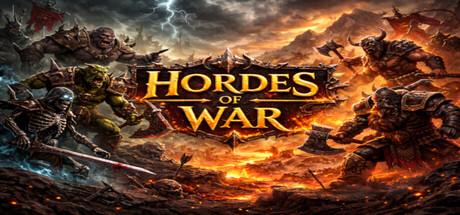
Some visual assets used during the development of **Hordes of War** were created or enhanced with the assistance of generative artificial intelligence. These assets include certain promotional artwork, concept art, and placeholder images used during development.
All gameplay systems, game design, world-building, maps, mechanics, balance, programming, and the final implementation of in-game content have been created, reviewed, and curated by the development team. Any AI-assisted content is carefully edited and integrated to ensure it meets the artistic style and quality standards of the game.
In order to realize my childhood dream of building this game, I have leveraged AI in every step of the development process, augmenting my capabilities as an engineer and visual designer by having AI generate some of the sprites, music, sound effects, voices, and code used to build this game.
I pledge that if Card Knight: Astral Arcana is successful, the sequel title will be brought to life by a team of human artists, composers, and programmers.
We use generative AI tools to assist with:- Machine translation (MT) of interface and data text, reviewed before release.- Drafts of store page text and marketing materials.All content is reviewed by a human before publication.Art, creatures, and music [adjust to reflect reality] do not use generative AI / use AI for [X].
Generative AI was utilized to produce the mockup video game background you see on the store page. The framepacer application itself does not include AI-generated material.
Gemini was used to assist in creating card art and art in backgrounds based off of a Fantasy setting from a not yet published book which is copyrighted. Sounds were created using elevenlabs for card sounds and effects including vo.
During the Early Access period and onwards to launch, we will be integrating and testing AI technologies to create ongoing secondary content like daily and weekly quests, and the material surrounding those quests needed to communicate that to the gamer.
We expect these to significantly enhance the user experience for gamers when used as tools under the guidance of the development team.
This game uses generative AI during development to assist with selected visual and written content, such as concept art, placeholder materials, localization drafts, and marketing assets. All content included in the game and store materials is reviewed, edited, and approved by the development team before publication.
As a small, two-person independent development team, we have used generative AI to help create a limited number of pre-generated assets during development. This includes portions of the store capsule artwork, a number of UI elements and icons, and approximately three lines of dialogue for a single enemy.
The AI-generated visual content is used solely as placeholder artwork to support our Early Access proof of concept. These assets allow us to focus our limited resources on gameplay, systems, balance, and overall game quality while we continue development. Replacing these placeholder assets with original, commissioned artwork is a planned and intentional part of our Early Access development roadmap.
No generative AI was or will be used to create gameplay, game logic, programming, level design, music, sound effects, visual effects, or any live-generated in-game content.
We use a local real-time deep learning neural network (AI) to perform depth estimation on the video frame. The AI analyzes the 2D image and generates a corresponding depth map in real-time, which is then used to reconstruct the 3D VR environment. The AI only processes the visual depth data and does not generate any text, audio, new art assets, or user-facing media content.
AI tools were used strictly as a minor supplementary aid for light editing of select images and textures. Additionally, AI was partially utilized to generate specific ambient sound effects and assist with voiceover processing. All core game mechanics, 3D models, and primary assets were created manually by the developer.
Some art, music, and 3D assets in this game were created with the help of generative AI tools. Every AI-generated asset was carefully reviewed, refined, and hand-curated by the developer to fit the game's art direction and tone. The game does not use any live-generated (runtime) AI content.
This game uses generative AI tools during development to assist with the creation of pre-generated game content.
AI tools were used as part of the production workflow for concept/reference images, some 3D model generation, and audio/source material discovery or selection support. The final assets included in the game were reviewed, edited, and integrated by the developer before being added to the game.
The game does not use generative AI to create new content during gameplay.
Penko Vox: Japanese uses local generative AI to power its immersive language learning experience. An integrated Large Language Model (LLM) acts as a native Japanese tutor, generating real-time dialogue based on user input, while a Neural Text-to-Speech (TTS) engine synthesizes high-fidelity Japanese audio for listening practice.
AI Generated Content Disclosure
Pre-generated AI:
"Artificial intelligence tools were utilized during the development process to generate initial 3D character assets and models. Following the generation, our development team extensively refined the textures, customized the coloring, and completely performed the rigging and weight painting manually."
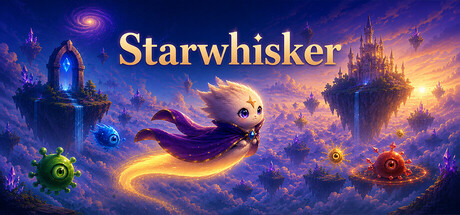
Starwhisker is a solo indie project. During early development, some placeholder assets and development materials were created with the assistance of AI tools to help prototype ideas quickly and focus resources on gameplay development.
As development continues, these assets are being progressively refined, replaced, or supplemented with original work created specifically for the game. The goal is to ensure Starwhisker develops its own distinct artistic identity while remaining transparent about the tools used during its creation.
During the development of Crossfall, generative AI is used as an auxiliary tool for creating game content. The following materials have been created or prepared with its help:
Images. Some of the game’s visual content has been created using generative AI, including character images, as well as some sprites and icons. Other parts of the artwork were made manually.
Text. AI helps me prepare some of the text content, including drafts of item names and descriptions, text for certain in-game events, as well as translation and localization of texts into other languages.
Music. The game’s musical soundtrack was created using generative AI.
All content generated with the help of AI is reviewed, selected, and, if necessary, refined by me before being added to the game.
The game itself does not use generative AI during gameplay: no content is generated in real time on the player’s side, and the game does not require an internet connection or access to any AI services.
This game contains pre-generated AI-assisted content, including some character artwork, visual assets, and audio. All AI-generated content has been reviewed, edited, and integrated into the game by the developer.
AI-assisted tools were used to help create some ability icons and some HUD elements. The assets were reviewed and integrated into the game by the developers.
Some of the game's 3D models (characters, monsters, and items) were created using the generative AI tool. Some in-game text translations were produced with AI assistance. All of this content was pre-generated during development, and we hold the appropriate rights to use it in the game.
The art, music, and writing in this game were created with AI tools during development, directed by the developer through written prompts. The development process is documented publicly, prompt by prompt. The shipped game contains no live or runtime AI generation — the in-game assistant “Aya” is a hand-authored, deterministic simulation, and the game makes no network or model calls during play.
Generative AI was used during the development of this game to speed up the coding process and to create some 2D visual designs. No other AI tools were used in the creation of the game.
Some visual assets used in the game, including selected 2D artwork and UI graphics, were created with the assistance of generative AI. All AI-generated content has been reviewed, edited, and integrated by the developer to ensure consistency with the game's artistic vision.
This game uses generative AI in the following ways:
In-game assets: Some game objects and assets were generated using Unity's built-in AI tools.
Development assistance: Claude (Anthropic) was used as a coding and development assistant during development.
Store page content: Store page descriptions and marketing copy were drafted with the assistance of Claude (Anthropic).
This game and its store page may include pre-generated AI-assisted content, such as visual assets, store artwork, marketing images, text drafts and localization support. All AI-assisted content is reviewed, selected and edited manually before inclusion.
The game does not use live-generated AI during gameplay.
Some visual assets used in this game were created or assisted by generative AI tools during development. All AI-generated content was reviewed, edited, and integrated by the developer before being included in the final game. No AI-generated content is created during gameplay.
Generative AI was used as an assistive tool for some parts of the following game development tasks:
(Background images, item images, coloring of character artwork, sound, code review, optimization, and localization text.)
GenderShift uses generative AI in two ways:
1. Live audio: AI converts your speech or text into the voice you select
2. Voice portraits and sample audio (in the app, trailer, and screenshots) were pre-created with generative AI. You can also generate these yourself in the app.
Generative AI was used solely to assist in the creation of promotional materials, including some Steam store banners. All in-game assets, gameplay, and content were created without the use of generative AI.
In King of Props, generative AI is used exclusively for text-based content: An AI assistant helped translate the in-game texts and menus into the supported languages (German, English, French, Spanish, Italian, Japanese) and assisted with drafts for shop pages and marketing texts. I reviewed and revised all results. Visual assets come from licensed asset packs and are not generated by AI; no AI runs during gameplay.
Some art assets, textures, and sound effects are created with the assistance of AI tools, then curated and edited by the developer. All game design, gameplay systems, code architecture, physics simulation, and mission design are human-made. No AI-generated content is created at runtime.
As a solo developer with a limited budget, I use AI tools to help produce some assets and sounds. This lets me keep my time focused where a solo dev's hours matter most — the core gameplay, the physics simulation, and mission design — while still delivering production quality that would normally require an extended team. Every AI-assisted asset is curated, edited, and integrated by hand.
Slimeball Castle Wars was made by a solo developer with the help of generative AI tools. AI was used during development to help create:
Music and audio — background music tracks were made using AI music-generation tools.
Art and sprites — building art, unit sprites, and other in-game graphics were created or assisted with AI image tools.
In-game text — some descriptions and written content were drafted with AI assistance.
Code — parts of the game's code were written with the help of an AI coding assistant.
Some music, sound effects, and UI icons in Riftslayer were created with the assistance of generative AI tools during development. All AI-assisted content was reviewed and selected by the developer before being included in the game.
Some visual assets used during the development of **Hordes of War** were created or enhanced with the assistance of generative artificial intelligence. These assets include certain promotional artwork, concept art, and placeholder images used during development.
All gameplay systems, game design, world-building, maps, mechanics, balance, programming, and the final implementation of in-game content have been created, reviewed, and curated by the development team. Any AI-assisted content is carefully edited and integrated to ensure it meets the artistic style and quality standards of the game.
In order to realize my childhood dream of building this game, I have leveraged AI in every step of the development process, augmenting my capabilities as an engineer and visual designer by having AI generate some of the sprites, music, sound effects, voices, and code used to build this game.
I pledge that if Card Knight: Astral Arcana is successful, the sequel title will be brought to life by a team of human artists, composers, and programmers.
We use generative AI tools to assist with:- Machine translation (MT) of interface and data text, reviewed before release.- Drafts of store page text and marketing materials.All content is reviewed by a human before publication.Art, creatures, and music [adjust to reflect reality] do not use generative AI / use AI for [X].
Generative AI was utilized to produce the mockup video game background you see on the store page. The framepacer application itself does not include AI-generated material.
Gemini was used to assist in creating card art and art in backgrounds based off of a Fantasy setting from a not yet published book which is copyrighted. Sounds were created using elevenlabs for card sounds and effects including vo.
During the Early Access period and onwards to launch, we will be integrating and testing AI technologies to create ongoing secondary content like daily and weekly quests, and the material surrounding those quests needed to communicate that to the gamer.
We expect these to significantly enhance the user experience for gamers when used as tools under the guidance of the development team.
This game uses generative AI during development to assist with selected visual and written content, such as concept art, placeholder materials, localization drafts, and marketing assets. All content included in the game and store materials is reviewed, edited, and approved by the development team before publication.
As a small, two-person independent development team, we have used generative AI to help create a limited number of pre-generated assets during development. This includes portions of the store capsule artwork, a number of UI elements and icons, and approximately three lines of dialogue for a single enemy.
The AI-generated visual content is used solely as placeholder artwork to support our Early Access proof of concept. These assets allow us to focus our limited resources on gameplay, systems, balance, and overall game quality while we continue development. Replacing these placeholder assets with original, commissioned artwork is a planned and intentional part of our Early Access development roadmap.
No generative AI was or will be used to create gameplay, game logic, programming, level design, music, sound effects, visual effects, or any live-generated in-game content.
We use a local real-time deep learning neural network (AI) to perform depth estimation on the video frame. The AI analyzes the 2D image and generates a corresponding depth map in real-time, which is then used to reconstruct the 3D VR environment. The AI only processes the visual depth data and does not generate any text, audio, new art assets, or user-facing media content.
AI tools were used strictly as a minor supplementary aid for light editing of select images and textures. Additionally, AI was partially utilized to generate specific ambient sound effects and assist with voiceover processing. All core game mechanics, 3D models, and primary assets were created manually by the developer.
Some art, music, and 3D assets in this game were created with the help of generative AI tools. Every AI-generated asset was carefully reviewed, refined, and hand-curated by the developer to fit the game's art direction and tone. The game does not use any live-generated (runtime) AI content.
This game uses generative AI tools during development to assist with the creation of pre-generated game content.
AI tools were used as part of the production workflow for concept/reference images, some 3D model generation, and audio/source material discovery or selection support. The final assets included in the game were reviewed, edited, and integrated by the developer before being added to the game.
The game does not use generative AI to create new content during gameplay.
Penko Vox: Japanese uses local generative AI to power its immersive language learning experience. An integrated Large Language Model (LLM) acts as a native Japanese tutor, generating real-time dialogue based on user input, while a Neural Text-to-Speech (TTS) engine synthesizes high-fidelity Japanese audio for listening practice.
AI Generated Content Disclosure
Pre-generated AI:
"Artificial intelligence tools were utilized during the development process to generate initial 3D character assets and models. Following the generation, our development team extensively refined the textures, customized the coloring, and completely performed the rigging and weight painting manually."
Starwhisker is a solo indie project. During early development, some placeholder assets and development materials were created with the assistance of AI tools to help prototype ideas quickly and focus resources on gameplay development.
As development continues, these assets are being progressively refined, replaced, or supplemented with original work created specifically for the game. The goal is to ensure Starwhisker develops its own distinct artistic identity while remaining transparent about the tools used during its creation.
During the development of Crossfall, generative AI is used as an auxiliary tool for creating game content. The following materials have been created or prepared with its help:
Images. Some of the game’s visual content has been created using generative AI, including character images, as well as some sprites and icons. Other parts of the artwork were made manually.
Text. AI helps me prepare some of the text content, including drafts of item names and descriptions, text for certain in-game events, as well as translation and localization of texts into other languages.
Music. The game’s musical soundtrack was created using generative AI.
All content generated with the help of AI is reviewed, selected, and, if necessary, refined by me before being added to the game.
The game itself does not use generative AI during gameplay: no content is generated in real time on the player’s side, and the game does not require an internet connection or access to any AI services.
This game contains pre-generated AI-assisted content, including some character artwork, visual assets, and audio. All AI-generated content has been reviewed, edited, and integrated into the game by the developer.
AI-assisted tools were used to help create some ability icons and some HUD elements. The assets were reviewed and integrated into the game by the developers.