Public Steam disclosure research25,394 disclosures tracked
Where do games disclose AI use?
Search developers’ Steam disclosures, compare classified AI use across
games, and follow recorded changes.
This index adds cross-game classifications and statistics to
statements published on individual store pages.
Groups reflect automatic analysis of public disclosures; mature records are excluded. These counts do not measure AI use across all of Steam.
Missing or unclear statements cannot establish whether a game uses AI.
Generative AI was used only to assist in editing and enhancing certain 2D images used in the game, such as improving quality, refining details, or making visual adjustments. All gameplay, programming, game design, and the final implementation of assets were created and reviewed by the developer. No generative AI is used to create gameplay content or player interactions during gameplay.
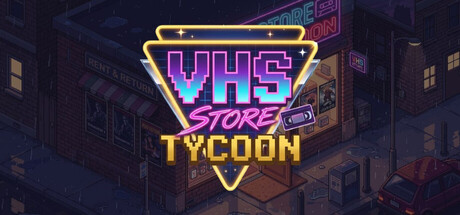
This game used generative AI tools during development to assist with: (1) some artwork such as the title illustration, (2) in-game text including newspaper headlines and stock descriptions, and (3) Korean/English localization. All AI-assisted output was reviewed and edited by the developer. The game does not generate any AI content at runtime (all pre-generated).
Pre-generated content (created during development, not at runtime):
- In-game parody movie cover art: generated with AI tools and manually reviewed by the team to ensure all covers are original parodies and do not reproduce trademarked logos, brands, or copyrighted characters.
- In-game parody movie titles and descriptions: drafted with AI assistance and manually edited by the team.
- In-game UI and text translations into the 8 supported languages: produced with AI assistance and reviewed by the team.
No live generative AI is used at runtime. All AI-assisted content is baked into the game build.
Core game assets (code, gameplay design, UI art, character and shop sprites, music and sound effects) were NOT generated with AI.
Netshell uses AI to power its characters. The NPCs you meet on the in-game forums and IRC read what is happening in your playthrough and respond in character, so their messages and forum posts are generated rather than pre-scripted, and each player's world unfolds differently.
All of this runs locally and offline: the AI models ship with the game and run on your machine. Netshell never connects to a third-party AI service such as ChatGPT or Claude. You can turn the AI off entirely, in which case the NPCs stop chatting and the game continues with its authored story.
Some Steam store and trailer assets were created with AI assistance and then edited/curated by the development team. During gameplay, Netshell only uses AI to generate in-character NPC text.
This game uses images created with AI generation tools — including NPC photos and portraits, and some store and promotional artwork. All such content has been reviewed by the developer to ensure it contains no illegal or infringing material.
AI image generation tools (ChatGPT/DALL-E) were used to create unit artwork, faction sprites, and promotional images for this game. No AI was used to generate game code, narrative text, or audio content.
Some store page marketing images, capsule assets, and promotional screenshots were created or edited with generative AI and then reviewed and adjusted for layout, sizing, and text. The game does not use live generative AI during gameplay, and it does not connect to any third-party AI service while players are playing.
Some of the promotional and storefront images were created with AI tools and then refined by hand. All of the in-game assets were designed by a 3D artist. Some of the audio files are AI generated.
Store page artwork (capsule images and header) was created with
the assistance of AI image generation tools (Stable Diffusion /
Flux). All in-game content, text, and gameplay logic is
human-authored. No AI is used to generate content during gameplay.
Some asset textures, background music, and assistance with game development questions include AI-generated content.
No AI translation was used for Japanese, English, Korean, or Czech.
This game includes live-generated AI features that run locally on the player's computer and do not rely on external AI services.
The game uses AI to:
- interpret the player's spoken voice commands in real time to support gameplay interactions;
- generate voice audio for in-game pilot communications in real time.
The AI systems are used exclusively for these gameplay functions. They do not generate user-visible images, text, or other open-ended content.
The game is designed so that AI-generated output is limited to its intended gameplay purpose and cannot be used to create illegal, infringing, or otherwise prohibited content.
Yes. Geoplanetical is a solo project, just me. I use generative AI in a few places. It helps me translate the game and this Steam page into other languages, though I check every translation myself. It also helps me research and format the game's real world starting data, which comes from public sources like the World Bank, the IMF and Natural Earth, and I verify all of that data myself too. The character portraits, around 60,000 of them, are generated with AI. The promotional images and text on this store page were made with AI as well. That's it. Nothing else in the game uses generative AI, and none of it runs while you play. If you want to know where the rest of the game's content comes from, like the real world datasets, the hand made assets and the Creative Commons icons, it's all documented in the About section inside the game.
Some visual assets used in the game and store page were created or modified with the assistance of generative AI, including certain UI elements, icons, and promotional artwork. AI-assisted translation was also used for some store page localizations. All AI-generated content was reviewed, edited, and integrated by the developer.
Ce jeu peut contenir des éléments créés avec l’aide d’outils IA pendant le développement, comme des concepts visuels, maquettes d’interface, images temporaires, icônes, brouillons de texte ou références de design. Le contenu généré par IA est revu et modifié par le développeur avant d’être intégré au jeu. Le jeu n’utilise pas d’IA générative en direct pendant la partie.
Generative technologies are used in Korea. IL-2 Series as production tools for selected types of content: in-game radio communications, pilot portraits and images used in Career mode.
Radio communications use text-to-speech technology based on voice recordings made by our team and voice actors under the relevant agreements.
Pilot portraits and Career mode images are created with AI-assisted workflows based on our own assets, in-game screenshots, models, and historical references, then manually reviewed and refined by our artists.
Generative AI is not used as a replacement for creative direction. All such content is curated, checked, and finalized by the development team.
A pre-rendered promotional cinematic/trailer used in marketing materials was created with generative AI cinematic tools. The game itself does not include live generative AI features, and players cannot generate AI content in-game.
Artificial intelligence is used exclusively as a tool to assist the developer in editing the source code structure (optimizing Unity script logic), checking compilation errors, and assisting with stylistic design. The AI is not constantly loaded during gameplay.
I use generative AI tools as part of art pipeline. Some visual assets - such as background art and certain textures - are created with AI assistance (e.g. Midjourney, Gemini) and then manually refined, edited, and composited before being integrated into the game. All AI-assisted content is reviewed by me personally to ensure quality and appropriateness. The game does not generate any content live during play.
Some of Airline Legacy's artwork, music, in-game text, and translations were created with the assistance of generative AI tools during development. All AI-assisted content was reviewed and curated by the developer. No content is generated live during gameplay.
This game uses generative AI for some visual assets.
All such assets are reviewed, edited, and refined by the developer before use.
Generative AI is not used for gameplay or game progression.
I use AI-generated content—such as game illustrations—as a basis for refinement or as a reference.
I also use AI to write code, or refer to the code it generates.
Generative AI may be used for certain promotional materials and future story-related visual content. All AI-assisted content is reviewed and edited by the developer before being included in the game or store page.
The Living Atlas uses procedural generation algorithms to create unique fantasy worlds, including terrain, biomes, river systems, and civilization simulation. These systems were developed with the assistance of large language models (LLMs) used during development for code generation and design. The store page copy and marketing assets were also created with LLM assistance. No AI-generated content is produced during gameplay — all in-game content is generated by deterministic procedural algorithms seeded by player input.
Keep Drawing was developed by HuDoes Interactive with AI-assisted tools used as part of our workflow — not as a fully automated production pipeline.
Some in-game visuals and UI elements were created or refined with generative AI during development. All such assets were reviewed, edited, and integrated by the developer before release. Store and marketing graphics (including Steam capsule artwork) were also created with AI assistance and then manually adjusted for quality and consistency.
AI-assisted coding tools were used to help write and refactor parts of the game's source code. The design, game systems, balance, and final implementation remain developer-directed.
Generative AI was used to create some of the capsule and promotional artwork displayed on the game's Steam store page. All such artwork was reviewed and selected by the developer. No AI-generated content is created during gameplay.
Football Academy Director includes pre-generated fictional player portraits and selected promotional artwork created with the assistance of generative AI. All AI-generated content is created before release and manually reviewed and curated. The game does not generate AI content during gameplay.
Football Academy Director uses the NG_Regens facepack for fictional player portraits, with permission from the creator. NG_Regens can be found at: https://ngregens.org/
We used generative AI mainly for generating code. It has also been used for writing flavour text, many interface descriptions and some lines for an AI character. Finally it has also been used for proofreading.
This game uses pre-generated AI only for certain UI background images and promotional store visuals. These assets were created before release and remain fixed. The game does not include any live AI generation during gameplay.
Cellula was developed with the assistance of generative AI tools. The developer used AI to help write C++ code, generate 3D organelle models from text descriptions, and create UI button artwork. No AI-generated content appears in the final game without human modification, curation, and integration.
This project is itself a demonstration of how AI can democratize game development — allowing a single developer with domain expertise but limited programming experience to build something that previously required a full studio.
All game design, biological accuracy, educational content, and creative direction were provided by a human physician and educator.
We used advanced AI language models (Claude and Gemini) to help translate
SERVICE DESK SIM into 8 languages: French, German, Spanish, Italian, Hindi,
Urdu, Japanese, and English (UK). The AI handled the initial translation of
all in-game text from UI menus to dialogue, story sequences, and thousands
of unique support tickets. Every translation was then carefully reviewed and
tested by humans to ensure quality and cultural accuracy across all languages.
Generative AI was used only to assist in editing and enhancing certain 2D images used in the game, such as improving quality, refining details, or making visual adjustments. All gameplay, programming, game design, and the final implementation of assets were created and reviewed by the developer. No generative AI is used to create gameplay content or player interactions during gameplay.
This game used generative AI tools during development to assist with: (1) some artwork such as the title illustration, (2) in-game text including newspaper headlines and stock descriptions, and (3) Korean/English localization. All AI-assisted output was reviewed and edited by the developer. The game does not generate any AI content at runtime (all pre-generated).
Pre-generated content (created during development, not at runtime):
- In-game parody movie cover art: generated with AI tools and manually reviewed by the team to ensure all covers are original parodies and do not reproduce trademarked logos, brands, or copyrighted characters.
- In-game parody movie titles and descriptions: drafted with AI assistance and manually edited by the team.
- In-game UI and text translations into the 8 supported languages: produced with AI assistance and reviewed by the team.
No live generative AI is used at runtime. All AI-assisted content is baked into the game build.
Core game assets (code, gameplay design, UI art, character and shop sprites, music and sound effects) were NOT generated with AI.
Netshell uses AI to power its characters. The NPCs you meet on the in-game forums and IRC read what is happening in your playthrough and respond in character, so their messages and forum posts are generated rather than pre-scripted, and each player's world unfolds differently.
All of this runs locally and offline: the AI models ship with the game and run on your machine. Netshell never connects to a third-party AI service such as ChatGPT or Claude. You can turn the AI off entirely, in which case the NPCs stop chatting and the game continues with its authored story.
Some Steam store and trailer assets were created with AI assistance and then edited/curated by the development team. During gameplay, Netshell only uses AI to generate in-character NPC text.
This game uses images created with AI generation tools — including NPC photos and portraits, and some store and promotional artwork. All such content has been reviewed by the developer to ensure it contains no illegal or infringing material.
AI image generation tools (ChatGPT/DALL-E) were used to create unit artwork, faction sprites, and promotional images for this game. No AI was used to generate game code, narrative text, or audio content.
Some store page marketing images, capsule assets, and promotional screenshots were created or edited with generative AI and then reviewed and adjusted for layout, sizing, and text. The game does not use live generative AI during gameplay, and it does not connect to any third-party AI service while players are playing.
Some of the promotional and storefront images were created with AI tools and then refined by hand. All of the in-game assets were designed by a 3D artist. Some of the audio files are AI generated.
Store page artwork (capsule images and header) was created with
the assistance of AI image generation tools (Stable Diffusion /
Flux). All in-game content, text, and gameplay logic is
human-authored. No AI is used to generate content during gameplay.
Some asset textures, background music, and assistance with game development questions include AI-generated content.
No AI translation was used for Japanese, English, Korean, or Czech.
This game includes live-generated AI features that run locally on the player's computer and do not rely on external AI services.
The game uses AI to:
- interpret the player's spoken voice commands in real time to support gameplay interactions;
- generate voice audio for in-game pilot communications in real time.
The AI systems are used exclusively for these gameplay functions. They do not generate user-visible images, text, or other open-ended content.
The game is designed so that AI-generated output is limited to its intended gameplay purpose and cannot be used to create illegal, infringing, or otherwise prohibited content.
Yes. Geoplanetical is a solo project, just me. I use generative AI in a few places. It helps me translate the game and this Steam page into other languages, though I check every translation myself. It also helps me research and format the game's real world starting data, which comes from public sources like the World Bank, the IMF and Natural Earth, and I verify all of that data myself too. The character portraits, around 60,000 of them, are generated with AI. The promotional images and text on this store page were made with AI as well. That's it. Nothing else in the game uses generative AI, and none of it runs while you play. If you want to know where the rest of the game's content comes from, like the real world datasets, the hand made assets and the Creative Commons icons, it's all documented in the About section inside the game.
Some visual assets used in the game and store page were created or modified with the assistance of generative AI, including certain UI elements, icons, and promotional artwork. AI-assisted translation was also used for some store page localizations. All AI-generated content was reviewed, edited, and integrated by the developer.
Ce jeu peut contenir des éléments créés avec l’aide d’outils IA pendant le développement, comme des concepts visuels, maquettes d’interface, images temporaires, icônes, brouillons de texte ou références de design. Le contenu généré par IA est revu et modifié par le développeur avant d’être intégré au jeu. Le jeu n’utilise pas d’IA générative en direct pendant la partie.
Generative technologies are used in Korea. IL-2 Series as production tools for selected types of content: in-game radio communications, pilot portraits and images used in Career mode.
Radio communications use text-to-speech technology based on voice recordings made by our team and voice actors under the relevant agreements.
Pilot portraits and Career mode images are created with AI-assisted workflows based on our own assets, in-game screenshots, models, and historical references, then manually reviewed and refined by our artists.
Generative AI is not used as a replacement for creative direction. All such content is curated, checked, and finalized by the development team.
A pre-rendered promotional cinematic/trailer used in marketing materials was created with generative AI cinematic tools. The game itself does not include live generative AI features, and players cannot generate AI content in-game.
Artificial intelligence is used exclusively as a tool to assist the developer in editing the source code structure (optimizing Unity script logic), checking compilation errors, and assisting with stylistic design. The AI is not constantly loaded during gameplay.
I use generative AI tools as part of art pipeline. Some visual assets - such as background art and certain textures - are created with AI assistance (e.g. Midjourney, Gemini) and then manually refined, edited, and composited before being integrated into the game. All AI-assisted content is reviewed by me personally to ensure quality and appropriateness. The game does not generate any content live during play.
Some of Airline Legacy's artwork, music, in-game text, and translations were created with the assistance of generative AI tools during development. All AI-assisted content was reviewed and curated by the developer. No content is generated live during gameplay.
This game uses generative AI for some visual assets.
All such assets are reviewed, edited, and refined by the developer before use.
Generative AI is not used for gameplay or game progression.
I use AI-generated content—such as game illustrations—as a basis for refinement or as a reference.
I also use AI to write code, or refer to the code it generates.
Generative AI may be used for certain promotional materials and future story-related visual content. All AI-assisted content is reviewed and edited by the developer before being included in the game or store page.
The Living Atlas uses procedural generation algorithms to create unique fantasy worlds, including terrain, biomes, river systems, and civilization simulation. These systems were developed with the assistance of large language models (LLMs) used during development for code generation and design. The store page copy and marketing assets were also created with LLM assistance. No AI-generated content is produced during gameplay — all in-game content is generated by deterministic procedural algorithms seeded by player input.
Keep Drawing was developed by HuDoes Interactive with AI-assisted tools used as part of our workflow — not as a fully automated production pipeline.
Some in-game visuals and UI elements were created or refined with generative AI during development. All such assets were reviewed, edited, and integrated by the developer before release. Store and marketing graphics (including Steam capsule artwork) were also created with AI assistance and then manually adjusted for quality and consistency.
AI-assisted coding tools were used to help write and refactor parts of the game's source code. The design, game systems, balance, and final implementation remain developer-directed.
Generative AI was used to create some of the capsule and promotional artwork displayed on the game's Steam store page. All such artwork was reviewed and selected by the developer. No AI-generated content is created during gameplay.
Football Academy Director includes pre-generated fictional player portraits and selected promotional artwork created with the assistance of generative AI. All AI-generated content is created before release and manually reviewed and curated. The game does not generate AI content during gameplay.
Football Academy Director uses the NG_Regens facepack for fictional player portraits, with permission from the creator. NG_Regens can be found at: https://ngregens.org/
We used generative AI mainly for generating code. It has also been used for writing flavour text, many interface descriptions and some lines for an AI character. Finally it has also been used for proofreading.
This game uses pre-generated AI only for certain UI background images and promotional store visuals. These assets were created before release and remain fixed. The game does not include any live AI generation during gameplay.
Cellula was developed with the assistance of generative AI tools. The developer used AI to help write C++ code, generate 3D organelle models from text descriptions, and create UI button artwork. No AI-generated content appears in the final game without human modification, curation, and integration.
This project is itself a demonstration of how AI can democratize game development — allowing a single developer with domain expertise but limited programming experience to build something that previously required a full studio.
All game design, biological accuracy, educational content, and creative direction were provided by a human physician and educator.
We used advanced AI language models (Claude and Gemini) to help translate
SERVICE DESK SIM into 8 languages: French, German, Spanish, Italian, Hindi,
Urdu, Japanese, and English (UK). The AI handled the initial translation of
all in-game text from UI menus to dialogue, story sequences, and thousands
of unique support tickets. Every translation was then carefully reviewed and
tested by humans to ensure quality and cultural accuracy across all languages.