Public Steam disclosure research25,394 disclosures tracked
Where do games disclose AI use?
Search developers’ Steam disclosures, compare classified AI use across
games, and follow recorded changes.
This index adds cross-game classifications and statistics to
statements published on individual store pages.
Groups reflect automatic analysis of public disclosures; mature records are excluded. These counts do not measure AI use across all of Steam.
Missing or unclear statements cannot establish whether a game uses AI.
AI image tools supported the creation of some 2D illustrations and promotional assets. Every asset was designed, reworked, and finished by our artists, and all writing, game design, and code are entirely human-made. Nothing in the game is AI-generated at runtime.
Some art assets, localized text, and store marketing materials were created with the assistance of generative AI during development, then reviewed, edited, and integrated by the developer. The game does not use generative AI to create content during gameplay.
Generative AI was used in a limited, supporting role during development:
• Portions of this store page description were drafted with the help of AI text tools and then reviewed and edited by the developer.
• A small number of icons (used on the store page) were created with the assistance of AI image generation tools and refined by the developer.
The game itself does not use generative AI at runtime.
Some assets in Crown Cribbage were made with the help of generative AI tools:
- in-game music was generated with AI music tools
- capsule/key art
- marketing copy drafts
- assistance with programming
One point of emphasis:
The computer opponents in this game are not generative AI. They are hand-written heuristics, a fixed set of rules for discarding and pegging, tuned by
difficulty.
They see only what you see. They do not look at your hand, and nothing about them is generated while you play.
No AI content of any kind is created during a match.
This game uses generative AI tools to help create static visual assets, including card illustrations and background artwork. All AI-generated content is produced during development and does not change during gameplay — nothing is generated in real time.
Generative AI was used during development to create a small amount of temporary placeholder imagery. AI-generated content is limited to pre-generated visual assets and no AI content is generated during gameplay.
Some character, costume, and promotional artwork was created with the assistance of generative AI image tools, then selected, edited, and assembled by the developer. There is no live AI generation during gameplay, and the game does not connect to external AI services.
This game’s store page key art, capsules, and marketing images were created with the assistance of generative AI tools. The game experience itself was developed independently.
Portions of the game's code were written with AI assistance and reviewed, tested and integrated by the developer. Localization into non-English languages was machine-assisted and human-reviewed. Some 2D concept/marketing artwork was AI-assisted and manually refined. All gameplay, game design and audio are human-made. The game does not generate any content with AI at runtime.
Generative AI tools were only used to assist with writing some C# code scripts during development and to translate/draft the text descriptions for the Steam Store page. There are no AI-generated visual (art/UI) or audio assets included in the game.
Generative AI was used to create artwork for the in-game How to Play instructional image. All other game artwork and visual assets were created by the developer.
This game uses a few assets purchased from FAB which may or may not contain AI-generated content. I have personally done my best to scrub AI out of those few purchased assets. There are also two images and two short instrumentals, and that's it.
AI-assisted tools were used during the development of this game to help with portions of the programming process, the creation of some visual assets, and certain audio assets. All AI-assisted content was reviewed, refined, and integrated by the development team before release. The game does not use generative AI to create content during gameplay and does not rely on external AI services while running.
Some of the artwork in The Dawn Forge — the item, building, unit and boss illustrations — and the spoken narration lines were created using AI image and voice tools, working from the developer's own art direction and scripts, and then composed and edited by hand. Nothing is generated while you play: the game runs entirely offline and never contacts an AI service.
Some pre-rendered assets were created with the assistance of generative AI tools during development: the key art illustration, the store capsule images derived from it, and parts of the localization (translated interface text). All AI-assisted content was reviewed and curated by the developer. The game does not generate any content with AI at runtime.
Generative AI tools were used during development to assist with code and selected pre-generated game and marketing content. All shipped content was reviewed by the developer. No AI content is generated during gameplay.
Generative AI may have been used in creating pre-rendered content for this game. All such content is the result of a human-led artistic and creative process
We use generative AI to assist with writing and localizing the game's text. All art and audio are procedurally generated by our own code or sourced from CC0 libraries. No content is generated by AI in real time during gameplay.
I used AI as an aid for a few things: parts of the writing, the translations into
French, Spanish and Italian, and some of the more complex store artwork. Everything
that came out of it was reworked by hand before it went in. It isn't something I'm a
fan of, but as a solo developer without a studio behind me, some things are simply out
of reach otherwise.
As an indie studio, we use generative AI to continue developing the games we love. It allows us to accomplish tasks that would otherwise be beyond our small team's capacity.
Generative AI was used during the development of the game's user interface and to assist with creating parts of the game's audio. Every AI-generated asset was carefully reviewed and refined before being included in the final game.
Some in-game background artwork was created using generative AI as source material, then manually edited, processed, and optimized by the developer.
Some music was arranged using generative AI services based on original compositions previously written by the developer, then manually edited and remastered.
Generative AI was also used to assist with translation and editing of some store-page text and English localization, with the final content reviewed and edited by the developer.
The game does not generate any AI content at runtime.
Generative AI tools were used during development to assist with the creation of selected promotional and visual assets. During gameplay, an AI-based analysis service may also be used to evaluate submitted player-created clay sculptures and determine how closely they match the given challenge.
Generative AI tools were used during development to assist in creating and refining some pre-generated visual assets, including selected in-game backgrounds. All AI-assisted content was reviewed, edited, and integrated by the development team. The game does not generate content using AI during gameplay.
Generative AI was used during development to create all visual art assets and music featured in the game. The generated content was reviewed, selected, and integrated by the developer. The game does not generate AI content during gameplay.
Generative AI was used during development to assist with editing and reviewing some narrative text and with localization. AI-assisted text was reviewed and edited manually by the developer before being included in the game. No AI-generated content is created live during gameplay.
Artwork, music and parts of the text were created with AI tools and individually curated, refined and hand-fitted into the game by the developer. No AI content is generated at runtime.
AI tools were used during development to assist with the creation of certain 2D visual assets. Specifically, AI was used to generate some images used on the Steam store page and to assist in creating character portrait artwork used in the game. These AI-generated assets were reviewed and incorporated into the final game by the development team.
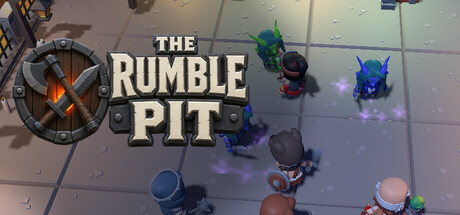
The Rumble Pit is made by one person, and generative AI tools were part of how it was built.
Music: the tracks you hear in the menus and in the twelve dungeons were generated with a local AI music model, from a written brief for each place, then cut, looped and mixed by hand.
2D art: the interface icons, the class and specialisation emblems, the dungeon thumbnails, the illustrated boss backdrops and the logo were produced with image generation tools, then cropped, cleaned up and colour-matched by hand.
Text and code: much of the in-game text — talent names and descriptions, loot labels, boss briefings, the translation tables — and part of the source code were drafted with an AI assistant, then edited, tested and rewritten by hand.
Not AI-generated: the 3D models and animations (licensed art packs), and the sound effects (CC0 libraries).
Nothing is generated while you play. The game connects to no AI service and produces no new content at runtime — everything ships as a fixed file, checked before release.
As a solo developer, I made use of AI for generation of models and music to act as base components. These typically went through much manual editing afterwards.
Some AI was used for testing & improvements to code in some areas
AI image tools supported the creation of some 2D illustrations and promotional assets. Every asset was designed, reworked, and finished by our artists, and all writing, game design, and code are entirely human-made. Nothing in the game is AI-generated at runtime.
Some art assets, localized text, and store marketing materials were created with the assistance of generative AI during development, then reviewed, edited, and integrated by the developer. The game does not use generative AI to create content during gameplay.
Generative AI was used in a limited, supporting role during development:
• Portions of this store page description were drafted with the help of AI text tools and then reviewed and edited by the developer.
• A small number of icons (used on the store page) were created with the assistance of AI image generation tools and refined by the developer.
The game itself does not use generative AI at runtime.
Some assets in Crown Cribbage were made with the help of generative AI tools:
- in-game music was generated with AI music tools
- capsule/key art
- marketing copy drafts
- assistance with programming
One point of emphasis:
The computer opponents in this game are not generative AI. They are hand-written heuristics, a fixed set of rules for discarding and pegging, tuned by
difficulty.
They see only what you see. They do not look at your hand, and nothing about them is generated while you play.
No AI content of any kind is created during a match.
This game uses generative AI tools to help create static visual assets, including card illustrations and background artwork. All AI-generated content is produced during development and does not change during gameplay — nothing is generated in real time.
Generative AI was used during development to create a small amount of temporary placeholder imagery. AI-generated content is limited to pre-generated visual assets and no AI content is generated during gameplay.
Some character, costume, and promotional artwork was created with the assistance of generative AI image tools, then selected, edited, and assembled by the developer. There is no live AI generation during gameplay, and the game does not connect to external AI services.
This game’s store page key art, capsules, and marketing images were created with the assistance of generative AI tools. The game experience itself was developed independently.
Portions of the game's code were written with AI assistance and reviewed, tested and integrated by the developer. Localization into non-English languages was machine-assisted and human-reviewed. Some 2D concept/marketing artwork was AI-assisted and manually refined. All gameplay, game design and audio are human-made. The game does not generate any content with AI at runtime.
Generative AI tools were only used to assist with writing some C# code scripts during development and to translate/draft the text descriptions for the Steam Store page. There are no AI-generated visual (art/UI) or audio assets included in the game.
Generative AI was used to create artwork for the in-game How to Play instructional image. All other game artwork and visual assets were created by the developer.
This game uses a few assets purchased from FAB which may or may not contain AI-generated content. I have personally done my best to scrub AI out of those few purchased assets. There are also two images and two short instrumentals, and that's it.
AI-assisted tools were used during the development of this game to help with portions of the programming process, the creation of some visual assets, and certain audio assets. All AI-assisted content was reviewed, refined, and integrated by the development team before release. The game does not use generative AI to create content during gameplay and does not rely on external AI services while running.
Some of the artwork in The Dawn Forge — the item, building, unit and boss illustrations — and the spoken narration lines were created using AI image and voice tools, working from the developer's own art direction and scripts, and then composed and edited by hand. Nothing is generated while you play: the game runs entirely offline and never contacts an AI service.
Some pre-rendered assets were created with the assistance of generative AI tools during development: the key art illustration, the store capsule images derived from it, and parts of the localization (translated interface text). All AI-assisted content was reviewed and curated by the developer. The game does not generate any content with AI at runtime.
Generative AI tools were used during development to assist with code and selected pre-generated game and marketing content. All shipped content was reviewed by the developer. No AI content is generated during gameplay.
Generative AI may have been used in creating pre-rendered content for this game. All such content is the result of a human-led artistic and creative process
We use generative AI to assist with writing and localizing the game's text. All art and audio are procedurally generated by our own code or sourced from CC0 libraries. No content is generated by AI in real time during gameplay.
I used AI as an aid for a few things: parts of the writing, the translations into
French, Spanish and Italian, and some of the more complex store artwork. Everything
that came out of it was reworked by hand before it went in. It isn't something I'm a
fan of, but as a solo developer without a studio behind me, some things are simply out
of reach otherwise.
As an indie studio, we use generative AI to continue developing the games we love. It allows us to accomplish tasks that would otherwise be beyond our small team's capacity.
Generative AI was used during the development of the game's user interface and to assist with creating parts of the game's audio. Every AI-generated asset was carefully reviewed and refined before being included in the final game.
Some in-game background artwork was created using generative AI as source material, then manually edited, processed, and optimized by the developer.
Some music was arranged using generative AI services based on original compositions previously written by the developer, then manually edited and remastered.
Generative AI was also used to assist with translation and editing of some store-page text and English localization, with the final content reviewed and edited by the developer.
The game does not generate any AI content at runtime.
Generative AI tools were used during development to assist with the creation of selected promotional and visual assets. During gameplay, an AI-based analysis service may also be used to evaluate submitted player-created clay sculptures and determine how closely they match the given challenge.
Generative AI tools were used during development to assist in creating and refining some pre-generated visual assets, including selected in-game backgrounds. All AI-assisted content was reviewed, edited, and integrated by the development team. The game does not generate content using AI during gameplay.
Generative AI was used during development to create all visual art assets and music featured in the game. The generated content was reviewed, selected, and integrated by the developer. The game does not generate AI content during gameplay.
Generative AI was used during development to assist with editing and reviewing some narrative text and with localization. AI-assisted text was reviewed and edited manually by the developer before being included in the game. No AI-generated content is created live during gameplay.
Artwork, music and parts of the text were created with AI tools and individually curated, refined and hand-fitted into the game by the developer. No AI content is generated at runtime.
AI tools were used during development to assist with the creation of certain 2D visual assets. Specifically, AI was used to generate some images used on the Steam store page and to assist in creating character portrait artwork used in the game. These AI-generated assets were reviewed and incorporated into the final game by the development team.
The Rumble Pit is made by one person, and generative AI tools were part of how it was built.
Music: the tracks you hear in the menus and in the twelve dungeons were generated with a local AI music model, from a written brief for each place, then cut, looped and mixed by hand.
2D art: the interface icons, the class and specialisation emblems, the dungeon thumbnails, the illustrated boss backdrops and the logo were produced with image generation tools, then cropped, cleaned up and colour-matched by hand.
Text and code: much of the in-game text — talent names and descriptions, loot labels, boss briefings, the translation tables — and part of the source code were drafted with an AI assistant, then edited, tested and rewritten by hand.
Not AI-generated: the 3D models and animations (licensed art packs), and the sound effects (CC0 libraries).
Nothing is generated while you play. The game connects to no AI service and produces no new content at runtime — everything ships as a fixed file, checked before release.
As a solo developer, I made use of AI for generation of models and music to act as base components. These typically went through much manual editing afterwards.
Some AI was used for testing & improvements to code in some areas