Public Steam disclosure research25,394 disclosures tracked
Where do games disclose AI use?
Search developers’ Steam disclosures, compare classified AI use across
games, and follow recorded changes.
This index adds cross-game classifications and statistics to
statements published on individual store pages.
Groups reflect automatic analysis of public disclosures; mature records are excluded. These counts do not measure AI use across all of Steam.
Missing or unclear statements cannot establish whether a game uses AI.
Generative AI tools were used during development to create and refine some pre-generated visual assets, music, sound effects, and promotional artwork. No text or narrative content was generated using AI. All AI-assisted materials were reviewed, edited, and integrated by the development team. The game does not use generative AI at runtime, and no player input or personal data is sent to any AI service.
Pre-generated content only; nothing is generated at runtime. Some sound effects, Some textures and images, The in-game dialogue and the Spanish/English texts were written with the help of an AI assistant and reviewed by the developer.
This game uses generative artificial intelligence to assist in the creation of its original soundtrack.
All tracks were composed with AI support, resulting in a music selection inspired by J-Rock, K-Pop, electronic music, and classic football games from the 90s/2000s. The goal was to deliver an energetic, nostalgic, and vibrant atmosphere that perfectly matches the 2.5D pixel art aesthetic of Free Kick.
Artificial intelligence was used exclusively as a production tool during development. The soundtrack is not generated in real time and does not dynamically adapt to match conditions — all tracks are fixed, curated, and manually integrated to ensure quality and consistency throughout the experience.
Spudfall's visuals and music are created entirely by the game's own code as you play. There are no image, sprite, or audio files. The developer used an AI assistant to help design and write that code, including the neon visual style and the synthesized soundtrack, and to draft the store page text. Trailers and screenshots show real gameplay. The game does not generate any content with AI while you play.
Generative AI tools were used to create some pre-generated visual assets for the game and its Steam store materials. All outputs were reviewed and edited by the developer. The game does not generate content during gameplay.
Master Builders was created through close collaboration between a human developer and AI tools: the concept, rules, balance, narrative, and every creative decision came from the developer, while AI assisted with coding and image production to the developer's exact specifications.
Generative AI was used during development to create some 2D artwork, including machines, enemies and environments, and to assist with in-game text, English and German localization, and store materials. These are pre-generated assets and texts.
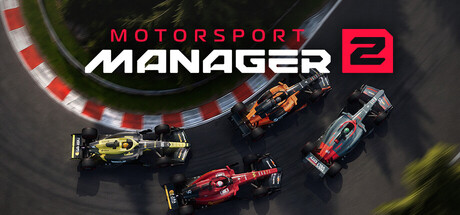
Generative AI is being used during development solely to create character head portraits. It enabled us to create thousands of portrait variations across three age stages, helping the large cast of characters feel more varied, immersive and realistic while allowing characters to visibly age during long careers.
Every portrait is created in advance and checked by the Playsport art team before being included in the game. Nothing is generated while the game is running. No other artwork in the game, including vehicles, decals, logos or clothing uses generative AI. AI-generated portraits can be disabled in the preferences menu.
Generative AI tools were used to assist in the creation of 2D pre-rendered artwork for this game. Specifically, AI was used to generate the promotional library capsules on the store page, as well as the 2D icon graphics for the upgrade cards shown during gameplay. All AI-generated assets were reviewed and manually edited to ensure quality and consistency with the game's art style.
AI tools were used to assist in creating selected promotional store assets and game assets. These materials were or will be later edited, refined, and finalized by human creators.
The altered paintings ("forgeries") were made by editing public-domain museum scans with generative AI image tools. Each one was reviewed by hand, colour-matched to its original scan and, where possible, composited back onto that scan so that only the altered detail differs. Some in-game English text (the questions that appear beside the paintings) and parts of this store description were drafted with an AI writing assistant and edited by the developer. The capsule art and screenshots are frames rendered by the game itself; the capsule art shows one of the AI-edited paintings. Nothing is generated by AI while the game runs.
This game uses generative AI to create some of its audio content. Background music tracks were generated using Suno, and sound effects (SFX) for menus were generated using ElevenLabs. All AI-generated audio was reviewed and curated by the developer. No gameplay code or puzzle logic is generated by AI at runtime; the use of AI is limited to pre-generated audio content included in the build.
Some visual assets used in the game, including selected artwork, character images, interface graphics, and cinematic images, were created with the assistance of generative AI tools. All generated assets were reviewed, selected, edited where necessary, and integrated into the final game by the developer.
The store page artwork (capsule images, header, library images and logo) was created with the help of generative AI tools. Part of the game's source code and development tools were also written with the help of AI coding assistants, then reviewed and integrated by the developer. The in-game content itself (3D visuals from licensed asset packs, CC0 sound effects, texts) is not AI-generated, and the game does not use generative AI while playing. All screenshots are captured from the actual game.
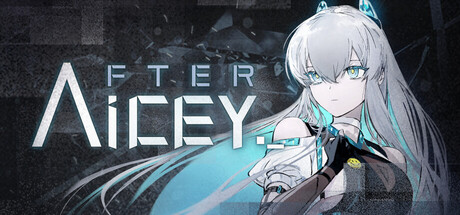
Our AI assistance is mainly focused on copy polishing (e.g., correcting typos and logical errors), a small amount of scene refinement and VFX for the second part of the game (the second part is a redesign of some original scenes from ICEY; after handcrafting the concept design and finishing the demo, we use AI to batch-reduce repetitive work), and some programming implementation and test cases.
In all other areas—such as concept design, character design (character illustrations), scene design and related design work, combat animation and VFX, and scene implementation (from hand-drawn 2D animation to final implementation)—there is no AI content at all. The specific iteration details are basically all in the development VLOG; if you're interested, feel free to look through it.
Generative AI tools were used during development to create portions of the artwork, character and environment assets, cinematic visuals, music, sound effects, voice recordings, text, localization, and store marketing materials. These assets are prepared in advance and incorporated into the game by Keke Studio. The game does not generate AI content or connect to third-party generative AI services during gameplay.
Generative AI was used during development to create some artwork, character animation assets, music, and promotional artwork. These assets were prepared before release. The game does not generate AI content during gameplay or connect to an AI service.
Artificial intelligence was used to assist in development, primarily for the front end, and AI generated content is used in game for text and voices via local models ran on the player's system or external models provided by the player.
This game was developed with the help of AI tools. AI assisted with programming, and some pre-generated content was created with AI assistance: pixel-art visual effects, background music, Japanese and Chinese translations, and parts of the store page text. All AI-assisted content was reviewed and edited by the developer. The game does not generate any content with AI while you play.
HELIOBANE was made with the help of generative AI tools.
- Assets: AI was used to generate some of the game's assets, including artwork, voice lines, sound effects, in-game text and translations. Artwork was edited and fitted to the game's 32-colour palette and style before use.
- Music: the soundtrack was made with a custom tracker built for agentic work, by an AI trained on a curated collection of public-domain tracker (MOD) music.
- Some store page and marketing art is also AI-assisted.
Nothing is generated while you play. All content is fixed in the build, and the game does not connect to any AI service.
Pre-generated AI-assisted illustrations are used in the Yustar studio opening animation and Steam store and library promotional artwork. AI also assisted with the written store descriptions. No content is generated using AI during gameplay.
During development, generative AI tools were used to assist in creating the 78 card illustrations, composing ambient background soundscapes, and drafting card interpretations. All assets were curated, edited, and assembled by the developer to build an atmospheric, cohesive divination sanctuary. The game does not generate live AI content during runtime.
The in-game text and the store page text, including the Korean, Japanese and Simplified Chinese translations, were written with the help of AI. Nothing is generated by AI while you play.
Game text and translations were created with the help of AI tools. The public build has no AI voices; it has no voice acting yet. The art is not made with generative AI: it comes from free CC0 asset packs plus shapes and textures built in code. Sound effects are synthesized by our own scripts. Nothing is generated by AI while you play.
Some visual content, including parts of the backgrounds and selected graphics, was created with the assistance of generative AI and subsequently edited for the game. These elements serve as temporary placeholders during development and are intended to be replaced with custom artwork once a suitable artist joins the team.
A Light in the Gloam uses pre-generated AI content. Nothing is generated while the game is running, and the game makes no network calls of any kind.
Visual art: all in-game art was generated with OpenAI's image model (gpt-image-1) from prompts written by hand, then processed by our own scripts, which downscale it, quantise it to a fixed palette and trim it before it is placed in the game. This covers 14 character portraits, 43 enemy and boss sprites, 63 item icons, 27 wall, floor and ceiling textures, 10 dungeon props, 21 achievement emblems, and 14 town and title backdrops. The store capsules and the client icons are crops of the title-screen generation rather than new images.
Music and sound: all 14 music tracks were generated with ElevenLabs' music model and all 47 sound effects with ElevenLabs' sound-effects model, both from written prompts and both post-processed by our own scripts for level and length. There is no voice acting and no synthesised speech anywhere in the game.
Writing and translation: the game's text, meaning item and monster descriptions, dialogue, menus and the story, was written with the assistance of a large language model and then edited by hand. The Brazilian Portuguese translation was produced the same way and reviewed against the English.
Some character portraits were created with generative AI. AI tools were also used to help write and translate the store page and to translate the game's text. The story and dialogue were written by our team.
This game uses generative AI to assist in creating some of its visual assets, including card illustrations, backgrounds, and interface artwork. These assets are reviewed, edited, and integrated by the developer. All AI-assisted content is created during development; the game does not generate AI content while you play.
Generative AI tools were used during development to create pre-generated visual assets, including 2D background artwork, environment graphics, character sprites, and promotional store imagery. All AI-generated content was created prior to release, and no generative AI runs in real-time during gameplay.
Some of this game's content was created with the help of generative AI tools during development:
- Artwork: some of the visual art in the game.
- Text: parts of the in-game writing, and the Simplified Chinese translation.
- Audio: a small number of sound effects. Most of the game's sound was made without AI.
Nothing is generated by AI while you play.
I'm a solo developer with a full-time job and a dad with two wonderful little kids. Full Count Club is a game I've wanted to make for a long time. AI tools are how I fit it into the time I have: they helped create the illustrated art, some sound effects, and some in-game writing such as newspaper headlines. I direct, select and edit all of it. The game does not generate any AI content while you play.
This game uses a mix of human and generative AI tools. AI was used in some visual art assets, code generation, and portions of the store page text. All writing in the game, voice acting, and music are fully human-created.
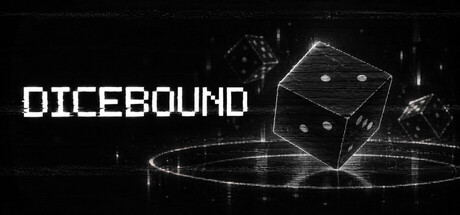
Dicebound uses generative AI as part of the development process for some pre-generated content. This includes certain visual assets and promotional/store materials, as well as some drafting support for interface text and localization. All AI-assisted content has been reviewed, edited, and curated by the developer before being included in the game or on the store page. Dicebound does not use live generative AI during gameplay, and players cannot generate content through AI in-game.
Generative AI tools were used during development to assist with concept development and the creation of some visual assets. AI-generated material was reviewed, edited, and integrated by the developer to fit the game’s visual style and design. Generative AI is not used during gameplay and no content is generated dynamically for players.
Generative AI tools were used during development to create and refine some pre-generated visual assets, music, sound effects, and promotional artwork. No text or narrative content was generated using AI. All AI-assisted materials were reviewed, edited, and integrated by the development team. The game does not use generative AI at runtime, and no player input or personal data is sent to any AI service.
Pre-generated content only; nothing is generated at runtime. Some sound effects, Some textures and images, The in-game dialogue and the Spanish/English texts were written with the help of an AI assistant and reviewed by the developer.
This game uses generative artificial intelligence to assist in the creation of its original soundtrack.
All tracks were composed with AI support, resulting in a music selection inspired by J-Rock, K-Pop, electronic music, and classic football games from the 90s/2000s. The goal was to deliver an energetic, nostalgic, and vibrant atmosphere that perfectly matches the 2.5D pixel art aesthetic of Free Kick.
Artificial intelligence was used exclusively as a production tool during development. The soundtrack is not generated in real time and does not dynamically adapt to match conditions — all tracks are fixed, curated, and manually integrated to ensure quality and consistency throughout the experience.
Spudfall's visuals and music are created entirely by the game's own code as you play. There are no image, sprite, or audio files. The developer used an AI assistant to help design and write that code, including the neon visual style and the synthesized soundtrack, and to draft the store page text. Trailers and screenshots show real gameplay. The game does not generate any content with AI while you play.
Generative AI tools were used to create some pre-generated visual assets for the game and its Steam store materials. All outputs were reviewed and edited by the developer. The game does not generate content during gameplay.
Master Builders was created through close collaboration between a human developer and AI tools: the concept, rules, balance, narrative, and every creative decision came from the developer, while AI assisted with coding and image production to the developer's exact specifications.
Generative AI was used during development to create some 2D artwork, including machines, enemies and environments, and to assist with in-game text, English and German localization, and store materials. These are pre-generated assets and texts.
Generative AI is being used during development solely to create character head portraits. It enabled us to create thousands of portrait variations across three age stages, helping the large cast of characters feel more varied, immersive and realistic while allowing characters to visibly age during long careers.
Every portrait is created in advance and checked by the Playsport art team before being included in the game. Nothing is generated while the game is running. No other artwork in the game, including vehicles, decals, logos or clothing uses generative AI. AI-generated portraits can be disabled in the preferences menu.
Generative AI tools were used to assist in the creation of 2D pre-rendered artwork for this game. Specifically, AI was used to generate the promotional library capsules on the store page, as well as the 2D icon graphics for the upgrade cards shown during gameplay. All AI-generated assets were reviewed and manually edited to ensure quality and consistency with the game's art style.
AI tools were used to assist in creating selected promotional store assets and game assets. These materials were or will be later edited, refined, and finalized by human creators.
The altered paintings ("forgeries") were made by editing public-domain museum scans with generative AI image tools. Each one was reviewed by hand, colour-matched to its original scan and, where possible, composited back onto that scan so that only the altered detail differs. Some in-game English text (the questions that appear beside the paintings) and parts of this store description were drafted with an AI writing assistant and edited by the developer. The capsule art and screenshots are frames rendered by the game itself; the capsule art shows one of the AI-edited paintings. Nothing is generated by AI while the game runs.
This game uses generative AI to create some of its audio content. Background music tracks were generated using Suno, and sound effects (SFX) for menus were generated using ElevenLabs. All AI-generated audio was reviewed and curated by the developer. No gameplay code or puzzle logic is generated by AI at runtime; the use of AI is limited to pre-generated audio content included in the build.
Some visual assets used in the game, including selected artwork, character images, interface graphics, and cinematic images, were created with the assistance of generative AI tools. All generated assets were reviewed, selected, edited where necessary, and integrated into the final game by the developer.
The store page artwork (capsule images, header, library images and logo) was created with the help of generative AI tools. Part of the game's source code and development tools were also written with the help of AI coding assistants, then reviewed and integrated by the developer. The in-game content itself (3D visuals from licensed asset packs, CC0 sound effects, texts) is not AI-generated, and the game does not use generative AI while playing. All screenshots are captured from the actual game.
Our AI assistance is mainly focused on copy polishing (e.g., correcting typos and logical errors), a small amount of scene refinement and VFX for the second part of the game (the second part is a redesign of some original scenes from ICEY; after handcrafting the concept design and finishing the demo, we use AI to batch-reduce repetitive work), and some programming implementation and test cases.
In all other areas—such as concept design, character design (character illustrations), scene design and related design work, combat animation and VFX, and scene implementation (from hand-drawn 2D animation to final implementation)—there is no AI content at all. The specific iteration details are basically all in the development VLOG; if you're interested, feel free to look through it.
Generative AI tools were used during development to create portions of the artwork, character and environment assets, cinematic visuals, music, sound effects, voice recordings, text, localization, and store marketing materials. These assets are prepared in advance and incorporated into the game by Keke Studio. The game does not generate AI content or connect to third-party generative AI services during gameplay.
Generative AI was used during development to create some artwork, character animation assets, music, and promotional artwork. These assets were prepared before release. The game does not generate AI content during gameplay or connect to an AI service.
Artificial intelligence was used to assist in development, primarily for the front end, and AI generated content is used in game for text and voices via local models ran on the player's system or external models provided by the player.
This game was developed with the help of AI tools. AI assisted with programming, and some pre-generated content was created with AI assistance: pixel-art visual effects, background music, Japanese and Chinese translations, and parts of the store page text. All AI-assisted content was reviewed and edited by the developer. The game does not generate any content with AI while you play.
HELIOBANE was made with the help of generative AI tools.
- Assets: AI was used to generate some of the game's assets, including artwork, voice lines, sound effects, in-game text and translations. Artwork was edited and fitted to the game's 32-colour palette and style before use.
- Music: the soundtrack was made with a custom tracker built for agentic work, by an AI trained on a curated collection of public-domain tracker (MOD) music.
- Some store page and marketing art is also AI-assisted.
Nothing is generated while you play. All content is fixed in the build, and the game does not connect to any AI service.
Pre-generated AI-assisted illustrations are used in the Yustar studio opening animation and Steam store and library promotional artwork. AI also assisted with the written store descriptions. No content is generated using AI during gameplay.
During development, generative AI tools were used to assist in creating the 78 card illustrations, composing ambient background soundscapes, and drafting card interpretations. All assets were curated, edited, and assembled by the developer to build an atmospheric, cohesive divination sanctuary. The game does not generate live AI content during runtime.
The in-game text and the store page text, including the Korean, Japanese and Simplified Chinese translations, were written with the help of AI. Nothing is generated by AI while you play.
Game text and translations were created with the help of AI tools. The public build has no AI voices; it has no voice acting yet. The art is not made with generative AI: it comes from free CC0 asset packs plus shapes and textures built in code. Sound effects are synthesized by our own scripts. Nothing is generated by AI while you play.
Some visual content, including parts of the backgrounds and selected graphics, was created with the assistance of generative AI and subsequently edited for the game. These elements serve as temporary placeholders during development and are intended to be replaced with custom artwork once a suitable artist joins the team.
A Light in the Gloam uses pre-generated AI content. Nothing is generated while the game is running, and the game makes no network calls of any kind.
Visual art: all in-game art was generated with OpenAI's image model (gpt-image-1) from prompts written by hand, then processed by our own scripts, which downscale it, quantise it to a fixed palette and trim it before it is placed in the game. This covers 14 character portraits, 43 enemy and boss sprites, 63 item icons, 27 wall, floor and ceiling textures, 10 dungeon props, 21 achievement emblems, and 14 town and title backdrops. The store capsules and the client icons are crops of the title-screen generation rather than new images.
Music and sound: all 14 music tracks were generated with ElevenLabs' music model and all 47 sound effects with ElevenLabs' sound-effects model, both from written prompts and both post-processed by our own scripts for level and length. There is no voice acting and no synthesised speech anywhere in the game.
Writing and translation: the game's text, meaning item and monster descriptions, dialogue, menus and the story, was written with the assistance of a large language model and then edited by hand. The Brazilian Portuguese translation was produced the same way and reviewed against the English.
Some character portraits were created with generative AI. AI tools were also used to help write and translate the store page and to translate the game's text. The story and dialogue were written by our team.
This game uses generative AI to assist in creating some of its visual assets, including card illustrations, backgrounds, and interface artwork. These assets are reviewed, edited, and integrated by the developer. All AI-assisted content is created during development; the game does not generate AI content while you play.
Generative AI tools were used during development to create pre-generated visual assets, including 2D background artwork, environment graphics, character sprites, and promotional store imagery. All AI-generated content was created prior to release, and no generative AI runs in real-time during gameplay.
Some of this game's content was created with the help of generative AI tools during development:
- Artwork: some of the visual art in the game.
- Text: parts of the in-game writing, and the Simplified Chinese translation.
- Audio: a small number of sound effects. Most of the game's sound was made without AI.
Nothing is generated by AI while you play.
I'm a solo developer with a full-time job and a dad with two wonderful little kids. Full Count Club is a game I've wanted to make for a long time. AI tools are how I fit it into the time I have: they helped create the illustrated art, some sound effects, and some in-game writing such as newspaper headlines. I direct, select and edit all of it. The game does not generate any AI content while you play.
This game uses a mix of human and generative AI tools. AI was used in some visual art assets, code generation, and portions of the store page text. All writing in the game, voice acting, and music are fully human-created.
Dicebound uses generative AI as part of the development process for some pre-generated content. This includes certain visual assets and promotional/store materials, as well as some drafting support for interface text and localization. All AI-assisted content has been reviewed, edited, and curated by the developer before being included in the game or on the store page. Dicebound does not use live generative AI during gameplay, and players cannot generate content through AI in-game.
Generative AI tools were used during development to assist with concept development and the creation of some visual assets. AI-generated material was reviewed, edited, and integrated by the developer to fit the game’s visual style and design. Generative AI is not used during gameplay and no content is generated dynamically for players.