Public Steam disclosure research27,030 disclosures tracked
Where do games disclose AI use?
Search developers’ Steam disclosures, compare classified AI use across
games, and follow recorded changes.
This index adds cross-game classifications and statistics to
statements published on individual store pages.
Groups reflect automatic analysis of public disclosures; mature records are excluded. These counts do not measure AI use across all of Steam.
Missing or unclear statements cannot establish whether a game uses AI.
Some visual assets and materials used in the game were created or enhanced with the help of AI tools during development.
All AI-assisted content was reviewed, edited, and integrated by the developer.
The game does not use AI to generate content during gameplay.
Thunder Infinity was developed by a single person with no resources or financial support.
The artwork for the project was produced by generative AI under strict artistic guidelines.
In the future, if the game is well-received and sells well, a redesign by professional artists could be considered.
Generative AI tools were used during development to assist with the creation of some pre-generated 2D artwork and static visual assets included in the game, Steam store page, and marketing materials. AI tools were also used as development assistance for portions of the code. All resulting content was completed and integrated before release. The game does not use generative AI during gameplay, does not connect to external generative AI services, and does not generate text, images, audio, or other content at runtime.
In order to provide accessibility, AI was used to create the narration for the tutorial and encyclopaedia. Also some of the background and encyclopaedia images were generated using AI, but will be replaced for 1.0 launch.
This game uses AI to power NPC behavior and dialogue during gameplay. The gameplay rules and overall game design are created and controlled by the development team.
The game uses a generative AI model to evaluate the sentences players construct during verbal battles. The AI analyzes the player's input sentence for grammatical coherence and contextual appropriateness, and returns a grade (e.g., 'Good', 'Great', 'Excellent'). The raw AI output is not displayed to players — only the graded result affects gameplay. No AI-generated text, images, or audio is shown directly to the player.
As a solo developer, I used AI tools as a foundation to expand the game's scope, manually refining and finalizing every asset to ensure the final result is a high-quality, handcrafted experience.
Heart Duels is a solo-developed game. I use AI-assisted tools for some art and audio. All assets are curated and integrated by me to create a cohesive experience.
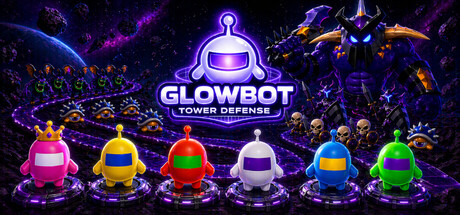
Some store assets (such as capsules and promotional images) were created with the assistance of AI tools due to limited resources during development. All gameplay, design, and core content of Glowbot Tower Defense are fully original and developed by me.
As future projects grow, I plan to collaborate with artists to further enhance the visual presentation.
Beaver's Pond's game design, creative direction, art direction, gameplay systems, and overall vision were conceived and directed by a solo human developer. All AI-generated content was curated, edited, and integrated by the developer.
AI was used to assist in the following areas:
All game code was written with AI assistance
Character sprite artwork was generated with AI assistance
Lure artwork was generated with AI assistance
Fish artwork was generated with AI assistance
All music tracks were generated with AI assistance
The game contains several code snippets and folder modifications that remain unsolved. There is no artificial intelligence that directly affects the gameplay.
Some store artwork and promotional images were created or edited using generative AI tools. These assets are used only as marketing/store page artwork for Neuralic Race Engineer. The product does not include or redistribute third-party game assets, logos, screenshots, car models, track assets, or proprietary content.
Neuralic Race Engineer uses AI/ML-based logic to analyze telemetry data and provide setup recommendations. It does not generate illegal or infringing user-facing content in real time.
This game uses generative AI to assist in creating certain in-game assets, including pixel-style character art, environmental backgrounds, and music. All AI-generated content was created using licensed commercial services.
Since I’m mostly developing this game on my own, I couldn’t have done it without a little help from AI. Portraits, some sound effects, and UI elements were refined or generated using AI. Still, most of the game is old-school manual work! I ran around with a microphone recording individual sounds, wrote entire music tracks, modeled and textured objects, and of course designed levels and much more, all with my own hands using the full range of available NO-AI classic tools. Over time, I’ve been removing more and more AI-generated content with the help of some talented friends.
AI tools were used to assist in creating certain promotional/store assets such as capsule images and marketing artwork.
No AI-generated content is included in gameplay, game assets, or user interactions.
We use AI as a creative assistant to refine our English descriptions and ensure they are easy to read and engaging (since we are not native speakers). In addition, some of the game’s illustrations were created with the help of generative AI tools and later refined by human artists.
Generative AI tools were used as an assistive resource during the planning and development of this game.
All AI-generated outputs were reviewed and refined by the development team before inclusion in the final product.
This game uses generative AI tools as part of the creative process, primarily during the creation of certain visual and musical elements.
All assets have been manually edited, adapted and integrated by the developer to ensure artistic consistency and quality within the game.
Generative AI tools were used as development assistance for scripting and for some marketing or store presentation assets.
All 3D models and core visual assets were created by the developer. The game does not use AI to generate content, code, images, audio, or text during gameplay, and it does not connect to any external AI services.
AI image generation tools were used to create some promotional artwork and store page images. The game does not connect to any AI services or generate AI content during play.
"The game utilizes generative AI tools for the creation of concept art, UI icons, and English-to-Turkish localization. These assets are pre-generated during the development phase and are fully reviewed and polished by our team to ensure quality and originality."
AI was used as a support tool across various aspects of development, particularly to assist with visuals and animations. The goal is not to replace human work, but to allow creative efforts to be focused where they matter most, ensuring the highest possible quality for the final game.
Some visual, audio, and narrative assets in We Die Below were created using AI-assisted tools as part of the development process. All such content was reviewed, edited, and refined by the development team to ensure consistency and quality.
Nexus Legacy is made by a solo developer using AI-assisted production tools. These tools were used during development to help with visual iteration, asset production, prototyping and code assistance, making a larger persistent MMO possible with a small production pipeline.
The final game is not a live AI generator. Gameplay design, balance, economy, progression, PvE/PvP rules, server logic, world structure, final visuals and updates are selected, reviewed, edited and maintained by the developer.
No live generative AI is used to create player-facing content while the game is running.
EQUILIBRIUM uses generative AI to power its core gameplay mechanic: the Policy Terminal.
LIVE-GENERATED CONTENT
When a player types a directive or law in natural language (e.g., "Abolish the luxury car tax"), the AI Engine analyzes the request in real time and generates a structured governmental dossier, including:
- Legislative feasibility analysis
- Budget impact and financial coverage
- Macroeconomic effects (GDP, debt, inflation)
- Social and political consensus projections
- Parliamentary vote simulation
Model used: Anthropic Claude, accessed via API.
Guardrails: AI output is constrained to a fixed set of structured fields defined by the developer. All numeric effects are clamped within bounds enforced by the simulation engine, so no AI output can produce values outside the game's defined ranges. The model operates only on the simulation state provided to it and cannot invent game data: commands that cannot be mapped to a valid government action are refused, and the player is offered bounded policy alternatives instead. No image, audio, or user-data generation is involved, and no player data is used to train any model.
Because responses are generated at runtime, outputs vary between playthroughs: the same directive may produce different wording and different outcomes.
PRE-GENERATED CONTENT
The game's background music track was generated using AI tools during development and ships with the game.
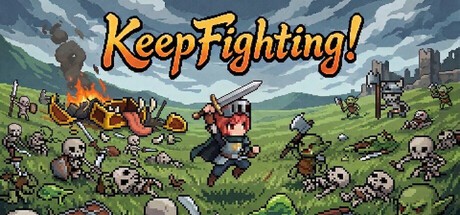
Some visual assets and promotional materials for KeepFighting were created with the assistance of generative AI tools.
All AI-generated content was reviewed, refined, and integrated by the developer to ensure consistency with the game's artistic direction and quality standards.