Public Steam disclosure research25,383 disclosures tracked
Where do games disclose AI use?
Search developers’ Steam disclosures, compare classified AI use across
games, and follow recorded changes.
This index adds cross-game classifications and statistics to
statements published on individual store pages.
Groups reflect automatic analysis of public disclosures; mature records are excluded. These counts do not measure AI use across all of Steam.
Missing or unclear statements cannot establish whether a game uses AI.
AI was used initially to prototype a design of the logo for the 1st game Astro Fighters.
This design has been manually adjusted from the AI concept and now forms a part of the Astro Fighters and Astro Fighters 2 logo designs.
Some UI icons were created using AI.
The English, French, and Russian localizations were made by human translators; all other localizations were made with AI.
Some assets and designs were optimized and polished using AI tools. AI was also used to assist with grammar and text corrections for dialogues and in-game text. All game content, art, and core gameplay were created by hand by the development team. No gameplay content or characters are generated by AI.
This game does not contain any AI-generated visual or audio assets. I only used AI as a tool for:
- Brainstorming and idea generation
- Assistance with translations and wording
- Improvements to certain code sections and algorithms
We occasionally used generative AI as an assistive tool to refine certain visual assets, enhance texture resolutions, and process minor audio elements. These tools were used sparingly to support our production workflow, and all final content has been manually reviewed and polished by our team to ensure it meets our quality and legal standards.
Escape the Maze was developed by a solo developer. Some elements of the game, including store page visuals and text, were created using generative AI tools during development. All final assets have been carefully reviewed and manually refined to ensure accuracy, quality, and full compliance with Steam’s content guidelines.
The game also features AI-controlled enemy behavior, such as a zombie that chases players in the maze. However, no live-generated AI content is used during gameplay.
Some of the 2D sprite assets and promotional images (such as the store capsule artwork) were partially generated using AI tools. These AI outputs served as a foundation and were further edited and refined by the artists to ensure quality, consistency, and originality. No AI-generated content is created during gameplay, and AI was only one step in a multi-stage creative process.
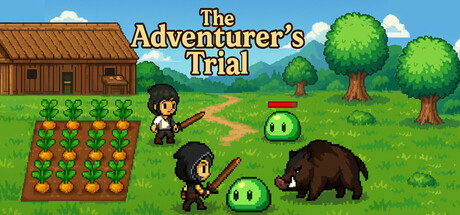
Some of the visual assets in The Adventurer’s Trial were initially created with the help of AI tools, and then carefully modified, refined, and integrated by hand to fit the game’s art style. All final in-game content has been reviewed and adjusted by the developer to ensure consistency and quality.
Generative AI was utilized during development to create Steam capsule designs, in-game UI assets, and the trailer music. All assets produced using AI are fully owned and licensed for commercial use by us.
OxyRail contains a vast amount of content, with over 516 obtainable items currently available and many more planned for future updates. AI-generated content represents only a very small portion of the game. Due to the large number of items, we use AI-assisted tools in the creation of some item icons, certain background music tracks, and a very small number of visual assets to improve consistency and controllability during content production.
All AI-assisted content is carefully reviewed, adjusted, and further refined by hand to ensure it meets the artistic and design standards of the game.
We will continue to improve the game and gradually replace existing AI-assisted content with manually created assets whenever possible, increasing the proportion of original content over time.
We use generative AI tools in a very limited way to create minor in-game image assets and a small amount of marketing materials, always with human oversight and input. All core game content is carefully designed, authored, and curated by our development team to ensure quality and originality.
The developer of Synergy Strike used AI-assisted tools as part of a solo development workflow. Audio, visuals, and code assistance were crafted using a curated set of generative tools all directed, reviewed, and shaped by a single human creator. Synergy Strike is handmade at its core.
We used generative AI tools during the development phase of the game to assist with the character controller code, the multiplayer system, and localization. We also used AI for language translation of the game’s store page and in-game texts. No AI-generated content is used during gameplay or at runtime.
We used AI tools (such as ChatGPT or Claude) to assist to a certain extent with C++ and Blueprint scripting during development. No AI-generated content is present in the final game assets. All visual, audio, and narrative content was created by the development team.
Sketch Play includes an in-game assistant called Scholia. When you ask her to look at a page, she reads your drawing and writes back her impressions, a few things to try next, and an experience-point reward. That written feedback is generated by Gemma 4 E2B, a small open-weights AI model.
Scholia cannot draw. She has no ability to generate images, alter your artwork, or add anything to the page. Everything in your sketchbook is drawn by you and the people you invite.
The model runs entirely on your own computer. No account or internet connection is required, nothing you draw is uploaded, and none of your work is used to train anything.
Her notes are one opinion, and she has biases.
AI was used initially to prototype a design of the logo for the 1st game Astro Fighters.
This design has been manually adjusted from the AI concept and now forms a part of the Astro Fighters and Astro Fighters 2 logo designs.
Some UI icons were created using AI.
The English, French, and Russian localizations were made by human translators; all other localizations were made with AI.
Some assets and designs were optimized and polished using AI tools. AI was also used to assist with grammar and text corrections for dialogues and in-game text. All game content, art, and core gameplay were created by hand by the development team. No gameplay content or characters are generated by AI.
This game does not contain any AI-generated visual or audio assets. I only used AI as a tool for:
- Brainstorming and idea generation
- Assistance with translations and wording
- Improvements to certain code sections and algorithms
We occasionally used generative AI as an assistive tool to refine certain visual assets, enhance texture resolutions, and process minor audio elements. These tools were used sparingly to support our production workflow, and all final content has been manually reviewed and polished by our team to ensure it meets our quality and legal standards.
Escape the Maze was developed by a solo developer. Some elements of the game, including store page visuals and text, were created using generative AI tools during development. All final assets have been carefully reviewed and manually refined to ensure accuracy, quality, and full compliance with Steam’s content guidelines.
The game also features AI-controlled enemy behavior, such as a zombie that chases players in the maze. However, no live-generated AI content is used during gameplay.
Some of the 2D sprite assets and promotional images (such as the store capsule artwork) were partially generated using AI tools. These AI outputs served as a foundation and were further edited and refined by the artists to ensure quality, consistency, and originality. No AI-generated content is created during gameplay, and AI was only one step in a multi-stage creative process.
Some of the visual assets in The Adventurer’s Trial were initially created with the help of AI tools, and then carefully modified, refined, and integrated by hand to fit the game’s art style. All final in-game content has been reviewed and adjusted by the developer to ensure consistency and quality.
Generative AI was utilized during development to create Steam capsule designs, in-game UI assets, and the trailer music. All assets produced using AI are fully owned and licensed for commercial use by us.
OxyRail contains a vast amount of content, with over 516 obtainable items currently available and many more planned for future updates. AI-generated content represents only a very small portion of the game. Due to the large number of items, we use AI-assisted tools in the creation of some item icons, certain background music tracks, and a very small number of visual assets to improve consistency and controllability during content production.
All AI-assisted content is carefully reviewed, adjusted, and further refined by hand to ensure it meets the artistic and design standards of the game.
We will continue to improve the game and gradually replace existing AI-assisted content with manually created assets whenever possible, increasing the proportion of original content over time.
We use generative AI tools in a very limited way to create minor in-game image assets and a small amount of marketing materials, always with human oversight and input. All core game content is carefully designed, authored, and curated by our development team to ensure quality and originality.
The developer of Synergy Strike used AI-assisted tools as part of a solo development workflow. Audio, visuals, and code assistance were crafted using a curated set of generative tools all directed, reviewed, and shaped by a single human creator. Synergy Strike is handmade at its core.
We used generative AI tools during the development phase of the game to assist with the character controller code, the multiplayer system, and localization. We also used AI for language translation of the game’s store page and in-game texts. No AI-generated content is used during gameplay or at runtime.
We used AI tools (such as ChatGPT or Claude) to assist to a certain extent with C++ and Blueprint scripting during development. No AI-generated content is present in the final game assets. All visual, audio, and narrative content was created by the development team.
Sketch Play includes an in-game assistant called Scholia. When you ask her to look at a page, she reads your drawing and writes back her impressions, a few things to try next, and an experience-point reward. That written feedback is generated by Gemma 4 E2B, a small open-weights AI model.
Scholia cannot draw. She has no ability to generate images, alter your artwork, or add anything to the page. Everything in your sketchbook is drawn by you and the people you invite.
The model runs entirely on your own computer. No account or internet connection is required, nothing you draw is uploaded, and none of your work is used to train anything.
Her notes are one opinion, and she has biases.