Public Steam disclosure research25,376 disclosures tracked
Where do games disclose AI use?
Search developers’ Steam disclosures, compare classified AI use across
games, and follow recorded changes.
This index adds cross-game classifications and statistics to
statements published on individual store pages.
Groups reflect automatic analysis of public disclosures; mature records are excluded. These counts do not measure AI use across all of Steam.
Missing or unclear statements cannot establish whether a game uses AI.
The main uses of AI in the creation of this game were for minor coding problems, such as what sorting algorithm to use and detecting bugs occasionally. The second main use was the art. The majority of art in the game is ai generated, but there are no influences on the generation based off of real images. All generated images are random and pre-generated.
Keep in mind none of the names in the game are ai generated.
This game used generative AI for the following elements :
-The backgrounds in the game (generated by Lornn, Two Orcs and lehxra, available online)
-The representation of Hotel Perkkow (Used in the store and library images)
AI-generated materials are not used directly.
of some of the character illustrations are used
Posing, facial expressions, and composition of some character illustrations are used as references.
I draw by hand while looking at the AI-generated materials.
The artwork “Girl with Flowers” has been replaced with a newly illustrated piece by KOHSKE.
We will continue to progressively replace in-game artworks—such as paintings displayed in the corridors—that contain elements inspired by AI reference materials.
No AI tools were used in the creation of the scenario, characters, or UI elements.
We have sections that use AI:
1. On the character selection page of the game, the character's voiceover is created by AI
2. On the character selection page of the game, the first version of the character's sketch is created by AI.
Illustrations in the game's "event" system are created by AI.
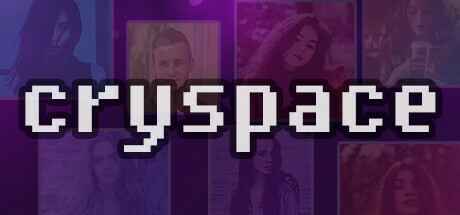
Some music and graphical elements (ie. music that plays during scenes, pictures that display during scenes, etc.) were edited and/or created using AI. These technologies are used sparsely throughout the game, and the entirety of Cryspace's story, characters, UI elements, etc. were not created using any AI technologies.
DeepL has been used as a tool for aiding the translations, AI has been used for image generation (a complete list can be found in-game), a single song is AI-generated song (can you spot it? ;) It has been exclusively added for the Steam release. In a recent update, we also added optional AI-background music for a part of the game.
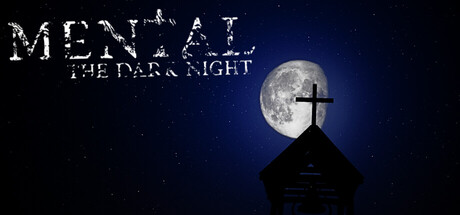
The AI integrated into Mental creates a dynamic experience by automatically generating text, textures, sound, lighting, and gameplay mechanics. Each session offers unique stories, customized visual environments, and challenges adapted in real-time to your actions, ensuring a consistently fresh and immersive adventure.
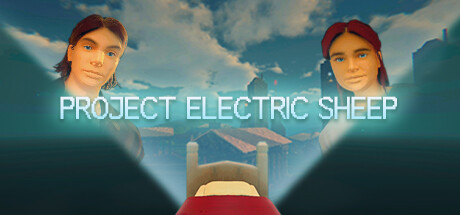
Project Electric Sheep uses generative AI to create character conversations inspired by your dream prompts, as well as to tailor dream worlds to your chosen topics. Below is some more information about which generative AI services we're using in PES, and how:
1. We use ChatGPT to generate NPC dialogue when dream worlds are created and when you reply to an NPC. We use AWS to generate voices for our NPCs.
2. We also use ChatGPT to write in-game world building details, such as graffiti and advertisements, as well as to create the dream description that displays on the dream loading screen.
3. We use DALL·E 2 to paint in-game murals inspired by your dream prompt.
4. Lastly, during the dream generation phase, we use ChatGPT to make creative decisions about world design based on the given dream prompt.
Players can create and modify games using text prompts. The game uses AI (LLM) to understand the player's request and then uses LLM to construct the game using a pre-defined asset library.
We used AI-assisted tools to help create pre-generated assets such as concept art variations and promotional material. All final in-game assets are fully owned and licensed by us, and do not include illegal or infringing content. The game does not use live AI generation during gameplay.
Generative Artificial Intelligence (AI) Disclosure for NecroNomNomNom: Eldritch Horror Dating
From the very outset, "NecroNomNomNom: Eldritch Horror Dating" was conceived as a cosmic horror experiment in itself. Instead of passively wondering how generative AI might impact creative professions, we decided to confront that existential dread head-on. Our core design philosophy was to push the boundaries of AI's capabilities, attempting to completely replace human creative input and, in essence, make ourselves obsolete in the game development process.
Our findings, however, have been profoundly ironic and surprisingly reassuring. While generative AI played a significant role in various aspects of the game's development (including concept generation, preliminary asset creation, dialogue outlines, and certain code snippets), we discovered that achieving a cohesive, engaging, and polished experience still required substantial human oversight and manual intervention. AI, in its current form, proved to be an invaluable tool for iteration and initial ideation, but it could not replicate the nuanced artistic direction, problem-solving, and quality assurance that only human creativity and discernment can provide.
Ultimately, this experiment demonstrated that the path to creative obsolescence is far from straightforward. In a twist we didn't anticipate, the very act of attempting to replace ourselves with AI actually created new roles and opportunities for human collaborators in areas where AI fell short. This project, born from a fear of replacement, has, against all odds, generated more work for creative professionals rather than eliminating it. The human touch remains indispensable in bringing a truly unique and compelling vision to life.
AI generated images have been used to as a starting point for icons, characters, and elements of some backgrounds. In nearly every case images are then digitally painted over to remove unwanted artifacts and give all the artwork a similar style. Every effort has been made to produce unique content that does not infringe on any copyright.
This game heavily uses AI to live-generate in-game content such as text, images, and sound effects. It also uses AI to make a variety of game mechanics decisions in real time.
In Zero Factory, there is no option for users to generate content using AI or other means that could infringe on intellectual property rights. The game’s content is fully curated and controlled by the development team, ensuring that any assets or user interactions within the game are legally compliant and original.
AI was utilized as a tool during the creative process to enhance the storytelling and dialogue. All other aspects of the game’s content were created manually.
This game may contain parts of Audio and / or Artwork customized with the help of AI Generation derived from Art we own commercial rights to use, or artwork done by our studio.
AI tools were used during the pre-production phase to generate concept art and visual references to help establish the game's atmosphere and mood. All final in-game assets were created or modified by our development team. No AI-generated content is created in real-time during gameplay.
The Art Director chose a composition for each background.
They were then made by professional artists or, for a few, bought on Adobe Stock.
Finally, the art director enhanced each background in Photoshop and also through LeonardoAI.
By integrating OpenAI's technology, users can generate unique high-quality images that serve as components for their tabletop games. This feature requires a free external account created with your email address. The core application remains fully functional without registration.
A revolutionary new era in game development and entertainment, in Synthasia users can bring to life their stories or live those designed by others.
Multiple LLM models will be responsible of bringing to life a potentially infinite number of adventures.
In Synthasia players load "World files" which include locations and descriptions and other informations pertinent to the story they want to tell, LLMs will then take those elements and create a rich text adventure around them with lively characters and unscripted consequences. .
The main uses of AI in the creation of this game were for minor coding problems, such as what sorting algorithm to use and detecting bugs occasionally. The second main use was the art. The majority of art in the game is ai generated, but there are no influences on the generation based off of real images. All generated images are random and pre-generated.
Keep in mind none of the names in the game are ai generated.
This game used generative AI for the following elements :
-The backgrounds in the game (generated by Lornn, Two Orcs and lehxra, available online)
-The representation of Hotel Perkkow (Used in the store and library images)
AI-generated materials are not used directly.
of some of the character illustrations are used
Posing, facial expressions, and composition of some character illustrations are used as references.
I draw by hand while looking at the AI-generated materials.
The artwork “Girl with Flowers” has been replaced with a newly illustrated piece by KOHSKE.
We will continue to progressively replace in-game artworks—such as paintings displayed in the corridors—that contain elements inspired by AI reference materials.
No AI tools were used in the creation of the scenario, characters, or UI elements.
We have sections that use AI:
1. On the character selection page of the game, the character's voiceover is created by AI
2. On the character selection page of the game, the first version of the character's sketch is created by AI.
Illustrations in the game's "event" system are created by AI.
Some music and graphical elements (ie. music that plays during scenes, pictures that display during scenes, etc.) were edited and/or created using AI. These technologies are used sparsely throughout the game, and the entirety of Cryspace's story, characters, UI elements, etc. were not created using any AI technologies.
DeepL has been used as a tool for aiding the translations, AI has been used for image generation (a complete list can be found in-game), a single song is AI-generated song (can you spot it? ;) It has been exclusively added for the Steam release. In a recent update, we also added optional AI-background music for a part of the game.
The AI integrated into Mental creates a dynamic experience by automatically generating text, textures, sound, lighting, and gameplay mechanics. Each session offers unique stories, customized visual environments, and challenges adapted in real-time to your actions, ensuring a consistently fresh and immersive adventure.
Project Electric Sheep uses generative AI to create character conversations inspired by your dream prompts, as well as to tailor dream worlds to your chosen topics. Below is some more information about which generative AI services we're using in PES, and how:
1. We use ChatGPT to generate NPC dialogue when dream worlds are created and when you reply to an NPC. We use AWS to generate voices for our NPCs.
2. We also use ChatGPT to write in-game world building details, such as graffiti and advertisements, as well as to create the dream description that displays on the dream loading screen.
3. We use DALL·E 2 to paint in-game murals inspired by your dream prompt.
4. Lastly, during the dream generation phase, we use ChatGPT to make creative decisions about world design based on the given dream prompt.
Players can create and modify games using text prompts. The game uses AI (LLM) to understand the player's request and then uses LLM to construct the game using a pre-defined asset library.
We used AI-assisted tools to help create pre-generated assets such as concept art variations and promotional material. All final in-game assets are fully owned and licensed by us, and do not include illegal or infringing content. The game does not use live AI generation during gameplay.
Generative Artificial Intelligence (AI) Disclosure for NecroNomNomNom: Eldritch Horror Dating
From the very outset, "NecroNomNomNom: Eldritch Horror Dating" was conceived as a cosmic horror experiment in itself. Instead of passively wondering how generative AI might impact creative professions, we decided to confront that existential dread head-on. Our core design philosophy was to push the boundaries of AI's capabilities, attempting to completely replace human creative input and, in essence, make ourselves obsolete in the game development process.
Our findings, however, have been profoundly ironic and surprisingly reassuring. While generative AI played a significant role in various aspects of the game's development (including concept generation, preliminary asset creation, dialogue outlines, and certain code snippets), we discovered that achieving a cohesive, engaging, and polished experience still required substantial human oversight and manual intervention. AI, in its current form, proved to be an invaluable tool for iteration and initial ideation, but it could not replicate the nuanced artistic direction, problem-solving, and quality assurance that only human creativity and discernment can provide.
Ultimately, this experiment demonstrated that the path to creative obsolescence is far from straightforward. In a twist we didn't anticipate, the very act of attempting to replace ourselves with AI actually created new roles and opportunities for human collaborators in areas where AI fell short. This project, born from a fear of replacement, has, against all odds, generated more work for creative professionals rather than eliminating it. The human touch remains indispensable in bringing a truly unique and compelling vision to life.
AI generated images have been used to as a starting point for icons, characters, and elements of some backgrounds. In nearly every case images are then digitally painted over to remove unwanted artifacts and give all the artwork a similar style. Every effort has been made to produce unique content that does not infringe on any copyright.
This game heavily uses AI to live-generate in-game content such as text, images, and sound effects. It also uses AI to make a variety of game mechanics decisions in real time.
In Zero Factory, there is no option for users to generate content using AI or other means that could infringe on intellectual property rights. The game’s content is fully curated and controlled by the development team, ensuring that any assets or user interactions within the game are legally compliant and original.
AI was utilized as a tool during the creative process to enhance the storytelling and dialogue. All other aspects of the game’s content were created manually.
This game may contain parts of Audio and / or Artwork customized with the help of AI Generation derived from Art we own commercial rights to use, or artwork done by our studio.
AI tools were used during the pre-production phase to generate concept art and visual references to help establish the game's atmosphere and mood. All final in-game assets were created or modified by our development team. No AI-generated content is created in real-time during gameplay.
The Art Director chose a composition for each background.
They were then made by professional artists or, for a few, bought on Adobe Stock.
Finally, the art director enhanced each background in Photoshop and also through LeonardoAI.
By integrating OpenAI's technology, users can generate unique high-quality images that serve as components for their tabletop games. This feature requires a free external account created with your email address. The core application remains fully functional without registration.
A revolutionary new era in game development and entertainment, in Synthasia users can bring to life their stories or live those designed by others.
Multiple LLM models will be responsible of bringing to life a potentially infinite number of adventures.
In Synthasia players load "World files" which include locations and descriptions and other informations pertinent to the story they want to tell, LLMs will then take those elements and create a rich text adventure around them with lively characters and unscripted consequences. .