Public Steam disclosure research26,946 disclosures tracked
Where do games disclose AI use?
Search developers’ Steam disclosures, compare classified AI use across
games, and follow recorded changes.
This index adds cross-game classifications and statistics to
statements published on individual store pages.
Groups reflect automatic analysis of public disclosures; mature records are excluded. These counts do not measure AI use across all of Steam.
Missing or unclear statements cannot establish whether a game uses AI.
AI was used to generate art pieces for the Steam Store Page as placeholder. As the developing continues and feedback from the community comes, those placeholders will be changed to real art done by real persons.
BROKEN SOUL : Boss Rush is a solo-developed game, and generative AI tools were used during development to assist with the creation of some visual assets and promotional materials. However, the game’s ideas, combat design, and system logic were all personally conceived and implemented, and every piece of content that appears in the final game was also directly selected, edited, and reviewed before completion. This is not a game that was made easily, but rather one that was brought to completion by making full use of every available tool and resource. If the game receives greater support in the future, there are plans to further expand and improve various elements, including the art assets, to an even higher level of quality. The game does not include any functionality that generates content with generative AI in real time during gameplay.
AI is used to generate in-game characters, including their visual traits, background concepts, and gameplay attributes. When players create a character, the Gen-AI system produces unique variations based on predefined rules and developer-designed parameters.
The AI functions solely as a content generation tool to enhance gameplay variety. It does not collect, store, or learn from personal player data.
Divookoa is primarily handcrafted, next-generation software and does not rely on AI-generated content as part of the player-facing experience.
Generative AI is used selectively within the development process in the following areas:
- Refinement of marketing materials (written content, visual compositions)
- Research and prototyping during R&D phases
- Limited graphical asset generation (e.g., icons, non-core UI elements)
- Localization support (translation and adaptation of text)
No AI-generated content is directly shipped as part of the core gameplay experience.
This game uses generative AI for a limited amount of pre-made content created during development, including some achievement icons and certain voice lines we could not perform ourselves. No AI-generated content is created during gameplay, and the game does not connect to any external third-party AI services while you play.
Generative AI tools were used during the development of this game to create some of the 2D visual assets, such as background art and certain environmental textures. All AI-generated content has been reviewed and manually edited by the development team to ensure quality and consistency with the game's overall artistic style.
Generative AI tools may be used during production for some localization and minor audio elements. Core gameplay content and game artwork are not created using AI.
I use token-prediction tools to help create certain in-game background assets, including environment textures, secondary NPC voices, parts of the soundtrack, and translations into several languages.
My Music Label leverages generative artificial intelligence to enhance your gaming experience. All in-game images, music-related assets, and even parts of the code are generated using AI technology.
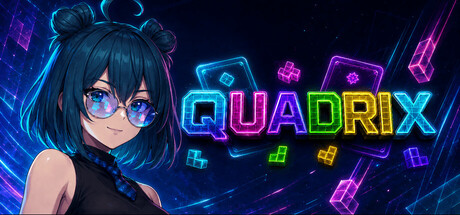
Some of the pre-made visual elements used in Quadrix—including certain card images/templates, game music, and some game mode icons—were created with the help of generative AI tools. These elements were reviewed, selected, and refined by the developer before being added to the game to ensure they align with the game’s visual style and usability requirements. Quadrix does not use real-time generative AI during gameplay, and players cannot generate AI-generated content within the game.
Some background scenes, supporting character artwork, music, and localization text in this game were created with the assistance of AI generation tools. All main character artwork, UI design, and core visual assets were created by human artists.
The game features a multilingual system, with some languages processed using AI.
Some UI elements and game scene components were designed with AI assistance.
Game plugin code was processed using AI.
Some game music, sound effects, and trailer music were also processed using AI.
Artificial: Proxy Bar uses artificial intelligence to generate dynamic dialogue content in real time.
The game integrates AI technologies including Ollama, OpenAI Whisper (speech recognition), and Google Gemma language models. Because of this, in-game conversations and responses are generated automatically and may be unpredictable.
AI-generated content may be inaccurate, nonsensical, inappropriate, or offensive. The developer does not guarantee the accuracy or suitability of AI-generated content and is not responsible for outputs produced by the AI systems.
By using the AI features in the game, players acknowledge that they interact with AI-generated content at their own discretion and risk.
Music: AI was used to generate the initial tracks, but every song was then heavily edited, rearranged, and mastered by a human. Nothing went straight from the algorithm to your headphones.
I'm a game/level designer so I used visual scripting to make games. AI was used to generate the code of some elements of the game that were too complicated to do in visual scripting. SFX and Voices were also generated by AI.
GOLF+ uses AI-assisted tools in limited areas of development such as in-game voice-over audio and select 2D visual assets, such as battle medals. Additionally, AI tools are used to assist in the creation of some marketing materials.
Some in-game art is created with AI-assisted workflows.
Players can also use AI to generate their own characters from photos, making each hero feel more personal.
This game includes content created with the assistance of AI tools.
AI was used to assist in generating some store page text, parts of the game code, and background music.
All AI-assisted content has been reviewed and curated by the developer before being included in the final product.
Some of the visual materials in this game are created with the assistance of generative artificial intelligence, including some display images on the store page and some art resources within the game.
HEME is a solo project created by a developer pursuing a dream without formal training. To bring this vision to life, Generative AI was used as a primary collaborator throughout the development:
Art & Graphics: AI assisted in creating concept art, environmental designs, and refining visual assets to match the game's emotional tone.
Coding & Technical: AI served as a mentor and technical assistant to write, debug, and optimize game logic within the Unity engine.
Narrative & Translation: AI helped in refining the script and ensuring the dramatic elements are effectively communicated in both Thai and English.
Development Support: Beyond technical tasks, AI served as a constant source of guidance and support for the solo developer during this challenging journey.
AI tools were used in a limited capacity to assist in the creation of certain visual assets for store and marketing presentation (such as background elements and minor graphical components). All final content was reviewed, edited, and approved by the development team.
Generative AI tools were used solely to assist in creating the logo and promotional art featured on this Steam store page. No generative AI was used in the creation of the game itself—all in-game assets, code, writing, and gameplay mechanics are 100% handcrafted by the development team.
Generative AI was used during the development process to enhance and diversify the variety of card assets and narrative content. This technology allowed for the creation of a more expansive and unique library of scenarios, ensuring a richer and more varied gameplay experience for the player.
Generative AI was used during development only for early ideation and reference purposes. All final in-game assets, visuals, audio, writing, and gameplay content were created manually and are not AI-generated. The game does not use any live-generated AI content.