Public Steam disclosure research25,394 disclosures tracked
Where do games disclose AI use?
Search developers’ Steam disclosures, compare classified AI use across
games, and follow recorded changes.
This index adds cross-game classifications and statistics to
statements published on individual store pages.
Groups reflect automatic analysis of public disclosures; mature records are excluded. These counts do not measure AI use across all of Steam.
Missing or unclear statements cannot establish whether a game uses AI.
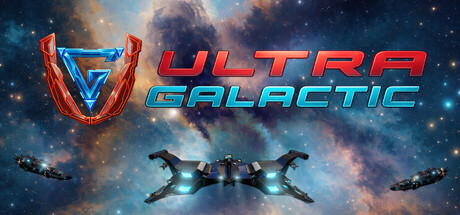
AI was used only for limited assistance, such as refining some logos, helping with music production, and translating texts into other languages.
All core game content — including ships, designs, graphics, 3D models, sound effects, and more — is handcrafted. Overall, the game was created using traditional development methods.
For the technical development of this title, I utilized AI tools to assist with writing and debugging the game's code, as I do not have a formal background in programming.
This game uses generative AI for the following purposes:
· Text language translation
The following languages are translated by local staff, not AI:
English
French
Italian
German
Dutch
Spanish
Spanish (Latin America)
Polish
Portuguese (Brazil)
Japanese
Korean
This game was built using a blend of digital tools, custom created datasets and software, and AI asset generation.
Human creativity and ingenuity can be positively amplified using AI. I hope this game can inspire independent creators and game designers to realize their own magic fairy fun dreams.
This game uses Spotify's Basic Pitch, a machine learning model for audio-to-MIDI transcription. This technology assists in converting audio files into note data for gameplay purposes and is entirely optional—players can choose whether or not to use this feature. It does not generate music, artwork, or other creative content; all such elements are created by human artists and composers.
– Some textures in the game were initially AI-generated and then significantly refined by hand in a graphics editor.
– Certain 3D assets began as AI-generated concepts but were readjusted or fully reworked in a 3D modeling tool to fit the game’s aesthetic.
– The promotional artwork on this Steam page was AI-assisted and then heavily edited to match the game’s visual identity.
The translations into Simplified Chinese were done using AI, as were some of the store images. The game itself does not include AI-generated content beyond the translations mentioned above.
This product uses AI-generated content in a limited capacity.
AI-generated images were used for locked achievement icons.
AI-generated audio was partially used for character sound elements.
All AI-generated assets were reviewed and integrated by the development team.
See the description for an extended discussion about the tools used to produce this game.
AI use in this game includes Claude and Claude Code for assisting with implementing complex systems and bug fixing. The codex's image-examination assets are pre-rendered during development: in-game screenshots are composited via ChatGPT and then some are stylistically processed by a model running locally on my laptop. I experimented a bit with Adobe Podcast to make recordings on my not-very-good mic sound a little better but I wasn't so impressed with the results so I don't think much of this made it in. Most sound effects were found in online libraries but in some cases they were generated using ElevenLabs and other sound generation models when suitable alternatives could not be found. Some 3D models and textures were created using Meshy. Text was checked for spelling and grammar with Grammarly and Claude.
AI-generated content includes:
* Promotional graphics for the Steam Store page. (GPT)
* UI icons and game main icon. (GPT)
* Initial translations for in-game text. (GPT)
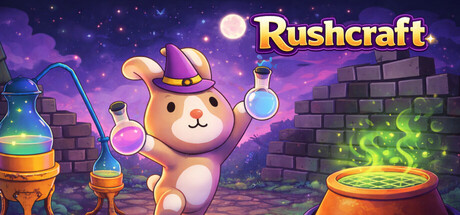
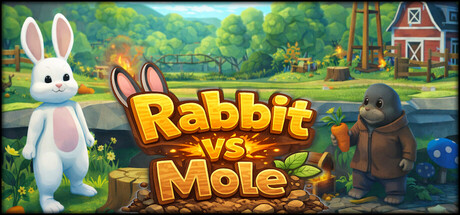
* Voice synthesis for the "Rabbit" character. (ElevenLabs)
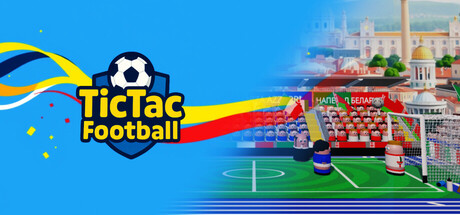
Tic Tac Football uses AI-controlled opponents to allow players to compete in single-player matches, cups, and leagues.
AI players follow the same rules as human players and are designed to provide a fair, accessible challenge focused on positioning, timing, and decision-making rather than speed or complex simulation.
Some in-game visual assets and code snippets were developed with the assistance of generative AI tools. These pre-generated elements were used to enhance the visual quality and technical foundation of the game.
Notice Regarding AI-Generated Content "To provide a more immersive visual experience within our limited resources, we have supplementally utilized generative AI technology to create a small number of photorealistic background images. All other character designs and core art assets have been handcrafted by our development team."
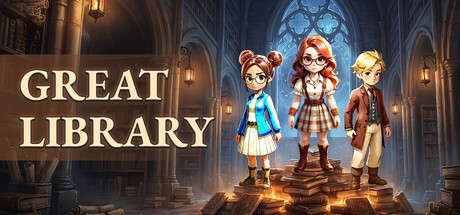
For the development of Great Library, generative AI tools were used to assist in the creation of static visual assets, including environmental textures, character concept art, and store page promotional imagery. All AI-assisted content has been manually reviewed, refined, and integrated by our development team to ensure quality and consistency. There is no live-generated AI content, code, or real-time generation used during gameplay.
AI was used to translate the game into French, Spanish and Brazil Portuguese.
Friends speaking these languages checked for accuracy but I will adjust any translation errors, when the community let me know about them!
Generative AI was used for the production of SOME art assets. Some are completely handmade, Some are almost entirely AI with additional human editing. This normally varies by game where one will have lots of AI and one will be completely handmade.
Art assets refer to images and music.
No AI ever runs during runtime.
This game includes pre-generated art and assets created with the assistance of generative AI tools. All AI-assisted content has been reviewed, edited, and integrated by the development team. The game does not use live-generated AI systems during gameplay.
This game uses generative AI tools during development to create certain pre-rendered visual assets.
These include some in-game visual elements such as icons, UI-related graphics, and visual assets, as well as store page and promotional materials.
No generative AI is used during gameplay. The game does not generate content, visuals, text, audio, or code in real time using AI.
All gameplay logic, behavior, and systems are fully authored and deterministic.
Generating some of the children's drawings used in the game.
Generating sound effects (SFX).
Supporting localization, including the translation of in-game text into multiple languages.
AI was not used for modeling or software development; the entire design process is original and created by the team.
Generative AI tools were used in a supportive role for some character visuals and promotional materials.
All AI-assisted artwork was manually edited and refined.
The game’s design, mechanics, and code were created manually.
Use of UI Assets and Visual Elements
The game uses a combination of custom-made assets and assisted tools for certain visual elements.
Some UI icons and minor interface elements were created with the help of generation tools and then manually edited and integrated into the game.
This includes:
small UI icons
damage indicators
ability cards and card elements
UI cards and visual overlays
promotional banners for the Steam store
All generated elements are used as supporting visuals, refined and adapted to fit the game’s original design, gameplay systems, and overall art direction.
Core gameplay visuals, mechanics, environments, and animations are fully custom and developed specifically for the game.
AI was used only for limited assistance, such as refining some logos, helping with music production, and translating texts into other languages.
All core game content — including ships, designs, graphics, 3D models, sound effects, and more — is handcrafted. Overall, the game was created using traditional development methods.
For the technical development of this title, I utilized AI tools to assist with writing and debugging the game's code, as I do not have a formal background in programming.
This game uses generative AI for the following purposes:
· Text language translation
The following languages are translated by local staff, not AI:
English
French
Italian
German
Dutch
Spanish
Spanish (Latin America)
Polish
Portuguese (Brazil)
Japanese
Korean
This game was built using a blend of digital tools, custom created datasets and software, and AI asset generation.
Human creativity and ingenuity can be positively amplified using AI. I hope this game can inspire independent creators and game designers to realize their own magic fairy fun dreams.
This game uses Spotify's Basic Pitch, a machine learning model for audio-to-MIDI transcription. This technology assists in converting audio files into note data for gameplay purposes and is entirely optional—players can choose whether or not to use this feature. It does not generate music, artwork, or other creative content; all such elements are created by human artists and composers.
– Some textures in the game were initially AI-generated and then significantly refined by hand in a graphics editor.
– Certain 3D assets began as AI-generated concepts but were readjusted or fully reworked in a 3D modeling tool to fit the game’s aesthetic.
– The promotional artwork on this Steam page was AI-assisted and then heavily edited to match the game’s visual identity.
The translations into Simplified Chinese were done using AI, as were some of the store images. The game itself does not include AI-generated content beyond the translations mentioned above.
This product uses AI-generated content in a limited capacity.
AI-generated images were used for locked achievement icons.
AI-generated audio was partially used for character sound elements.
All AI-generated assets were reviewed and integrated by the development team.
See the description for an extended discussion about the tools used to produce this game.
AI use in this game includes Claude and Claude Code for assisting with implementing complex systems and bug fixing. The codex's image-examination assets are pre-rendered during development: in-game screenshots are composited via ChatGPT and then some are stylistically processed by a model running locally on my laptop. I experimented a bit with Adobe Podcast to make recordings on my not-very-good mic sound a little better but I wasn't so impressed with the results so I don't think much of this made it in. Most sound effects were found in online libraries but in some cases they were generated using ElevenLabs and other sound generation models when suitable alternatives could not be found. Some 3D models and textures were created using Meshy. Text was checked for spelling and grammar with Grammarly and Claude.
AI-generated content includes:
* Promotional graphics for the Steam Store page. (GPT)
* UI icons and game main icon. (GPT)
* Initial translations for in-game text. (GPT)
* Voice synthesis for the "Rabbit" character. (ElevenLabs)
Tic Tac Football uses AI-controlled opponents to allow players to compete in single-player matches, cups, and leagues.
AI players follow the same rules as human players and are designed to provide a fair, accessible challenge focused on positioning, timing, and decision-making rather than speed or complex simulation.
Some in-game visual assets and code snippets were developed with the assistance of generative AI tools. These pre-generated elements were used to enhance the visual quality and technical foundation of the game.
Notice Regarding AI-Generated Content "To provide a more immersive visual experience within our limited resources, we have supplementally utilized generative AI technology to create a small number of photorealistic background images. All other character designs and core art assets have been handcrafted by our development team."
For the development of Great Library, generative AI tools were used to assist in the creation of static visual assets, including environmental textures, character concept art, and store page promotional imagery. All AI-assisted content has been manually reviewed, refined, and integrated by our development team to ensure quality and consistency. There is no live-generated AI content, code, or real-time generation used during gameplay.
AI was used to translate the game into French, Spanish and Brazil Portuguese.
Friends speaking these languages checked for accuracy but I will adjust any translation errors, when the community let me know about them!
Generative AI was used for the production of SOME art assets. Some are completely handmade, Some are almost entirely AI with additional human editing. This normally varies by game where one will have lots of AI and one will be completely handmade.
Art assets refer to images and music.
No AI ever runs during runtime.
This game includes pre-generated art and assets created with the assistance of generative AI tools. All AI-assisted content has been reviewed, edited, and integrated by the development team. The game does not use live-generated AI systems during gameplay.
This game uses generative AI tools during development to create certain pre-rendered visual assets.
These include some in-game visual elements such as icons, UI-related graphics, and visual assets, as well as store page and promotional materials.
No generative AI is used during gameplay. The game does not generate content, visuals, text, audio, or code in real time using AI.
All gameplay logic, behavior, and systems are fully authored and deterministic.
Generating some of the children's drawings used in the game.
Generating sound effects (SFX).
Supporting localization, including the translation of in-game text into multiple languages.
AI was not used for modeling or software development; the entire design process is original and created by the team.
Generative AI tools were used in a supportive role for some character visuals and promotional materials.
All AI-assisted artwork was manually edited and refined.
The game’s design, mechanics, and code were created manually.
Use of UI Assets and Visual Elements
The game uses a combination of custom-made assets and assisted tools for certain visual elements.
Some UI icons and minor interface elements were created with the help of generation tools and then manually edited and integrated into the game.
This includes:
small UI icons
damage indicators
ability cards and card elements
UI cards and visual overlays
promotional banners for the Steam store
All generated elements are used as supporting visuals, refined and adapted to fit the game’s original design, gameplay systems, and overall art direction.
Core gameplay visuals, mechanics, environments, and animations are fully custom and developed specifically for the game.