Public Steam disclosure research25,497 disclosures tracked
Where do games disclose AI use?
Search developers’ Steam disclosures, compare classified AI use across
games, and follow recorded changes.
This index adds cross-game classifications and statistics to
statements published on individual store pages.
Groups reflect automatic analysis of public disclosures; mature records are excluded. These counts do not measure AI use across all of Steam.
Missing or unclear statements cannot establish whether a game uses AI.
AI is used for cinematic cutscenes and certain art assets, but the majority of the work is done manually.
Similarly, code workflows include partial generation for certain C++, C#, and HLSL functions.
Artificial Intelligence is used to generate some of the images and visual assets displayed in the game. All generated content is reviewed and curated by the development team before publication.
This game was developed with the assistance of an AI language model, including store page content, level design, in-game descriptions, code, and game mechanics. All creative direction and final decisions were made by the developer.
AI tools were used during development for assistance with programming and creation of promotional visual assets.
AI-assisted code generation was used to help implement gameplay systems and scripting within the Godot engine. All code was reviewed, integrated, and tested by the developer.
Generative AI was also used to create certain marketing and promotional images used in trailers and store presentation materials. No AI-generated assets are included directly in gameplay.
AI was used during development to help fix scripting errors and improve development efficiency. No AI was used in the creation of the game’s levels, menus, UI, or graphic designs.
Some of the English text content and translations in this game were created with the help of generative AI tools. All text has been reviewed and edited by our development team to ensure accuracy and educational quality.
Generative AI was used to create initial game art concepts and certain marketing materials. Final in-game assets were reviewed and modified by the development team.
I use ElevenLabs to create sound effects as well as the voice changing effects. I recorded the lines in the game and used ElevenLabs to alter my voice into the characters you will here in this game. The main character Mesh, some interactable mesh's as well as the main entity within this game were initially generated in MeshyAI and edited by myself in Blender.
This game includes some visual and audio contents created with the assistance of generative A.I. All content included in the final release was curated, edited, and integrated by the developer as part of the creative process. The game engine and logic is 100% human created.
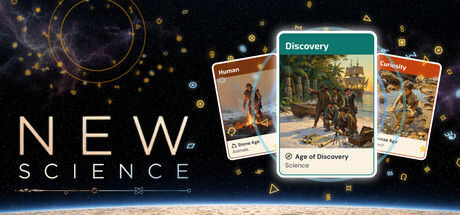
New Science uses generative AI as a core part of its discovery system. When a player attempts a combination, an AI model may be used to determine whether the two selected objects can logically produce a new result. Generative AI is also used to create an illustration for newly discovered objects. Known discoveries are stored and reused, so the same established combination does not need to be generated again for every player. This system allows New Science to support open-ended experimentation beyond a small, completely predefined recipe list. Players may therefore encounter newly generated combinations and images that have not previously been seen by the development team.
The soundtrack and sound effects were made using AI tools, then edited and mixed by hand to fit the game. Localization for non-English languages was AI-translated.
Some visual assets, including certain images and 3D models, were created or assisted using generative AI tools. All assets were reviewed and edited by the developer before being added to the game.
Generative AI was used as support for writing and translating store page text and descriptive material. All content is reviewed before publication. The game does not use generative AI during gameplay.
Some visual assets and promotional materials for Frozen Christmas Magic: Santa’s Hidden Village were created with the assistance of generative AI tools, then manually directed, selected, edited and integrated by the developer as part of the game’s artistic production pipeline.
No real-time generative AI is used during gameplay.
This application uses local AI technology for interaction, although the chosen TTS and STT plugins have not yet been selected because the word game is still under development.
However, it is confirmed that plugins from the FAB marketplace will be used. And AI processing will run offline on player's device. No internet connection will be required.
This game does not generate any AI content in real-time. Pre-generated AI images were used during the development process to create some of the design assets both inside the game and on the store page (including the capsule art)
AI is used for cinematic cutscenes and certain art assets, but the majority of the work is done manually.
Similarly, code workflows include partial generation for certain C++, C#, and HLSL functions.
Artificial Intelligence is used to generate some of the images and visual assets displayed in the game. All generated content is reviewed and curated by the development team before publication.
This game was developed with the assistance of an AI language model, including store page content, level design, in-game descriptions, code, and game mechanics. All creative direction and final decisions were made by the developer.
AI tools were used during development for assistance with programming and creation of promotional visual assets.
AI-assisted code generation was used to help implement gameplay systems and scripting within the Godot engine. All code was reviewed, integrated, and tested by the developer.
Generative AI was also used to create certain marketing and promotional images used in trailers and store presentation materials. No AI-generated assets are included directly in gameplay.
AI was used during development to help fix scripting errors and improve development efficiency. No AI was used in the creation of the game’s levels, menus, UI, or graphic designs.
Some of the English text content and translations in this game were created with the help of generative AI tools. All text has been reviewed and edited by our development team to ensure accuracy and educational quality.
Generative AI was used to create initial game art concepts and certain marketing materials. Final in-game assets were reviewed and modified by the development team.
I use ElevenLabs to create sound effects as well as the voice changing effects. I recorded the lines in the game and used ElevenLabs to alter my voice into the characters you will here in this game. The main character Mesh, some interactable mesh's as well as the main entity within this game were initially generated in MeshyAI and edited by myself in Blender.
This game includes some visual and audio contents created with the assistance of generative A.I. All content included in the final release was curated, edited, and integrated by the developer as part of the creative process. The game engine and logic is 100% human created.
New Science uses generative AI as a core part of its discovery system. When a player attempts a combination, an AI model may be used to determine whether the two selected objects can logically produce a new result. Generative AI is also used to create an illustration for newly discovered objects. Known discoveries are stored and reused, so the same established combination does not need to be generated again for every player. This system allows New Science to support open-ended experimentation beyond a small, completely predefined recipe list. Players may therefore encounter newly generated combinations and images that have not previously been seen by the development team.
The soundtrack and sound effects were made using AI tools, then edited and mixed by hand to fit the game. Localization for non-English languages was AI-translated.
Some visual assets, including certain images and 3D models, were created or assisted using generative AI tools. All assets were reviewed and edited by the developer before being added to the game.
Generative AI was used as support for writing and translating store page text and descriptive material. All content is reviewed before publication. The game does not use generative AI during gameplay.
Some visual assets and promotional materials for Frozen Christmas Magic: Santa’s Hidden Village were created with the assistance of generative AI tools, then manually directed, selected, edited and integrated by the developer as part of the game’s artistic production pipeline.
No real-time generative AI is used during gameplay.
This application uses local AI technology for interaction, although the chosen TTS and STT plugins have not yet been selected because the word game is still under development.
However, it is confirmed that plugins from the FAB marketplace will be used. And AI processing will run offline on player's device. No internet connection will be required.
This game does not generate any AI content in real-time. Pre-generated AI images were used during the development process to create some of the design assets both inside the game and on the store page (including the capsule art)