Public Steam disclosure research25,376 disclosures tracked
Where do games disclose AI use?
Search developers’ Steam disclosures, compare classified AI use across
games, and follow recorded changes.
This index adds cross-game classifications and statistics to
statements published on individual store pages.
Groups reflect automatic analysis of public disclosures; mature records are excluded. These counts do not measure AI use across all of Steam.
Missing or unclear statements cannot establish whether a game uses AI.
Ski Lines is a solo-developed indie game created with the help of generative AI tools. AI was used throughout production to support artwork creation, music and sound design, code assistance, prototyping, iteration, and marketing assets.
Every AI-assisted element was curated, edited, and integrated by the developer to fit the game’s minimalist ski-map aesthetic and gameplay vision. The use of AI helped accelerate production while preserving human creative direction, design decisions, quality control, and final authorship.
Development is AI-assisted: source code, the procedural asset factories (meshes, MetaSound hero sounds, code-driven UMG) and docs are written with AI tooling under human review in-repo. No external generative-AI image/audio assets are imported; everything ships from the code-authored pipeline.
Some visual assets used in the game were edited with the assistance of AI-based tools and subsequently refined and integrated into the project by the developer.
AI translation tools were used to produce the localized text for the game. Additionally, initial concept drafts for select visual assets were generated using AI, but were subsequently heavily modified, painted over, and finalized by human artists.
Some of the game's resources (art assets, some promotional images on the store page, code, etc.) were completed with the help of AI to achieve better artistic effects.
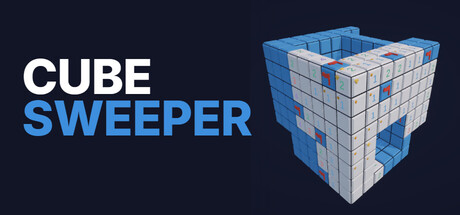
Cube Sweeper used AI assistance during development in two places. Some of the game's handcrafted curated boards began as AI-generated shapes, which were then validated and certified solvable by the game's own logic engine before anything shipped, exactly like every other board in the game. Store page artwork production was aided by AI-assisted tools. No AI is used at runtime. The puzzles are generated by a deterministic system.
Portions of the game's written content (interface text, in-game help, Russian/English localization) and store page texts were created with the assistance of AI tools, directed, reviewed and edited by the developer. All graphics are hand-coded procedural visuals and all audio is procedurally synthesized in code — no AI-generated images or audio are included.
During development of this game, generative AI was used to assist with writing portions of the source code. All AI-generated code was reviewed, modified, tested, and approved by the developer before being incorporated into the game. The game's design, functionality, and overall quality are the result of developer oversight and implementation.
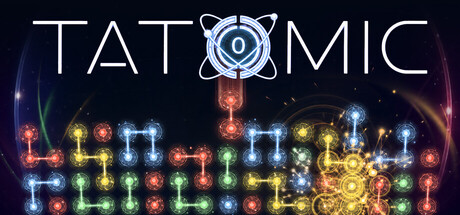
Tatomic was originally created in 2008 for the first-generation iPhone, with artwork designed for its 480 × 320 display.
Generative AI was used only to upscale and recreate the original artwork at higher resolutions while preserving the game’s original visual style. No generative AI was used to create the game’s design, gameplay, sound effects, music, or original art direction.
During development, generative AI was used to assist with creating placeholder artwork, text, and portions of the game's code. All AI-generated content was reviewed, edited, and integrated by the development team, and we confirm that the final content does not knowingly infringe the intellectual property rights of others.
Generative AI was used only for creating some logos and images. All generated assets were reviewed and refined by the developer before being included in the game.
Generative AI was used during development to create 22 music tracks with AI music-generation tools licensed for commercial use and to draft portions of the non-English localization and store-page text. All AI-assisted material has been reviewed and finalized by the developer. The game does not generate content or code with AI during play and does not connect to external AI services at runtime.
AI was used to troubleshoot code and to draft isolated sections of the codebase, which I then finalized.
All graphics, UI, and music are made without AI.
AI was used for initial translation from English into other languages. Many translations were then reviewed and edited by native speakers.
Some of the game's artwork (such as background images) and store/marketing assets were created with the assistance of generative AI tools, and all of them were reviewed and adjusted by the developer. Some in-game descriptive texts
were also drafted with AI assistance and manually verified. All AI-assisted content is pre-rendered — the game does not generate any content or code with AI during gameplay. Trailer narration uses VOICEVOX text-to-speech (VOICEVOX:
Zundamon).
This game uses generative AI in limited, non-gameplay-critical areas:
- AI-assisted code refactoring and performance optimization during development
- AI-assisted translation polishing for multi-language support
- UI layout refinement suggested by AI tools during the design process
All core gameplay logic, the unique drawing-and-deduction design, and all original game artwork were created, reviewed and refined by human developers.
This game is built by a Master of the Fine Arts in Digital and New Media with a specialization in procedural content. Generative AI tools were used during development to create and iterate on pre-rendered visual assets, including dream artwork, backgrounds, capsule art, and marketing imagery. All AI-assisted content is selected, edited, and integrated by the development team. The game does not generate AI content during gameplay and does not connect to third-party AI services during play.
Generative AI tools were used during development to assist with the game's custom C# code, gameplay systems, UI structure and layout, in-game written content, official word list, localization in nine languages, and draft store-page copy.
All AI-assisted outputs were reviewed, edited, tested, and integrated by the developer. Visual art, icons, fonts, music, and sound effects are separately licensed third-party assets.
No generative AI is used during gameplay, and the game does not connect to external AI services.
As this is a solo-developed project, I have utilized generative AI assistants for the writing, debugging, and structuring of the game's programming code.
Additionally, AI has been used in a very minor and complementary capacity for some secondary environmental visual elements. The vast majority of the core artistic assets, art direction, game design, 3D modeling, and overall experience have been entirely hand-crafted and assembled.
Generative AI was used only during the early testing and prototyping stages to create temporary placeholder images for visualisation and internal evaluation. These images will not be included in the final released version of the game and will be replaced with original, professionally produced artwork.
The final game will not contain any AI-generated images, text, audio, or other AI-generated assets. It also does not use generative AI to produce content during gameplay.
In this work, much of the text is interactively generated by a language generation AI. In addition, language generation AI is used for various judgments on the text entered by players. Furthermore, all the illustrations in this work are created using image generation AI.
AI-generated art assets are used in this game. All such assets have been manually reviewed and adjusted to ensure a consistent visual style and quality.
The in-game music and soundtrack are created using Suno (generative AI). All visual art is produced procedurally through code. Development used an AI coding assistant (Claude), which is a development-efficiency tool; it does not generate any content live at runtime. No generative AI runs during gameplay.
Some non-interactive assets in Harvest Havoc were produced with AI-assisted tools:
- Background music tracks were generated via AI music synthesis models, then curated and mixed by the developer.
- Sound effects were produced with AI-assisted audio generation tools.
- English and Japanese in-game text was drafted with AI translation assistance and then reviewed by the developer.
All gameplay code, level design, sprite art, and character animations were created by the developer without AI generation. No AI content is generated at runtime.
The game's music tracks were generated using AI tools (ElevenLabs Music, on a paid commercial plan, and Stable Audio Open) and were curated and edited by the developer. Key art and some promotional images were created with AI image generation (Stable Diffusion) and reviewed by the developer. All gameplay visuals, game design, and code are original work. No AI content is generated at runtime.
LLMs were used during development as coding assistants and to help write the game's text and translations. No AI-generated images, audio, or video ship as assets, and no AI model runs during play.
IKANDY includes an optional AI scene generator. When you choose to use it, it creates new audio-reactive visual scenes in real time from a text prompt you write. This content is generated live, only when you request it, using an AI service you connect with your own API key. Not required to use IKANDY. Some of IKANDY's artwork and promotional media (key art, trailer visuals and music, and some in-app imagery) was created with generative AI tools and is reviewed by the developer.
I am writing to provide further explanation regarding the AI content disclosure. We used an AI-assisted video and image editing tool, specifically CapCut (also known as JianYing), to help edit and generate some of the assets for our promotional trailer and store page images. The AI features within this software were utilized to assist in the editing, effects, and visual generation process for these store page assets.
This game makes extensive use of generative AI for nearly all player-facing content.
All assets, textures, shaders, fonts, some animations, sound effects, and music are fully generated using AI tools and then integrated and refined within the game. As a core rule of the project, everything the player sees and hears has to be AI-generated.
Game design, mechanics, level design, and technical implementation are created and controlled by the developer. AI is used as a content creation tool and does not dynamically generate gameplay content or influence player experience in real time.
No personal player data is processed by AI systems during gameplay.
AI has been used to refine the game balance, produce the graphics and the code for Conglomerate. As a solo indie dev, AI is used to bounce ideas and support the game development, replicating having a development partner.
Ski Lines is a solo-developed indie game created with the help of generative AI tools. AI was used throughout production to support artwork creation, music and sound design, code assistance, prototyping, iteration, and marketing assets.
Every AI-assisted element was curated, edited, and integrated by the developer to fit the game’s minimalist ski-map aesthetic and gameplay vision. The use of AI helped accelerate production while preserving human creative direction, design decisions, quality control, and final authorship.
Development is AI-assisted: source code, the procedural asset factories (meshes, MetaSound hero sounds, code-driven UMG) and docs are written with AI tooling under human review in-repo. No external generative-AI image/audio assets are imported; everything ships from the code-authored pipeline.
Some visual assets used in the game were edited with the assistance of AI-based tools and subsequently refined and integrated into the project by the developer.
AI translation tools were used to produce the localized text for the game. Additionally, initial concept drafts for select visual assets were generated using AI, but were subsequently heavily modified, painted over, and finalized by human artists.
Some of the game's resources (art assets, some promotional images on the store page, code, etc.) were completed with the help of AI to achieve better artistic effects.
Cube Sweeper used AI assistance during development in two places. Some of the game's handcrafted curated boards began as AI-generated shapes, which were then validated and certified solvable by the game's own logic engine before anything shipped, exactly like every other board in the game. Store page artwork production was aided by AI-assisted tools. No AI is used at runtime. The puzzles are generated by a deterministic system.
Portions of the game's written content (interface text, in-game help, Russian/English localization) and store page texts were created with the assistance of AI tools, directed, reviewed and edited by the developer. All graphics are hand-coded procedural visuals and all audio is procedurally synthesized in code — no AI-generated images or audio are included.
During development of this game, generative AI was used to assist with writing portions of the source code. All AI-generated code was reviewed, modified, tested, and approved by the developer before being incorporated into the game. The game's design, functionality, and overall quality are the result of developer oversight and implementation.
Tatomic was originally created in 2008 for the first-generation iPhone, with artwork designed for its 480 × 320 display.
Generative AI was used only to upscale and recreate the original artwork at higher resolutions while preserving the game’s original visual style. No generative AI was used to create the game’s design, gameplay, sound effects, music, or original art direction.
During development, generative AI was used to assist with creating placeholder artwork, text, and portions of the game's code. All AI-generated content was reviewed, edited, and integrated by the development team, and we confirm that the final content does not knowingly infringe the intellectual property rights of others.
Generative AI was used only for creating some logos and images. All generated assets were reviewed and refined by the developer before being included in the game.
Generative AI was used during development to create 22 music tracks with AI music-generation tools licensed for commercial use and to draft portions of the non-English localization and store-page text. All AI-assisted material has been reviewed and finalized by the developer. The game does not generate content or code with AI during play and does not connect to external AI services at runtime.
AI was used to troubleshoot code and to draft isolated sections of the codebase, which I then finalized.
All graphics, UI, and music are made without AI.
AI was used for initial translation from English into other languages. Many translations were then reviewed and edited by native speakers.
Some of the game's artwork (such as background images) and store/marketing assets were created with the assistance of generative AI tools, and all of them were reviewed and adjusted by the developer. Some in-game descriptive texts
were also drafted with AI assistance and manually verified. All AI-assisted content is pre-rendered — the game does not generate any content or code with AI during gameplay. Trailer narration uses VOICEVOX text-to-speech (VOICEVOX:
Zundamon).
This game uses generative AI in limited, non-gameplay-critical areas:
- AI-assisted code refactoring and performance optimization during development
- AI-assisted translation polishing for multi-language support
- UI layout refinement suggested by AI tools during the design process
All core gameplay logic, the unique drawing-and-deduction design, and all original game artwork were created, reviewed and refined by human developers.
This game is built by a Master of the Fine Arts in Digital and New Media with a specialization in procedural content. Generative AI tools were used during development to create and iterate on pre-rendered visual assets, including dream artwork, backgrounds, capsule art, and marketing imagery. All AI-assisted content is selected, edited, and integrated by the development team. The game does not generate AI content during gameplay and does not connect to third-party AI services during play.
Generative AI tools were used during development to assist with the game's custom C# code, gameplay systems, UI structure and layout, in-game written content, official word list, localization in nine languages, and draft store-page copy.
All AI-assisted outputs were reviewed, edited, tested, and integrated by the developer. Visual art, icons, fonts, music, and sound effects are separately licensed third-party assets.
No generative AI is used during gameplay, and the game does not connect to external AI services.
As this is a solo-developed project, I have utilized generative AI assistants for the writing, debugging, and structuring of the game's programming code.
Additionally, AI has been used in a very minor and complementary capacity for some secondary environmental visual elements. The vast majority of the core artistic assets, art direction, game design, 3D modeling, and overall experience have been entirely hand-crafted and assembled.
Generative AI was used only during the early testing and prototyping stages to create temporary placeholder images for visualisation and internal evaluation. These images will not be included in the final released version of the game and will be replaced with original, professionally produced artwork.
The final game will not contain any AI-generated images, text, audio, or other AI-generated assets. It also does not use generative AI to produce content during gameplay.
In this work, much of the text is interactively generated by a language generation AI. In addition, language generation AI is used for various judgments on the text entered by players. Furthermore, all the illustrations in this work are created using image generation AI.
AI-generated art assets are used in this game. All such assets have been manually reviewed and adjusted to ensure a consistent visual style and quality.
The in-game music and soundtrack are created using Suno (generative AI). All visual art is produced procedurally through code. Development used an AI coding assistant (Claude), which is a development-efficiency tool; it does not generate any content live at runtime. No generative AI runs during gameplay.
Some non-interactive assets in Harvest Havoc were produced with AI-assisted tools:
- Background music tracks were generated via AI music synthesis models, then curated and mixed by the developer.
- Sound effects were produced with AI-assisted audio generation tools.
- English and Japanese in-game text was drafted with AI translation assistance and then reviewed by the developer.
All gameplay code, level design, sprite art, and character animations were created by the developer without AI generation. No AI content is generated at runtime.
The game's music tracks were generated using AI tools (ElevenLabs Music, on a paid commercial plan, and Stable Audio Open) and were curated and edited by the developer. Key art and some promotional images were created with AI image generation (Stable Diffusion) and reviewed by the developer. All gameplay visuals, game design, and code are original work. No AI content is generated at runtime.
LLMs were used during development as coding assistants and to help write the game's text and translations. No AI-generated images, audio, or video ship as assets, and no AI model runs during play.
IKANDY includes an optional AI scene generator. When you choose to use it, it creates new audio-reactive visual scenes in real time from a text prompt you write. This content is generated live, only when you request it, using an AI service you connect with your own API key. Not required to use IKANDY. Some of IKANDY's artwork and promotional media (key art, trailer visuals and music, and some in-app imagery) was created with generative AI tools and is reviewed by the developer.
I am writing to provide further explanation regarding the AI content disclosure. We used an AI-assisted video and image editing tool, specifically CapCut (also known as JianYing), to help edit and generate some of the assets for our promotional trailer and store page images. The AI features within this software were utilized to assist in the editing, effects, and visual generation process for these store page assets.
This game makes extensive use of generative AI for nearly all player-facing content.
All assets, textures, shaders, fonts, some animations, sound effects, and music are fully generated using AI tools and then integrated and refined within the game. As a core rule of the project, everything the player sees and hears has to be AI-generated.
Game design, mechanics, level design, and technical implementation are created and controlled by the developer. AI is used as a content creation tool and does not dynamically generate gameplay content or influence player experience in real time.
No personal player data is processed by AI systems during gameplay.
AI has been used to refine the game balance, produce the graphics and the code for Conglomerate. As a solo indie dev, AI is used to bounce ideas and support the game development, replicating having a development partner.