Public Steam disclosure research25,376 disclosures tracked
Where do games disclose AI use?
Search developers’ Steam disclosures, compare classified AI use across
games, and follow recorded changes.
This index adds cross-game classifications and statistics to
statements published on individual store pages.
Groups reflect automatic analysis of public disclosures; mature records are excluded. These counts do not measure AI use across all of Steam.
Missing or unclear statements cannot establish whether a game uses AI.
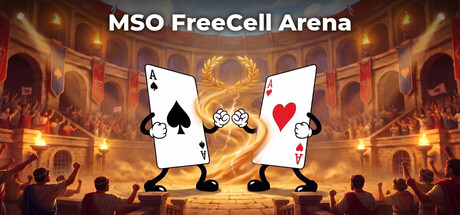
Generative AI is used across this game's development — including store-page marketing artwork, in-game art (cards, UI elements), and source code. All AI-generated content is human-directed, reviewed, and edited by the developer. No AI runs at game time; everything ships as static, pre-rendered assets.
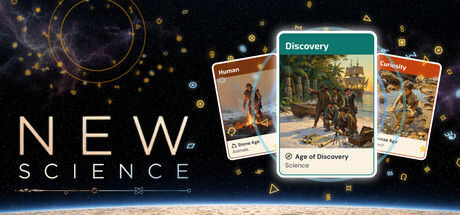
New Science uses generative AI as a core part of its discovery system. When a player attempts a combination, an AI model may be used to determine whether the two selected objects can logically produce a new result. Generative AI is also used to create an illustration for newly discovered objects. Known discoveries are stored and reused, so the same established combination does not need to be generated again for every player. This system allows New Science to support open-ended experimentation beyond a small, completely predefined recipe list. Players may therefore encounter newly generated combinations and images that have not previously been seen by the development team.
The art and music assets in this game were created with the assistance of generative AI technology.
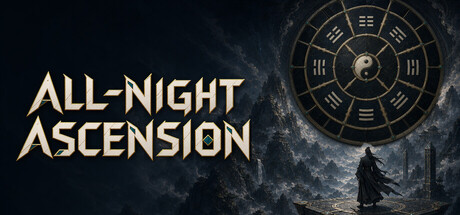
As a registered architect in my day job, I am used to using tools like CAD to aid my designs. In game development, AI plays the exact same role—it is a tool, but the soul of the design comes from the human creator. I do not allow any rough, unpolished assets into my game. Therefore, all AI-generated content has gone through my strict "manual inspection": rigorous prompt tuning, meticulous manual overpainting, and audio trimming. I carefully polish every visual and auditory "brick" to build the perfect cultivation world, pouring my true craftsmanship entirely into the core "Eight Trigrams Array" deck-building experience.
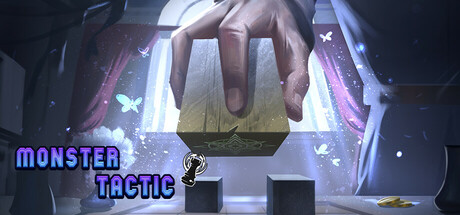
Some of the text descriptions on the game’s store page, certain in-game localization texts, and some images used in the test version were generated with the help of AI technology.
We use generative AI tools to assist with the creation and refinement of some pre-generated content, including store page text, translations, marketing copy, and selected promotional/static visual assets. The game does not use generative AI to create content in real time during gameplay.
All design, writing, and creative direction in this game are human-made. Generative AI was used only as a workflow tool for pre-rendered assets — achievement icons, platform tilesets, zone backgrounds, the soundtrack, and the DE / FR / ES / IT translations
of the human-written English text. All assets were reviewed and finalised by the developer. The game runs no AI at runtime.
Storefront and Marketing Materials: Generative AI was used to assist in drafting, refining, and localizing the text content for the Steam store page and promotional descriptions.
In-Game Content: All final visual assets, code, and audio within the game have been created and designed by our development team. There is no AI-generated content produced in real-time during gameplay.
During development, we used generative AI tools to assist with certain visual assets, including images and 3D models. All AI-generated content was pre-produced during the development phase and has been manually reviewed and validated. No real-time AI generation occurs during gameplay.
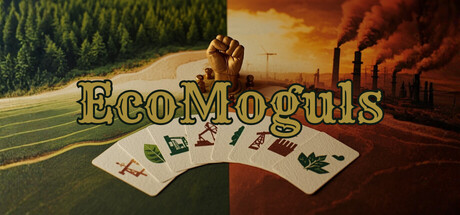
EcoMoguls uses generative AI as part of a small-studio production workflow for some player-facing content, including visual assets, written material, and audio. All final content included in the game and on the store page has been selected, edited, and integrated by the developer to fit the game's design, tone, and educational goals.
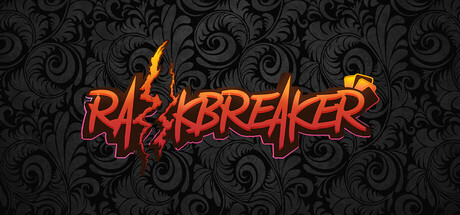
In development and early prototyping, Rankbreaker used some generative art assets. These are being actively replaced with original work created by professional artists, and this transition is already underway.
Current contributions include:
Leonardo Veronesi: Disruptors “Void,” “Raven,” “Recoil,” and character card “Axl Rydell”
Samuele Colombini: Character cards “Bloodthirst,” “Ironjaw,” “Riff the Cat,” and “Stonewhal”
Richard Kessler: Location art “Deadspace,” “Sepulcher,” and “The Arc”
All generative assets are being phased out in favor of fully original artwork as development continues.
Some of the artworks, sounds and localizations in the game have been partially or entirely generated with the help of AI.
We strongly believe AI will help videogames reach new heights, not kill jobs nor creativity.
I’m a solo developer and I use my own cat photography in the game. Some of those photos were transformed into in-game card art with generative AI. Both my original photography and the card art based on it are included in the game. Voice lines in the intro cinematic were also generated with AI. Generative AI is also used when generating stylized weapon & power-up cards. Final assets were selected and edited by the developer.
All of the game's code was generated using generative AI, and no code was manually written by the developer. The gameplay, levels, balancing, controls, and overall player experience were entirely designed, directed, tested, and ultimately approved by a human creator.
AI tools were used during development to help generate select visual assets and concepts. These assets were reviewed, refined, and integrated into the game by the developer to ensure consistency with the overall style and experience.
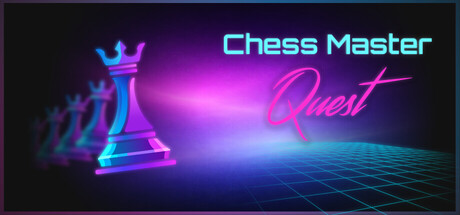
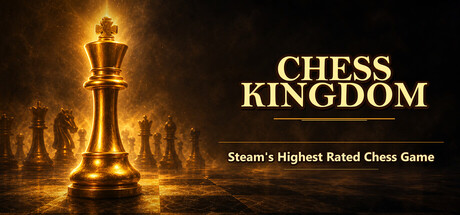
Chess Master Quest was developed by a solo developer with assistance from generative AI tools during development.
• Code: AI coding assistants (GitHub Copilot, Claude) were used to help write and refine parts of the game code. All code was reviewed and tested by the developer.
• Text: AI was used to help draft and edit some in-game text, including puzzle annotations and educational commentary. All text was reviewed and edited by the developer.
No AI-generated visual art or music is used in the game. Chess piece graphics are open-source vector assets. Store capsule images and artwork were created by a professional artist. The chess engine (Stockfish) is traditional software, not generative AI. No content is generated by AI at runtime during gameplay.
Some in-game art is created with AI-assisted workflows.
Players can also use AI to generate their own characters from photos, making each hero feel more personal.
We use generative AI tools to assist in creating some of the game's visual assets. All AI-generated content has been manually refined and integrated by the developer to ensure quality and consistency.
A few pieces of art were generated: the battle background, the fire aura on the marketing assets, and a few projectiles for units like the white beetle.
Currently, all locales are generated by an LLM. However, I am making significant efforts to ensure that all supported UI languages 100% human-made for the future.
If the user chooses to, there are alternative translation models to download & use through the community repository. These are all text generative AI.
Generative Artificial Intelligence tools were used during development to assist in the creation, proofreading, and translation of texts (including the store page and tutorial dialogue), as well as aiding in the ideation and creation of some static 2D visual assets.
Our team may utilize AI tools to assist with specific illustrations during the development process. Any AI-generated content is used as a draft content; it is selected, edited, combined by our team before the final result is achieved. The final product is created under the complete creative control of our developers and artists.
All marketing was AI Generated - except the screenshots and demo video.
Most source code was vibe coded, though it's getting too complex for the better models and I've done a lot of personal touch-ups.
How much AI will be used for more than research going forward is up to see.
This game includes AI-generated images that were created to support its visual style and world design. These assets are used as artistic elements within the game, while all gameplay, mechanics, and overall design are crafted by hand.
AI tools were used to assist in creating some visual and audio assets. All generated content was reviewed, edited, and curated by the solo developer. 30% of profits will be used to replace AI assets.
This game was developed with the extensive use of generative AI 'Gemini' for many processes, including coding and image generation. While AI helped improve development efficiency, all final adjustments and quality control were done manually to ensure a polished experience for players.
User might use AI as necessary outside the the game. Any use of AI by players is done outside the executable itself. User generated content will NOT YET have a way to be imported to the game. The game is isolated and closed from interactions with AI beyond its simple assets.
Generative AI is used across this game's development — including store-page marketing artwork, in-game art (cards, UI elements), and source code. All AI-generated content is human-directed, reviewed, and edited by the developer. No AI runs at game time; everything ships as static, pre-rendered assets.
New Science uses generative AI as a core part of its discovery system. When a player attempts a combination, an AI model may be used to determine whether the two selected objects can logically produce a new result. Generative AI is also used to create an illustration for newly discovered objects. Known discoveries are stored and reused, so the same established combination does not need to be generated again for every player. This system allows New Science to support open-ended experimentation beyond a small, completely predefined recipe list. Players may therefore encounter newly generated combinations and images that have not previously been seen by the development team.
The art and music assets in this game were created with the assistance of generative AI technology.
As a registered architect in my day job, I am used to using tools like CAD to aid my designs. In game development, AI plays the exact same role—it is a tool, but the soul of the design comes from the human creator. I do not allow any rough, unpolished assets into my game. Therefore, all AI-generated content has gone through my strict "manual inspection": rigorous prompt tuning, meticulous manual overpainting, and audio trimming. I carefully polish every visual and auditory "brick" to build the perfect cultivation world, pouring my true craftsmanship entirely into the core "Eight Trigrams Array" deck-building experience.
Some of the text descriptions on the game’s store page, certain in-game localization texts, and some images used in the test version were generated with the help of AI technology.
We use generative AI tools to assist with the creation and refinement of some pre-generated content, including store page text, translations, marketing copy, and selected promotional/static visual assets. The game does not use generative AI to create content in real time during gameplay.
All design, writing, and creative direction in this game are human-made. Generative AI was used only as a workflow tool for pre-rendered assets — achievement icons, platform tilesets, zone backgrounds, the soundtrack, and the DE / FR / ES / IT translations
of the human-written English text. All assets were reviewed and finalised by the developer. The game runs no AI at runtime.
Storefront and Marketing Materials: Generative AI was used to assist in drafting, refining, and localizing the text content for the Steam store page and promotional descriptions.
In-Game Content: All final visual assets, code, and audio within the game have been created and designed by our development team. There is no AI-generated content produced in real-time during gameplay.
During development, we used generative AI tools to assist with certain visual assets, including images and 3D models. All AI-generated content was pre-produced during the development phase and has been manually reviewed and validated. No real-time AI generation occurs during gameplay.
EcoMoguls uses generative AI as part of a small-studio production workflow for some player-facing content, including visual assets, written material, and audio. All final content included in the game and on the store page has been selected, edited, and integrated by the developer to fit the game's design, tone, and educational goals.
In development and early prototyping, Rankbreaker used some generative art assets. These are being actively replaced with original work created by professional artists, and this transition is already underway.
Current contributions include:
Leonardo Veronesi: Disruptors “Void,” “Raven,” “Recoil,” and character card “Axl Rydell”
Samuele Colombini: Character cards “Bloodthirst,” “Ironjaw,” “Riff the Cat,” and “Stonewhal”
Richard Kessler: Location art “Deadspace,” “Sepulcher,” and “The Arc”
All generative assets are being phased out in favor of fully original artwork as development continues.
Some of the artworks, sounds and localizations in the game have been partially or entirely generated with the help of AI.
We strongly believe AI will help videogames reach new heights, not kill jobs nor creativity.
I’m a solo developer and I use my own cat photography in the game. Some of those photos were transformed into in-game card art with generative AI. Both my original photography and the card art based on it are included in the game. Voice lines in the intro cinematic were also generated with AI. Generative AI is also used when generating stylized weapon & power-up cards. Final assets were selected and edited by the developer.
All of the game's code was generated using generative AI, and no code was manually written by the developer. The gameplay, levels, balancing, controls, and overall player experience were entirely designed, directed, tested, and ultimately approved by a human creator.
AI tools were used during development to help generate select visual assets and concepts. These assets were reviewed, refined, and integrated into the game by the developer to ensure consistency with the overall style and experience.
Chess Master Quest was developed by a solo developer with assistance from generative AI tools during development.
• Code: AI coding assistants (GitHub Copilot, Claude) were used to help write and refine parts of the game code. All code was reviewed and tested by the developer.
• Text: AI was used to help draft and edit some in-game text, including puzzle annotations and educational commentary. All text was reviewed and edited by the developer.
No AI-generated visual art or music is used in the game. Chess piece graphics are open-source vector assets. Store capsule images and artwork were created by a professional artist. The chess engine (Stockfish) is traditional software, not generative AI. No content is generated by AI at runtime during gameplay.
Some in-game art is created with AI-assisted workflows.
Players can also use AI to generate their own characters from photos, making each hero feel more personal.
We use generative AI tools to assist in creating some of the game's visual assets. All AI-generated content has been manually refined and integrated by the developer to ensure quality and consistency.
A few pieces of art were generated: the battle background, the fire aura on the marketing assets, and a few projectiles for units like the white beetle.
Currently, all locales are generated by an LLM. However, I am making significant efforts to ensure that all supported UI languages 100% human-made for the future.
If the user chooses to, there are alternative translation models to download & use through the community repository. These are all text generative AI.
Generative Artificial Intelligence tools were used during development to assist in the creation, proofreading, and translation of texts (including the store page and tutorial dialogue), as well as aiding in the ideation and creation of some static 2D visual assets.
Our team may utilize AI tools to assist with specific illustrations during the development process. Any AI-generated content is used as a draft content; it is selected, edited, combined by our team before the final result is achieved. The final product is created under the complete creative control of our developers and artists.
All marketing was AI Generated - except the screenshots and demo video.
Most source code was vibe coded, though it's getting too complex for the better models and I've done a lot of personal touch-ups.
How much AI will be used for more than research going forward is up to see.
This game includes AI-generated images that were created to support its visual style and world design. These assets are used as artistic elements within the game, while all gameplay, mechanics, and overall design are crafted by hand.
AI tools were used to assist in creating some visual and audio assets. All generated content was reviewed, edited, and curated by the solo developer. 30% of profits will be used to replace AI assets.
This game was developed with the extensive use of generative AI 'Gemini' for many processes, including coding and image generation. While AI helped improve development efficiency, all final adjustments and quality control were done manually to ensure a polished experience for players.
User might use AI as necessary outside the the game. Any use of AI by players is done outside the executable itself. User generated content will NOT YET have a way to be imported to the game. The game is isolated and closed from interactions with AI beyond its simple assets.