Public Steam disclosure research25,376 disclosures tracked
Where do games disclose AI use?
Search developers’ Steam disclosures, compare classified AI use across
games, and follow recorded changes.
This index adds cross-game classifications and statistics to
statements published on individual store pages.
Groups reflect automatic analysis of public disclosures; mature records are excluded. These counts do not measure AI use across all of Steam.
Missing or unclear statements cannot establish whether a game uses AI.
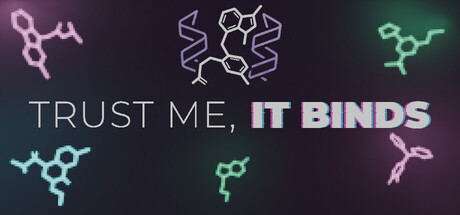
The game uses generative AI to create molecular structures during gameplay. Molecules are procedurally generated by a generative AI model embedded locally within the game and operating as part of the game’s molecular design system.
The in-game generative AI system is used exclusively for molecular structure generation and does not generate dialogue, artwork, music, or other narrative content during gameplay.
During development, generative AI tools were used to assist with artwork preparation, text polishing, and UI code development.
English: This game uses generative AI to create case stories, suspect dialogues, and investigative clues in real time during play. AI is provided by third-party services — you bring your own API key (entered in the in-game settings). No microtransactions.
Some art and audio in Bunker And Friends was produced with generative AI tools during development. This includes store and marketing artwork — the key art, store capsules, and logo elements — and some sound effects and music. All of it was generated ahead of time and ships as fixed assets. The game does not generate any content using AI while you play, and it does not connect to any external AI service during gameplay.
Parts this game's visual assets — including concept art, textures, and character portraits — were pre-rendered with generative AI tools during development, then reviewed and hand-integrated by the developer. Store and marketing images were produced the same way. No content is generated by in real time while you play.
This game used generative AI during development as a programming aid, assisting with the writing, debugging, and optimization of portions of the source code. All AI-assisted code was reviewed, edited, and tested by the developer before inclusion.
Generative AI tools were used in the development of this game to assist with creating select artwork, writing promotional/store page descriptions, and localization.
We are a two-person indie team with over a decade of real-world game development experience. Pat has been making games for 10 years, and Nate was a professional working artist long before generative AI tools existed.
We know AI in games is a dealbreaker for some folks, and we struggle with how much to use it ourselves. We want to be completely upfront about how we built this so you have the full picture:
- Visuals: We used generative AI alongside our standard software to speed up ideation and automate tedious tasks. Every final in-game element is as handmade as any other pre-LLM digital art. Most of the icons were licensed from a third-party.
- Code: We used AI assistants for pair-programming and troubleshooting complex engine logic on a project that two non-engineers couldn't otherwise build alone.
No content is generated live in-game at runtime.
We believe in total transparency with our players. We built this game to celebrate developers, and we want to be completely open about how we made it. As busy parents navigating the job hunt during development, these tools gave us the leverage to build and ship an ambitious project that we simply couldn't have created otherwise.
The game does not generate any content with AI at runtime. Some illustrations and some in-game artwork were pre-generated using generative AI image tools, then curated, edited and integrated by our team. All game design, code, writing and final art direction are human-made.
Some character artwork was developed from AI-assisted concept images, then
rebuilt and refined by the developer through 3D modelling and a deterministic
No generative AI is used while the game is running.
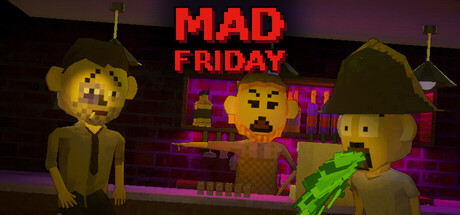
Mad Friday is made by one person. The art, animation, design and code are all mine, made by hand. A few background music tracks are licensed royalty-free assets produced with a generative music model. All audio is pre-generated and shipped with the build; nothing is generated at runtime.
Some of the art assets in this work are created using Image2.5, including but not limited to partial store page images, in-game scene graphics, loading screens, and select item icons.
Generative AI tools were used during development to assist with creating select pre-generated 3D base models, 2D promotional/marketing art, and drafting portions of the source code
All animations (sourced and configured via Mixamo), level design, environmental layouts, physics tuning, core game logic, and overall gameplay systems were manually designed, built, and integrated by the development team
The game does not generate any live AI content at runtime
All AI-assisted assets and code have been manually reviewed, curated, and tested to ensure stability, quality, and full compliance with copyright and intellectual property standards
Generative AI tools were used during development to assist in creating selected pre-generated 3D assets and visual artwork used in the game. All generated outputs were reviewed, edited, and integrated by the developer. The game does not generate AI content during gameplay or connect to external AI services.
Generative AI tools were used during development to assist in the creation and refinement of some pre-generated game content, including visual assets, audio, and development materials. All AI-assisted content was reviewed, edited, and integrated by the developer. No generative AI is used during gameplay.
Lateral Crawl will launch in Early Access. The Early Access build will contain some AI-generated and developer-edited sound effects, which are planned to be replaced before the 1.0 release.
I used generative AI tools to create initial concept art and sketches for my game characters, which I then manually recreated and modeled in 3D myself. I also used AI to assist in sketching the game's official logo
AI-assisted tools were used for all of the game visuals, audio, and code. No AI generation occurs during gameplay, and no external AI services are used while playing.
Generative AI tools were used to assist in the creation of some promotional artwork and marketing assets for the game. Final assets were reviewed and edited by the development team.
All art, music, and sound in TOWERPUNK are original to this project, produced by procedural code written specifically for the game. None of it is derived from generative media models. AI coding assistants were used during development to help write the game's source code and some functional interface text (menu labels, status readouts). All narrative and creative writing is authored by the developer.
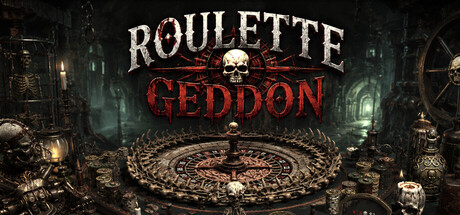
Some pre-generated visual assets used in Roulettegeddon, including portions of promotional artwork and certain in-game visual elements, were created or refined with the assistance of generative AI. The game's gameplay, mechanics, and player progression do not rely on AI-generated content during play.
Generative AI has been used solely as a supporting tool to create some of the icons used for the character's abilities and upgrades, as well as to assist with translating the game's text into other languages.
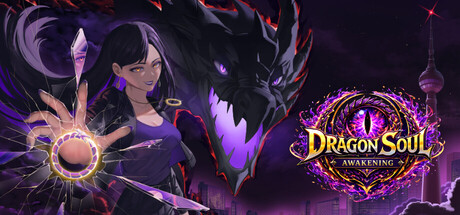
Dragon Soul: Awakening is a solo-developed game that uses generative AI as one of many creative tools during development. The logo, some backgrounds, character sprites, UI elements, and music were created using AI-assisted workflows alongside original writing, design, editing, and human-created artwork. Some AI-assisted assets currently serve as placeholders during development and will be replaced before the full release.
Generative AI was used as an assistive tool for translating parts of the scenario and in-game text. All translated content has been thoroughly reviewed, refined, and proofread manually by the developer to ensure natural phrasing and quality.
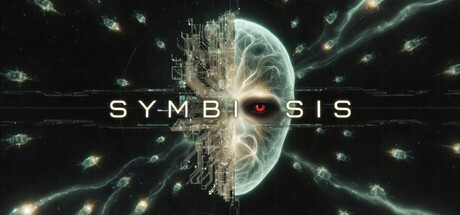
Symbiosis: Criticality's narrative and dialogue were developed with the assistance of generative AI as part of an iterative, human-directed writing process. All in-game art, audio, and code were authored directly by the development team.
I used AI as an aid for a few things: parts of the writing, the translations into
French, Spanish and Italian, and some of the more complex store artwork. Everything
that came out of it was reworked by hand before it went in. It isn't something I'm a
fan of, but as a solo developer without a studio behind me, some things are simply out
of reach otherwise.
Generative AI tools were used during development to create initial concepts for background music tracks and 2D loading screen artwork. These concepts were heavily reworked, re-edited, and finalized by human artists before being integrated as static files into the game build.
Players who prefer a completely traditional experience can completely disable all AI-assisted art and music via a toggle in the game's settings menu.
This game does not use any real-time or live generative AI. No content is generated dynamically during gameplay.
The game's core visual presentation is built around human-created playable character sprite sheets and map artwork, while the level layouts and game design are created by the developer. Generative AI was used for selected pre-generated audio, localization, and supporting visual content such as the logo and key art. No generative AI content is generated during gameplay.
Pixel art assets, in-game text translation to other languages were produced with AI assistance during development and edited by the developer. No content is generated at runtime.
Generative AI was used as an assistant throughout development, and the developer reviewed and approved everything before it shipped.
It helped draft part of the in-game text, some of the marketing copy, and the scripts that generate the artwork and the audio.
No image or audio file came out of a generative model: every sprite, glyph, sound effect and music track is drawn or synthesised by deterministic code, and the same script always produces the same pixels and the same samples.
The game does not generate any content with AI while you play.
Generative AI was used to help create pre-generated visual assets and promotional artwork used in the game and on the store page. The game does not generate AI content during gameplay and does not connect to external AI services during gameplay.
The game uses generative AI to create molecular structures during gameplay. Molecules are procedurally generated by a generative AI model embedded locally within the game and operating as part of the game’s molecular design system.
The in-game generative AI system is used exclusively for molecular structure generation and does not generate dialogue, artwork, music, or other narrative content during gameplay.
During development, generative AI tools were used to assist with artwork preparation, text polishing, and UI code development.
English: This game uses generative AI to create case stories, suspect dialogues, and investigative clues in real time during play. AI is provided by third-party services — you bring your own API key (entered in the in-game settings). No microtransactions.
Some art and audio in Bunker And Friends was produced with generative AI tools during development. This includes store and marketing artwork — the key art, store capsules, and logo elements — and some sound effects and music. All of it was generated ahead of time and ships as fixed assets. The game does not generate any content using AI while you play, and it does not connect to any external AI service during gameplay.
Parts this game's visual assets — including concept art, textures, and character portraits — were pre-rendered with generative AI tools during development, then reviewed and hand-integrated by the developer. Store and marketing images were produced the same way. No content is generated by in real time while you play.
This game used generative AI during development as a programming aid, assisting with the writing, debugging, and optimization of portions of the source code. All AI-assisted code was reviewed, edited, and tested by the developer before inclusion.
Generative AI tools were used in the development of this game to assist with creating select artwork, writing promotional/store page descriptions, and localization.
We are a two-person indie team with over a decade of real-world game development experience. Pat has been making games for 10 years, and Nate was a professional working artist long before generative AI tools existed.
We know AI in games is a dealbreaker for some folks, and we struggle with how much to use it ourselves. We want to be completely upfront about how we built this so you have the full picture:
- Visuals: We used generative AI alongside our standard software to speed up ideation and automate tedious tasks. Every final in-game element is as handmade as any other pre-LLM digital art. Most of the icons were licensed from a third-party.
- Code: We used AI assistants for pair-programming and troubleshooting complex engine logic on a project that two non-engineers couldn't otherwise build alone.
No content is generated live in-game at runtime.
We believe in total transparency with our players. We built this game to celebrate developers, and we want to be completely open about how we made it. As busy parents navigating the job hunt during development, these tools gave us the leverage to build and ship an ambitious project that we simply couldn't have created otherwise.
The game does not generate any content with AI at runtime. Some illustrations and some in-game artwork were pre-generated using generative AI image tools, then curated, edited and integrated by our team. All game design, code, writing and final art direction are human-made.
Some character artwork was developed from AI-assisted concept images, then
rebuilt and refined by the developer through 3D modelling and a deterministic
No generative AI is used while the game is running.
Mad Friday is made by one person. The art, animation, design and code are all mine, made by hand. A few background music tracks are licensed royalty-free assets produced with a generative music model. All audio is pre-generated and shipped with the build; nothing is generated at runtime.
Some of the art assets in this work are created using Image2.5, including but not limited to partial store page images, in-game scene graphics, loading screens, and select item icons.
Generative AI tools were used during development to assist with creating select pre-generated 3D base models, 2D promotional/marketing art, and drafting portions of the source code
All animations (sourced and configured via Mixamo), level design, environmental layouts, physics tuning, core game logic, and overall gameplay systems were manually designed, built, and integrated by the development team
The game does not generate any live AI content at runtime
All AI-assisted assets and code have been manually reviewed, curated, and tested to ensure stability, quality, and full compliance with copyright and intellectual property standards
Generative AI tools were used during development to assist in creating selected pre-generated 3D assets and visual artwork used in the game. All generated outputs were reviewed, edited, and integrated by the developer. The game does not generate AI content during gameplay or connect to external AI services.
Generative AI tools were used during development to assist in the creation and refinement of some pre-generated game content, including visual assets, audio, and development materials. All AI-assisted content was reviewed, edited, and integrated by the developer. No generative AI is used during gameplay.
Lateral Crawl will launch in Early Access. The Early Access build will contain some AI-generated and developer-edited sound effects, which are planned to be replaced before the 1.0 release.
I used generative AI tools to create initial concept art and sketches for my game characters, which I then manually recreated and modeled in 3D myself. I also used AI to assist in sketching the game's official logo
AI-assisted tools were used for all of the game visuals, audio, and code. No AI generation occurs during gameplay, and no external AI services are used while playing.
Generative AI tools were used to assist in the creation of some promotional artwork and marketing assets for the game. Final assets were reviewed and edited by the development team.
All art, music, and sound in TOWERPUNK are original to this project, produced by procedural code written specifically for the game. None of it is derived from generative media models. AI coding assistants were used during development to help write the game's source code and some functional interface text (menu labels, status readouts). All narrative and creative writing is authored by the developer.
Some pre-generated visual assets used in Roulettegeddon, including portions of promotional artwork and certain in-game visual elements, were created or refined with the assistance of generative AI. The game's gameplay, mechanics, and player progression do not rely on AI-generated content during play.
Generative AI has been used solely as a supporting tool to create some of the icons used for the character's abilities and upgrades, as well as to assist with translating the game's text into other languages.
Dragon Soul: Awakening is a solo-developed game that uses generative AI as one of many creative tools during development. The logo, some backgrounds, character sprites, UI elements, and music were created using AI-assisted workflows alongside original writing, design, editing, and human-created artwork. Some AI-assisted assets currently serve as placeholders during development and will be replaced before the full release.
Generative AI was used as an assistive tool for translating parts of the scenario and in-game text. All translated content has been thoroughly reviewed, refined, and proofread manually by the developer to ensure natural phrasing and quality.
Symbiosis: Criticality's narrative and dialogue were developed with the assistance of generative AI as part of an iterative, human-directed writing process. All in-game art, audio, and code were authored directly by the development team.
I used AI as an aid for a few things: parts of the writing, the translations into
French, Spanish and Italian, and some of the more complex store artwork. Everything
that came out of it was reworked by hand before it went in. It isn't something I'm a
fan of, but as a solo developer without a studio behind me, some things are simply out
of reach otherwise.
Generative AI tools were used during development to create initial concepts for background music tracks and 2D loading screen artwork. These concepts were heavily reworked, re-edited, and finalized by human artists before being integrated as static files into the game build.
Players who prefer a completely traditional experience can completely disable all AI-assisted art and music via a toggle in the game's settings menu.
This game does not use any real-time or live generative AI. No content is generated dynamically during gameplay.
The game's core visual presentation is built around human-created playable character sprite sheets and map artwork, while the level layouts and game design are created by the developer. Generative AI was used for selected pre-generated audio, localization, and supporting visual content such as the logo and key art. No generative AI content is generated during gameplay.
Pixel art assets, in-game text translation to other languages were produced with AI assistance during development and edited by the developer. No content is generated at runtime.
Generative AI was used as an assistant throughout development, and the developer reviewed and approved everything before it shipped.
It helped draft part of the in-game text, some of the marketing copy, and the scripts that generate the artwork and the audio.
No image or audio file came out of a generative model: every sprite, glyph, sound effect and music track is drawn or synthesised by deterministic code, and the same script always produces the same pixels and the same samples.
The game does not generate any content with AI while you play.
Generative AI was used to help create pre-generated visual assets and promotional artwork used in the game and on the store page. The game does not generate AI content during gameplay and does not connect to external AI services during gameplay.