Public Steam disclosure research27,951 disclosures tracked
Where do games disclose AI use?
Search developers’ Steam disclosures, compare classified AI use across
games, and follow recorded changes.
This index adds cross-game classifications and statistics to
statements published on individual store pages.
Groups reflect automatic analysis of public disclosures; mature records are excluded. These counts do not measure AI use across all of Steam.
Missing or unclear statements cannot establish whether a game uses AI.
We use generative AI across all disciplines of game development with heavy amounts of human editing. That involves audio and visual art. We use it as a productivity tool so we can achieve a higher level of quality, faster, than we would have been able to.
Some of the voices in the game were generated using ElevenLabs voice changer, solely to produce pre-recorded audio. Some 3D models were created with Tencent tools as development support. ComfyUI-based workflows were also used to generate certain pre-rendered images and visual materials. None of these systems generate content during gameplay, and no AI tools affect the game dynamically at runtime.
Generating background images for the store page's cover, header, and banner
Trailer and in-game BGM generation
Creating the English version of the title logo
Translation into other languages
Some visual assets in this game were initially generated using AI tools and then manually edited and refined by artists. No AI systems influence gameplay or player data.
The final game contains no directly AI-generated assets. All content was created and finalized by the developer. AI-assisted tools were used for early concept exploration.
Generative AI played a significant role in early environment creation, allowing rapid visual exploration and iteration during development. These AI-assisted environments were then manually edited, refined, and authored into their final form. All shipped content is static and handcrafted, and the game does not use generative AI during gameplay.
Artificial Intelligence was generated in the creation of certain in-game graphics and marketing banners, and there may also be some AI-generated dialogue in the game.
It was used to create 2 graphic elements that were heavily edited by hand that are used as symbols on the main menu and on the store page capsule art. That is the entire extent of AI usage.
Some in-game illustrations and trailer music were created using AI tools.
We plan to replace all AI-generated illustrations with artwork by human artists for the full release, though some AI assets may remain depending on production constraints.
Our goal is to minimize the use of AI-generated content by launch.
Most of our assets are hand-made, but there are a scattered handful of assets that were AI generated. Background skybox, distant castles, and even a few small entities. Things like that.
The game has NO ai-generated content. The page localization is done with AI tools but it will be replaced when the game will be localized (without AI).
I used AI only to polish the kid in the Steam marketing image and the retro poster on the walls in the game. All the other art was designed by my friends and me.
Some character voices in this game were created using AI-assisted tools. All AI generated audio has been reviewed and approved by the development team to ensure quality and consistency.
During development, the solo dev might use procedural tools or AI to speed up time-consuming tasks — but the final game is still fully shaped by the developer’s own creativity and decisions.
We intentionally use generative artificial intelligence to conceptualize unique architectural models and details of the new district, details of the environment. And to get new original and author's ideas. This will allow us to finish the project on time and not let people down. However, every detail is carefully redrawn by the hands of artists and 3D modelers. graphic artists-people to ensure compliance with the aesthetics and visual identity of the game. Also, people do painstaking technical work with raw materials from AI.
1.We used the scenery and base images of the game background generated by AI, and based on these, we modified and created the background of the game scenes.
2.We used the concept images and dynamic elements of the images generated by AI for the production of game videos and promotional videos.
In this game, we used a generative AI tool (ChatGPT) to design some of the custom shaders. The shaders used were tweaked by the developers and finally implemented for the built-in render pipeline. No generative AI was used for the in-game art, story, voice, etc.
Some images and videos used in in-game signs
Character voices: AI placeholders; professional voice acting is intended for a future update.
Translations
Some marketing artwork for this game was produced, in part, with the use of AI.
The game itself is NOT AI-generated. In-game content and assets, including the graphics, music, story and dialogue, are human-generated.
AI was used to create 2D concept art for some characters as an initial reference. These designs were modified and refined by an artist into custom 3D models.
Some cutscenes in the game were generated using AI to enhance the visual storytelling and atmosphere. These videos create a unique atmosphere and are not part of the main gameplay.
Some elements of the game were created with the help of AI-assisted tools and were then further developed through manual work — modified, improved, and integrated to align with the game’s overall style and vision.
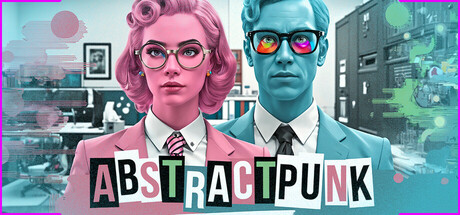
In AbstractPunk, AI was used for speech synthesis, referencing the earlier Evil Indie Games title, NO THING. AI is used in AbstractPunk to generate character speech and sounds. The collage-style graphics in the game feature AI-generated elements as well as numerous distortions caused by AI.
We used AI to generate textures when painting images for the library.
The gameplay screenshots do not contain generative content.
The game itself, its code and assets do not contain generated content.