Public Steam disclosure research25,508 disclosures tracked
Where do games disclose AI use?
Search developers’ Steam disclosures, compare classified AI use across
games, and follow recorded changes.
This index adds cross-game classifications and statistics to
statements published on individual store pages.
Groups reflect automatic analysis of public disclosures; mature records are excluded. These counts do not measure AI use across all of Steam.
Missing or unclear statements cannot establish whether a game uses AI.
This game uses AI-assisted tools for the creation of some content. Certain artwork, voice lines, and sound effects are generated or assisted using third-party AI services, including ElevenLabs. All AI-assisted content is reviewed and integrated during development to ensure it fits the game’s style and overall experience.
This game uses generative AI during development to assist with selected visual and written content, such as concept art, placeholder materials, localization drafts, and marketing assets. All content included in the game and store materials is reviewed, edited, and approved by the development team before publication.
Some visual assets, including characters, environments, objects, and backgrounds, were produced with the help of generative AI tools during development, then curated, edited, cleaned up, and integrated manually under human art direction to achieve a consistent visual style.
This game actively supports human creativity, notably musicians and programmers - but uses AI in the design of marketing materials and some aspects of software development. Neither the game itself - nor the procedural generation techniques used to create the world, music, or audio - use AI or AI-generated art.
This game uses AI-generated artwork for character portraits and encounter illustrations. All other content — game design, code, writing, and audio — is human-created.
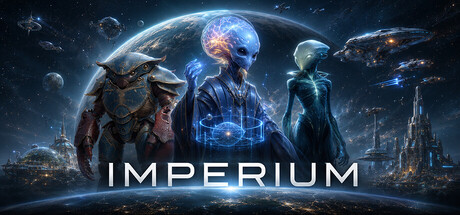
Imperium is a solo-developed game that makes extensive use of generative AI
to create its content:
• Visual art and graphical assets — planet surfaces, buildings, species and
ship artwork, interface art, and store/marketing imagery — were generated
using Midjourney and ChatGPT, then extensively edited, composited, and
refined by hand in Photoshop (including Photoshop's AI tools) to fit the
game's art direction.
• Music was generated using Suno.
• Sound effects were generated using ElevenLabs.
Every asset is reviewed, edited, and approved by the developer before it
ships, and the game's design, systems, and balance are the developer's own.
Imperium's in-game opponents use traditional algorithmic AI, not generative AI.
Some music tracks in this game were created with the assistance of generative AI. The developer reviewed, edited, and selected all generated material before including it in the final product. No gameplay content, code, or player interactions are generated by AI
Hire uses AI for its live character conversations and generated portraits, connecting to your own ChatGPT account (it uses your existing ChatGPT plan, with no separate purchase).
AI-assisted tools were used as part of the development workflow for prototyping, implementation support, and content iteration. The released game content was selected, edited, and curated by the developer. The game does not use live generative AI during gameplay.
Delphi uses Midjourney for illustrated artwork (cards, events, key art, capsule art) and Kling for image-to-video trailer animation, all curated and edited by the developer. UI artwork is hand-made by a credited human artist.
No AI is used in design, writing, narrative or gameplay, and no AI runs at runtime — all in-game content is human-written static data.
This game uses the DeepSeek AI model to generate character dialogue in real time. Based on player input, the AI responds according to preset character personalities, creating an immersive role-playing experience. All generated content is filtered through a content moderation system to prevent inappropriate or policy-violating outputs.
API and Billing Notice:
To use this feature, you need to register a DeepSeek account and add API credits at: https://platform.deepseek.com/usage
The AI service costs are charged directly by DeepSeek. The game developer does not collect any API fees.
Project AIRI uses live-generated AI for player-initiated companion conversations and synthesized voice responses. In the Steam edition, these features are provided through an AIRI account and AIRI-managed services. Players cannot enter third-party API keys or configure custom AI providers. Cloud AI features require an internet connection and a free AIRI account.
Temporary pre-rendered visual assets were created with the assistance of generative AI tools. The game does not use generative AI during gameplay and does not connect to external AI services while running.
Chrongrid is a narrative experience product powered by large language models (LLMs). In-game dialogue, scene descriptions, and character responses are generated in real time by an AI model — you can choose a third-party API service (such as DeepSeek, OpenAI, or Anthropic), or run a model locally on your machine via Ollama. You provide your own API credentials and bear the associated costs; we do not operate any server to relay your requests. The AI generates dialogue and descriptive text at runtime, always within the constraints of pre-authored narrative blueprints, characters, and world settings.
This game utilizes AI-assisted technologies in its development process. Generative AI was used to assist in writing code, refining localized text, and generating certain background ambient music and sound effects. Additionally, AI tools were used to help conceptualize and refine the unique "Shadow Puppetry" and "Ink-wash" artistic style assets to ensure a high-quality visual experience.
This game includes some pre-generated visual assets and music created with the help of AI tools during development. No AI content is generated live during gameplay.
As a blind developer, I use AI-assisted generative tools to bridge the gap in creatingvisual marketing assets and to ensure presentation meets modern store standards
Currently only AI generated item is the Store graphics.
It is, however, intended in the future for the game itself to contain AI generated graphics as well.
Some background music in the game was composed with the assistance of generative AI tools. These tracks were subsequently edited, mixed, and refined by the developer to ensure alignment with the game's sci-fi aesthetic.
Fictional character portraits used in the game's default database were hand-drawn by the developer, then colored and aged using a customized AI workflow.
Some store trailer audio, including voice and music, was generated or assisted by generative AI. The application itself does not include AI-generated assets and does not generate AI content during use.
In WE ARE FOOTBALL 2027 we use about 12,500 AI-generated realistic-looking photos for generic male and female players. These pictures are e.g. displayed on the line-up screen or on the player profile screens. Only photographs of persons photographed specifically for this purpose were used.
As an assistive measure, AI has been implemented into our code practices throughout early development. This includes the use of specialist AI models to assist with code reviews, optimisation and minor troubleshooting and bug fixes. Whilst AI has been used in this way, this in no way compromises or risks the quality of any features, content or security, and all code is ultimately reviewed by a human.
This game features user-generated content (UGC), which may include AI-generated materials created by our players.
We utilize AI technologies to assist with the generation, modification, and review of in-game localization, and to create select graphical assets, such as achievements, badges, UI icons, logos and marketing materials.
For the development of The Bus, AI was used occasionally and to a limited extent as a supportive tool, for example for passenger voices or textures. All content was ultimately reviewed, revised, and integrated into the game by our team.
Several post-release languages (specifically Bulgarian, Hungarian, Ukrainian, Slovak, and Latin) were experimentally translated using an AI model. The quality of these translations is not guaranteed, and they may contain mistakes.
All other languages were translated by a team of human translators.
BFM 26 uses AI-assisted tools during development, including AI-generated imagery for certain visual assets and AI code auditing during the development process. No generative AI is used to produce live or dynamic in-game content during gameplay. All AI-generated assets have been reviewed and approved by the developer before inclusion in the game.
This game uses AI-assisted tools during development for tasks such as text editing, translation, and creative support. All final game content, including story, design, and gameplay, is reviewed and curated by the developer. No AI-generated content is created dynamically during gameplay.
The music and translations in this game are generated using artificial intelligence technology. Additionally, the background images in the story sections, the coloring of the character Lang, the coloring of the boss in the third memory interface, and the images of the three crystals are also AI-generated.
This game uses generative AI tools during development to assist in the creation of certain visual assets and programming workflows. All AI-assisted content has been reviewed, edited, and approved by the developer to ensure compliance with Steam’s policies and quality standards.
This game uses AI-assisted tools for the creation of some content. Certain artwork, voice lines, and sound effects are generated or assisted using third-party AI services, including ElevenLabs. All AI-assisted content is reviewed and integrated during development to ensure it fits the game’s style and overall experience.
This game uses generative AI during development to assist with selected visual and written content, such as concept art, placeholder materials, localization drafts, and marketing assets. All content included in the game and store materials is reviewed, edited, and approved by the development team before publication.
Some visual assets, including characters, environments, objects, and backgrounds, were produced with the help of generative AI tools during development, then curated, edited, cleaned up, and integrated manually under human art direction to achieve a consistent visual style.
This game actively supports human creativity, notably musicians and programmers - but uses AI in the design of marketing materials and some aspects of software development. Neither the game itself - nor the procedural generation techniques used to create the world, music, or audio - use AI or AI-generated art.
This game uses AI-generated artwork for character portraits and encounter illustrations. All other content — game design, code, writing, and audio — is human-created.
Imperium is a solo-developed game that makes extensive use of generative AI
to create its content:
• Visual art and graphical assets — planet surfaces, buildings, species and
ship artwork, interface art, and store/marketing imagery — were generated
using Midjourney and ChatGPT, then extensively edited, composited, and
refined by hand in Photoshop (including Photoshop's AI tools) to fit the
game's art direction.
• Music was generated using Suno.
• Sound effects were generated using ElevenLabs.
Every asset is reviewed, edited, and approved by the developer before it
ships, and the game's design, systems, and balance are the developer's own.
Imperium's in-game opponents use traditional algorithmic AI, not generative AI.
Some music tracks in this game were created with the assistance of generative AI. The developer reviewed, edited, and selected all generated material before including it in the final product. No gameplay content, code, or player interactions are generated by AI
Hire uses AI for its live character conversations and generated portraits, connecting to your own ChatGPT account (it uses your existing ChatGPT plan, with no separate purchase).
AI-assisted tools were used as part of the development workflow for prototyping, implementation support, and content iteration. The released game content was selected, edited, and curated by the developer. The game does not use live generative AI during gameplay.
Delphi uses Midjourney for illustrated artwork (cards, events, key art, capsule art) and Kling for image-to-video trailer animation, all curated and edited by the developer. UI artwork is hand-made by a credited human artist.
No AI is used in design, writing, narrative or gameplay, and no AI runs at runtime — all in-game content is human-written static data.
This game uses the DeepSeek AI model to generate character dialogue in real time. Based on player input, the AI responds according to preset character personalities, creating an immersive role-playing experience. All generated content is filtered through a content moderation system to prevent inappropriate or policy-violating outputs.
API and Billing Notice:
To use this feature, you need to register a DeepSeek account and add API credits at: https://platform.deepseek.com/usage
The AI service costs are charged directly by DeepSeek. The game developer does not collect any API fees.
Project AIRI uses live-generated AI for player-initiated companion conversations and synthesized voice responses. In the Steam edition, these features are provided through an AIRI account and AIRI-managed services. Players cannot enter third-party API keys or configure custom AI providers. Cloud AI features require an internet connection and a free AIRI account.
Temporary pre-rendered visual assets were created with the assistance of generative AI tools. The game does not use generative AI during gameplay and does not connect to external AI services while running.
Chrongrid is a narrative experience product powered by large language models (LLMs). In-game dialogue, scene descriptions, and character responses are generated in real time by an AI model — you can choose a third-party API service (such as DeepSeek, OpenAI, or Anthropic), or run a model locally on your machine via Ollama. You provide your own API credentials and bear the associated costs; we do not operate any server to relay your requests. The AI generates dialogue and descriptive text at runtime, always within the constraints of pre-authored narrative blueprints, characters, and world settings.
This game utilizes AI-assisted technologies in its development process. Generative AI was used to assist in writing code, refining localized text, and generating certain background ambient music and sound effects. Additionally, AI tools were used to help conceptualize and refine the unique "Shadow Puppetry" and "Ink-wash" artistic style assets to ensure a high-quality visual experience.
This game includes some pre-generated visual assets and music created with the help of AI tools during development. No AI content is generated live during gameplay.
As a blind developer, I use AI-assisted generative tools to bridge the gap in creatingvisual marketing assets and to ensure presentation meets modern store standards
Currently only AI generated item is the Store graphics.
It is, however, intended in the future for the game itself to contain AI generated graphics as well.
Some background music in the game was composed with the assistance of generative AI tools. These tracks were subsequently edited, mixed, and refined by the developer to ensure alignment with the game's sci-fi aesthetic.
Fictional character portraits used in the game's default database were hand-drawn by the developer, then colored and aged using a customized AI workflow.
Some store trailer audio, including voice and music, was generated or assisted by generative AI. The application itself does not include AI-generated assets and does not generate AI content during use.
In WE ARE FOOTBALL 2027 we use about 12,500 AI-generated realistic-looking photos for generic male and female players. These pictures are e.g. displayed on the line-up screen or on the player profile screens. Only photographs of persons photographed specifically for this purpose were used.
As an assistive measure, AI has been implemented into our code practices throughout early development. This includes the use of specialist AI models to assist with code reviews, optimisation and minor troubleshooting and bug fixes. Whilst AI has been used in this way, this in no way compromises or risks the quality of any features, content or security, and all code is ultimately reviewed by a human.
This game features user-generated content (UGC), which may include AI-generated materials created by our players.
We utilize AI technologies to assist with the generation, modification, and review of in-game localization, and to create select graphical assets, such as achievements, badges, UI icons, logos and marketing materials.
For the development of The Bus, AI was used occasionally and to a limited extent as a supportive tool, for example for passenger voices or textures. All content was ultimately reviewed, revised, and integrated into the game by our team.
Several post-release languages (specifically Bulgarian, Hungarian, Ukrainian, Slovak, and Latin) were experimentally translated using an AI model. The quality of these translations is not guaranteed, and they may contain mistakes.
All other languages were translated by a team of human translators.
BFM 26 uses AI-assisted tools during development, including AI-generated imagery for certain visual assets and AI code auditing during the development process. No generative AI is used to produce live or dynamic in-game content during gameplay. All AI-generated assets have been reviewed and approved by the developer before inclusion in the game.
This game uses AI-assisted tools during development for tasks such as text editing, translation, and creative support. All final game content, including story, design, and gameplay, is reviewed and curated by the developer. No AI-generated content is created dynamically during gameplay.
The music and translations in this game are generated using artificial intelligence technology. Additionally, the background images in the story sections, the coloring of the character Lang, the coloring of the boss in the third memory interface, and the images of the three crystals are also AI-generated.
This game uses generative AI tools during development to assist in the creation of certain visual assets and programming workflows. All AI-assisted content has been reviewed, edited, and approved by the developer to ensure compliance with Steam’s policies and quality standards.