Public Steam disclosure research25,376 disclosures tracked
Where do games disclose AI use?
Search developers’ Steam disclosures, compare classified AI use across
games, and follow recorded changes.
This index adds cross-game classifications and statistics to
statements published on individual store pages.
Groups reflect automatic analysis of public disclosures; mature records are excluded. These counts do not measure AI use across all of Steam.
Missing or unclear statements cannot establish whether a game uses AI.
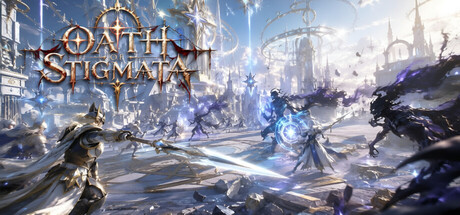
Character, monster, and item artwork in this game was pre-generated using AI image generation tools (FLUX.1). No AI-generated content is created live during gameplay, and the game does not connect to any third-party AI service at runtime.
Generative AI was used during development to create visual assets, including character illustrations, backgrounds, and UI artwork, as well as portions of the written text. The generated content was edited and adapted to fit the game's setting and presentation.
Generative AI tools were used to a very limited extent during the development of the game for a few minor visual elements. These consist only of a small number of simple effect graphics, which were subsequently adapted and edited for use in the game.
Generative AI was also used as a writing aid to improve and refine some of the text used on the game's Steam store page.
The core content and functionality of the game were not created using generative AI.
This game includes content created with the help of generative AI. The base 3D animal models were generated using an AI 3D-modeling tool and then rigged, animated, and hand-finished by the developer. Non-English translations were initially AI-drafted and then reviewed and corrected by the developer. All content is final and reviewed before release — no AI content is generated while you play.
Generative AI tools were used during development to create visual assets and music, and to assist with localization. All content is prepared in advance. The game does not generate AI content during gameplay or connect to external AI services.
Generative AI was used during development to help create some visual assets and assist with development work. The resulting content was selected, edited, and integrated into the game by the developer.
Generative AI tools were used during development to assist with the localization of in-game text into multiple languages. All AI-assisted translations were reviewed, edited and integrated manually by the developer. No generative AI is used during gameplay. Visual and audio assets were not generated using AI.
This game includes content created with the assistance of generative AI tools. Some character and UI artwork was produced using AI image generation (ChatGPT) and then edited by the developer, and the background music was generated using Suno. All AI-assisted assets were reviewed by the developer to ensure they do not infringe the intellectual property of third parties. No AI is used at runtime—all generation occurred during development (pre-generated).
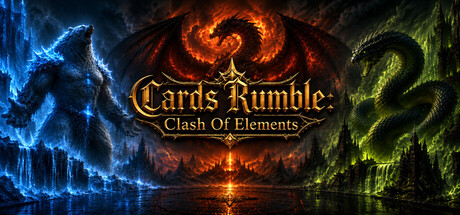
Cards Rumble: Clash Of Elements uses generative AI tools during development to help create some of the game's card artwork and illustrations, as well as some of its music, sound effects, and voice lines. All AI-assisted content was reviewed, edited, and refined by our team before being included in the game. No content is generated by AI while you play.
Generative AI was used during development to assist in creating some character, monster, environment, UI icon, and store promotional artwork, as well as portions of the text and translations. These materials were selected, edited, and integrated by the developer. The game does not generate AI content during gameplay.
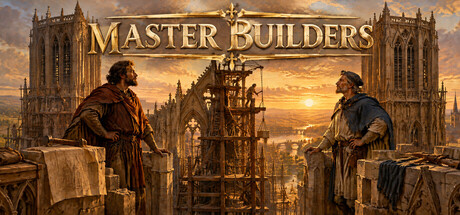
Master Builders was created through close collaboration between a human developer and AI tools: the concept, rules, balance, narrative, and every creative decision came from the developer, while AI assisted with coding and image production to the developer's exact specifications.
A small amount of artwork and text included in the game was created using generative AI during development. All such content is pre-generated. The game does not generate AI content during gameplay or connect to external AI services.
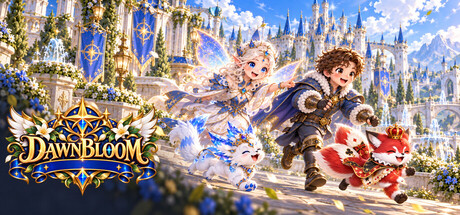
DAWNBLOOM uses generative AI-assisted tools during the development of certain game content. The in-game “Dawnbloom Spirit” feature connects to a generative AI service to provide real-time text responses to players’ game-related questions, including game knowledge, gameplay explanations, and general guidance. This feature generates auxiliary text content only. It does not generate or modify game code, nor does it directly control game rules, character data, or player assets.
Portraits of characters and creatures are generated using Stable Diffusion. They appear in-game and in store page materials. I plan to replace all generated portraits with hand-drawn art.
Some in-game labels and text descriptions are placeholders generated by an LLM. I am gradually rewriting them by hand.
Pre-generated content only. No AI generated content is produced at runtime during gameplay.
Some in-game text and its English localization were drafted with AI assistance and edited by the team.
All art, including card art, backgrounds, icons and UI, is created by our artist. AI image tools were used as visual reference during concept work only; no AI generated image ships in the game. No AI models are used for music or sound effects.
As a solo developer with a big dream and limited resources, I want to be entirely upfront how this game was built. The vast majority of this game is completely human-made: I crafted the pixel characters, animations, code, and story over the past 10 years. I also utilized incredible royalty-free and purchased assets from human creators like gyvr, Eunity, RafaelMatos, penusbmic, Winlu, Geoff Harvey.
The use of generative AI was for touching up and refining the marketing capsule images using Adobe Photoshop tools.
Generative AI was used during development to assist with the creation and refinement of some visual assets, including character artwork, environmental artwork, icons, and promotional imagery. AI-assisted assets were reviewed, edited, and integrated by the developer to maintain a consistent visual style. Generative AI is not used during gameplay and does not generate content in real time.
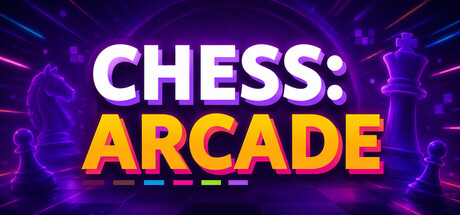
CHESS: ARCADE uses generative AI for its 2D artwork and for its music.
The illustrated assets — move callouts, effect overlays, chess piece sets, UI plates, the title graphic and the game icon — were generated with GPT Image 2 from prompts we wrote and iterated on ourselves. Every generated image then goes through our own import pipeline (trim, alpha normalisation, correction onto the game's fixed palette, downscale), is reviewed in the running game by hand, and is reworked or discarded when it misses. All of it ships as fixed image files inside the build.
The soundtrack was composed with generative AI: the melodies, harmony and arrangements were written with AI assistance, then reviewed, edited and mixed by hand. The game ships no audio files and uses no AI audio model — the score exists as note data that the game's own synthesiser renders procedurally at first launch. Twelve of the tracks are arrangements of public-domain classical themes; the rest are original.
Nothing is generated while you play, and the game never connects to an AI service. The opponent is a classical alpha-beta chess engine with a hand-written evaluation and opening book, and the puzzles come from the public Lichess puzzle database, verified against that engine. No player input, game data or personal data is ever sent to an AI model.
Generative AI was used during development to create pre-generated visual assets for the game, including character artwork, card artwork, backgrounds, visual effects, textures, UI artwork, and promotional materials.
All AI-generated content is reviewed and curated by the developer before being included in the game.
The game does not use live generative AI during gameplay.
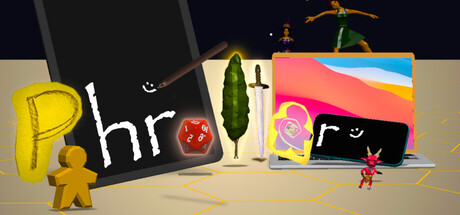
As with most VTT systems, users are welcome to import assets made anywhere. Phroller makes it easier than ever. You can just drag the image or model files into the VTT directly from your browser or file system!
I want to encourage supporting real artists where we can though. As such I do my best to collaborate with real creatives on the vast Phroller libraries. Each one of the assets in the library has a field showing the artist behind it. If you like their work, please consider checking them out. Many of them are open for commissions as well! However, I cannot guarantee that assets or part of those assets were created with no AI use at all. A large amount of the assets are made before 2022 though, so we should be safe there.
While I do my best to make Phroller as user friendly as possible, it does still require a ton of instructions and manuals. Frontier models are used to keep some of the text up to date across rapid early access development. Sorry if it sounds robotic!
Generative AI tools assisted development and the creation of promotional artwork and some written content. Screenshots and gameplay footage show the actual game. No AI content is generated during gameplay, and the game does not connect to external AI services.
During development, this game used generative AI tools to assist in creating some content: some card illustrations, character art, and scene images were initially generated by AI, then manually selected, redrawn, and post-processed by the developer. Some music, sound effects, and text were also created with AI assistance and finalized after item-by-item revisions by the developer. Some assets used on the store page and promotional images were also produced with the assistance of the above tools. The game does not contain any AI content generated in real time at runtime, and does not use any third-party copyrighted characters, assets, or trademarks.
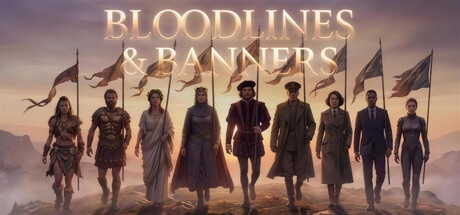
Bloodlines & Banners is designed, architected, and coded by one person. Generative AI is used as a production tool for volume, with portraits, illustration, music, cinematics, voice, and a share of the in-game prose, at a scale a solo developer could not otherwise afford or commission. It is not used to make creative decisions. The art direction is a single locked style anchor authored by hand and enforced across every asset. The game design, the systems architecture, the historical research, the balance, and every line of the server and client are human work. In-game text is a mixed case, and we set that out plainly rather than round it up to “human-written”. We are stating this up front, unprompted, because we would rather a partner evaluate the game knowing exactly what it is than discover it later.
AI was used during development to create some of the game's visual artwork and graphical assets. The AI-generated assets are pre-generated and included as static content in the game. No AI content is generated during gameplay, and the game does not connect to or use an AI service at runtime.
Generative AI was used during development to assist with the creation and refinement of some visual assets. All AI-assisted content was selected, reviewed, edited, and integrated by the development team. The game does not use generative AI in real time during gameplay.
Card and key art generated with AI tools to a studio style guide, then hand-composited in Photoshop; all text, UI, code and music are original or purchased assets.
Generative AI tools assisted with pre-generated artwork, including Steam store capsules and library images, and some localization text. The game does not generate AI content during play or connect to external AI services.
Generative AI was used only to create artwork for the Steam store page and marketing materials. No generative AI is used in the game or during gameplay.
Generative AI tools were used during development to create some visual assets, including card and encounter illustrations, the game icon, and certain visual effects, as well as music and some sound effects. AI tools also assisted with in-game text, localization, and store-page copy. This content is prepared before release. The game does not use generative AI to create content during gameplay.
Generative AI was used for pre-generated artwork, including character portraits, key art, cards, Jokers and decorative interface artwork, and assisted portions of game text and localization. Assets are selected and integrated during development. No AI content is generated during gameplay, and the game does not connect to external AI services.
Generative AI tools were used in the following areas of this game's development.
■ Visual assets
Image generation AI was used to create some 2D visual assets, including backgrounds, card artwork, and UI elements. These images are included in the game as fixed assets.
■ Music
The background music was created using Suno, an AI music generation tool.
■ Voice assets
The included female voice assets were created using audio generation AI. The male voice assets are pre-existing recordings provided by T-Sta.
■ Text and translation
Generative AI assisted with writing and translation for some in-game text and the store page description.
■ Program code
AI coding assistance tools were used for part of the implementation work.
■ Other assets
Sound effects are pre-existing audio assets provided by Soundeffect Lab, Kurage Kosho, T-Sta, and DOVA-SYNDROME. The font is Zen Kaku Gothic New, provided under the SIL Open Font License.
■ No live generation
All AI-generated content described above was created in advance during development. The game does not use generative AI to create new images, music, voices, or dialogue during gameplay.
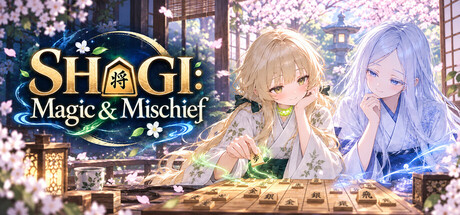
Shogi: Magic & Mischief was developed with the assistance of generative AI tools in the following areas.
■ Illustrations and images
Generative AI was used to create 2D visual assets, including character portraits, backgrounds, title illustrations, and other game and promotional artwork. The developer directed the visual concepts, character designs, composition, and colors, and selected the images for inclusion, with editing, cropping, and compositing where needed.
■ Music
Background music was created using music generation AI. The developer defined the intended mood, generated candidates, and selected and edited tracks for the game.
■ Voices
The male voice assets are pre-existing human-recorded audio from T-Sta. The female voice assets were created using audio generation AI and selected and edited by the developer. These descriptions refer to the voice asset sets, rather than the gender of every character using them.
■ Text
AI writing assistance was used to draft or revise some character descriptions and store-page text, including English promotional text. The developer determines the final wording.
■ Program code
AI coding assistance tools were used during implementation, debugging, and testing.
■ Non-AI assets
Sound effects are pre-existing human-created audio assets from providers including Soundeffect Lab, Kurage Kosho, T-Sta, and DOVA-SYNDROME, rather than AI-generated sound effects. The game uses the fonts Zen Kaku Gothic New and Shippori Mincho, distributed under the SIL Open Font License 1.1.
■ How AI is used
Generative AI is used during development, not to generate new artwork, music, voices, or dialogue during gameplay. The computer-controlled shogi opponents use game logic and move-search algorithms; they are separate from the generative AI tools used to develop the game.
■ Developer responsibility
The developer is responsible for the content included in the game, reviewing it for inappropriate or potentially infringing material, and checking the applicable licenses and terms of use for third-party assets and AI tools.
Generative AI tools were used during development to create and assist with pre-generated visual artwork and image assets. No generative AI content is created in real time during gameplay.
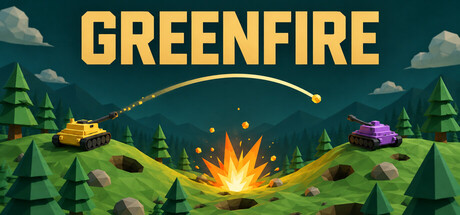
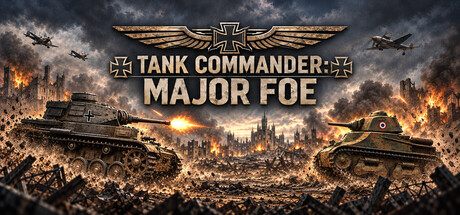
Some 2D artwork and visual assets in Tank Commander: Major FOE were created with the assistance of generative AI tools. These assets were reviewed, selected, edited, and integrated by the developer. The game does not generate AI content during gameplay and does not connect to external AI services while being played.
Generative AI was used during development to assist in the creation of some visual assets and promotional materials. The final content was reviewed and selected by the developer before being included in the game or its store materials.
Character, monster, and item artwork in this game was pre-generated using AI image generation tools (FLUX.1). No AI-generated content is created live during gameplay, and the game does not connect to any third-party AI service at runtime.
Generative AI was used during development to create visual assets, including character illustrations, backgrounds, and UI artwork, as well as portions of the written text. The generated content was edited and adapted to fit the game's setting and presentation.
Generative AI tools were used to a very limited extent during the development of the game for a few minor visual elements. These consist only of a small number of simple effect graphics, which were subsequently adapted and edited for use in the game.
Generative AI was also used as a writing aid to improve and refine some of the text used on the game's Steam store page.
The core content and functionality of the game were not created using generative AI.
This game includes content created with the help of generative AI. The base 3D animal models were generated using an AI 3D-modeling tool and then rigged, animated, and hand-finished by the developer. Non-English translations were initially AI-drafted and then reviewed and corrected by the developer. All content is final and reviewed before release — no AI content is generated while you play.
Generative AI tools were used during development to create visual assets and music, and to assist with localization. All content is prepared in advance. The game does not generate AI content during gameplay or connect to external AI services.
Generative AI was used during development to help create some visual assets and assist with development work. The resulting content was selected, edited, and integrated into the game by the developer.
Generative AI tools were used during development to assist with the localization of in-game text into multiple languages. All AI-assisted translations were reviewed, edited and integrated manually by the developer. No generative AI is used during gameplay. Visual and audio assets were not generated using AI.
This game includes content created with the assistance of generative AI tools. Some character and UI artwork was produced using AI image generation (ChatGPT) and then edited by the developer, and the background music was generated using Suno. All AI-assisted assets were reviewed by the developer to ensure they do not infringe the intellectual property of third parties. No AI is used at runtime—all generation occurred during development (pre-generated).
Cards Rumble: Clash Of Elements uses generative AI tools during development to help create some of the game's card artwork and illustrations, as well as some of its music, sound effects, and voice lines. All AI-assisted content was reviewed, edited, and refined by our team before being included in the game. No content is generated by AI while you play.
Generative AI was used during development to assist in creating some character, monster, environment, UI icon, and store promotional artwork, as well as portions of the text and translations. These materials were selected, edited, and integrated by the developer. The game does not generate AI content during gameplay.
Master Builders was created through close collaboration between a human developer and AI tools: the concept, rules, balance, narrative, and every creative decision came from the developer, while AI assisted with coding and image production to the developer's exact specifications.
A small amount of artwork and text included in the game was created using generative AI during development. All such content is pre-generated. The game does not generate AI content during gameplay or connect to external AI services.
DAWNBLOOM uses generative AI-assisted tools during the development of certain game content. The in-game “Dawnbloom Spirit” feature connects to a generative AI service to provide real-time text responses to players’ game-related questions, including game knowledge, gameplay explanations, and general guidance. This feature generates auxiliary text content only. It does not generate or modify game code, nor does it directly control game rules, character data, or player assets.
Portraits of characters and creatures are generated using Stable Diffusion. They appear in-game and in store page materials. I plan to replace all generated portraits with hand-drawn art.
Some in-game labels and text descriptions are placeholders generated by an LLM. I am gradually rewriting them by hand.
Pre-generated content only. No AI generated content is produced at runtime during gameplay.
Some in-game text and its English localization were drafted with AI assistance and edited by the team.
All art, including card art, backgrounds, icons and UI, is created by our artist. AI image tools were used as visual reference during concept work only; no AI generated image ships in the game. No AI models are used for music or sound effects.
As a solo developer with a big dream and limited resources, I want to be entirely upfront how this game was built. The vast majority of this game is completely human-made: I crafted the pixel characters, animations, code, and story over the past 10 years. I also utilized incredible royalty-free and purchased assets from human creators like gyvr, Eunity, RafaelMatos, penusbmic, Winlu, Geoff Harvey.
The use of generative AI was for touching up and refining the marketing capsule images using Adobe Photoshop tools.
Generative AI was used during development to assist with the creation and refinement of some visual assets, including character artwork, environmental artwork, icons, and promotional imagery. AI-assisted assets were reviewed, edited, and integrated by the developer to maintain a consistent visual style. Generative AI is not used during gameplay and does not generate content in real time.
CHESS: ARCADE uses generative AI for its 2D artwork and for its music.
The illustrated assets — move callouts, effect overlays, chess piece sets, UI plates, the title graphic and the game icon — were generated with GPT Image 2 from prompts we wrote and iterated on ourselves. Every generated image then goes through our own import pipeline (trim, alpha normalisation, correction onto the game's fixed palette, downscale), is reviewed in the running game by hand, and is reworked or discarded when it misses. All of it ships as fixed image files inside the build.
The soundtrack was composed with generative AI: the melodies, harmony and arrangements were written with AI assistance, then reviewed, edited and mixed by hand. The game ships no audio files and uses no AI audio model — the score exists as note data that the game's own synthesiser renders procedurally at first launch. Twelve of the tracks are arrangements of public-domain classical themes; the rest are original.
Nothing is generated while you play, and the game never connects to an AI service. The opponent is a classical alpha-beta chess engine with a hand-written evaluation and opening book, and the puzzles come from the public Lichess puzzle database, verified against that engine. No player input, game data or personal data is ever sent to an AI model.
Generative AI was used during development to create pre-generated visual assets for the game, including character artwork, card artwork, backgrounds, visual effects, textures, UI artwork, and promotional materials.
All AI-generated content is reviewed and curated by the developer before being included in the game.
The game does not use live generative AI during gameplay.
As with most VTT systems, users are welcome to import assets made anywhere. Phroller makes it easier than ever. You can just drag the image or model files into the VTT directly from your browser or file system!
I want to encourage supporting real artists where we can though. As such I do my best to collaborate with real creatives on the vast Phroller libraries. Each one of the assets in the library has a field showing the artist behind it. If you like their work, please consider checking them out. Many of them are open for commissions as well! However, I cannot guarantee that assets or part of those assets were created with no AI use at all. A large amount of the assets are made before 2022 though, so we should be safe there.
While I do my best to make Phroller as user friendly as possible, it does still require a ton of instructions and manuals. Frontier models are used to keep some of the text up to date across rapid early access development. Sorry if it sounds robotic!
Generative AI tools assisted development and the creation of promotional artwork and some written content. Screenshots and gameplay footage show the actual game. No AI content is generated during gameplay, and the game does not connect to external AI services.
During development, this game used generative AI tools to assist in creating some content: some card illustrations, character art, and scene images were initially generated by AI, then manually selected, redrawn, and post-processed by the developer. Some music, sound effects, and text were also created with AI assistance and finalized after item-by-item revisions by the developer. Some assets used on the store page and promotional images were also produced with the assistance of the above tools. The game does not contain any AI content generated in real time at runtime, and does not use any third-party copyrighted characters, assets, or trademarks.
Bloodlines & Banners is designed, architected, and coded by one person. Generative AI is used as a production tool for volume, with portraits, illustration, music, cinematics, voice, and a share of the in-game prose, at a scale a solo developer could not otherwise afford or commission. It is not used to make creative decisions. The art direction is a single locked style anchor authored by hand and enforced across every asset. The game design, the systems architecture, the historical research, the balance, and every line of the server and client are human work. In-game text is a mixed case, and we set that out plainly rather than round it up to “human-written”. We are stating this up front, unprompted, because we would rather a partner evaluate the game knowing exactly what it is than discover it later.
AI was used during development to create some of the game's visual artwork and graphical assets. The AI-generated assets are pre-generated and included as static content in the game. No AI content is generated during gameplay, and the game does not connect to or use an AI service at runtime.
Generative AI was used during development to assist with the creation and refinement of some visual assets. All AI-assisted content was selected, reviewed, edited, and integrated by the development team. The game does not use generative AI in real time during gameplay.
Card and key art generated with AI tools to a studio style guide, then hand-composited in Photoshop; all text, UI, code and music are original or purchased assets.
Generative AI tools assisted with pre-generated artwork, including Steam store capsules and library images, and some localization text. The game does not generate AI content during play or connect to external AI services.
Generative AI was used only to create artwork for the Steam store page and marketing materials. No generative AI is used in the game or during gameplay.
Generative AI tools were used during development to create some visual assets, including card and encounter illustrations, the game icon, and certain visual effects, as well as music and some sound effects. AI tools also assisted with in-game text, localization, and store-page copy. This content is prepared before release. The game does not use generative AI to create content during gameplay.
Generative AI was used for pre-generated artwork, including character portraits, key art, cards, Jokers and decorative interface artwork, and assisted portions of game text and localization. Assets are selected and integrated during development. No AI content is generated during gameplay, and the game does not connect to external AI services.
Generative AI tools were used in the following areas of this game's development.
■ Visual assets
Image generation AI was used to create some 2D visual assets, including backgrounds, card artwork, and UI elements. These images are included in the game as fixed assets.
■ Music
The background music was created using Suno, an AI music generation tool.
■ Voice assets
The included female voice assets were created using audio generation AI. The male voice assets are pre-existing recordings provided by T-Sta.
■ Text and translation
Generative AI assisted with writing and translation for some in-game text and the store page description.
■ Program code
AI coding assistance tools were used for part of the implementation work.
■ Other assets
Sound effects are pre-existing audio assets provided by Soundeffect Lab, Kurage Kosho, T-Sta, and DOVA-SYNDROME. The font is Zen Kaku Gothic New, provided under the SIL Open Font License.
■ No live generation
All AI-generated content described above was created in advance during development. The game does not use generative AI to create new images, music, voices, or dialogue during gameplay.
Shogi: Magic & Mischief was developed with the assistance of generative AI tools in the following areas.
■ Illustrations and images
Generative AI was used to create 2D visual assets, including character portraits, backgrounds, title illustrations, and other game and promotional artwork. The developer directed the visual concepts, character designs, composition, and colors, and selected the images for inclusion, with editing, cropping, and compositing where needed.
■ Music
Background music was created using music generation AI. The developer defined the intended mood, generated candidates, and selected and edited tracks for the game.
■ Voices
The male voice assets are pre-existing human-recorded audio from T-Sta. The female voice assets were created using audio generation AI and selected and edited by the developer. These descriptions refer to the voice asset sets, rather than the gender of every character using them.
■ Text
AI writing assistance was used to draft or revise some character descriptions and store-page text, including English promotional text. The developer determines the final wording.
■ Program code
AI coding assistance tools were used during implementation, debugging, and testing.
■ Non-AI assets
Sound effects are pre-existing human-created audio assets from providers including Soundeffect Lab, Kurage Kosho, T-Sta, and DOVA-SYNDROME, rather than AI-generated sound effects. The game uses the fonts Zen Kaku Gothic New and Shippori Mincho, distributed under the SIL Open Font License 1.1.
■ How AI is used
Generative AI is used during development, not to generate new artwork, music, voices, or dialogue during gameplay. The computer-controlled shogi opponents use game logic and move-search algorithms; they are separate from the generative AI tools used to develop the game.
■ Developer responsibility
The developer is responsible for the content included in the game, reviewing it for inappropriate or potentially infringing material, and checking the applicable licenses and terms of use for third-party assets and AI tools.
Generative AI tools were used during development to create and assist with pre-generated visual artwork and image assets. No generative AI content is created in real time during gameplay.
Some 2D artwork and visual assets in Tank Commander: Major FOE were created with the assistance of generative AI tools. These assets were reviewed, selected, edited, and integrated by the developer. The game does not generate AI content during gameplay and does not connect to external AI services while being played.
Generative AI was used during development to assist in the creation of some visual assets and promotional materials. The final content was reviewed and selected by the developer before being included in the game or its store materials.