Public Steam disclosure research25,376 disclosures tracked
Where do games disclose AI use?
Search developers’ Steam disclosures, compare classified AI use across
games, and follow recorded changes.
This index adds cross-game classifications and statistics to
statements published on individual store pages.
Groups reflect automatic analysis of public disclosures; mature records are excluded. These counts do not measure AI use across all of Steam.
Missing or unclear statements cannot establish whether a game uses AI.
VainGraphics is a local AI workspace application. Its core functionality heavily utilizes live-generated AI content, allowing users to run Large Language Models (LLMs) to generate text, stories, and code snippets, as well as image generation models to create local artwork. All generative processes run locally on the user's hardware.
AI tools were utilized during the development of this application for programming code architecture, store description translations, and the creation of core visual content including avatar illustrations, outfits, and graphic assets.
Based on these AI-generated visuals, we carefully handcrafted the layered asset separation and implemented real-time motion synchronization with keyboard and gamepad inputs to optimize it as a streamer tool.
We have conducted thorough reviews regarding rights and usage to ensure that users can safely and freely use these avatars, including for commercial streaming purposes.
Foundation Typer uses generative AI-assisted artwork, voice, and cinematic media elements for certain visual and promotional content, including portions of trailers, character presentation, and store assets. All gameplay systems, lesson structure, progression design, typing mechanics, interface functionality, and core training content were created and assembled as part of the game's original development.
Some art assets, promotional materials, or puzzle images in this game may have been created with the assistance of AI tools. All AI-assisted content is reviewed, edited, selected, and finalized by the developer before being used in the game.
The game does not include live generative AI features. Players will not enter prompts or generate new AI text, images, audio, or other content during gameplay. AI is only used as an auxiliary art creation tool during development.
This game uses generative AI tools during development.
All voice-over audio is generated using AI tools.
The game does not use live generative AI during gameplay.
The developer utilized AI tools to assist in the development process. AI was used to help generate concept art, some minor 2D environmental textures/UI elements, and to assist with structuring the game's programming framework. All AI-assisted content has been reviewed, heavily modified, and manually integrated by the developer to match the game's specific artistic vision and mechanics.
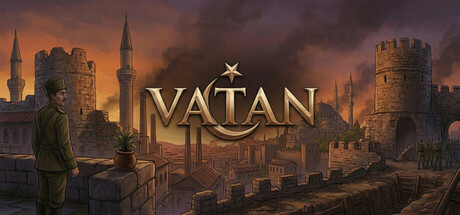
During the development of Vatan, generative AI tools were used exclusively during the visualization phase to create certain in-game artwork and store assets (such as store capsules). AI was not used in any other aspect of the game, such as coding, story writing, or audio design.
We highly value player choice. For players who prefer not to see AI-generated content, we have included a dedicated toggle in the settings menu. By selecting the 'Disable AI' option, players can easily turn off all AI-generated visuals in the game.
Some artwork (character sprites, backgrounds, and story cover images) was created with the assistance of generative AI image tools, with human review and curation. Story text for Adventure mode was written with the assistance of generative AI, with human editing and oversight.
This game uses live-generated AI to create text-based dialogue and narrative responses during gameplay. Players can type messages to interact with AI-driven characters and story events, and the AI may generate contextual responses based on the player’s input and current game state. AI-generated content in this game is limited to in-game text and narrative interaction.
📝 AI Generation Transparency (Steam Store Page)
1. Real-Time Narrative Gameplay (LLM):
The core of the game is powered by an advanced Large Language Model (AI) that generates kidnappers' responses in real-time. Unlike traditional games, your dialogues are not limited to pre-written choices. The AI interprets your arguments, your tone, and your creativity to offer unique and unpredictable reactions. We have implemented strict moderation filters to ensure that all interactions remain within the satirical framework of the game and fully comply with Steam’s community guidelines.
2. Pre-Production Creative Assistance:
We utilized AI-generative image tools for artistic exploration and concept art during the initial design phases. This allowed us to define the game's "moonshot" and vibrant aesthetic.Important Note: All final visual assets (interfaces, characters, environments) have been retouched, finalized, or recreated by our human team to ensure total artistic consistency and full respect for intellectual property.
All Store images built with a baseline of Genertive AI and heavly modified before upload
Some Code mainly underlying Features are Made With Generative AI
Pingo uses generative AI to provide certain dialogue, monologue, and personalized text interactions. When these features are enabled, the game generates responses based on player input, context, and the selected AI configuration. Some features may connect to external AI services, and players may also choose to use their own compatible models or API configuration.
AI Disclosure (Text Content):
This game uses generative AI to assist in creating in-game text descriptions, specifically for:
Game Concepts & Descriptions: Some fictional game ideas and descriptions within the simulation are pre-generated using AI text models.
Manual Oversight: All AI-generated text has been manually reviewed and edited by the developer to ensure it contains no prohibited content and aligns with the game's creative direction.
No real-time AI generation occurs during gameplay.
AI was used to proofread and correct texts.
No game assets were generated by AI.
All assets were either produced:
In-house
Commissioned from freelancers
From 3rd party asset providers
The developer describes how AI-generated content is used in this game as follows:
This game contains pre-generated content created with the assistance of generative artificial intelligence, including portions of the artwork, audio, and store or marketing visual assets. All such content has been curated and integrated by the developer. Real-time generative AI is not used during gameplay.
Some artwork and visual assets in this game were created with the assistance of generative AI tools. All audio, including voice recordings, was recorded by humans.
All assets in this project are handcrafted, the only usage of generative AI is locally run LLM (Large Language Models), TTS (Text To Speech), and STT (Speech To Text) systems used for the optional feature of live conversation with the user created character.
Some in-game art is created with AI-assisted workflows.
Players can also use AI to generate their own characters from photos, making each hero feel more personal.
No AI was used to write the storyline or visual assets in the game. All of it is my own creative work. However, AI was used to assist in the creation of game artwork used for the store page and for helping craft and improve store descriptions.
We have used AI primarily for image generation and for optimizing the network system in Typer3000. AI-driven image generation allowed us to rapidly create and iterate visual assets such as backgrounds, interface elements, and stylistic variations, ensuring a consistent and scalable visual design.
In addition, we have used AI to support the setup and optimization of the multiplayer network architecture. It helped us refine data transmission strategies, reduce latency, and improve synchronization of player inputs, resulting in a smooth and responsive real-time gameplay experience.
This game uses generative AI only to create some 2D visual assets (e.g. key art, logos, achievement icons and other marketing/store artwork). All AI-generated content is pre-rendered, manually reviewed, and static.
The game itself does not perform any live AI generation, does not take user prompts for AI, and does not send any user data to AI services.
During development, this game used generative AI tools to help brainstorm, expand, and polish narrative and dialogue text, and to assist with in-editor organization in the development stage (for example, using novel/story-related plugins to structure plot outlines). All such material was reviewed, rewritten, and unified by the team; the final in-game text is based on the version approved by the team.
If a game build includes dialogue or text generated in real time by a large language model (for example, online responses from a third-party AI service), we will update this disclosure with the specific scope when that feature goes live. In the currently public version, the experience is primarily based on pre-written, human-reviewed story content.
We did not use generative AI to replace basic fact-checking for historical subject matter; statements involving history and historical figures remain guided by design intent and human oversight.
Generative AI is used to assist with the creation of some art assets, voice content, and localization/translation. All localized text is reviewed and edited by the developer.
Currently, all locales are generated by an LLM. However, I am making significant efforts to ensure that all supported UI languages 100% human-made for the future.
If the user chooses to, there are alternative translation models to download & use through the community repository. These are all text generative AI.
VainGraphics is a local AI workspace application. Its core functionality heavily utilizes live-generated AI content, allowing users to run Large Language Models (LLMs) to generate text, stories, and code snippets, as well as image generation models to create local artwork. All generative processes run locally on the user's hardware.
AI tools were utilized during the development of this application for programming code architecture, store description translations, and the creation of core visual content including avatar illustrations, outfits, and graphic assets.
Based on these AI-generated visuals, we carefully handcrafted the layered asset separation and implemented real-time motion synchronization with keyboard and gamepad inputs to optimize it as a streamer tool.
We have conducted thorough reviews regarding rights and usage to ensure that users can safely and freely use these avatars, including for commercial streaming purposes.
Foundation Typer uses generative AI-assisted artwork, voice, and cinematic media elements for certain visual and promotional content, including portions of trailers, character presentation, and store assets. All gameplay systems, lesson structure, progression design, typing mechanics, interface functionality, and core training content were created and assembled as part of the game's original development.
Some art assets, promotional materials, or puzzle images in this game may have been created with the assistance of AI tools. All AI-assisted content is reviewed, edited, selected, and finalized by the developer before being used in the game.
The game does not include live generative AI features. Players will not enter prompts or generate new AI text, images, audio, or other content during gameplay. AI is only used as an auxiliary art creation tool during development.
This game uses generative AI tools during development.
All voice-over audio is generated using AI tools.
The game does not use live generative AI during gameplay.
The developer utilized AI tools to assist in the development process. AI was used to help generate concept art, some minor 2D environmental textures/UI elements, and to assist with structuring the game's programming framework. All AI-assisted content has been reviewed, heavily modified, and manually integrated by the developer to match the game's specific artistic vision and mechanics.
During the development of Vatan, generative AI tools were used exclusively during the visualization phase to create certain in-game artwork and store assets (such as store capsules). AI was not used in any other aspect of the game, such as coding, story writing, or audio design.
We highly value player choice. For players who prefer not to see AI-generated content, we have included a dedicated toggle in the settings menu. By selecting the 'Disable AI' option, players can easily turn off all AI-generated visuals in the game.
Some artwork (character sprites, backgrounds, and story cover images) was created with the assistance of generative AI image tools, with human review and curation. Story text for Adventure mode was written with the assistance of generative AI, with human editing and oversight.
This game uses live-generated AI to create text-based dialogue and narrative responses during gameplay. Players can type messages to interact with AI-driven characters and story events, and the AI may generate contextual responses based on the player’s input and current game state. AI-generated content in this game is limited to in-game text and narrative interaction.
📝 AI Generation Transparency (Steam Store Page)
1. Real-Time Narrative Gameplay (LLM):
The core of the game is powered by an advanced Large Language Model (AI) that generates kidnappers' responses in real-time. Unlike traditional games, your dialogues are not limited to pre-written choices. The AI interprets your arguments, your tone, and your creativity to offer unique and unpredictable reactions. We have implemented strict moderation filters to ensure that all interactions remain within the satirical framework of the game and fully comply with Steam’s community guidelines.
2. Pre-Production Creative Assistance:
We utilized AI-generative image tools for artistic exploration and concept art during the initial design phases. This allowed us to define the game's "moonshot" and vibrant aesthetic.Important Note: All final visual assets (interfaces, characters, environments) have been retouched, finalized, or recreated by our human team to ensure total artistic consistency and full respect for intellectual property.
All Store images built with a baseline of Genertive AI and heavly modified before upload
Some Code mainly underlying Features are Made With Generative AI
Pingo uses generative AI to provide certain dialogue, monologue, and personalized text interactions. When these features are enabled, the game generates responses based on player input, context, and the selected AI configuration. Some features may connect to external AI services, and players may also choose to use their own compatible models or API configuration.
AI Disclosure (Text Content):
This game uses generative AI to assist in creating in-game text descriptions, specifically for:
Game Concepts & Descriptions: Some fictional game ideas and descriptions within the simulation are pre-generated using AI text models.
Manual Oversight: All AI-generated text has been manually reviewed and edited by the developer to ensure it contains no prohibited content and aligns with the game's creative direction.
No real-time AI generation occurs during gameplay.
AI was used to proofread and correct texts.
No game assets were generated by AI.
All assets were either produced:
In-house
Commissioned from freelancers
From 3rd party asset providers
The developer describes how AI-generated content is used in this game as follows:
This game contains pre-generated content created with the assistance of generative artificial intelligence, including portions of the artwork, audio, and store or marketing visual assets. All such content has been curated and integrated by the developer. Real-time generative AI is not used during gameplay.
Some artwork and visual assets in this game were created with the assistance of generative AI tools. All audio, including voice recordings, was recorded by humans.
All assets in this project are handcrafted, the only usage of generative AI is locally run LLM (Large Language Models), TTS (Text To Speech), and STT (Speech To Text) systems used for the optional feature of live conversation with the user created character.
Some in-game art is created with AI-assisted workflows.
Players can also use AI to generate their own characters from photos, making each hero feel more personal.
No AI was used to write the storyline or visual assets in the game. All of it is my own creative work. However, AI was used to assist in the creation of game artwork used for the store page and for helping craft and improve store descriptions.
We have used AI primarily for image generation and for optimizing the network system in Typer3000. AI-driven image generation allowed us to rapidly create and iterate visual assets such as backgrounds, interface elements, and stylistic variations, ensuring a consistent and scalable visual design.
In addition, we have used AI to support the setup and optimization of the multiplayer network architecture. It helped us refine data transmission strategies, reduce latency, and improve synchronization of player inputs, resulting in a smooth and responsive real-time gameplay experience.
This game uses generative AI only to create some 2D visual assets (e.g. key art, logos, achievement icons and other marketing/store artwork). All AI-generated content is pre-rendered, manually reviewed, and static.
The game itself does not perform any live AI generation, does not take user prompts for AI, and does not send any user data to AI services.
During development, this game used generative AI tools to help brainstorm, expand, and polish narrative and dialogue text, and to assist with in-editor organization in the development stage (for example, using novel/story-related plugins to structure plot outlines). All such material was reviewed, rewritten, and unified by the team; the final in-game text is based on the version approved by the team.
If a game build includes dialogue or text generated in real time by a large language model (for example, online responses from a third-party AI service), we will update this disclosure with the specific scope when that feature goes live. In the currently public version, the experience is primarily based on pre-written, human-reviewed story content.
We did not use generative AI to replace basic fact-checking for historical subject matter; statements involving history and historical figures remain guided by design intent and human oversight.
Generative AI is used to assist with the creation of some art assets, voice content, and localization/translation. All localized text is reviewed and edited by the developer.
Currently, all locales are generated by an LLM. However, I am making significant efforts to ensure that all supported UI languages 100% human-made for the future.
If the user chooses to, there are alternative translation models to download & use through the community repository. These are all text generative AI.