Public Steam disclosure research25,376 disclosures tracked
Where do games disclose AI use?
Search developers’ Steam disclosures, compare classified AI use across
games, and follow recorded changes.
This index adds cross-game classifications and statistics to
statements published on individual store pages.
Groups reflect automatic analysis of public disclosures; mature records are excluded. These counts do not measure AI use across all of Steam.
Missing or unclear statements cannot establish whether a game uses AI.
Generative AI was used to assist in the development of the game, including parts of the game engine code, internal development tools, some visual assets, and language proofreading. All AI-generated output was reviewed and supervised by a human. The game's audio was sourced from third-party providers outside the studio and, to the best of our knowledge, was not created using generative AI.
This game was created in collaboration with my friend Claude Code.
Listen.. I know AI is hated by the community, but I am a single developer with limited time and i wanted to make my progress during that time more efficient.
The direction comes from my side and the passion for this project is still real.
Generative AI tools were used to translate in-game text. Translations into languages spoken by the development team have been reviewed and corrected. Other languages rely primarily on these AI tools.
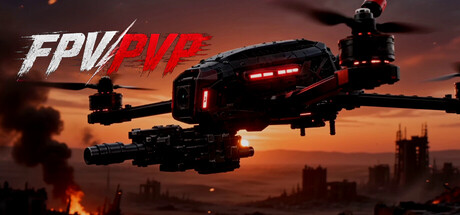
Some promotional and marketing materials for FPV PVP - specifically the cinematic announcement trailer and portions of the Steam store capsule/key artwork - were produced with the help of generative AI video and image tools, using our own original in-game drone model and game assets as the reference input. All in-game content (gameplay, 3D models, maps, UI, code and audio) is created by the developer and is not generative-AI content. The game does not generate any AI content live at runtime.
Generative AI was used during the development process to assist with code optimization, refactoring, and text translation. None of the AI-generated content is generated in real-time or active during live gameplay.
Some art assets, textures, and sound effects are created with the assistance of AI tools, then curated and edited by the developer. All game design, gameplay systems, code architecture, physics simulation, and mission design are human-made. No AI-generated content is created at runtime.
As a solo developer with a limited budget, I use AI tools to help produce some assets and sounds. This lets me keep my time focused where a solo dev's hours matter most — the core gameplay, the physics simulation, and mission design — while still delivering production quality that would normally require an extended team. Every AI-assisted asset is curated, edited, and integrated by hand.
Generative technologies are used in Korea. IL-2 Series as production tools for selected types of content: in-game radio communications, pilot portraits and images used in Career mode.
Radio communications use text-to-speech technology based on voice recordings made by our team and voice actors under the relevant agreements.
Pilot portraits and Career mode images are created with AI-assisted workflows based on our own assets, in-game screenshots, models, and historical references, then manually reviewed and refined by our artists.
Generative AI is not used as a replacement for creative direction. All such content is curated, checked, and finalized by the development team.
AI-assisted tools were used to help create some splash screen visuals and store page promotional artwork. All assets were reviewed and finalized by the developer before being included in the game and store materials.
This game uses text-to-speech to generate character voices, image-to-3D tools to create ship models, and image-to-video tools to produce cinematic sequences you may encounter during gameplay.
AI-generated content has been used to enhance and enrich the in-game experience.
This game uses generative AI during development to assist with concept art,
texture drafts, store media preparation, and iteration of visual assets.
Final in-game assets are reviewed, edited, and integrated by the developer
before release. The game does not use generative AI to create live gameplay
content during play.
VoidCraft uses generative AI in two ways. During development, AI tools assisted in creating written content that ships with the game (lore, item and research descriptions, mission templates, NPC flavour text) and in exploring marketing artwork concepts; all of it was reviewed by the developer before inclusion. During gameplay, two features generate text live using large language models: the optional in-game Advisor, which analyses your empire and offers strategy advice in character, and contract mission briefings (titles, short stories, and NPC names) on station contract boards. Players cannot type free-form prompts into these systems - the AI receives only structured game-state data assembled by our servers, and every output is validated server-side before it appears in the game. Core gameplay (combat, economy, progression, rewards) is governed by deterministic game rules, not by AI.
I am a solo developer who worked with external freelancers for art and audio. Some assets provided by these contributors might have been created or assisted by generative AI tools, though their specific workflow was not monitored.
We only use artificial intelligence tools to generate background music for the game (such as the background music for starting the game interface), promotional videos (CG promotional videos), and some UI background images (background images for the backpack interface), which are directly embedded into the game's assets. During the game, no artificial intelligence models were used to create or generate new content in real-time. No AI generated code was used either.
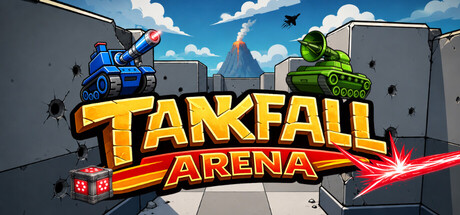
TankFall Arena contains certain pre-generated assets created with the assistance of generative AI tools during development. These assets may include promotional artwork, visual elements, audio content, and music. All AI-assisted content has been reviewed, curated, modified, and integrated by the developer as part of the game's overall design and presentation.
TankFall Arena does not generate AI content during gameplay and does not connect to external AI services while the game is running.
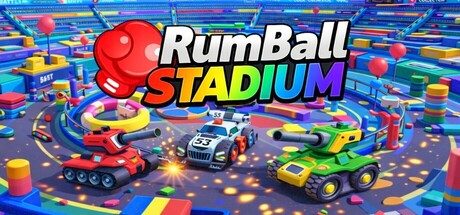
Some assets in RumBall Stadium were created with the assistance of generative AI tools, specifically the main game thumbnail and a selection of icons and background images used in the game's menus. All gameplay content, including vehicles, arenas, and game systems, was developed by the development team.
Generative AI was used to assist with the creation of some 3D models, music, sound effects, and certain visual assets used in the game and on the store page. Tools such as Meshy AI and Suno AI were used during asset creation. All final assets were reviewed, selected, and edited before being included in the final product.
Visual AI assets were used to fasten the development process, with caution and help of art direction to keep the sketch art style consistent and avoid being another AI slop game.
This game includes AI‑generated assets, such as sprites, icons, illustrations, and sound effects. All AI‑generated content was created during development, manually reviewed, and integrated as static assets.
The game does not generate any AI content during gameplay, and it does not create dynamic images, audio, or text for players. All included assets are fixed and safe.
Currently, this game uses placeholder generative AI images for character portraits and voiceovers for the announcer. Hopefully these assets will be replaced by talented artists overtime.
Some cosmetic assets and sticker designs used in the game were created or assisted with the help of generative AI tools. All AI-generated content was reviewed and modified before being included in the final product.
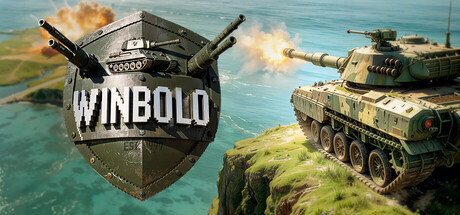
WinBolo's core engine and gameplay code was originally written by John Morrison between 1998 and 2008. The 2.0 modernization — including build system updates, the networking rewrite and platform ports — was developed with assistance from AI coding tools, with all architectural decisions, code review, and final integration handled by John Morrison.
Some non-gameplay marketing materials — including images and video elements used in trailers, social media, and the store page — were created using AI image generation as a starting point, with composition, editing, effects, and final selection done by hand. Gameplay screenshots and video footage are unedited captures from the actual game.
The game itself contains no generative AI content at runtime. Player-facing in-game assets (graphics, sound, music, text, UI) are human-created. The in-game AI opponents ("Brains," including NewAutopilot and future ML-trained agents) use traditional game AI techniques and trained reinforcement-learning models — they don't generate text, images, or audio during play.
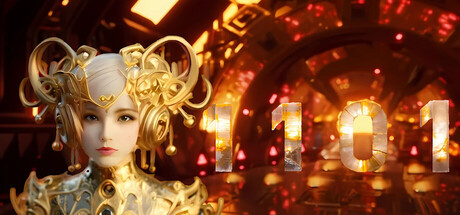
Our Creative Approach: A Human-First Duo and AI Disclosure
We are a passionate two-person team dedicated to bringing 1101 to life. To achieve the visual depth and cinematic quality we envisioned as a small studio, we utilized AI-assisted tools specifically for cinematic refinement, 3D texturing and modeling.
Here is exactly how we use AI to support our hand-crafted work:
From Concept to 3D Reality
Our 3D creation process combines traditional artistry with modern efficiency. Once we finalize a self-made image reference, hand-drawn sketch or a custom-generated image reference, we use AI-assisted modeling tools to convert that 2D vision into a 3D base mesh.
The Human Touch
This AI-assisted object is only the starting point. As a two-person team, we then step in to manually refine the geometry, adjust the proportions, and hand-modify the details. This "Human-in-the-Loop" approach allows us to bridge the gap between a 2D idea and a high-quality 3D asset, ensuring every object fits perfectly within our world’s hand-crafted design.
Cinematics: AI tools helped us polish visuals in our cinematics, allowing us to deliver high-quality storytelling that would typically require a much larger team.
Everything else is human-made. From the core gameplay mechanics and level design to the dialogue, music, and sound effects, every "soul" of this game comes directly from our hands. Ultimately, being an indie underdog means being resourceful. Using these tools wasn't about cutting corners; it was about bridging the gap to deliver a high-quality experience that a duo could otherwise never achieve. We’ve used technology to work harder on what matters most: making a game you'll love to play.
Generative AI was used for base sprites and code. All assets were manually edited and adapted to match the game's aesthetic and ensure originality. Content is static and pre-rendered.
Some visual assets were created with the assistance of generative AI and later refined by the developer. All content has been reviewed for originality. No generative AI is used during gameplay.
AI was used as limited support in creating certain elements.
All generated content was reviewed and manually adjusted by the developer.
There is no AI-generated content during gameplay.
All assets used have valid commercial licenses.
I’m a solo developer and I use my own cat photography in the game. Some of those photos were transformed into in-game card art with generative AI. Both my original photography and the card art based on it are included in the game. Voice lines in the intro cinematic were also generated with AI. Generative AI is also used when generating stylized weapon & power-up cards. Final assets were selected and edited by the developer.
The following content is created with generative AI: character portraits, background music, and cover/promo material (hand-made in-game screenshots edited/overpainted with AI-assisted tools). All other content (code, game mechanics, driving physics, 3D assets, sound effects, text, track design, gameplay) is hand-made without AI generation.
This game was developed with AI assistance for visual assets, sound effects, localization, and code. All AI-generated content was pre-generated during development and reviewed by the developer. No real-time AI content generation occurs during gameplay.
Generative AI was used to assist in the development of the game, including parts of the game engine code, internal development tools, some visual assets, and language proofreading. All AI-generated output was reviewed and supervised by a human. The game's audio was sourced from third-party providers outside the studio and, to the best of our knowledge, was not created using generative AI.
This game was created in collaboration with my friend Claude Code.
Listen.. I know AI is hated by the community, but I am a single developer with limited time and i wanted to make my progress during that time more efficient.
The direction comes from my side and the passion for this project is still real.
Generative AI tools were used to translate in-game text. Translations into languages spoken by the development team have been reviewed and corrected. Other languages rely primarily on these AI tools.
Some promotional and marketing materials for FPV PVP - specifically the cinematic announcement trailer and portions of the Steam store capsule/key artwork - were produced with the help of generative AI video and image tools, using our own original in-game drone model and game assets as the reference input. All in-game content (gameplay, 3D models, maps, UI, code and audio) is created by the developer and is not generative-AI content. The game does not generate any AI content live at runtime.
Generative AI was used during the development process to assist with code optimization, refactoring, and text translation. None of the AI-generated content is generated in real-time or active during live gameplay.
Some art assets, textures, and sound effects are created with the assistance of AI tools, then curated and edited by the developer. All game design, gameplay systems, code architecture, physics simulation, and mission design are human-made. No AI-generated content is created at runtime.
As a solo developer with a limited budget, I use AI tools to help produce some assets and sounds. This lets me keep my time focused where a solo dev's hours matter most — the core gameplay, the physics simulation, and mission design — while still delivering production quality that would normally require an extended team. Every AI-assisted asset is curated, edited, and integrated by hand.
Generative technologies are used in Korea. IL-2 Series as production tools for selected types of content: in-game radio communications, pilot portraits and images used in Career mode.
Radio communications use text-to-speech technology based on voice recordings made by our team and voice actors under the relevant agreements.
Pilot portraits and Career mode images are created with AI-assisted workflows based on our own assets, in-game screenshots, models, and historical references, then manually reviewed and refined by our artists.
Generative AI is not used as a replacement for creative direction. All such content is curated, checked, and finalized by the development team.
AI-assisted tools were used to help create some splash screen visuals and store page promotional artwork. All assets were reviewed and finalized by the developer before being included in the game and store materials.
This game uses text-to-speech to generate character voices, image-to-3D tools to create ship models, and image-to-video tools to produce cinematic sequences you may encounter during gameplay.
AI-generated content has been used to enhance and enrich the in-game experience.
This game uses generative AI during development to assist with concept art,
texture drafts, store media preparation, and iteration of visual assets.
Final in-game assets are reviewed, edited, and integrated by the developer
before release. The game does not use generative AI to create live gameplay
content during play.
VoidCraft uses generative AI in two ways. During development, AI tools assisted in creating written content that ships with the game (lore, item and research descriptions, mission templates, NPC flavour text) and in exploring marketing artwork concepts; all of it was reviewed by the developer before inclusion. During gameplay, two features generate text live using large language models: the optional in-game Advisor, which analyses your empire and offers strategy advice in character, and contract mission briefings (titles, short stories, and NPC names) on station contract boards. Players cannot type free-form prompts into these systems - the AI receives only structured game-state data assembled by our servers, and every output is validated server-side before it appears in the game. Core gameplay (combat, economy, progression, rewards) is governed by deterministic game rules, not by AI.
I am a solo developer who worked with external freelancers for art and audio. Some assets provided by these contributors might have been created or assisted by generative AI tools, though their specific workflow was not monitored.
We only use artificial intelligence tools to generate background music for the game (such as the background music for starting the game interface), promotional videos (CG promotional videos), and some UI background images (background images for the backpack interface), which are directly embedded into the game's assets. During the game, no artificial intelligence models were used to create or generate new content in real-time. No AI generated code was used either.
TankFall Arena contains certain pre-generated assets created with the assistance of generative AI tools during development. These assets may include promotional artwork, visual elements, audio content, and music. All AI-assisted content has been reviewed, curated, modified, and integrated by the developer as part of the game's overall design and presentation.
TankFall Arena does not generate AI content during gameplay and does not connect to external AI services while the game is running.
Some assets in RumBall Stadium were created with the assistance of generative AI tools, specifically the main game thumbnail and a selection of icons and background images used in the game's menus. All gameplay content, including vehicles, arenas, and game systems, was developed by the development team.
Generative AI was used to assist with the creation of some 3D models, music, sound effects, and certain visual assets used in the game and on the store page. Tools such as Meshy AI and Suno AI were used during asset creation. All final assets were reviewed, selected, and edited before being included in the final product.
Visual AI assets were used to fasten the development process, with caution and help of art direction to keep the sketch art style consistent and avoid being another AI slop game.
This game includes AI‑generated assets, such as sprites, icons, illustrations, and sound effects. All AI‑generated content was created during development, manually reviewed, and integrated as static assets.
The game does not generate any AI content during gameplay, and it does not create dynamic images, audio, or text for players. All included assets are fixed and safe.
Currently, this game uses placeholder generative AI images for character portraits and voiceovers for the announcer. Hopefully these assets will be replaced by talented artists overtime.
Some cosmetic assets and sticker designs used in the game were created or assisted with the help of generative AI tools. All AI-generated content was reviewed and modified before being included in the final product.
WinBolo's core engine and gameplay code was originally written by John Morrison between 1998 and 2008. The 2.0 modernization — including build system updates, the networking rewrite and platform ports — was developed with assistance from AI coding tools, with all architectural decisions, code review, and final integration handled by John Morrison.
Some non-gameplay marketing materials — including images and video elements used in trailers, social media, and the store page — were created using AI image generation as a starting point, with composition, editing, effects, and final selection done by hand. Gameplay screenshots and video footage are unedited captures from the actual game.
The game itself contains no generative AI content at runtime. Player-facing in-game assets (graphics, sound, music, text, UI) are human-created. The in-game AI opponents ("Brains," including NewAutopilot and future ML-trained agents) use traditional game AI techniques and trained reinforcement-learning models — they don't generate text, images, or audio during play.
Our Creative Approach: A Human-First Duo and AI Disclosure
We are a passionate two-person team dedicated to bringing 1101 to life. To achieve the visual depth and cinematic quality we envisioned as a small studio, we utilized AI-assisted tools specifically for cinematic refinement, 3D texturing and modeling.
Here is exactly how we use AI to support our hand-crafted work:
From Concept to 3D Reality
Our 3D creation process combines traditional artistry with modern efficiency. Once we finalize a self-made image reference, hand-drawn sketch or a custom-generated image reference, we use AI-assisted modeling tools to convert that 2D vision into a 3D base mesh.
The Human Touch
This AI-assisted object is only the starting point. As a two-person team, we then step in to manually refine the geometry, adjust the proportions, and hand-modify the details. This "Human-in-the-Loop" approach allows us to bridge the gap between a 2D idea and a high-quality 3D asset, ensuring every object fits perfectly within our world’s hand-crafted design.
Cinematics: AI tools helped us polish visuals in our cinematics, allowing us to deliver high-quality storytelling that would typically require a much larger team.
Everything else is human-made. From the core gameplay mechanics and level design to the dialogue, music, and sound effects, every "soul" of this game comes directly from our hands. Ultimately, being an indie underdog means being resourceful. Using these tools wasn't about cutting corners; it was about bridging the gap to deliver a high-quality experience that a duo could otherwise never achieve. We’ve used technology to work harder on what matters most: making a game you'll love to play.
Generative AI was used for base sprites and code. All assets were manually edited and adapted to match the game's aesthetic and ensure originality. Content is static and pre-rendered.
Some visual assets were created with the assistance of generative AI and later refined by the developer. All content has been reviewed for originality. No generative AI is used during gameplay.
AI was used as limited support in creating certain elements.
All generated content was reviewed and manually adjusted by the developer.
There is no AI-generated content during gameplay.
All assets used have valid commercial licenses.
I’m a solo developer and I use my own cat photography in the game. Some of those photos were transformed into in-game card art with generative AI. Both my original photography and the card art based on it are included in the game. Voice lines in the intro cinematic were also generated with AI. Generative AI is also used when generating stylized weapon & power-up cards. Final assets were selected and edited by the developer.
The following content is created with generative AI: character portraits, background music, and cover/promo material (hand-made in-game screenshots edited/overpainted with AI-assisted tools). All other content (code, game mechanics, driving physics, 3D assets, sound effects, text, track design, gameplay) is hand-made without AI generation.
This game was developed with AI assistance for visual assets, sound effects, localization, and code. All AI-generated content was pre-generated during development and reviewed by the developer. No real-time AI content generation occurs during gameplay.