Public Steam disclosure research25,497 disclosures tracked
Where do games disclose AI use?
Search developers’ Steam disclosures, compare classified AI use across
games, and follow recorded changes.
This index adds cross-game classifications and statistics to
statements published on individual store pages.
Groups reflect automatic analysis of public disclosures; mature records are excluded. These counts do not measure AI use across all of Steam.
Missing or unclear statements cannot establish whether a game uses AI.
Generative AI tools were used as part of the development and drafting workflow. Hex Tower Boogie does not generate content during gameplay, does not connect to external AI services, and all shipped/store content is reviewed and curated by the developer.
Generative AI was used only for pre-generation of some content. It was used to create some marketing materials for the store page, as well as music and some sound effects. All such content was reviewed, selected, and finalized by the developer before being included in the game or published on the store page.
The game does not utilize real-time generative AI. Generative AI does not contribute to the story, enemy behavior, gameplay, dialogue, or any other interaction with the player during gameplay.
This game used generative AI tools during development to assist with the creation and iteration of some visual assets, text and code. All AI-assisted content was reviewed, edited and manually implemented by the developer. The game does not generate AI content during gameplay.
This title makes assistive use of generative AI tools in the following areas. All AI-generated outputs are manually reviewed, edited, and curated by the development team before being incorporated as final assets, and we have taken care to ensure that they do not infringe on the rights of third parties. No real-time AI generation occurs during gameplay.[Pre-Rendered Content — AI-Assisted Areas]- Production support for a portion of the in-game visual assets- Production support for a portion of the in-game music (BGM) and sound effects- Translation support for store page localization across supported languages (with human proofreading)[Live Generation]The game does not invoke generative AI in real time at any point during gameplay.
The visual assets, audio, music, in-game text, and store page content of this game were created with the help of generative AI tools. All AI-generated content was reviewed, selected, and assembled by the developer. The game's design, code, and systems were created by the developer.
Generative AI tools were used during development for ideation, development assistance, and promotional exploration. All final gameplay systems, game logic, and in-game content were created and reviewed by the developer.
Game design, code, mechanics, gameplay systems, sprites, and writing are entirely human-made. All AI-generated assets were reviewed, edited, composed, and integrated manually by the developer. No AI content is generated at runtime — every asset is pre-authored and curated.
Generative AI was used in the creation of:
Marketing and store page artwork (capsules, banners, hero, logo)
In-game background art, sprites directions
Music tracks
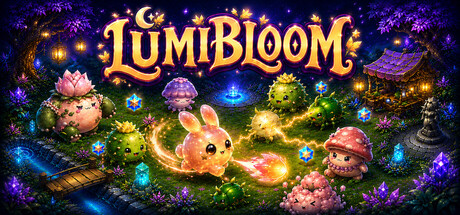
Some visual assets, promotional artwork, sound concepts, and early creative content for Lumibloom were created or assisted using generative AI tools during development. All AI-assisted content is reviewed, edited, and integrated by the developer to fit the game’s final artistic direction and gameplay experience.
The following aspects of this game's development were assisted by AI tools:
• Code architecture planning and refactoring suggestions
• Debugging assistance
• Localization (English / Simplified Chinese / Japanese / and other supported languages)
• Initial drafts of select art assets
• Background music generation (SUNO)
All AI-generated output was reviewed, edited, and integrated by a human before inclusion in the final build. Core gameplay design, balancing, and final decisions were made by the developer.
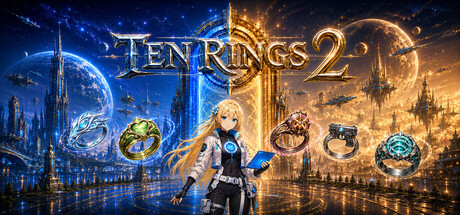
Ten Rings 2 uses generative AI during development to assist with some 2D visual asset production, concept iteration, and writing drafts. Final in-game content is selected, edited, integrated, and reviewed by the developer. Generative AI is not used to create live or personalized content during gameplay.
This game contains pre-generated content created with the assistance of generative AI tools during development.
AI was used mainly for card illustrations, UI design drafts, some text creation assistance, and programming assistance.
The game does not generate new images, audio, text, or other content using AI during gameplay.
Some promotional artwork, store capsule images, and marketing visuals were created with the assistance of generative AI tools and then reviewed, selected, and edited by the developer. The game itself does not generate new AI content during gameplay.
During the development of Super Monsterdoom, generative AI tools were used to support text creation, visual exploration, and mechanical iteration. As a solo developer, these tools were key to accelerating and expanding the process, but every final asset, text, and design decision went through extensive human editing, refinement, and hands-on work.
We begin by defining detailed character backgrounds, which are then transformed into base concept art using generative AI. Subsequently, we perform local editing, detailed repainting, and textural refinement on these images to ensure every asset meets our specific design requirements.
WizKitty uses generative AI-assisted artwork for some visual assets. These assets were creatively directed, curated, edited, and integrated by the developer to fit the game’s visual style. WizKitty does not use live generative AI during gameplay.
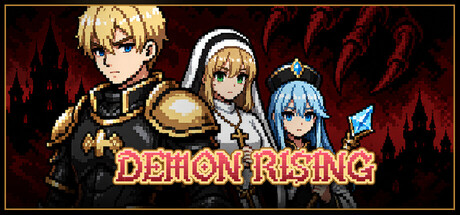
Demon Rising uses generative AI for part of its content:
Live-generated narrative — The game includes a local AI language model that runs fully offline on your PC; no internet connection is required and no data is sent anywhere. During play it generates dynamic dialogue for your demon officers, war-council debates, prisoner interrogations and boss encounters, keeping conversations varied across runs. All generated text is constrained by the game's prompts to in-game characters and situations and is bounded by built-in safeguards. If the AI model is unavailable, the game automatically falls back to hand-written dialogue, so the full game is playable either way.
Pre-generated artwork — Some character portraits and illustrations were created with the help of AI image-generation tools, then selected and edited by the developer.
All AI-assisted content is curated and reviewed by the developer.
Since our artistic skills don't quite allow us to realize everything we have in mind, we use AI to create some visuals, but we also try to edit them so as not to degrade the gaming experience.
I'm a solo developer using Generative AI as a supportive tool to realize my gameplay vision. The game has been crafted with human intent and is still firmly anchored in manual craftsmanship. Generative AI has helped with coding, some art assets, and the recording of voiceover narration.
Some background environments and character animations in this game were created with the assistance of AI generation tools. All AI-generated content has been reviewed, edited, and integrated by the development team to ensure quality and consistency with the game's artistic vision.
This game utilizes pre-generated AI content across multiple disciplines, including visual assets, code optimization, and audio design. These tools were used strictly to assist a solo developer in the production process. All AI-assisted assets have been thoroughly vetted to ensure they adhere to copyright and intellectual property standards, and no live-generation tools are present in the build.
During the development process, procedural- and AI-based tools were used to assist with content creation. In all such cases, the final product reflects the creativity and expression of our own team.
We do not knowingly use any AI-generated content that infringes on existing copyrighted works.
The soundtrack and sound effects were made using AI tools, then edited and mixed by hand to fit the game. Localization for non-English languages was AI-translated.
Some vfx sprite sheets and art were generated and then photoshopped and shaders added. I generated some images 100 plus times to make sure the style didn't drift. I photoshopped AI images to get what I wanted. AI generated images were guided by my thoughts the entire time.
A few visual assets are hand-drawn but most of the assets were created by either Perchance or ChatGPT and then heavily cleaned/edited in photoshop by myself to fit into the game. Music was created by Suno and edited in Audacity.
Coding was done from scratch, no AI used in that at all.
AI tools were used during development only for pre-generated content, including concept/reference artwork, store assets, music/audio drafts, and localization or translation assistance.
The game does not generate AI content at runtime. Players do not interact with any live AI system, and no text, images, audio, or gameplay content is dynamically generated by AI while the game is running.
All AI-assisted content is reviewed, edited, and integrated by the developer before release.
We used generative AI tools to assist with drafting and localizing store page text. All AI-assisted text is reviewed and edited by our team before publication. The game does not use live-generated AI content during gameplay.
In our game, some sections of code are generated by artificial intelligence, a common practice among developers and quality assurance engineers. Some images are also generated by artificial intelligence.
This application uses local AI technology for interaction, although the chosen TTS and STT plugins have not yet been selected because the word game is still under development.
However, it is confirmed that plugins from the FAB marketplace will be used. And AI processing will run offline on player's device. No internet connection will be required.
Visual AI assets were used to fasten the development process, with caution and help of art direction to keep the sketch art style consistent and avoid being another AI slop game.
Some visual elements in this game, such as textures and illustrations, were partially generated or enhanced using artificial intelligence tools, and then manually refined and integrated by the development team.
Some textures and mesh concepts were initially generated using AI-assisted tools. All assets have been significantly modified, refined, and integrated manually using 3d software. The developer is working to rid the game of AI generated content come launch.
I use AI to summarize documentation, criticize my code, and help me make sense of error messages.
Sometimes I feel discouraged and I ask AI to write stuff for me. Seeing the garbage it produces makes me feel better, and encourages me to try again :)
Generative AI tools were used as part of the development and drafting workflow. Hex Tower Boogie does not generate content during gameplay, does not connect to external AI services, and all shipped/store content is reviewed and curated by the developer.
Generative AI was used only for pre-generation of some content. It was used to create some marketing materials for the store page, as well as music and some sound effects. All such content was reviewed, selected, and finalized by the developer before being included in the game or published on the store page.
The game does not utilize real-time generative AI. Generative AI does not contribute to the story, enemy behavior, gameplay, dialogue, or any other interaction with the player during gameplay.
This game used generative AI tools during development to assist with the creation and iteration of some visual assets, text and code. All AI-assisted content was reviewed, edited and manually implemented by the developer. The game does not generate AI content during gameplay.
This title makes assistive use of generative AI tools in the following areas. All AI-generated outputs are manually reviewed, edited, and curated by the development team before being incorporated as final assets, and we have taken care to ensure that they do not infringe on the rights of third parties. No real-time AI generation occurs during gameplay.[Pre-Rendered Content — AI-Assisted Areas]- Production support for a portion of the in-game visual assets- Production support for a portion of the in-game music (BGM) and sound effects- Translation support for store page localization across supported languages (with human proofreading)[Live Generation]The game does not invoke generative AI in real time at any point during gameplay.
The visual assets, audio, music, in-game text, and store page content of this game were created with the help of generative AI tools. All AI-generated content was reviewed, selected, and assembled by the developer. The game's design, code, and systems were created by the developer.
Generative AI tools were used during development for ideation, development assistance, and promotional exploration. All final gameplay systems, game logic, and in-game content were created and reviewed by the developer.
Game design, code, mechanics, gameplay systems, sprites, and writing are entirely human-made. All AI-generated assets were reviewed, edited, composed, and integrated manually by the developer. No AI content is generated at runtime — every asset is pre-authored and curated.
Generative AI was used in the creation of:
Marketing and store page artwork (capsules, banners, hero, logo)
In-game background art, sprites directions
Music tracks
Some visual assets, promotional artwork, sound concepts, and early creative content for Lumibloom were created or assisted using generative AI tools during development. All AI-assisted content is reviewed, edited, and integrated by the developer to fit the game’s final artistic direction and gameplay experience.
The following aspects of this game's development were assisted by AI tools:
• Code architecture planning and refactoring suggestions
• Debugging assistance
• Localization (English / Simplified Chinese / Japanese / and other supported languages)
• Initial drafts of select art assets
• Background music generation (SUNO)
All AI-generated output was reviewed, edited, and integrated by a human before inclusion in the final build. Core gameplay design, balancing, and final decisions were made by the developer.
Ten Rings 2 uses generative AI during development to assist with some 2D visual asset production, concept iteration, and writing drafts. Final in-game content is selected, edited, integrated, and reviewed by the developer. Generative AI is not used to create live or personalized content during gameplay.
This game contains pre-generated content created with the assistance of generative AI tools during development.
AI was used mainly for card illustrations, UI design drafts, some text creation assistance, and programming assistance.
The game does not generate new images, audio, text, or other content using AI during gameplay.
Some promotional artwork, store capsule images, and marketing visuals were created with the assistance of generative AI tools and then reviewed, selected, and edited by the developer. The game itself does not generate new AI content during gameplay.
During the development of Super Monsterdoom, generative AI tools were used to support text creation, visual exploration, and mechanical iteration. As a solo developer, these tools were key to accelerating and expanding the process, but every final asset, text, and design decision went through extensive human editing, refinement, and hands-on work.
We begin by defining detailed character backgrounds, which are then transformed into base concept art using generative AI. Subsequently, we perform local editing, detailed repainting, and textural refinement on these images to ensure every asset meets our specific design requirements.
WizKitty uses generative AI-assisted artwork for some visual assets. These assets were creatively directed, curated, edited, and integrated by the developer to fit the game’s visual style. WizKitty does not use live generative AI during gameplay.
Demon Rising uses generative AI for part of its content:
Live-generated narrative — The game includes a local AI language model that runs fully offline on your PC; no internet connection is required and no data is sent anywhere. During play it generates dynamic dialogue for your demon officers, war-council debates, prisoner interrogations and boss encounters, keeping conversations varied across runs. All generated text is constrained by the game's prompts to in-game characters and situations and is bounded by built-in safeguards. If the AI model is unavailable, the game automatically falls back to hand-written dialogue, so the full game is playable either way.
Pre-generated artwork — Some character portraits and illustrations were created with the help of AI image-generation tools, then selected and edited by the developer.
All AI-assisted content is curated and reviewed by the developer.
Since our artistic skills don't quite allow us to realize everything we have in mind, we use AI to create some visuals, but we also try to edit them so as not to degrade the gaming experience.
I'm a solo developer using Generative AI as a supportive tool to realize my gameplay vision. The game has been crafted with human intent and is still firmly anchored in manual craftsmanship. Generative AI has helped with coding, some art assets, and the recording of voiceover narration.
Some background environments and character animations in this game were created with the assistance of AI generation tools. All AI-generated content has been reviewed, edited, and integrated by the development team to ensure quality and consistency with the game's artistic vision.
This game utilizes pre-generated AI content across multiple disciplines, including visual assets, code optimization, and audio design. These tools were used strictly to assist a solo developer in the production process. All AI-assisted assets have been thoroughly vetted to ensure they adhere to copyright and intellectual property standards, and no live-generation tools are present in the build.
During the development process, procedural- and AI-based tools were used to assist with content creation. In all such cases, the final product reflects the creativity and expression of our own team.
We do not knowingly use any AI-generated content that infringes on existing copyrighted works.
The soundtrack and sound effects were made using AI tools, then edited and mixed by hand to fit the game. Localization for non-English languages was AI-translated.
Some vfx sprite sheets and art were generated and then photoshopped and shaders added. I generated some images 100 plus times to make sure the style didn't drift. I photoshopped AI images to get what I wanted. AI generated images were guided by my thoughts the entire time.
A few visual assets are hand-drawn but most of the assets were created by either Perchance or ChatGPT and then heavily cleaned/edited in photoshop by myself to fit into the game. Music was created by Suno and edited in Audacity.
Coding was done from scratch, no AI used in that at all.
AI tools were used during development only for pre-generated content, including concept/reference artwork, store assets, music/audio drafts, and localization or translation assistance.
The game does not generate AI content at runtime. Players do not interact with any live AI system, and no text, images, audio, or gameplay content is dynamically generated by AI while the game is running.
All AI-assisted content is reviewed, edited, and integrated by the developer before release.
We used generative AI tools to assist with drafting and localizing store page text. All AI-assisted text is reviewed and edited by our team before publication. The game does not use live-generated AI content during gameplay.
In our game, some sections of code are generated by artificial intelligence, a common practice among developers and quality assurance engineers. Some images are also generated by artificial intelligence.
This application uses local AI technology for interaction, although the chosen TTS and STT plugins have not yet been selected because the word game is still under development.
However, it is confirmed that plugins from the FAB marketplace will be used. And AI processing will run offline on player's device. No internet connection will be required.
Visual AI assets were used to fasten the development process, with caution and help of art direction to keep the sketch art style consistent and avoid being another AI slop game.
Some visual elements in this game, such as textures and illustrations, were partially generated or enhanced using artificial intelligence tools, and then manually refined and integrated by the development team.
Some textures and mesh concepts were initially generated using AI-assisted tools. All assets have been significantly modified, refined, and integrated manually using 3d software. The developer is working to rid the game of AI generated content come launch.
I use AI to summarize documentation, criticize my code, and help me make sense of error messages.
Sometimes I feel discouraged and I ask AI to write stuff for me. Seeing the garbage it produces makes me feel better, and encourages me to try again :)