Public Steam disclosure research25,508 disclosures tracked
Where do games disclose AI use?
Search developers’ Steam disclosures, compare classified AI use across
games, and follow recorded changes.
This index adds cross-game classifications and statistics to
statements published on individual store pages.
Groups reflect automatic analysis of public disclosures; mature records are excluded. These counts do not measure AI use across all of Steam.
Missing or unclear statements cannot establish whether a game uses AI.
A small number of icons and one minor 3D model were generated with AI tools and then edited by the developer. All AI-assisted assets were reviewed and refined before inclusion. No content is generated at runtime.
- Pre-generated: "3D character/monster models generated via Tripo3D from concept art, textures via Ludo AI. All assets reviewed and integrated by developer. No live AI generation at runtime."
- Guardrails: Human review of all generated assets before shipping.
Chrongrid is a narrative experience product powered by large language models (LLMs). In-game dialogue, scene descriptions, and character responses are generated in real time by an AI model — you can choose a third-party API service (such as DeepSeek, OpenAI, or Anthropic), or run a model locally on your machine via Ollama. You provide your own API credentials and bear the associated costs; we do not operate any server to relay your requests. The AI generates dialogue and descriptive text at runtime, always within the constraints of pre-authored narrative blueprints, characters, and world settings.
ARB: Alien Races Battle is developed by a solo human author (Raphael Tremblay) with assistance from Anthropic's Claude AI as a coding, art, and writing collaborator throughout production. Specifically:
- Some pixel-art unit sprites, ability icons, and UI elements were generated as SVG code with Claude's help, then reviewed, edited, and approved by the developer.
- In-game ability descriptions, Field Manual codex entries, and supplementary lore text were written with Claude as a writing collaborator, all building on the existing canon of The Alien Races Book (a separate, fully human-authored book by the same author that predates this game by years).
- Game code (gameplay engine, multiplayer infrastructure, UI logic) was developed with Claude as a coding-pair assistant.
Every piece of AI-assisted content was reviewed and edited by the human developer before shipping. The game's core IP — the 60+ documented alien races, their homeworlds, and their first-contact records — comes from The Alien Races Book and is entirely human-authored.
ARB does not use AI to generate content live during gameplay. All in-game content (units, sprites, abilities, sound, text, music) is finalized at build time and shipped as static assets.
Grid Lands uses generative AI during development in three areas: some in-game illustrations and icons are produced with AI image-generation tools, some player-facing text (in-game copy and store-page text) is drafted with AI writing assistance, and our developers use AI coding assistants while writing the game. All assets, text, and code are reviewed and refined by our team before release. The game itself does not use generative AI at runtime — no player data is sent to AI services during play, and no in-game content is generated live.
This game uses generative AI to create and support fictional in-game content, including graphic assets, marketing materials, text, creator names, portraits, and related world-building elements. AI-generated content is used only for fictional game purposes and does not represent real people, companies, or events.
Death Before Decaf uses generative AI tools to assist with visual asset production. This includes character and enemy sprites, environment art, and marketing capsule images, all created using a fine-tuned model trained on reference materials owned by Overdose Interactive (Scenario.gg with a custom DBD LoRA, plus Replicate/Flux for select assets). All AI-generated outputs are reviewed, edited, and approved by a human art director before being shipped in the game.
The game itself does not generate any AI content at runtime: all assets are pre-rendered and bundled with the build. The game does not connect to any external AI services during gameplay.
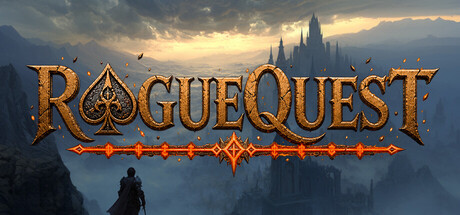
RogueQuest was made by a solo developer with the help of generative AI across most of its production: artwork (character portraits, environments, card illustrations), code (written collaboratively with AI coding assistants), and music/sound. Game design, writing, curation, and final decisions are made by a human. All AI-generated assets are pre-generated and shipped as static content. The game does not call any AI services while you play.
The game was made with the help of generative AI tools for visual assets, store artwork, music, localization support, and development assistance. AI-assisted materials were reviewed, selected, edited where necessary, and integrated by the developer.
AI tools were used to generate a small number of character portraits, sprite drafts, and some sound effect assets during development. All AI-generated content was reviewed, edited, and integrated by the development team.
"The game utilizes generative AI tools for the creation of concept art, UI icons, and English-to-Turkish localization. These assets are pre-generated during the development phase and are fully reviewed and polished by our team to ensure quality and originality."
Nexus Legacy is made by a solo developer using AI-assisted production tools. These tools were used during development to help with visual iteration, asset production, prototyping and code assistance, making a larger persistent MMO possible with a small production pipeline.
The final game is not a live AI generator. Gameplay design, balance, economy, progression, PvE/PvP rules, server logic, world structure, final visuals and updates are selected, reviewed, edited and maintained by the developer.
No live generative AI is used to create player-facing content while the game is running.
EQUILIBRIUM uses generative AI to power its core gameplay mechanic: the Policy Terminal.
LIVE-GENERATED CONTENT
When a player types a directive or law in natural language (e.g., "Abolish the luxury car tax"), the AI Engine analyzes the request in real time and generates a structured governmental dossier, including:
- Legislative feasibility analysis
- Budget impact and financial coverage
- Macroeconomic effects (GDP, debt, inflation)
- Social and political consensus projections
- Parliamentary vote simulation
Model used: Anthropic Claude, accessed via API.
Guardrails: AI output is constrained to a fixed set of structured fields defined by the developer. All numeric effects are clamped within bounds enforced by the simulation engine, so no AI output can produce values outside the game's defined ranges. The model operates only on the simulation state provided to it and cannot invent game data: commands that cannot be mapped to a valid government action are refused, and the player is offered bounded policy alternatives instead. No image, audio, or user-data generation is involved, and no player data is used to train any model.
Because responses are generated at runtime, outputs vary between playthroughs: the same directive may produce different wording and different outcomes.
PRE-GENERATED CONTENT
The game's background music track was generated using AI tools during development and ships with the game.
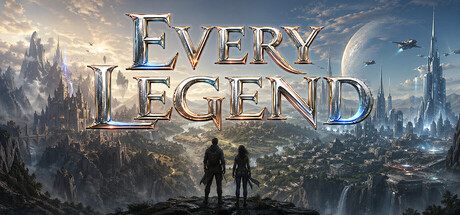
Every Legend uses AI to generate dynamic role-playing content during gameplay. This includes story text, characters, quests, dialogue, scene descriptions, images, speech, and music.
The game can use bundled local AI models on your computer, and it can also use optional third-party cloud AI providers if you configure API keys in the settings. When cloud providers are used, your prompts and relevant game context may be sent to those external services to generate content.
AI-generated content may vary between playthroughs and can occasionally be inaccurate, unexpected, or inconsistent.
Game Demon uses large language models (Llama 3.1/3.3 via Groq API, plus optional local Ollama inference) to generate coaching text in real time from the user's match data. Vision models analyze user-sampled frames. No user content is sent to third parties without explicit opt-in. No generative images or audio in final output.
This game uses generative AI tools in a limited capacity:
🎨 Marketing & Concept Materials: Some marketing materials, store page assets, and early concept visuals were created or refined using generative AI tools during development.
All AI-assisted content was reviewed, edited, and approved by the development team before publication.
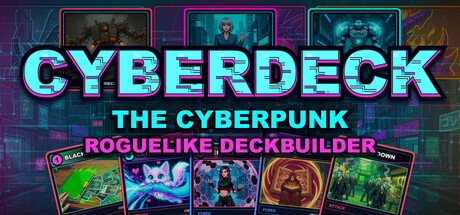
CyberDeck contains pre-generated visual art, animation frames, music, sound effects, voice audio, and written content created or assisted with generative AI tools, then curated and integrated by the development team. Generative AI also assists development, including code. No AI generates content during gameplay, and the game does not connect to external AI services while you play.
All in-game visual art assets in this title — including item icons, equipment artwork, character portraits, story illustrations, and UI decorative elements (frames, icons, and background textures) — are produced using OpenAI's ChatGPT image generation and xAI's Grok image generation API as core tools within our ink-wash and gongbi-style art pipeline. Every generated asset is reviewed, curated, manually retouched, and compositionally adjusted by the developer before being incorporated into the game. No real person's likeness has been used.
The game's source code is written by the developer, Kevin Chen, with OpenAI Codex and Anthropic Claude Code used as coding assistants during development. In-game narrative and dialogue text are written by the developer, with portions assisted by Anthropic Claude for polishing and proofreading.
Gridholm uses AI-generated imagery for its card art, champion portraits, and 3D models. As the sole developer, it's how I bring a full 250+ card game to life with a cohesive, painterly dark-fantasy look.
Some sound effects and voice related audio assets were created or assisted using generative AI tools. These assets are used as part of the game's horror atmosphere and enemy audio design. The game does not generate AI content in real time during gameplay.
CrowForge does not include any pre-generated AI content in the product
itself. The application is a workspace tool — all AI-generated content
is created by the user during their own sessions using their own prompts
and chosen AI models.
Some visual assets and audio elements in the game were created using AI-assisted tools and then refined and integrated into the final experience by the developer.
Some visual assets (card art and character portraits) generated using Google Gemini image models. Some SFX partially generated via ElevenLabs where Unity Assets were not available. All licensed for commercial use. Game design, code, and text content are original.
Some visual assets in Triad were created with the assistance of AI tools and further refined by the developer.
Triad is a solo-developed project, and these tools helped make its creation possible.
— Raph, developer of Triad
This game uses live-generated AI content during gameplay. Specifically, parts of the audio/signal layer are generated in real time based on game state and player interactions. No user prompts or user-generated text/images are required to play.
Generative AI was used for some of the music in game. All in game art was hand drawn and vectorized by the creator. Main Theme music created by Grace Streeter. Trailer voiceover by Grace Streeter.
- Some 2D assets were generated partly with AI (with human pre and post passes).
- Some languages were localized with AI. We intend to make a full human pass on all languages before 1.0 launch.
This game contains content created with the assistance of generative AI tools:
Artwork: Some visual assets were generated using AI image tools as a starting
point, then edited and refined by the developer. All final in-game artwork
has been reviewed, modified, and approved by human hands.
Music & Sound Effects: Background music and sound effects were created using
AI-based music generation tools, then selected and curated by the developer.
Localization: Translations for Japanese, Korean, Traditional Chinese, Spanish,
and Russian were produced with AI translation tools and reviewed by the
developer. Simplified Chinese and English were authored directly by the
developer.
Store Page Copy: Portions of the store page description were drafted with AI
writing assistance and finalized by the developer.
No generative AI runs during gameplay. The AI opponent in single-player mode
uses rule-based logic, not generative AI.
Generative AI was used to assist in creating certain in-game UI assets (such as combo icons), the main capsule (cover art), and for code debugging during the development process. All AI-assisted content has been manually reviewed, refined, and integrated by the developer to ensure a high-quality experience.
As a solo developer, I used generative AI tools to assist with certain parts of development, including the creation of some visual assets.
All generated content has been carefully reviewed, adjusted, and manually integrated to ensure artistic consistency, and overall game quality.
No AI generated content is produced in real time during gameplay.
A small number of icons and one minor 3D model were generated with AI tools and then edited by the developer. All AI-assisted assets were reviewed and refined before inclusion. No content is generated at runtime.
- Pre-generated: "3D character/monster models generated via Tripo3D from concept art, textures via Ludo AI. All assets reviewed and integrated by developer. No live AI generation at runtime."
- Guardrails: Human review of all generated assets before shipping.
Chrongrid is a narrative experience product powered by large language models (LLMs). In-game dialogue, scene descriptions, and character responses are generated in real time by an AI model — you can choose a third-party API service (such as DeepSeek, OpenAI, or Anthropic), or run a model locally on your machine via Ollama. You provide your own API credentials and bear the associated costs; we do not operate any server to relay your requests. The AI generates dialogue and descriptive text at runtime, always within the constraints of pre-authored narrative blueprints, characters, and world settings.
ARB: Alien Races Battle is developed by a solo human author (Raphael Tremblay) with assistance from Anthropic's Claude AI as a coding, art, and writing collaborator throughout production. Specifically:
- Some pixel-art unit sprites, ability icons, and UI elements were generated as SVG code with Claude's help, then reviewed, edited, and approved by the developer.
- In-game ability descriptions, Field Manual codex entries, and supplementary lore text were written with Claude as a writing collaborator, all building on the existing canon of The Alien Races Book (a separate, fully human-authored book by the same author that predates this game by years).
- Game code (gameplay engine, multiplayer infrastructure, UI logic) was developed with Claude as a coding-pair assistant.
Every piece of AI-assisted content was reviewed and edited by the human developer before shipping. The game's core IP — the 60+ documented alien races, their homeworlds, and their first-contact records — comes from The Alien Races Book and is entirely human-authored.
ARB does not use AI to generate content live during gameplay. All in-game content (units, sprites, abilities, sound, text, music) is finalized at build time and shipped as static assets.
Grid Lands uses generative AI during development in three areas: some in-game illustrations and icons are produced with AI image-generation tools, some player-facing text (in-game copy and store-page text) is drafted with AI writing assistance, and our developers use AI coding assistants while writing the game. All assets, text, and code are reviewed and refined by our team before release. The game itself does not use generative AI at runtime — no player data is sent to AI services during play, and no in-game content is generated live.
This game uses generative AI to create and support fictional in-game content, including graphic assets, marketing materials, text, creator names, portraits, and related world-building elements. AI-generated content is used only for fictional game purposes and does not represent real people, companies, or events.
Death Before Decaf uses generative AI tools to assist with visual asset production. This includes character and enemy sprites, environment art, and marketing capsule images, all created using a fine-tuned model trained on reference materials owned by Overdose Interactive (Scenario.gg with a custom DBD LoRA, plus Replicate/Flux for select assets). All AI-generated outputs are reviewed, edited, and approved by a human art director before being shipped in the game.
The game itself does not generate any AI content at runtime: all assets are pre-rendered and bundled with the build. The game does not connect to any external AI services during gameplay.
RogueQuest was made by a solo developer with the help of generative AI across most of its production: artwork (character portraits, environments, card illustrations), code (written collaboratively with AI coding assistants), and music/sound. Game design, writing, curation, and final decisions are made by a human. All AI-generated assets are pre-generated and shipped as static content. The game does not call any AI services while you play.
The game was made with the help of generative AI tools for visual assets, store artwork, music, localization support, and development assistance. AI-assisted materials were reviewed, selected, edited where necessary, and integrated by the developer.
AI tools were used to generate a small number of character portraits, sprite drafts, and some sound effect assets during development. All AI-generated content was reviewed, edited, and integrated by the development team.
"The game utilizes generative AI tools for the creation of concept art, UI icons, and English-to-Turkish localization. These assets are pre-generated during the development phase and are fully reviewed and polished by our team to ensure quality and originality."
Nexus Legacy is made by a solo developer using AI-assisted production tools. These tools were used during development to help with visual iteration, asset production, prototyping and code assistance, making a larger persistent MMO possible with a small production pipeline.
The final game is not a live AI generator. Gameplay design, balance, economy, progression, PvE/PvP rules, server logic, world structure, final visuals and updates are selected, reviewed, edited and maintained by the developer.
No live generative AI is used to create player-facing content while the game is running.
EQUILIBRIUM uses generative AI to power its core gameplay mechanic: the Policy Terminal.
LIVE-GENERATED CONTENT
When a player types a directive or law in natural language (e.g., "Abolish the luxury car tax"), the AI Engine analyzes the request in real time and generates a structured governmental dossier, including:
- Legislative feasibility analysis
- Budget impact and financial coverage
- Macroeconomic effects (GDP, debt, inflation)
- Social and political consensus projections
- Parliamentary vote simulation
Model used: Anthropic Claude, accessed via API.
Guardrails: AI output is constrained to a fixed set of structured fields defined by the developer. All numeric effects are clamped within bounds enforced by the simulation engine, so no AI output can produce values outside the game's defined ranges. The model operates only on the simulation state provided to it and cannot invent game data: commands that cannot be mapped to a valid government action are refused, and the player is offered bounded policy alternatives instead. No image, audio, or user-data generation is involved, and no player data is used to train any model.
Because responses are generated at runtime, outputs vary between playthroughs: the same directive may produce different wording and different outcomes.
PRE-GENERATED CONTENT
The game's background music track was generated using AI tools during development and ships with the game.
Every Legend uses AI to generate dynamic role-playing content during gameplay. This includes story text, characters, quests, dialogue, scene descriptions, images, speech, and music.
The game can use bundled local AI models on your computer, and it can also use optional third-party cloud AI providers if you configure API keys in the settings. When cloud providers are used, your prompts and relevant game context may be sent to those external services to generate content.
AI-generated content may vary between playthroughs and can occasionally be inaccurate, unexpected, or inconsistent.
Game Demon uses large language models (Llama 3.1/3.3 via Groq API, plus optional local Ollama inference) to generate coaching text in real time from the user's match data. Vision models analyze user-sampled frames. No user content is sent to third parties without explicit opt-in. No generative images or audio in final output.
This game uses generative AI tools in a limited capacity:
🎨 Marketing & Concept Materials: Some marketing materials, store page assets, and early concept visuals were created or refined using generative AI tools during development.
All AI-assisted content was reviewed, edited, and approved by the development team before publication.
CyberDeck contains pre-generated visual art, animation frames, music, sound effects, voice audio, and written content created or assisted with generative AI tools, then curated and integrated by the development team. Generative AI also assists development, including code. No AI generates content during gameplay, and the game does not connect to external AI services while you play.
All in-game visual art assets in this title — including item icons, equipment artwork, character portraits, story illustrations, and UI decorative elements (frames, icons, and background textures) — are produced using OpenAI's ChatGPT image generation and xAI's Grok image generation API as core tools within our ink-wash and gongbi-style art pipeline. Every generated asset is reviewed, curated, manually retouched, and compositionally adjusted by the developer before being incorporated into the game. No real person's likeness has been used.
The game's source code is written by the developer, Kevin Chen, with OpenAI Codex and Anthropic Claude Code used as coding assistants during development. In-game narrative and dialogue text are written by the developer, with portions assisted by Anthropic Claude for polishing and proofreading.
Gridholm uses AI-generated imagery for its card art, champion portraits, and 3D models. As the sole developer, it's how I bring a full 250+ card game to life with a cohesive, painterly dark-fantasy look.
Some sound effects and voice related audio assets were created or assisted using generative AI tools. These assets are used as part of the game's horror atmosphere and enemy audio design. The game does not generate AI content in real time during gameplay.
CrowForge does not include any pre-generated AI content in the product
itself. The application is a workspace tool — all AI-generated content
is created by the user during their own sessions using their own prompts
and chosen AI models.
Some visual assets and audio elements in the game were created using AI-assisted tools and then refined and integrated into the final experience by the developer.
Some visual assets (card art and character portraits) generated using Google Gemini image models. Some SFX partially generated via ElevenLabs where Unity Assets were not available. All licensed for commercial use. Game design, code, and text content are original.
Some visual assets in Triad were created with the assistance of AI tools and further refined by the developer.
Triad is a solo-developed project, and these tools helped make its creation possible.
— Raph, developer of Triad
This game uses live-generated AI content during gameplay. Specifically, parts of the audio/signal layer are generated in real time based on game state and player interactions. No user prompts or user-generated text/images are required to play.
Generative AI was used for some of the music in game. All in game art was hand drawn and vectorized by the creator. Main Theme music created by Grace Streeter. Trailer voiceover by Grace Streeter.
- Some 2D assets were generated partly with AI (with human pre and post passes).
- Some languages were localized with AI. We intend to make a full human pass on all languages before 1.0 launch.
This game contains content created with the assistance of generative AI tools:
Artwork: Some visual assets were generated using AI image tools as a starting
point, then edited and refined by the developer. All final in-game artwork
has been reviewed, modified, and approved by human hands.
Music & Sound Effects: Background music and sound effects were created using
AI-based music generation tools, then selected and curated by the developer.
Localization: Translations for Japanese, Korean, Traditional Chinese, Spanish,
and Russian were produced with AI translation tools and reviewed by the
developer. Simplified Chinese and English were authored directly by the
developer.
Store Page Copy: Portions of the store page description were drafted with AI
writing assistance and finalized by the developer.
No generative AI runs during gameplay. The AI opponent in single-player mode
uses rule-based logic, not generative AI.
Generative AI was used to assist in creating certain in-game UI assets (such as combo icons), the main capsule (cover art), and for code debugging during the development process. All AI-assisted content has been manually reviewed, refined, and integrated by the developer to ensure a high-quality experience.
As a solo developer, I used generative AI tools to assist with certain parts of development, including the creation of some visual assets.
All generated content has been carefully reviewed, adjusted, and manually integrated to ensure artistic consistency, and overall game quality.
No AI generated content is produced in real time during gameplay.