Public Steam disclosure research25,512 disclosures tracked
Where do games disclose AI use?
Search developers’ Steam disclosures, compare classified AI use across
games, and follow recorded changes.
This index adds cross-game classifications and statistics to
statements published on individual store pages.
Groups reflect automatic analysis of public disclosures; mature records are excluded. These counts do not measure AI use across all of Steam.
Missing or unclear statements cannot establish whether a game uses AI.
We used generative AI tools to assist with the initial translation of the game's text. However, all AI-generated content was subsequently reviewed, edited, and refined by the development team to ensure accuracy and quality.
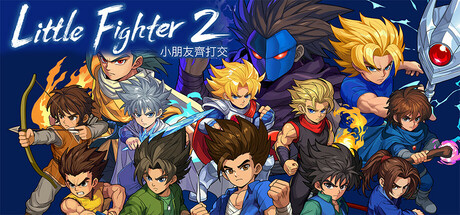
AI was used in the creation of certain visual assets, including character avatars, title screen artwork, promotional materials, and background art. However, these assets still required substantial manual work such as design, sketching, outline drawing, and polishing. The AI was used primarily as a tool for coloring and enhancement, and it did not dictate the creative direction. The visual style remains faithful to the original Little Fighter 2.
Some people assume that because AI was used in certain artwork, it must have been applied throughout the entire project. That is far from the truth. I used AI primarily for large-scale visual tasks. To give a clearer picture: the game includes over 3,000 hand-crafted sprite frames, composed from thousands of hand-drawn body parts. In contrast, only about 100 images were AI-assisted, and many of those, such as promotional artwork, don't even appear in the actual game.
I understand that some people may have concerns about the use of AI in the creative process. But I hope people can see the broader context and appreciate the amount of manual effort that went into making this game. Please know that I’m a solo developer working with a limited budget. I’ve been developing this project for around 3.5 years; even quitting my full-time job for a year to work on it full time, without expecting it to cover even half of my previous salary. I've done my best to balance quality and practicality. Your understanding and support mean a great deal to me.
Our hero submitted a portfolio generated by an AI, and got a job interview.
After seeing the company's artwork (also AI generated) and the portfolio, the interview starts.
Using AI, the interviewer's reaction will be custom, based on the hero's text input.
All the rest (music, script...) is human.
The user's voice input will be converted to text, then sent to open ai's LLM along with parameters and characteristics. A response will be given and then sent to elevenlabs to be converted into voice to give a life-like response to the player.
All faces that appear in the game were AI generated, except for the actors playing Jasper Holder, Adam Holder, Cheryl Holder, and Rory 'The Cleaner'. In addition, all voice performances in the game were modified with AI assistance to preserve the privacy of the original voice actors, except for the kitchen radio newsreader and all the live actors. Nothing else was created using AI.
I used generative AI as part of my process for creating images and text for monsters and NPCs. To do so, I have a proprietary way I generate and tune the prompt that feed the system, followed by multiple-post processing steps to generate the images and text you see in the game.
The development process of the game used AI to generate backgrounds, characters images, and other images such as items for hidden objects, runes for match-3, and jigsaw images. Game logo was partially generated with AI. Additionally, AI was used to generate voice-overs and some part of localizations into french and german.
- Most sound effects but never music
- Some images such as backgrounds and card faces before being transformed in photoshop
- General coding assistance
AI was used to translate the game into certain languages. When selecting one of these languages for the first time, a notification appears. Additionally, a marker is displayed next to the language name in the options menu.
Furthermore, AI was utilized to generate some of the graphical assets and may have been used in the creation of videos.
We are a small indie game development team made up of two programmers and one animator. As a tiny group, we don’t have a dedicated artist, so we use AI-generated art in our projects. However, that doesn’t mean we cut corners—every detail is carefully chosen, and we pour our passion and effort into every aspect of the game. From coding to animation to design, we’re committed to creating something unique and enjoyable. Despite the challenges, we believe our creativity and dedication shine through. We're excited to share our vision with players and grow together as developers and storytellers.
We have used generative AI to generate background music for some of our trailers, and for the train horn sound.
Everything else has been created by ourselves or purchased from professional artists that, to our knowledge, have not used generative AI for the purchased works.
Some of the 2D illustrations used in the game will be created with the help of generative AI technology like ChatGPT. These illustrations are designed to enhance the game's atmosphere and are combined with non-AI-generated content to create a cohesive artwork for the game. The use of generative AI is limited to 2D illustrations; no generative AI content will be used for other 3D assets.
The developers make use of agentic coding tools like Claude Code in their work process.
In-game and store descriptions have been translated using ai-tools in the localization process.
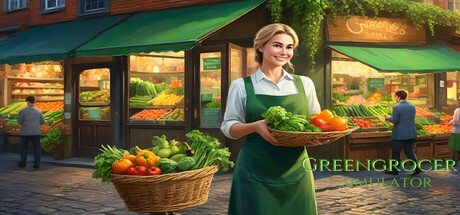
We used AI to create the language for the game's store page and some of the visual assets. Specifically, the library images were generated using AI tools to ensure a high-quality and polished presentation. We aimed to deliver visually appealing content that matches the style and atmosphere of the game.
AI-Assisted Development and Marketing
We believe in leveraging modern tools to enhance our workflow, and that includes using AI for various aspects of our project. For example:
We use ChatGPT to help us refine our English and ensure our communication is clear and engaging.
For quick and efficient mood boarding, we use MidJourney to generate visual concepts that inspire our creative process.
Once the game is complete, we plan to use ChatGPT to assist with translations, making the game accessible in 80+ languages.
These tools allow us to focus more on the creative process and make sure our community receives regular updates and clear communication across the globe.
We used generative AI tools to assist with the initial translation of the game's text. However, all AI-generated content was subsequently reviewed, edited, and refined by the development team to ensure accuracy and quality.
AI was used in the creation of certain visual assets, including character avatars, title screen artwork, promotional materials, and background art. However, these assets still required substantial manual work such as design, sketching, outline drawing, and polishing. The AI was used primarily as a tool for coloring and enhancement, and it did not dictate the creative direction. The visual style remains faithful to the original Little Fighter 2.
Some people assume that because AI was used in certain artwork, it must have been applied throughout the entire project. That is far from the truth. I used AI primarily for large-scale visual tasks. To give a clearer picture: the game includes over 3,000 hand-crafted sprite frames, composed from thousands of hand-drawn body parts. In contrast, only about 100 images were AI-assisted, and many of those, such as promotional artwork, don't even appear in the actual game.
I understand that some people may have concerns about the use of AI in the creative process. But I hope people can see the broader context and appreciate the amount of manual effort that went into making this game. Please know that I’m a solo developer working with a limited budget. I’ve been developing this project for around 3.5 years; even quitting my full-time job for a year to work on it full time, without expecting it to cover even half of my previous salary. I've done my best to balance quality and practicality. Your understanding and support mean a great deal to me.
Our hero submitted a portfolio generated by an AI, and got a job interview.
After seeing the company's artwork (also AI generated) and the portfolio, the interview starts.
Using AI, the interviewer's reaction will be custom, based on the hero's text input.
All the rest (music, script...) is human.
The user's voice input will be converted to text, then sent to open ai's LLM along with parameters and characteristics. A response will be given and then sent to elevenlabs to be converted into voice to give a life-like response to the player.
All faces that appear in the game were AI generated, except for the actors playing Jasper Holder, Adam Holder, Cheryl Holder, and Rory 'The Cleaner'. In addition, all voice performances in the game were modified with AI assistance to preserve the privacy of the original voice actors, except for the kitchen radio newsreader and all the live actors. Nothing else was created using AI.
I used generative AI as part of my process for creating images and text for monsters and NPCs. To do so, I have a proprietary way I generate and tune the prompt that feed the system, followed by multiple-post processing steps to generate the images and text you see in the game.
The development process of the game used AI to generate backgrounds, characters images, and other images such as items for hidden objects, runes for match-3, and jigsaw images. Game logo was partially generated with AI. Additionally, AI was used to generate voice-overs and some part of localizations into french and german.
- Most sound effects but never music
- Some images such as backgrounds and card faces before being transformed in photoshop
- General coding assistance
AI was used to translate the game into certain languages. When selecting one of these languages for the first time, a notification appears. Additionally, a marker is displayed next to the language name in the options menu.
Furthermore, AI was utilized to generate some of the graphical assets and may have been used in the creation of videos.
We are a small indie game development team made up of two programmers and one animator. As a tiny group, we don’t have a dedicated artist, so we use AI-generated art in our projects. However, that doesn’t mean we cut corners—every detail is carefully chosen, and we pour our passion and effort into every aspect of the game. From coding to animation to design, we’re committed to creating something unique and enjoyable. Despite the challenges, we believe our creativity and dedication shine through. We're excited to share our vision with players and grow together as developers and storytellers.
We have used generative AI to generate background music for some of our trailers, and for the train horn sound.
Everything else has been created by ourselves or purchased from professional artists that, to our knowledge, have not used generative AI for the purchased works.
Some of the 2D illustrations used in the game will be created with the help of generative AI technology like ChatGPT. These illustrations are designed to enhance the game's atmosphere and are combined with non-AI-generated content to create a cohesive artwork for the game. The use of generative AI is limited to 2D illustrations; no generative AI content will be used for other 3D assets.
The developers make use of agentic coding tools like Claude Code in their work process.
In-game and store descriptions have been translated using ai-tools in the localization process.
We used AI to create the language for the game's store page and some of the visual assets. Specifically, the library images were generated using AI tools to ensure a high-quality and polished presentation. We aimed to deliver visually appealing content that matches the style and atmosphere of the game.
AI-Assisted Development and Marketing
We believe in leveraging modern tools to enhance our workflow, and that includes using AI for various aspects of our project. For example:
We use ChatGPT to help us refine our English and ensure our communication is clear and engaging.
For quick and efficient mood boarding, we use MidJourney to generate visual concepts that inspire our creative process.
Once the game is complete, we plan to use ChatGPT to assist with translations, making the game accessible in 80+ languages.
These tools allow us to focus more on the creative process and make sure our community receives regular updates and clear communication across the globe.