Public Steam disclosure research25,508 disclosures tracked
Where do games disclose AI use?
Search developers’ Steam disclosures, compare classified AI use across
games, and follow recorded changes.
This index adds cross-game classifications and statistics to
statements published on individual store pages.
Groups reflect automatic analysis of public disclosures; mature records are excluded. These counts do not measure AI use across all of Steam.
Missing or unclear statements cannot establish whether a game uses AI.
AI Gen tools were used in a variety of ways for this game. Asset image concepting, narrative re-writes, 3d meshing, and marketing assets typically went through some form of a.i. modification, but then returned to a human-in-the-loop production step before game integration.
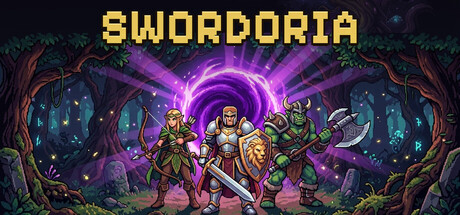
Swordoria was made by a solo developer with the help of generative AI tools. Some of the game's pixel art, music, and sound effects were generated with AI and then cut, edited, recolored, and assembled by hand, and parts of the code were written with the assistance of an AI coding tool. No generative AI runs while you play — all content is created and finalized during development and shipped as fixed assets in the game.
Some graphical assets (capsule images, etc.) and music tracks
were created using AI generation tools.
No AI generates content in real time during gameplay.
All AI-generated materials were reviewed and selected by a human.
Generative artificial intelligence was used during the process of creating the game's graphical elements. It was used to generate concepts and 2D graphics, which were then further manually edited and adapted to the needs of the project. The modified graphics were used as backgrounds in the game's main menu.
Color Cup Racing uses generative AI tools as part of the development and content creation process.
AI-assisted tools were used to help create or refine some game content, including development support, visual concepts, marketing materials, and/or music assets. All content included in the game is reviewed, selected, edited, and implemented by the developer before release.
The game does not generate AI content during gameplay. Players do not enter prompts, the game does not create live AI-generated images, audio, text, or code while running, and the game does not connect to external AI services during play.
Turbo Era Boss uses generative AI as part of its indie production workflow. Some pre-rendered visual assets, store capsule artwork, promotional/community images, and draft text/localization may be created or refined with AI-assisted tools. The game does not use live generative AI during gameplay. All AI-assisted material is reviewed, edited, and approved by Team76 before publication, and we avoid real team logos, real sponsors, driver likenesses, and other protected branding.
GridIron Grit is made with love, for us hardcore football sim fans, but AI did much of the heavy lifting.
AI helped me bring my dream game to life, writing code and generating game assets.
The game itself uses no generative AI within.
Run It Back: 90 Days to Race is developed solo. Illustrating the game's scenes, key art, and character art by hand wasn't feasible working alone, so AI image-generation tools are used as part of the art pipeline — some pieces generated directly from text prompts, others produced by restyling real photographic references into the game's illustrated art style. All AI-assisted artwork was selected and curated by the developer. No AI-generated content is created live during gameplay.
AI used to make pieces of capsule art then assembled and edited in photopea (free online photoshop). All the content in the game, dialogues, colors, quests, items, icons, layouts, proc gen, easter eggs, everything is handcrafted, handpicked and intentionally placed by me, or is a CC0 licenced asset which will be credited upon game's full release.
Being a small 2 person team in a startup studio working on this project while juggling other responsibilities; we used AI to generate base artwork that we then modified. We strived to use a fantasy theme based on Cubism as an art style so we wouldnt be ripping a specific artist's work.
All Artwork in game has been edited to fit the game, there is no raw AI content present.
AI was used to assist with grammar corrections for in-game text, which were then carefully reviewed and refined by hand.
We use AI solely as a supporting tool. Every aspect of the game is guided by human creativity, and our development process remains firmly centered on manual work.
Some visual assets, concept art, character portraits, promotional images, and store-related materials may be created or assisted using generative AI tools. All AI-assisted content is reviewed and edited by the developer before use. The game does not use real-time AI generation during gameplay.
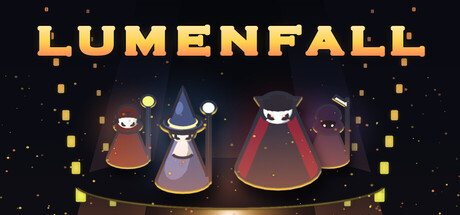
Lumenfall is built by a small studio using AI-assisted development tools. Some pre-generated content — including portions of the game's code, the store page text, and the 2D promotional/capsule artwork and achievement icons — was created with the help of AI tools, always under human direction and review. The game does not generate any content with AI at runtime; everything you play is fixed, hand-tuned content.
This game uses AI-generated voice audio for the narrative cassette recordings, and some AI-assisted sound effects. All content was reviewed and edited by the developer.
AI assisted drafting was used for the Steam store page text and marketing copy. The game does not use generative AI to create runtime gameplay content or player facing outputs during play.
Generative AI is used only to assist with localization and translation of game-related text. No gameplay, artwork, audio, or other player-facing content is generated by AI.
No game assets or gameplay content were generated using AI.
Localization into some supported languages was created with AI assistance and reviewed by the developers and community where possible.
This product uses generative AI only for some visual content, including in-game sprite images and promotional/store artwork such as capsule images, key art, logos, and character/instrument illustrations. AI is not used to generate live gameplay content in real time.
Pre-rendered AI-assisted promotional artwork and marketing assets may be used for the store page and promotional materials. No generative AI content is created live during gameplay.
ElevenLabs was used to create pre-recorded voice-over/narration audio, including some trailer narration.
Some existing promotional/store page images were edited with AI-assisted tools for cleanup, enhancement, and visual polishing. These images were not generated from scratch by AI.
No AI-generated content is generated live during gameplay, and the game does not use live AI systems during play.
Pueblo Duerme uses generative AI during gameplay to create short in-game text chat messages for bot players in social deduction matches. The game includes local Qwen3 GGUF models that run on the player's PC through a local llama-server process, with Quality and Performance modes available in the settings menu. Player messages are not sent to an external AI service. The system is limited to gameplay dialogue and uses validation and fallback responses to keep messages within the game's rules.
This game utilizes artificial intelligence (AI) tools to assist in generating some of the promotional materials on
the store page, as well as certain in-game visual assets
Space Delivery is a solo indie project by Christian Wolf. Generative AI was one of the tools used to make it: all character voice-over and some sound effects were generated with ElevenLabs, AI image tools were used for the game's icons and some other menu/UI artwork, and AI tools were used to translate the game and its store page from English. The trailer and promotional images were assembled using AI tools from the game's own assets. AI also assisted with coding and design during development. All game design, art direction, and final creative decisions were made by the developer.
Forged Cards is a passion project, built by one person. I'm not a game studio, I'm a single developer who fell in love with an idea for a deck-builder where you build the cards and set out to make it real.
Games like this usually take a team. Modern AI development tools are a big part of how one person was able to build something at this scope. I used AI coding assistants to help me build and iterate on the game's systems, AI image generation for the art, and AI-generated sound effects, all of it reviewed, edited, and shaped by me to fit the world I wanted to create. Every card, every enemy, every choice about how this game looks and feels came from a person (and some close friends) who cared about getting it right.
I'm being upfront about this because I think you deserve to know how the thing you're playing was made. Forged Cards exists because these tools let one person build a game that otherwise would have stayed an idea in a notebook.
Some 2D art (sprites, icons, key art) was generated with a locally run image model, then hand-curated and edited by the developer. Sound effects and music were generated with local audio models and hand-picked. Everything shipped was reviewed by a human; the game performs no AI generation at runtime.
Generative AI was used to assist with some images, sound effects, music, and translations. All AI-assisted content was reviewed, edited, and curated by the developer before being included in the game.
Lane Wars uses generative AI only for some pre-made 2D artwork: the game's icon, main-menu key art, and the Steam store capsule/promotional images were created with AI image-generation tools and then edited by the developer. Some trailer and marketing music was made with an AI music tool. Everything you interact with in-game — the 3D characters, environments, HUD, visual and sound effects, and all gameplay systems — is hand-built and procedurally generated in code, not AI-generated. The game does not use any generative AI at runtime.
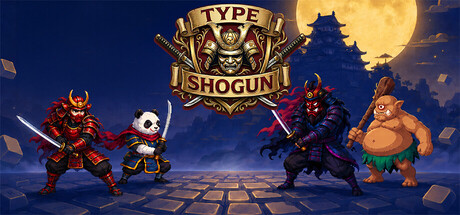
Type Shogun uses pre-generated AI-assisted artwork for some stylized visual assets, including Steam store/library artwork and selected marketing/capsule images. Some in-game background or presentation artwork may also include AI-assisted elements. All AI-assisted content was reviewed, selected, and curated by NH Media LLC before inclusion.
Type Shogun does not use live generative AI during gameplay. Players cannot generate AI images, text, audio, or other AI content inside the game.
AI Gen tools were used in a variety of ways for this game. Asset image concepting, narrative re-writes, 3d meshing, and marketing assets typically went through some form of a.i. modification, but then returned to a human-in-the-loop production step before game integration.
Swordoria was made by a solo developer with the help of generative AI tools. Some of the game's pixel art, music, and sound effects were generated with AI and then cut, edited, recolored, and assembled by hand, and parts of the code were written with the assistance of an AI coding tool. No generative AI runs while you play — all content is created and finalized during development and shipped as fixed assets in the game.
Some graphical assets (capsule images, etc.) and music tracks
were created using AI generation tools.
No AI generates content in real time during gameplay.
All AI-generated materials were reviewed and selected by a human.
Generative artificial intelligence was used during the process of creating the game's graphical elements. It was used to generate concepts and 2D graphics, which were then further manually edited and adapted to the needs of the project. The modified graphics were used as backgrounds in the game's main menu.
Color Cup Racing uses generative AI tools as part of the development and content creation process.
AI-assisted tools were used to help create or refine some game content, including development support, visual concepts, marketing materials, and/or music assets. All content included in the game is reviewed, selected, edited, and implemented by the developer before release.
The game does not generate AI content during gameplay. Players do not enter prompts, the game does not create live AI-generated images, audio, text, or code while running, and the game does not connect to external AI services during play.
Turbo Era Boss uses generative AI as part of its indie production workflow. Some pre-rendered visual assets, store capsule artwork, promotional/community images, and draft text/localization may be created or refined with AI-assisted tools. The game does not use live generative AI during gameplay. All AI-assisted material is reviewed, edited, and approved by Team76 before publication, and we avoid real team logos, real sponsors, driver likenesses, and other protected branding.
GridIron Grit is made with love, for us hardcore football sim fans, but AI did much of the heavy lifting.
AI helped me bring my dream game to life, writing code and generating game assets.
The game itself uses no generative AI within.
Run It Back: 90 Days to Race is developed solo. Illustrating the game's scenes, key art, and character art by hand wasn't feasible working alone, so AI image-generation tools are used as part of the art pipeline — some pieces generated directly from text prompts, others produced by restyling real photographic references into the game's illustrated art style. All AI-assisted artwork was selected and curated by the developer. No AI-generated content is created live during gameplay.
AI used to make pieces of capsule art then assembled and edited in photopea (free online photoshop). All the content in the game, dialogues, colors, quests, items, icons, layouts, proc gen, easter eggs, everything is handcrafted, handpicked and intentionally placed by me, or is a CC0 licenced asset which will be credited upon game's full release.
Being a small 2 person team in a startup studio working on this project while juggling other responsibilities; we used AI to generate base artwork that we then modified. We strived to use a fantasy theme based on Cubism as an art style so we wouldnt be ripping a specific artist's work.
All Artwork in game has been edited to fit the game, there is no raw AI content present.
AI was used to assist with grammar corrections for in-game text, which were then carefully reviewed and refined by hand.
We use AI solely as a supporting tool. Every aspect of the game is guided by human creativity, and our development process remains firmly centered on manual work.
Some visual assets, concept art, character portraits, promotional images, and store-related materials may be created or assisted using generative AI tools. All AI-assisted content is reviewed and edited by the developer before use. The game does not use real-time AI generation during gameplay.
Lumenfall is built by a small studio using AI-assisted development tools. Some pre-generated content — including portions of the game's code, the store page text, and the 2D promotional/capsule artwork and achievement icons — was created with the help of AI tools, always under human direction and review. The game does not generate any content with AI at runtime; everything you play is fixed, hand-tuned content.
This game uses AI-generated voice audio for the narrative cassette recordings, and some AI-assisted sound effects. All content was reviewed and edited by the developer.
AI assisted drafting was used for the Steam store page text and marketing copy. The game does not use generative AI to create runtime gameplay content or player facing outputs during play.
Generative AI is used only to assist with localization and translation of game-related text. No gameplay, artwork, audio, or other player-facing content is generated by AI.
No game assets or gameplay content were generated using AI.
Localization into some supported languages was created with AI assistance and reviewed by the developers and community where possible.
This product uses generative AI only for some visual content, including in-game sprite images and promotional/store artwork such as capsule images, key art, logos, and character/instrument illustrations. AI is not used to generate live gameplay content in real time.
Pre-rendered AI-assisted promotional artwork and marketing assets may be used for the store page and promotional materials. No generative AI content is created live during gameplay.
ElevenLabs was used to create pre-recorded voice-over/narration audio, including some trailer narration.
Some existing promotional/store page images were edited with AI-assisted tools for cleanup, enhancement, and visual polishing. These images were not generated from scratch by AI.
No AI-generated content is generated live during gameplay, and the game does not use live AI systems during play.
Pueblo Duerme uses generative AI during gameplay to create short in-game text chat messages for bot players in social deduction matches. The game includes local Qwen3 GGUF models that run on the player's PC through a local llama-server process, with Quality and Performance modes available in the settings menu. Player messages are not sent to an external AI service. The system is limited to gameplay dialogue and uses validation and fallback responses to keep messages within the game's rules.
This game utilizes artificial intelligence (AI) tools to assist in generating some of the promotional materials on
the store page, as well as certain in-game visual assets
Space Delivery is a solo indie project by Christian Wolf. Generative AI was one of the tools used to make it: all character voice-over and some sound effects were generated with ElevenLabs, AI image tools were used for the game's icons and some other menu/UI artwork, and AI tools were used to translate the game and its store page from English. The trailer and promotional images were assembled using AI tools from the game's own assets. AI also assisted with coding and design during development. All game design, art direction, and final creative decisions were made by the developer.
Forged Cards is a passion project, built by one person. I'm not a game studio, I'm a single developer who fell in love with an idea for a deck-builder where you build the cards and set out to make it real.
Games like this usually take a team. Modern AI development tools are a big part of how one person was able to build something at this scope. I used AI coding assistants to help me build and iterate on the game's systems, AI image generation for the art, and AI-generated sound effects, all of it reviewed, edited, and shaped by me to fit the world I wanted to create. Every card, every enemy, every choice about how this game looks and feels came from a person (and some close friends) who cared about getting it right.
I'm being upfront about this because I think you deserve to know how the thing you're playing was made. Forged Cards exists because these tools let one person build a game that otherwise would have stayed an idea in a notebook.
Some 2D art (sprites, icons, key art) was generated with a locally run image model, then hand-curated and edited by the developer. Sound effects and music were generated with local audio models and hand-picked. Everything shipped was reviewed by a human; the game performs no AI generation at runtime.
Generative AI was used to assist with some images, sound effects, music, and translations. All AI-assisted content was reviewed, edited, and curated by the developer before being included in the game.
Lane Wars uses generative AI only for some pre-made 2D artwork: the game's icon, main-menu key art, and the Steam store capsule/promotional images were created with AI image-generation tools and then edited by the developer. Some trailer and marketing music was made with an AI music tool. Everything you interact with in-game — the 3D characters, environments, HUD, visual and sound effects, and all gameplay systems — is hand-built and procedurally generated in code, not AI-generated. The game does not use any generative AI at runtime.
Type Shogun uses pre-generated AI-assisted artwork for some stylized visual assets, including Steam store/library artwork and selected marketing/capsule images. Some in-game background or presentation artwork may also include AI-assisted elements. All AI-assisted content was reviewed, selected, and curated by NH Media LLC before inclusion.
Type Shogun does not use live generative AI during gameplay. Players cannot generate AI images, text, audio, or other AI content inside the game.