Public Steam disclosure research25,508 disclosures tracked
Where do games disclose AI use?
Search developers’ Steam disclosures, compare classified AI use across
games, and follow recorded changes.
This index adds cross-game classifications and statistics to
statements published on individual store pages.
Groups reflect automatic analysis of public disclosures; mature records are excluded. These counts do not measure AI use across all of Steam.
Missing or unclear statements cannot establish whether a game uses AI.
AI DISCLOSURE
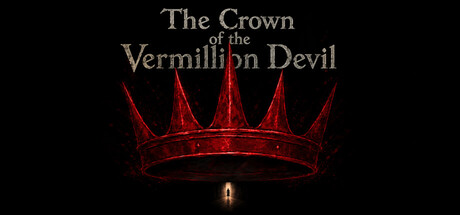
Crown of the Vermillion Devil uses AI-generated imagery for its location artwork. All writing, game design, systems, music, and narrative content are original human-authored work. We are a small independent project and have been transparent about this from the start. If that affects your purchasing decision, we respect it.
AI-Generated Content Disclosure:
Pre-Generated Content: Generative AI tools were used to create the game's background music, and to generate source material for portions of the sound and art, refined by the developer.
No Real-Time Generation: This game does not feature any live or real-time AI content generation.
No External Connectivity: The game runs entirely locally and does not connect to external AI services or servers while playing.
This game uses generative AI as part of the asset creation process. Some artwork, textures, music, and sound effects were generated with AI-assisted tools and subsequently modified, curated, and integrated by the developer. All gameplay design, game systems, balancing, programming, and final implementation were created and controlled by the developer.
Some visual assets, promotional images, and design elements used in Dream Cola were created or assisted with generative AI tools. All AI-generated content was reviewed, modified, and integrated by the developer to fit the game's artistic direction.
Some in-game visual assets and trivia/ranking question data were created with the assistance of generative AI tools. All AI-assisted content was reviewed, edited, and curated by the developer before being included in the game.
This game was developed with the assistance of various AI tools. All AI-assisted content was reviewed, edited, and implemented by the developer before being included in the final game.
As a small independent development team, we used generative AI as a supporting production tool during development.
All creative direction, game design, asset selection, editing, integration, and final approval were handled by the development team. AI-generated material was reviewed and modified by the developers before being included in the game.
The game does not generate AI content during gameplay.
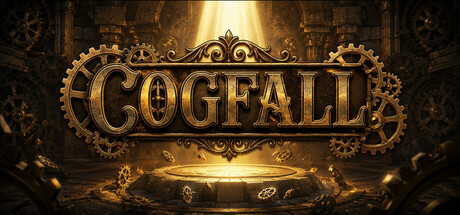
Cogfall was developed solo by Nodding Panda Studios. To bring the steampunk Clockwork Kingdom to life, AI tools were used to generate artwork and music under the creative direction of the developer. Every image and track was intentionally prompted, selected, and refined to fit the game's vision — AI served as a creative tool, not a replacement for creative decisions. All gameplay systems, code, game design, writing, and balancing were created entirely by the developer.
Generative AI was used to assist with localization/translation of in-game text. All translated text is pre-generated and included with the game as static content. The game does not generate AI content during gameplay. All artwork is hand-drawn, the music was created by human artists, and all programming was done manually.
During development, we used generative AI tools to assist in creating certain game content. This includes using AI to generate base concepts and visual assets for specific in-game items or backgrounds (which were subsequently refined manually), as well as using AI for multilingual localization and text polishing.
Generative AI tools were used to assist with drafting and editing store page text and marketing descriptions. All final content is reviewed and edited by the developer.
This game uses generative AI tools to assist in creating certain environmental assets, which were then manually upscaled, recolored, and heavily edited for quality
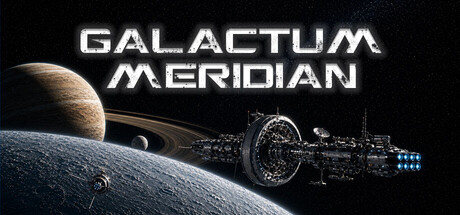
Galactum Meridian was developed with generative AI assistance under direct human creative direction. AI tools supported coding, writing, design exploration, production workflows, and selected visual and promotional assets. All material was reviewed, edited, and integrated by the developer. The game does not use live generative AI during gameplay.
AI Disclosure
This game was developed entirely with the assistance of large language models and generative AI tools. AI systems were used for graphic asset generation, concept art, narrative text drafting, lore writing, design review, creative critique, initial structural planning, code architecture, system design, feature implementation, iterative refinement, and debugging. All lore, mechanics, story, art, and game systems are pre-authored and fully static. No AI processing or generation occurs at runtime — the game runs entirely on pre-built code with no live model calls. This disclosure is provided in compliance with Steam's AI Content Policy and Valve developer transparency guidelines.
Some visuals, text, and promotional materials (including the trailer) were created with the help of AI.
Imperfections, inconsistencies, and “errors” are intentional — they reflect a world where systems don’t always make sense, yet people rely on them anyway.
This is not a bug. It’s the design.
Generative AI tools were used only as programming assistance during development, such as code reference, debugging support, and workflow optimization. No player-facing art, story, audio, localization text, or gameplay content was generated by AI.
Artificial intelligence (AI) was leveraged for key aspects of the game's development, including in-game logic, support systems, and certain artistic assets.
Generative AI was used to assist in creating selected promotional artwork and logo/icon assets for the Steam store page. All outputs were reviewed, selected, and edited by the developer. Generative AI is not used during gameplay, and no content is generated live for players.
AI tools were used to generate store/marketing illustrations (capsule, hero, banners, trailer). All in-game graphics are procedurally generated in real time and do not use AI
The game's narration engine is a deterministic template system with zero runtime AI. The template/fragment library it draws from was hand-crafted in English, and then mass-localized during development using a large language model and then human-curated. No AI image generation was used: all art, icons, and store assets are procedurally rasterized from hand-authored primitive op-lists. The game contains no live/runtime AI generation.
Some 2D art (icons and illustrations) was created with the help of generative AI tools and refined by the developer. No AI content is generated during gameplay.
Some visual assets in the game may have been generated or assisted by AI tools. This includes certain textures, logos, shop signs, and some localized translations. All AI-generated or AI-assisted content has been reviewed and integrated into the game by the developer.
Some Steam store page promotional images were created or edited with the assistance of generative AI tools. These assets are used only for store page or marketing presentation.
The playable game itself does not include generative AI features, does not connect to any AI service, and does not generate images, audio, text, or other content at runtime. No AI-generated images, audio, or text are included in the playable game build.
Pre-generated content (Pre-Generated)
During the development of this game, AI tools were used to assist in the creation of the following pre-generated content:
Code assistance: Some game logic codes are written and debugged with the help of AI. All the codes have been reviewed and tested by humans.
Localization and store copy: The English translation and Steam store page copy were initially drafted with the assistance of AI, and then reviewed and refined by the developers.
Real-time Generated Content (Live-Generated)
This game does not contain any real-time AI-generated content during its operation. All game graphics, text, and numerical values are pre-set content or determined through player actions in a deterministic manner, and no generative AI interfaces are invoked.
This game uses AI-generated art assets (ComfyUI / Stable Diffusion XL) and music (AceStep). All AI-generated content was created during development and is fixed in the final build. No AI APIs are
called at runtime.
Some visual assets and parts of the development workflow for Forest of Numbers were created with the assistance of generative artificial intelligence tools. All content was curated, reviewed, and refined by the developer before being included in the final game.
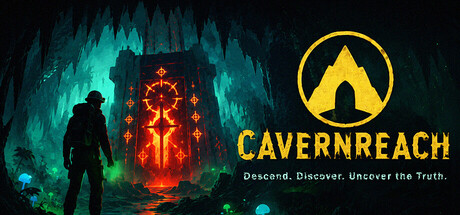
Cavernreach contains very limited AI-assisted content, including some music/audio assets and promotional artwork. All gameplay, environments, programming, story content, voice acting, level design, and game implementation were created by the developer. Any AI-assisted assets used during development for testing or reference purposes have been replaced, recreated, or removed from the full release where applicable.
Dear player,
Original renders where done in Blender by me. Then I used (AI) to enhance the rendered images out of Blender. Only for Marketing.
Game design and QA was done by team member. Code was done in Godot by a team member, 3d models were done in Block bench and Blender by a team member.
Doing what I can with what I got. Since I got lay off from the game industry 2 1/2 years ago, no career, no income. I hope that a little of AI marketing does not push you away from the team's hard work.
Archie
Kıvam's core — its ebru (paper marbling) simulation, gameplay, design, and direction — is authored by the developer. Generative AI tools were used as assistants in producing some supporting content: store page and marketing imagery, certain visual assets, and drafting/editing of written text, which was then reviewed and finalized by the developer. No AI-generated voice or music is used. The marbling you create in-game is produced by the game's own simulation, not by generative AI.
This game contains pre-generated AI-generated and AI-assisted visual content.
Generative AI tools were used as part of the art creation process for certain visual assets appearing in the game and on the Steam store page. This may include building artwork, ability cards, character artwork, menu artwork, user interface elements, promotional images, store capsules, library assets, and other graphical materials.
All such content was reviewed, curated, modified where necessary, and approved by the developer before inclusion in the final game. The developer is responsible for the final content presented to players.
The game does not use live AI generation, AI-powered gameplay systems, or AI-generated user content. All AI-assisted content is pre-generated during development and distributed as part of the game files.
Character portraits and story illustrations received an AI enhancement pass based on the original hand-painted artwork. Each image was then refined with a manual hand-drawn pass.
Google Gemini was utilized during the development phase as an assistive tool for C# scripting, code optimization, debugging, and brainstorming game mechanics. All AI-assisted outputs were manually reviewed, edited, and validated by the developer to ensure proper integration and originality.
Dark Dream contains pre-generated AI-assisted content used exclusively for marketing and promotional materials. This includes certain Steam store assets such as capsules, banners, promotional artwork, and the game's promotional trailer.
The trailer was created using AI-assisted tools based on original characters, creatures, and creative concepts designed and owned by the studio.
The in-game experience does not generate content using AI, and no AI systems are used during gameplay.
All final artwork is created by our artists. AI-generated 2D placeholders are clearly labeled and will be replaced during production. Generative AI also assisted with select audio elements under our team’s direction.
Artwork note: some visuals were generated with AI models in this early version. For now the focus is on mechanics, so they are placeholders. Over time I will make the style more consistent and replace them with assets designed specifically for AoNW.
AI DISCLOSURE
Crown of the Vermillion Devil uses AI-generated imagery for its location artwork. All writing, game design, systems, music, and narrative content are original human-authored work. We are a small independent project and have been transparent about this from the start. If that affects your purchasing decision, we respect it.
AI-Generated Content Disclosure:
Pre-Generated Content: Generative AI tools were used to create the game's background music, and to generate source material for portions of the sound and art, refined by the developer.
No Real-Time Generation: This game does not feature any live or real-time AI content generation.
No External Connectivity: The game runs entirely locally and does not connect to external AI services or servers while playing.
This game uses generative AI as part of the asset creation process. Some artwork, textures, music, and sound effects were generated with AI-assisted tools and subsequently modified, curated, and integrated by the developer. All gameplay design, game systems, balancing, programming, and final implementation were created and controlled by the developer.
Some visual assets, promotional images, and design elements used in Dream Cola were created or assisted with generative AI tools. All AI-generated content was reviewed, modified, and integrated by the developer to fit the game's artistic direction.
Some in-game visual assets and trivia/ranking question data were created with the assistance of generative AI tools. All AI-assisted content was reviewed, edited, and curated by the developer before being included in the game.
This game was developed with the assistance of various AI tools. All AI-assisted content was reviewed, edited, and implemented by the developer before being included in the final game.
As a small independent development team, we used generative AI as a supporting production tool during development.
All creative direction, game design, asset selection, editing, integration, and final approval were handled by the development team. AI-generated material was reviewed and modified by the developers before being included in the game.
The game does not generate AI content during gameplay.
Cogfall was developed solo by Nodding Panda Studios. To bring the steampunk Clockwork Kingdom to life, AI tools were used to generate artwork and music under the creative direction of the developer. Every image and track was intentionally prompted, selected, and refined to fit the game's vision — AI served as a creative tool, not a replacement for creative decisions. All gameplay systems, code, game design, writing, and balancing were created entirely by the developer.
Generative AI was used to assist with localization/translation of in-game text. All translated text is pre-generated and included with the game as static content. The game does not generate AI content during gameplay. All artwork is hand-drawn, the music was created by human artists, and all programming was done manually.
During development, we used generative AI tools to assist in creating certain game content. This includes using AI to generate base concepts and visual assets for specific in-game items or backgrounds (which were subsequently refined manually), as well as using AI for multilingual localization and text polishing.
Generative AI tools were used to assist with drafting and editing store page text and marketing descriptions. All final content is reviewed and edited by the developer.
This game uses generative AI tools to assist in creating certain environmental assets, which were then manually upscaled, recolored, and heavily edited for quality
Galactum Meridian was developed with generative AI assistance under direct human creative direction. AI tools supported coding, writing, design exploration, production workflows, and selected visual and promotional assets. All material was reviewed, edited, and integrated by the developer. The game does not use live generative AI during gameplay.
AI Disclosure
This game was developed entirely with the assistance of large language models and generative AI tools. AI systems were used for graphic asset generation, concept art, narrative text drafting, lore writing, design review, creative critique, initial structural planning, code architecture, system design, feature implementation, iterative refinement, and debugging. All lore, mechanics, story, art, and game systems are pre-authored and fully static. No AI processing or generation occurs at runtime — the game runs entirely on pre-built code with no live model calls. This disclosure is provided in compliance with Steam's AI Content Policy and Valve developer transparency guidelines.
Some visuals, text, and promotional materials (including the trailer) were created with the help of AI.
Imperfections, inconsistencies, and “errors” are intentional — they reflect a world where systems don’t always make sense, yet people rely on them anyway.
This is not a bug. It’s the design.
Generative AI tools were used only as programming assistance during development, such as code reference, debugging support, and workflow optimization. No player-facing art, story, audio, localization text, or gameplay content was generated by AI.
Artificial intelligence (AI) was leveraged for key aspects of the game's development, including in-game logic, support systems, and certain artistic assets.
Generative AI was used to assist in creating selected promotional artwork and logo/icon assets for the Steam store page. All outputs were reviewed, selected, and edited by the developer. Generative AI is not used during gameplay, and no content is generated live for players.
AI tools were used to generate store/marketing illustrations (capsule, hero, banners, trailer). All in-game graphics are procedurally generated in real time and do not use AI
The game's narration engine is a deterministic template system with zero runtime AI. The template/fragment library it draws from was hand-crafted in English, and then mass-localized during development using a large language model and then human-curated. No AI image generation was used: all art, icons, and store assets are procedurally rasterized from hand-authored primitive op-lists. The game contains no live/runtime AI generation.
Some 2D art (icons and illustrations) was created with the help of generative AI tools and refined by the developer. No AI content is generated during gameplay.
Some visual assets in the game may have been generated or assisted by AI tools. This includes certain textures, logos, shop signs, and some localized translations. All AI-generated or AI-assisted content has been reviewed and integrated into the game by the developer.
Some Steam store page promotional images were created or edited with the assistance of generative AI tools. These assets are used only for store page or marketing presentation.
The playable game itself does not include generative AI features, does not connect to any AI service, and does not generate images, audio, text, or other content at runtime. No AI-generated images, audio, or text are included in the playable game build.
Pre-generated content (Pre-Generated)
During the development of this game, AI tools were used to assist in the creation of the following pre-generated content:
Code assistance: Some game logic codes are written and debugged with the help of AI. All the codes have been reviewed and tested by humans.
Localization and store copy: The English translation and Steam store page copy were initially drafted with the assistance of AI, and then reviewed and refined by the developers.
Real-time Generated Content (Live-Generated)
This game does not contain any real-time AI-generated content during its operation. All game graphics, text, and numerical values are pre-set content or determined through player actions in a deterministic manner, and no generative AI interfaces are invoked.
This game uses AI-generated art assets (ComfyUI / Stable Diffusion XL) and music (AceStep). All AI-generated content was created during development and is fixed in the final build. No AI APIs are
called at runtime.
Some visual assets and parts of the development workflow for Forest of Numbers were created with the assistance of generative artificial intelligence tools. All content was curated, reviewed, and refined by the developer before being included in the final game.
Cavernreach contains very limited AI-assisted content, including some music/audio assets and promotional artwork. All gameplay, environments, programming, story content, voice acting, level design, and game implementation were created by the developer. Any AI-assisted assets used during development for testing or reference purposes have been replaced, recreated, or removed from the full release where applicable.
Dear player,
Original renders where done in Blender by me. Then I used (AI) to enhance the rendered images out of Blender. Only for Marketing.
Game design and QA was done by team member. Code was done in Godot by a team member, 3d models were done in Block bench and Blender by a team member.
Doing what I can with what I got. Since I got lay off from the game industry 2 1/2 years ago, no career, no income. I hope that a little of AI marketing does not push you away from the team's hard work.
Archie
Kıvam's core — its ebru (paper marbling) simulation, gameplay, design, and direction — is authored by the developer. Generative AI tools were used as assistants in producing some supporting content: store page and marketing imagery, certain visual assets, and drafting/editing of written text, which was then reviewed and finalized by the developer. No AI-generated voice or music is used. The marbling you create in-game is produced by the game's own simulation, not by generative AI.
This game contains pre-generated AI-generated and AI-assisted visual content.
Generative AI tools were used as part of the art creation process for certain visual assets appearing in the game and on the Steam store page. This may include building artwork, ability cards, character artwork, menu artwork, user interface elements, promotional images, store capsules, library assets, and other graphical materials.
All such content was reviewed, curated, modified where necessary, and approved by the developer before inclusion in the final game. The developer is responsible for the final content presented to players.
The game does not use live AI generation, AI-powered gameplay systems, or AI-generated user content. All AI-assisted content is pre-generated during development and distributed as part of the game files.
Character portraits and story illustrations received an AI enhancement pass based on the original hand-painted artwork. Each image was then refined with a manual hand-drawn pass.
Google Gemini was utilized during the development phase as an assistive tool for C# scripting, code optimization, debugging, and brainstorming game mechanics. All AI-assisted outputs were manually reviewed, edited, and validated by the developer to ensure proper integration and originality.
Dark Dream contains pre-generated AI-assisted content used exclusively for marketing and promotional materials. This includes certain Steam store assets such as capsules, banners, promotional artwork, and the game's promotional trailer.
The trailer was created using AI-assisted tools based on original characters, creatures, and creative concepts designed and owned by the studio.
The in-game experience does not generate content using AI, and no AI systems are used during gameplay.
All final artwork is created by our artists. AI-generated 2D placeholders are clearly labeled and will be replaced during production. Generative AI also assisted with select audio elements under our team’s direction.
Artwork note: some visuals were generated with AI models in this early version. For now the focus is on mechanics, so they are placeholders. Over time I will make the style more consistent and replace them with assets designed specifically for AoNW.