Public Steam disclosure research25,508 disclosures tracked
Where do games disclose AI use?
Search developers’ Steam disclosures, compare classified AI use across
games, and follow recorded changes.
This index adds cross-game classifications and statistics to
statements published on individual store pages.
Groups reflect automatic analysis of public disclosures; mature records are excluded. These counts do not measure AI use across all of Steam.
Missing or unclear statements cannot establish whether a game uses AI.
Generative AI was used in a limited capacity during development.
It was primarily utilized for prototyping certain textures and creating visual references.
Additionally, AI was used to generate a vocal track featured in the game's intro sequence.
All other music, as well as the majority of visual and gameplay content, has been created manually.
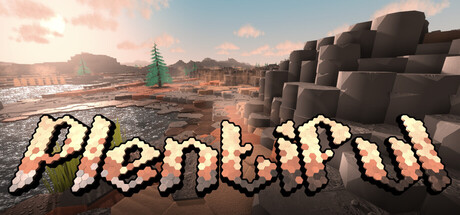
The Early Access version of Plentiful uses AI-assisted machine translation for localization. No generative AI was used to create gameplay content, art, or audio.
Generative AI was used during development to assist in the creation of:
Assets: Textures, Sound Effects, Music, and Voice.
Development: Code and Narrative Text.
All AI-generated content has been manually refined and integrated by our team to ensure high quality and originality. Many of these tools were utilized primarily for concepting and prototyping to streamline our production workflow.
English and Italian localization have been handled internally by our team. All other currently available languages, such as Simplified Chinese, Spanish, Brazilian Portuguese, German, Japanese, Russian, and French, are temporarily supported through AI-assisted translation.
These translations are placeholder versions and will be gradually replaced with finalized localizations leading up to the 1.0 release of the game.
No AI-generated content has been used for any other aspect of development, including coding, art, music, or 3D modeling.
All of our art assets are handmade by our artists. We only use AI for things that would not be technically possible otherwise.
We use a text-to-speech solution for the voices because we want to include custom names for vehicles, streets and employees (which can also be changed) in the messages. We also want to support modding missions with voices. None of this is possible with pre-recorded footage.
Several music tracks used AI tools during production. When possible I used historical paintings for reference in drawing pixel art for cards, but some card art used generated art for inspiration instead.
AI Disclosure:
This game uses generative AI tools to assist in creating some of the music. All other content is handmade by the developer, and no AI is used during gameplay.
Currently, all locales are generated by an LLM. However, I am making significant efforts to ensure that all supported UI languages 100% human-made for the future.
If the user chooses to, there are alternative translation models to download & use through the community repository. These are all text generative AI.
Gameplay trailer on storepage uses song made with the help of suno.ai
Some backgrounds in the game are made with the help of various generative AI tools like Adobe Firefly.
Generative AI was used during development to assist with programming, debugging, localization, and text drafting. Some small UI/icon assets included in the game were also created with generative AI and reviewed by the developer before use.
The main visual content of the game uses licensed or manually prepared assets.
As an assistive measure, AI has been implemented into our code practices throughout early development. This includes the use of specialist AI models to assist with code reviews, optimisation and minor troubleshooting and bug fixes. Whilst AI has been used in this way, this in no way compromises or risks the quality of any features, content or security, and all code is ultimately reviewed by a human.
All game works are either original hand-made works that we own, or they were AI-assisted and redrawn or touched up by hand.
Our trailers were also AI-assisted with original works we own to enhance their quality.
All AI voices were trained on licensed material that has commercial rights to use or that we own and were manually directed by the developer.
Throughout our development, we may leverage AI-based tools to assist our team in programming logic and audio production. Please rest assured that the final gameplay and soundscapes reflect the creativity and hard work of our team. Examples include code optimization and musical composition aids.
Dark and Darker has begun utilizing AI-powered tools in the content creation process. All elements that make up the essence of the game are still done by the people who make this game.
We want to be transparent about our use of AI:
AI is used for: assisting with code development (debugging, refactoring, technical guidance during programming sessions).
AI is NOT used for: the story, the dialogue, the music, the illustrations, the character designs, or any creative content. A Piano Tale is a deeply personal project, and its soul comes entirely from human hands.
Generative AI tools were used during the development process in the following areas:
3D Assets & Texturing: We utilized tools such as ChatGPT and Grok to generate visual references and base textures. These references were then used in conjunction with Meshy.ai to assist in the creation of 3D models and their corresponding textures.
Code & Programming: An AI-based coding assistant was used to help write, refactor, and optimize the game's GDScript logic, including character movement, interaction systems, and UI components.
All AI-generated elements have been reviewed, integrated, and refined by the development team to ensure a high-quality experience for players.
Generative Pre-Trained Transformer has been used for improving the game content, for example to improve amazing vehicles, effects and marketing materials.
This game contains visual assets generated using generative AI tools (including some characters, vehicles, and icons). All such assets have been reviewed and integrated by the developer.
The game does not use generative AI during gameplay, nor does it generate any content in real time. All gameplay logic and systems are fully developer-created.
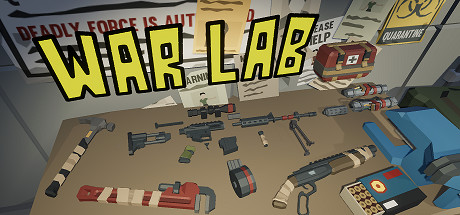
The development of War Lab is aided by AI as a tool. This is, as of now, a single dev project, no jobs are being taken by AI.
-Coding: script templates, help refactoring, commenting, and optimizing human-written code. It also helps solve problems, errors/warnings and find more optimized ways of doing human-designed functionality.
-Sound effects: some computer interactions with fictional devices, and voices (NOT MUSIC)
-Textures: some textures have been upscaled using AI or edited to better depict the desired effects we were aiming for.
-No decisions are taken by AI
-No lore/story elements are written or decided by AI
-No 3D models have been made using AI
Last updated: March 22 2026 (5th game anniversary)
Possible changes in the future:
-Realtime AI NPC actions
-AI-driven text-to-speech for NPCs
-Player mimics (takes in player voices and movements to create player "doppelgangers")
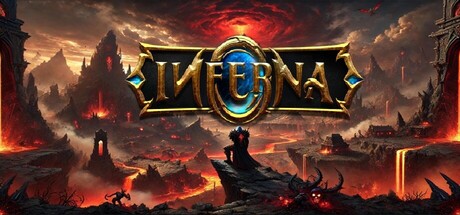
As a small independent team, we use AI as a supportive tool to help us develop and improve Inferna more efficiently.
We may use AI-assisted tools for certain visual materials, such as patch note images, announcements, and loading screens. AI may also support our localization work, including translations of some in-game texts into selected languages.
During gameplay, AI is used for live translations, making it easier for players from different countries to communicate, trade, group up, and play together. Our live translation system is hosted locally on our own infrastructure. Player messages are not sent to third-party AI providers, and player data is never used to train AI models.
How we use artificial intelligence:
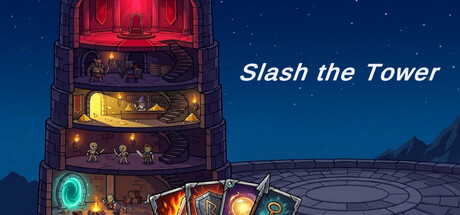
Some creative assets in Slash The Tower were created with the help of generative AI.
Art and music were produced using Google Gemini (AI-assisted generation). Those assets are pre-made and shipped with the game—they are not generated live while you play.
Game code and parts of the user interface were developed with assistance from Cursor (an AI-enabled editor) together with Unity. That means design and implementation were guided by us as developers, with AI helping draft or refine code and UI-related work—not replacing human creative direction for the whole game.
We do not use generative AI to create personalized or real-time content for each player session beyond what is described above. If we add AI-generated material to the Steam store page, community hubs, or marketing, we will treat it the same way: clearly labeled and consistent with this approach.
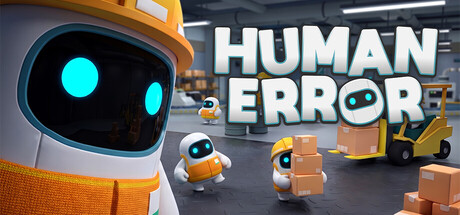
Human Error utilizes cloud based generative AI to power the dialogue and interrogation systems of its robotic characters. During the Debrief Session, an integrated model generates text responses based on your performance metrics in the preceding tasks. This technology is used to create dynamic, unscripted confrontations where the machines analyze your behavior and react to your input in real time.
The game generates text-based dialogue during the social deduction phase. This content is created in real time using your performance data (movement patterns, task efficiency, and error logs). This process requires an active internet connection to communicate with our cloud hosted AI systems. We have implemented guardrails to ensure the AI remains within the thematic boundaries of the game.
To maintain high quality interactions and manage operational costs, gameplay is limited to 25 games per day per user. This ensures that our cloud-based AI systems remain available and responsive for all players.
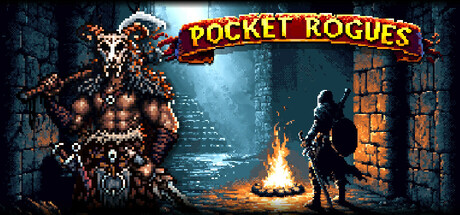
Some of the images in the game were created using neural networks, but were later significantly modified (or used only as inspiration). No image in Pocket Rogues is entirely AI generated.
We use Generative AI tools specifically for the voice acting (dialogue, radio transmissions, and environmental narration) of characters and story sequences.
Generative AI was used in a limited capacity during development.
It was primarily utilized for prototyping certain textures and creating visual references.
Additionally, AI was used to generate a vocal track featured in the game's intro sequence.
All other music, as well as the majority of visual and gameplay content, has been created manually.
The Early Access version of Plentiful uses AI-assisted machine translation for localization. No generative AI was used to create gameplay content, art, or audio.
Generative AI was used during development to assist in the creation of:
Assets: Textures, Sound Effects, Music, and Voice.
Development: Code and Narrative Text.
All AI-generated content has been manually refined and integrated by our team to ensure high quality and originality. Many of these tools were utilized primarily for concepting and prototyping to streamline our production workflow.
English and Italian localization have been handled internally by our team. All other currently available languages, such as Simplified Chinese, Spanish, Brazilian Portuguese, German, Japanese, Russian, and French, are temporarily supported through AI-assisted translation.
These translations are placeholder versions and will be gradually replaced with finalized localizations leading up to the 1.0 release of the game.
No AI-generated content has been used for any other aspect of development, including coding, art, music, or 3D modeling.
All of our art assets are handmade by our artists. We only use AI for things that would not be technically possible otherwise.
We use a text-to-speech solution for the voices because we want to include custom names for vehicles, streets and employees (which can also be changed) in the messages. We also want to support modding missions with voices. None of this is possible with pre-recorded footage.
Several music tracks used AI tools during production. When possible I used historical paintings for reference in drawing pixel art for cards, but some card art used generated art for inspiration instead.
AI Disclosure:
This game uses generative AI tools to assist in creating some of the music. All other content is handmade by the developer, and no AI is used during gameplay.
Currently, all locales are generated by an LLM. However, I am making significant efforts to ensure that all supported UI languages 100% human-made for the future.
If the user chooses to, there are alternative translation models to download & use through the community repository. These are all text generative AI.
Gameplay trailer on storepage uses song made with the help of suno.ai
Some backgrounds in the game are made with the help of various generative AI tools like Adobe Firefly.
Generative AI was used during development to assist with programming, debugging, localization, and text drafting. Some small UI/icon assets included in the game were also created with generative AI and reviewed by the developer before use.
The main visual content of the game uses licensed or manually prepared assets.
As an assistive measure, AI has been implemented into our code practices throughout early development. This includes the use of specialist AI models to assist with code reviews, optimisation and minor troubleshooting and bug fixes. Whilst AI has been used in this way, this in no way compromises or risks the quality of any features, content or security, and all code is ultimately reviewed by a human.
All game works are either original hand-made works that we own, or they were AI-assisted and redrawn or touched up by hand.
Our trailers were also AI-assisted with original works we own to enhance their quality.
All AI voices were trained on licensed material that has commercial rights to use or that we own and were manually directed by the developer.
Throughout our development, we may leverage AI-based tools to assist our team in programming logic and audio production. Please rest assured that the final gameplay and soundscapes reflect the creativity and hard work of our team. Examples include code optimization and musical composition aids.
Dark and Darker has begun utilizing AI-powered tools in the content creation process. All elements that make up the essence of the game are still done by the people who make this game.
We want to be transparent about our use of AI:
AI is used for: assisting with code development (debugging, refactoring, technical guidance during programming sessions).
AI is NOT used for: the story, the dialogue, the music, the illustrations, the character designs, or any creative content. A Piano Tale is a deeply personal project, and its soul comes entirely from human hands.
Generative AI tools were used during the development process in the following areas:
3D Assets & Texturing: We utilized tools such as ChatGPT and Grok to generate visual references and base textures. These references were then used in conjunction with Meshy.ai to assist in the creation of 3D models and their corresponding textures.
Code & Programming: An AI-based coding assistant was used to help write, refactor, and optimize the game's GDScript logic, including character movement, interaction systems, and UI components.
All AI-generated elements have been reviewed, integrated, and refined by the development team to ensure a high-quality experience for players.
Generative Pre-Trained Transformer has been used for improving the game content, for example to improve amazing vehicles, effects and marketing materials.
This game contains visual assets generated using generative AI tools (including some characters, vehicles, and icons). All such assets have been reviewed and integrated by the developer.
The game does not use generative AI during gameplay, nor does it generate any content in real time. All gameplay logic and systems are fully developer-created.
The development of War Lab is aided by AI as a tool. This is, as of now, a single dev project, no jobs are being taken by AI.
-Coding: script templates, help refactoring, commenting, and optimizing human-written code. It also helps solve problems, errors/warnings and find more optimized ways of doing human-designed functionality.
-Sound effects: some computer interactions with fictional devices, and voices (NOT MUSIC)
-Textures: some textures have been upscaled using AI or edited to better depict the desired effects we were aiming for.
-No decisions are taken by AI
-No lore/story elements are written or decided by AI
-No 3D models have been made using AI
Last updated: March 22 2026 (5th game anniversary)
Possible changes in the future:
-Realtime AI NPC actions
-AI-driven text-to-speech for NPCs
-Player mimics (takes in player voices and movements to create player "doppelgangers")
As a small independent team, we use AI as a supportive tool to help us develop and improve Inferna more efficiently.
We may use AI-assisted tools for certain visual materials, such as patch note images, announcements, and loading screens. AI may also support our localization work, including translations of some in-game texts into selected languages.
During gameplay, AI is used for live translations, making it easier for players from different countries to communicate, trade, group up, and play together. Our live translation system is hosted locally on our own infrastructure. Player messages are not sent to third-party AI providers, and player data is never used to train AI models.
How we use artificial intelligence:
Some creative assets in Slash The Tower were created with the help of generative AI.
Art and music were produced using Google Gemini (AI-assisted generation). Those assets are pre-made and shipped with the game—they are not generated live while you play.
Game code and parts of the user interface were developed with assistance from Cursor (an AI-enabled editor) together with Unity. That means design and implementation were guided by us as developers, with AI helping draft or refine code and UI-related work—not replacing human creative direction for the whole game.
We do not use generative AI to create personalized or real-time content for each player session beyond what is described above. If we add AI-generated material to the Steam store page, community hubs, or marketing, we will treat it the same way: clearly labeled and consistent with this approach.
Human Error utilizes cloud based generative AI to power the dialogue and interrogation systems of its robotic characters. During the Debrief Session, an integrated model generates text responses based on your performance metrics in the preceding tasks. This technology is used to create dynamic, unscripted confrontations where the machines analyze your behavior and react to your input in real time.
The game generates text-based dialogue during the social deduction phase. This content is created in real time using your performance data (movement patterns, task efficiency, and error logs). This process requires an active internet connection to communicate with our cloud hosted AI systems. We have implemented guardrails to ensure the AI remains within the thematic boundaries of the game.
To maintain high quality interactions and manage operational costs, gameplay is limited to 25 games per day per user. This ensures that our cloud-based AI systems remain available and responsive for all players.
Some of the images in the game were created using neural networks, but were later significantly modified (or used only as inspiration). No image in Pocket Rogues is entirely AI generated.
We use Generative AI tools specifically for the voice acting (dialogue, radio transmissions, and environmental narration) of characters and story sequences.