Public Steam disclosure research25,376 disclosures tracked
Where do games disclose AI use?
Search developers’ Steam disclosures, compare classified AI use across
games, and follow recorded changes.
This index adds cross-game classifications and statistics to
statements published on individual store pages.
Groups reflect automatic analysis of public disclosures; mature records are excluded. These counts do not measure AI use across all of Steam.
Missing or unclear statements cannot establish whether a game uses AI.
Some text in this game — the store page, in-game UI labels and menus, and the English translation — was drafted with the help of an AI assistant and then reviewed and edited by the developer. AI coding assistants were also used during development. All in-game art, 3D models, textures and sounds are hand-made, generated procedurally by the game's own code, or licensed third-party assets; none of them are AI-generated. No AI is used to generate content during gameplay.
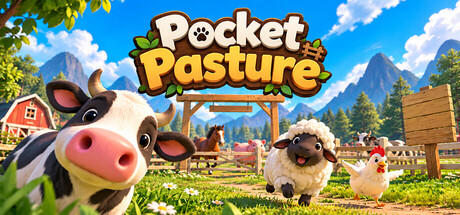
As a solo developer, generative AI tools were used to assist in creating promotional capsule artwork and achievement icons. All gameplay mechanics, coding, and game design were created directly by the developer.
Part of the game were created with the help of generative AI tools, then reviewed, edited and assembled by the developer:
• visual art — the ambient background images and the animated background loop
• audio — background music and sound effects
Generative AI is used only during development to produce these assets. The game does NOT use any AI at runtime — there is no live AI generation while you play.
Puzzles and word lists are hand-curated, and level layouts are produced by our own deterministic algorithm (not AI).
AI-assisted coding and editor automation tools were used during development for workflow efficiency.
Most of the art was hand-made by me. The remaining art generated by AI tools like icons or textures will be swapped to human-made art in the near future.
AI translation tools were used to create localization drafts, that are being reviewed by speakers of the language.
Some of what you see and hear in Semblature was made with AI tools. Nothing is generated while you play. There is no model in the game, nothing is created at runtime, and the game never sends anything you do to an AI service.
Art: No AI-generated imagery currently ships. All in-game art is drawn procedurally by the game's own code, and the store assets (capsules, library art, icons) are the same. No diffusion imagery is used in any of them. An AI image pipeline exists in development; if generated art ships in a future build, this section will be updated before release with the tools and process.
Music: No music has shipped in a build yet. If AI-generated music ships, this answer will be updated with the tool and process before release.
Puzzles: A puzzle's shape, what it teaches, and where it falls on the difficulty curve was designed with an AI coding assistant under my direction. The puzzles you play are produced from that design by a deterministic program, and a solver proves it has exactly one solution. The teaching cards and rule text were drafted the same way and edited by me.
Store copy is drafted with an AI writing assistant and edited by me.
This game contains pre-generated AI content. Some collectible item models and several furniture and decor props were created with AI image-to-3D and text-to-3D generation, then optimized and placed by the developer. Some surface textures and decorative images were AI-generated. The store capsule and library artwork, logo and icons were created with AI image generation using the game's own screenshots as reference. In-game and store text, including translations, was drafted with AI assistance and edited by the developer. Gameplay screenshots are real in-game captures without AI editing. The game does not generate AI content or connect to AI services while running.
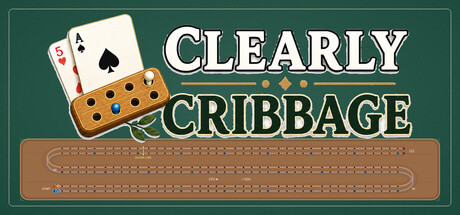
Clearly Cribbage is my first game as a developer. I used AI tools to help with coding, debugging, testing, and working through design ideas while I learned to build it.
The opening studio image, game logo and icon, and some Steam artwork were made with AI image generation under my direction. Some of the licensed music in the game is also identified by its creators as AI-generated. I chose what to use and made the final decisions about the game.
No generative AI creates content while you play.
Generative AI tools were used to assist in creating some pre-generated 3D models, textures, visual assets, and promotional artwork. All content is generated before gameplay, reviewed by the developer, and integrated into the finished game. No generative AI is used live during gameplay.
The developer used generative AI tools to help create some of the game's artwork and 3D models, sound effects and music, and text, including the store description and translations. All AI-assisted content was reviewed and edited by the developer before being included. The game does not generate any AI content while you play.
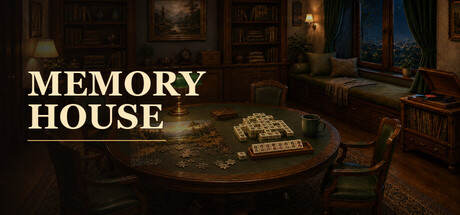
Memory House is based on our original concept, characters, storylines, gameplay, and creative direction. During development, we used generative AI as a tool to help produce illustrations, visual assets, and written narrative content based on those ideas. We selected and refined the resulting content for the game and some promotional materials. No AI content is generated during gameplay.
The character art, idle animations, icons and store images were created with locally run AI image tools, then selected and retouched by hand. Nothing is generated by AI while the game runs.
Generative AI tools were used to assist with the creation of some game and promotional content. All final content was reviewed and approved by the developer.
Some sound effects and music were created with AI audio tools.
AI tools assisted in writing the game's code and some of its text (descriptions, hints and story notes), all reviewed and edited by the developer. The artwork is drawn procedurally by the game itself, not AI-generated, and no AI content is generated during gameplay.
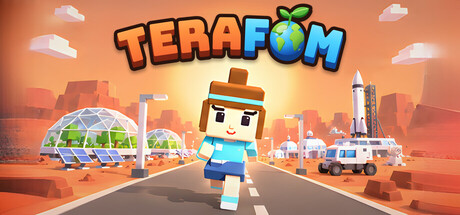
Terafom was developed with the help of generative AI tools. Some of the artwork, 3D models, in-game text and translations, voice, music and sound effects were created with AI assistance and reviewed by the developer. During gameplay, the in-game AI helper character answers players' questions about the game using third-party AI services (Google Gemini, DeepSeek, OpenAI), and its answers are spoken with an AI-generated voice.
AI helped with grammatical corrections for in-game text, which were then carefully reviewed and adjusted by hand.
We only consider AI to be a supportive tool. Every detail is meticulously crafted with human intent, as our creative process is still firmly anchored in manual craftsmanship.
Generative AI tools were used during development to help create and refine some 2D artwork, icons and promotional images, and to assist with store-page text and translation. These assets are prepared before release and reviewed by the developer. The game does not generate AI content during gameplay or connect to an external AI service. Player-designed weapons are created with the in-game drawing and crafting tools, not generative AI.
Our logo and key art were created with the help of AI image generation tools and edited by us. All gameplay, 3D models, and audio were made by our team.
An AI assistant (Claude) was used during development. It wrote the in-game text translations, the store page text, and the scripts that build many of the game's 3D models, animations and textures, all under the developer's direction and review. Nothing is generated by AI while you play. All sounds are real recordings from CC0 libraries.
A small language model (Google's Gemma 3 270M) runs entirely on the player's computer, with no network connection. It writes short lines of villager small talk, the ritual oracle's one- or two-sentence hint after a failed ritual, and routine filler records in the in-game archive, and it chooses which of our pre-written dialogue lines fits the moment.
Guardrails: the player never types to the model — there is no text input anywhere in the game. Every prompt is a fixed template we wrote, filled in from game state such as a character's name, the time of day and the current quest. Output is short by construction (hard token caps, and lines over a few words are cut or discarded); lines that read as narration, stage directions or an assistant speaking are rejected; dialogue choices are constrained to our own authored lines. Any failure falls back to written lines. Players can turn the model off in Settings, and the game plays identically on written lines alone.
Illustrations and store art were created with Google Nano Banana 2 AI image generation, then selected, edited and assembled by the developer. Background music was created with Stable Audio 2.5. No AI content is generated during gameplay.
Part of the game's text, including the German, French and Spanish translations, and the store page descriptions were written with the help of AI tools. The paintings are public-domain works by real artists.
Character art, backgrounds, interface graphics and store artwork were created with the help of generative image tools and then selected, edited and assembled by the developer. Game design, code and writing are our own work. The game does not generate any content while you play.
Parts of this game were made with the help of generative AI during development.
- Artwork (item illustrations, backgrounds and interface graphics) was generated with AI tools and then edited and adjusted by hand.
- Music and sound effects were created with AI tools.
- The source code and the in-game text translations were written with AI assistance.
All of it was reviewed by the developer before release.
This game does not use generative AI while you play. No content is generated at runtime, and no player data is sent to any AI service.
Generative AI was used to create the illustrations, as well as a small portion of the character artwork and dialogue. This content was created during development. The game does not generate AI content during gameplay.
Generative AI tools were used during development to create artwork, icons, 3D assets, written content, and trailer narration. This content is reviewed, refined, and integrated under the developer’s creative direction. The game does not generate AI content during gameplay.
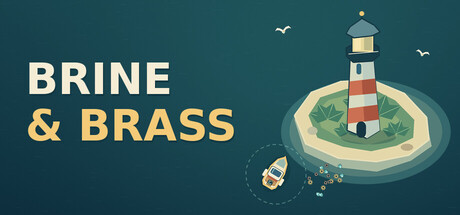
Brine & Brass is a solo project by Remoria, assisted by AI. GPT assisted with game programming, in-game writing, artwork-drawing scripts, and procedural music and sound code. The artwork is rendered from project drawing code, and the audio uses local waveform synthesis. No generative AI model or online AI service runs during gameplay.
Pre-generated content (created during development, not generated while playing):
- The ending theme song "さくら色の上履き" was created with Suno.
- The title logos were generated with an AI image tool and reviewed by the developer.
- Game artwork (scenes, character art and illustrations) was created with the help of AI image generation and upscaled with Real-ESRGAN, then selected and edited by the developer.
- AI assistants (Codex, Claude) were used to help write code and to draft/translate some text; all story text was reviewed by the developer.
The game does not generate any content with AI at runtime.
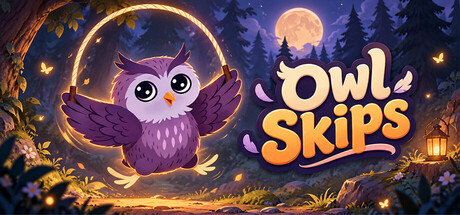
Generative AI tools were used during development to assist with visual concepting and the creation of some pre-generated art assets, including upgrade icons, rope textures, and elements of the game's logo/branding.
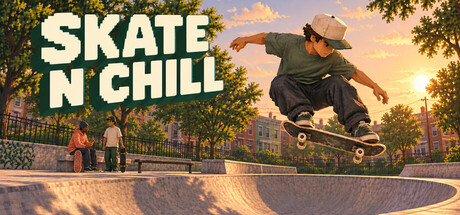
Skate N Chill uses pre-generated AI artwork and instrumental music created with Suno. AI-generated artwork is also used in store and promotional materials. These assets are prepared before release; no AI content is generated during gameplay.
We use generative AI across all disciplines of game development, most often with heavy amounts of human editing. That involves audio and visual art, 3D models, our logo, and localization. We use it as a productivity tool so we can achieve a higher level of quality, faster, than we would have been able to.
Some text in this game — the store page, in-game UI labels and menus, and the English translation — was drafted with the help of an AI assistant and then reviewed and edited by the developer. AI coding assistants were also used during development. All in-game art, 3D models, textures and sounds are hand-made, generated procedurally by the game's own code, or licensed third-party assets; none of them are AI-generated. No AI is used to generate content during gameplay.
As a solo developer, generative AI tools were used to assist in creating promotional capsule artwork and achievement icons. All gameplay mechanics, coding, and game design were created directly by the developer.
Part of the game were created with the help of generative AI tools, then reviewed, edited and assembled by the developer:
• visual art — the ambient background images and the animated background loop
• audio — background music and sound effects
Generative AI is used only during development to produce these assets. The game does NOT use any AI at runtime — there is no live AI generation while you play.
Puzzles and word lists are hand-curated, and level layouts are produced by our own deterministic algorithm (not AI).
AI-assisted coding and editor automation tools were used during development for workflow efficiency.
Most of the art was hand-made by me. The remaining art generated by AI tools like icons or textures will be swapped to human-made art in the near future.
AI translation tools were used to create localization drafts, that are being reviewed by speakers of the language.
Some of what you see and hear in Semblature was made with AI tools. Nothing is generated while you play. There is no model in the game, nothing is created at runtime, and the game never sends anything you do to an AI service.
Art: No AI-generated imagery currently ships. All in-game art is drawn procedurally by the game's own code, and the store assets (capsules, library art, icons) are the same. No diffusion imagery is used in any of them. An AI image pipeline exists in development; if generated art ships in a future build, this section will be updated before release with the tools and process.
Music: No music has shipped in a build yet. If AI-generated music ships, this answer will be updated with the tool and process before release.
Puzzles: A puzzle's shape, what it teaches, and where it falls on the difficulty curve was designed with an AI coding assistant under my direction. The puzzles you play are produced from that design by a deterministic program, and a solver proves it has exactly one solution. The teaching cards and rule text were drafted the same way and edited by me.
Store copy is drafted with an AI writing assistant and edited by me.
This game contains pre-generated AI content. Some collectible item models and several furniture and decor props were created with AI image-to-3D and text-to-3D generation, then optimized and placed by the developer. Some surface textures and decorative images were AI-generated. The store capsule and library artwork, logo and icons were created with AI image generation using the game's own screenshots as reference. In-game and store text, including translations, was drafted with AI assistance and edited by the developer. Gameplay screenshots are real in-game captures without AI editing. The game does not generate AI content or connect to AI services while running.
Clearly Cribbage is my first game as a developer. I used AI tools to help with coding, debugging, testing, and working through design ideas while I learned to build it.
The opening studio image, game logo and icon, and some Steam artwork were made with AI image generation under my direction. Some of the licensed music in the game is also identified by its creators as AI-generated. I chose what to use and made the final decisions about the game.
No generative AI creates content while you play.
Generative AI tools were used to assist in creating some pre-generated 3D models, textures, visual assets, and promotional artwork. All content is generated before gameplay, reviewed by the developer, and integrated into the finished game. No generative AI is used live during gameplay.
The developer used generative AI tools to help create some of the game's artwork and 3D models, sound effects and music, and text, including the store description and translations. All AI-assisted content was reviewed and edited by the developer before being included. The game does not generate any AI content while you play.
Memory House is based on our original concept, characters, storylines, gameplay, and creative direction. During development, we used generative AI as a tool to help produce illustrations, visual assets, and written narrative content based on those ideas. We selected and refined the resulting content for the game and some promotional materials. No AI content is generated during gameplay.
The character art, idle animations, icons and store images were created with locally run AI image tools, then selected and retouched by hand. Nothing is generated by AI while the game runs.
Generative AI tools were used to assist with the creation of some game and promotional content. All final content was reviewed and approved by the developer.
Some sound effects and music were created with AI audio tools.
AI tools assisted in writing the game's code and some of its text (descriptions, hints and story notes), all reviewed and edited by the developer. The artwork is drawn procedurally by the game itself, not AI-generated, and no AI content is generated during gameplay.
Terafom was developed with the help of generative AI tools. Some of the artwork, 3D models, in-game text and translations, voice, music and sound effects were created with AI assistance and reviewed by the developer. During gameplay, the in-game AI helper character answers players' questions about the game using third-party AI services (Google Gemini, DeepSeek, OpenAI), and its answers are spoken with an AI-generated voice.
AI helped with grammatical corrections for in-game text, which were then carefully reviewed and adjusted by hand.
We only consider AI to be a supportive tool. Every detail is meticulously crafted with human intent, as our creative process is still firmly anchored in manual craftsmanship.
Generative AI tools were used during development to help create and refine some 2D artwork, icons and promotional images, and to assist with store-page text and translation. These assets are prepared before release and reviewed by the developer. The game does not generate AI content during gameplay or connect to an external AI service. Player-designed weapons are created with the in-game drawing and crafting tools, not generative AI.
Our logo and key art were created with the help of AI image generation tools and edited by us. All gameplay, 3D models, and audio were made by our team.
An AI assistant (Claude) was used during development. It wrote the in-game text translations, the store page text, and the scripts that build many of the game's 3D models, animations and textures, all under the developer's direction and review. Nothing is generated by AI while you play. All sounds are real recordings from CC0 libraries.
A small language model (Google's Gemma 3 270M) runs entirely on the player's computer, with no network connection. It writes short lines of villager small talk, the ritual oracle's one- or two-sentence hint after a failed ritual, and routine filler records in the in-game archive, and it chooses which of our pre-written dialogue lines fits the moment.
Guardrails: the player never types to the model — there is no text input anywhere in the game. Every prompt is a fixed template we wrote, filled in from game state such as a character's name, the time of day and the current quest. Output is short by construction (hard token caps, and lines over a few words are cut or discarded); lines that read as narration, stage directions or an assistant speaking are rejected; dialogue choices are constrained to our own authored lines. Any failure falls back to written lines. Players can turn the model off in Settings, and the game plays identically on written lines alone.
Illustrations and store art were created with Google Nano Banana 2 AI image generation, then selected, edited and assembled by the developer. Background music was created with Stable Audio 2.5. No AI content is generated during gameplay.
Part of the game's text, including the German, French and Spanish translations, and the store page descriptions were written with the help of AI tools. The paintings are public-domain works by real artists.
Character art, backgrounds, interface graphics and store artwork were created with the help of generative image tools and then selected, edited and assembled by the developer. Game design, code and writing are our own work. The game does not generate any content while you play.
Parts of this game were made with the help of generative AI during development.
- Artwork (item illustrations, backgrounds and interface graphics) was generated with AI tools and then edited and adjusted by hand.
- Music and sound effects were created with AI tools.
- The source code and the in-game text translations were written with AI assistance.
All of it was reviewed by the developer before release.
This game does not use generative AI while you play. No content is generated at runtime, and no player data is sent to any AI service.
Generative AI was used to create the illustrations, as well as a small portion of the character artwork and dialogue. This content was created during development. The game does not generate AI content during gameplay.
Generative AI tools were used during development to create artwork, icons, 3D assets, written content, and trailer narration. This content is reviewed, refined, and integrated under the developer’s creative direction. The game does not generate AI content during gameplay.
Brine & Brass is a solo project by Remoria, assisted by AI. GPT assisted with game programming, in-game writing, artwork-drawing scripts, and procedural music and sound code. The artwork is rendered from project drawing code, and the audio uses local waveform synthesis. No generative AI model or online AI service runs during gameplay.
Pre-generated content (created during development, not generated while playing):
- The ending theme song "さくら色の上履き" was created with Suno.
- The title logos were generated with an AI image tool and reviewed by the developer.
- Game artwork (scenes, character art and illustrations) was created with the help of AI image generation and upscaled with Real-ESRGAN, then selected and edited by the developer.
- AI assistants (Codex, Claude) were used to help write code and to draft/translate some text; all story text was reviewed by the developer.
The game does not generate any content with AI at runtime.
Generative AI tools were used during development to assist with visual concepting and the creation of some pre-generated art assets, including upgrade icons, rope textures, and elements of the game's logo/branding.
Skate N Chill uses pre-generated AI artwork and instrumental music created with Suno. AI-generated artwork is also used in store and promotional materials. These assets are prepared before release; no AI content is generated during gameplay.
We use generative AI across all disciplines of game development, most often with heavy amounts of human editing. That involves audio and visual art, 3D models, our logo, and localization. We use it as a productivity tool so we can achieve a higher level of quality, faster, than we would have been able to.