Public Steam disclosure research25,376 disclosures tracked
Where do games disclose AI use?
Search developers’ Steam disclosures, compare classified AI use across
games, and follow recorded changes.
This index adds cross-game classifications and statistics to
statements published on individual store pages.
Groups reflect automatic analysis of public disclosures; mature records are excluded. These counts do not measure AI use across all of Steam.
Missing or unclear statements cannot establish whether a game uses AI.
3D models used in the game were pre-generated or generated with the assistance of AI technology prior to build deployment. All models have been reviewed, integrated, and verified to ensure they comply with rights, quality standards, and platform policies.
The in-game voiceover is generated in real-time by a text-to-speech AI model running entirely on your computer. This model only narrates built-in, pre-approved game text. None of your inputs will be sent to the AI model. The entire process runs locally offline.
Some store page art and description text were produced with AI assistance. All in-game art, audio and text are hand-authored or procedurally generated.
AI-assisted tools were used during the development of this game to help with portions of the programming process, the creation of some visual assets, and certain audio assets. All AI-assisted content was reviewed, refined, and integrated by the development team before release. The game does not use generative AI to create content during gameplay and does not rely on external AI services while running.
Generative AI was used during game development to assist with programming and to create some pre-generated promotional artwork. All AI-assisted outputs were reviewed and edited by the developer before release.
This game was developed through collaboration between the developer and AI tools across most content (art, writing, design); in-game translations were generated by AI.
Investors and characters respond to the business idea you type, because a language model re-words our hand-written dialogue at runtime. It only changes wording — never numbers, outcomes, or anything in your save. If a generation fails, you get the hand-written line instead.
Your product illustration is generated from your own idea text.
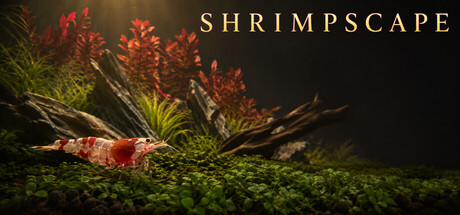
Some of Shrimpscape's assets were produced with generative AI. The shrimp, plant and hardscape artwork was generated with AI image tools and then hand-edited, colour-corrected and assembled by the developer. The 3D hardscape models were generated with an AI mesh tool and then cleaned up and textured by hand in Blender. Store page and capsule art was made the same way. Text outside English is machine-translated. Nothing is generated while you play — everything shipped in the game is fixed and reviewed before release.
Some promotional artwork on the store page (capsule images and logo) was created with the assistance of generative AI tools, based on the game's own original key art and branding. The game itself contains no AI-generated content: all gameplay, music, visuals, and levels are hand-crafted.
Generative AI tools were used to assist in creating some store page artwork and marketing materials, as well as parts of the game's word content. All AI-assisted content was reviewed, edited, and integrated by the developer. Game design, programming, and final implementation were created by the developer.
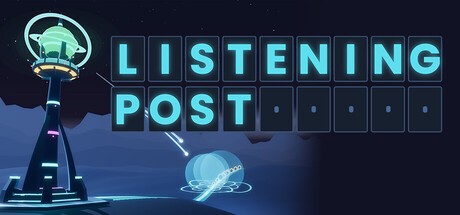
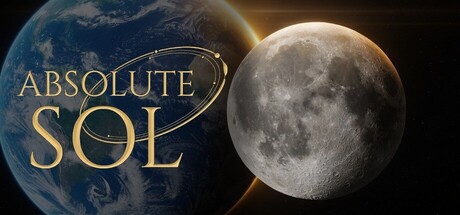
Some store, library, and marketing images were created with a generative image tool, then cropped and composited to Steam sizes. The playable game does not generate AI content at runtime. In-game planets, textures, and simulation are not live AI.
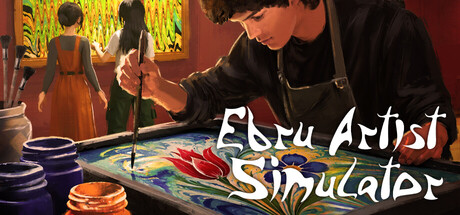
Ebru Artist Simulator uses generative AI-assisted artwork for a small number of textures and UI icons. AI is not used in any other aspect of the game, and we are currently working to replace these AI-assisted visuals before the full release.
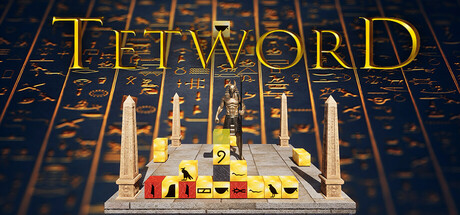
Some of the art assets in TETWORD were created with the help of generative AI tools. Certain textures and 2D artwork were produced using AI image-generation tools, and some 3D models were generated using Meshy AI. Generative AI assistants (ChatGPT and Claude) were also used during development. All AI-assisted assets were reviewed, edited, and curated by the developer before being included in the game. The game's design, code, gameplay, and word content were created by the developer.
AI tools (Claude, Gemini, Copilot) were used to assist with game source code development. No visual or audio content is generated by AI at runtime.
Narzędzia AI (Claude, Gemini, Copilot) były wykorzystywane jako wsparcie przy tworzeniu kodu źródłowego gry. Treści wizualne i dźwiękowe nie są generowane przez AI w czasie rzeczywistym.
Development of this game uses AI coding agents. Some procedural shader code shipping in the game was written by coding agents following human-made designs. All designs, music, and art styles are created by humans. All in-game text is written or edited by a human before release; no generated text ships unreviewed. No AI content is generated at runtime.
Some marketing assets on the store page (capsules, logo) were produced with a generative AI tool, based on screenshots and 3D renders from the game itself.
Part of the in-game text (encyclopaedia entries and mission briefings) was drafted with the assistance of a large language model, then reviewed and edited by the developer.
The 3D parts, textures and the simulation itself are authored. Nothing is generated while the game is running.
Generative AI was used as a writing and translation aid during development, always under human direction and review: in-game lesson and interface text, their translations into the supported languages, achievement text, and this store page. All of it was reviewed by the developer. The game itself does not use AI at runtime — nothing is generated while you play, and every level is deterministic.
Generative AI tools were used during development to assist with the creation and refinement of some pre-generated visual artwork and marketing assets. All AI-assisted content was reviewed, edited, and integrated by the developer. Ancient Duel does not generate AI content during gameplay.
Some pre-generated game assets, artwork and translations were created or assisted using generative AI. All AI-generated content has been reviewed, edited and integrated by the developer. QuizForge does not use generative AI to create live in-game content during gameplay.
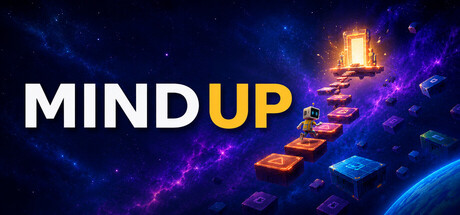
MindUP uses some pre-rendered AI-assisted visual, audio, and promotional assets. The game does not use live generative AI during gameplay, and no player prompts or AI-generated gameplay content are created at runtime.
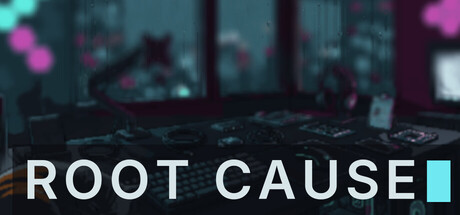
Root Cause is utilizes AI assets in the game. This content, when utilized, is generated during development, then curated, edited, and committed to the project before release. Nothing is generated while the game is running.
Items that may be generated:
Illustrated art.
UI/Interfaces
Icon Sets
Sounds and Music
Dialogue, case briefings, case content, and interface copy
Generative AI was used during development as a coding assistant and to assist with drafting and translating store-page and marketing text. Some pixel-art assets were rendered by deterministic drawing code written with AI assistance; the final images were not directly output by a text-to-image or diffusion model. All shipped and published content was reviewed and edited by the developer. No generative AI runs in the game, and no content is generated from player input.
Pregenerated AI audio tools were used during development to generate character voice lines and background music tracks. All visual art, graphics, puzzle task and animations were created by hand without generative AI.
Yes — pre-rendered only (no real-time generative AI during gameplay).
Generative AI tools were used to create or refine some visual assets (UI, images, marketing / store materials) and parts of text / localization. Gameplay, code and game design are made and reviewed by the studio. No AI content is generated live during play.
Portions of this game's written content were drafted with the assistance of Anthropic's Claude, under the direction of the developer, and were reviewed and edited by a human before inclusion. All artwork is procedurally rendered by the game's own code. No generative AI images are used. No AI content is generated during gameplay.
Generative AI tools were used during development to assist with some pre-generated promotional and graphical artwork used for Cubing Forge, including certain Steam store, library, and marketing assets. All AI-assisted content is reviewed, curated, and finalized before publication. Cubing Forge does not use live generative AI during gameplay.
The two announcer voices, BroadcASH and BOBcast, are generated with ElevenLabs from scripts we write and edit ourselves. Every line is approved, levelled and listened to by hand before it ships.
Nothing else in the game is AI generated. The card art is emoji placeholder today, and is being replaced with original illustrations commissioned from human artists. The music is composed in-house by our own procedural scripts, and every track has a written provenance log. The rules, the design and the natural history research are ours.
Some marketing and store copy is drafted with AI assistance and edited before use.
Yakutori uses on-device AI to translate Japanese text on your screen into English in real time. It reads the on-screen text with optical character recognition (PaddleOCR PP-OCRv5) and generates the English translation with a local large language model (Qwen3-4B). All AI runs entirely on your own computer — no cloud services and no internet connection are used, and nothing you translate ever leaves your device. As with any machine translation, the AI-generated output is not always perfect.
Some of the pre-rendered 2D art shipped with the game (era intermission illustrations, panel icons, campaign cover images and the Economic Association hall with economist portraits) was produced with generative image tools (fal.ai, Krea) from prompts authored by the developer, then post-processed by hand and by scripts in tools/. No generative AI is used at runtime. The game's simulation code, UI, isometric city renderer, world map (built from Natural Earth data) and all text, including the three interface languages, are authored by the developer.
This game uses live generative AI to create text-based character dialogue, diaries, journey events, NPC conversations, and outcomes of player-directed interactions. Responses are generated from player-created character profiles, recent in-game memories, current objectives, and player messages. Relevant text context is sent to a third-party AI service to generate these responses. Generated content may vary between sessions and may occasionally produce unexpected results. AI is not used to generate executable code or modify files on the player's device.
AI was used in the initial generation of some assets, but we edited them in Photoshop to adjust proportions and remove any obvious AI Slop.
As this is primarily a management game, we focused heavily on the gameplay mechanics, ensuring the game is bug-free, fun to play, and, dare we say, addicting!
That said, we would love for the art to be more authentic and beautiful. We have an artist under contract who can replace all of the art in the game if the game sells well enough, and we will release the updated art as a patch to all users who have previously purchased the game.
We use AI as a coding assistant during development, and as a drafting tool to help generate candidate crossword clues from our word bank. Every single clue is reviewed and edited by a human before it ships. AI generated images were used during prototyping as early placeholders. All final visual art assets that ship with the game have been created by the developer.
We've harnessed the power of Generative AI technology to create several of our game's unique theme background artworks, enhancing your gaming experience with visually stunning designs.
Generative AI tools were used during development to assist with some pre-generated visual assets and store marketing images. These assets are fixed in advance and are not generated during gameplay. The released game does not call an external generative AI service and does not generate text, images, audio, code, or other content at runtime.
Generative AI tools were used during development to create and refine some pre-generated 2D artwork used in the game and its marketing, including environmental backgrounds, character and item art, fossil and museum visuals, capsule and library artwork, and achievement imagery. All AI-assisted assets were selected, edited, and integrated by the developer before shipping. The game does not generate AI content during gameplay and does not connect to a live AI service.
3D models used in the game were pre-generated or generated with the assistance of AI technology prior to build deployment. All models have been reviewed, integrated, and verified to ensure they comply with rights, quality standards, and platform policies.
The in-game voiceover is generated in real-time by a text-to-speech AI model running entirely on your computer. This model only narrates built-in, pre-approved game text. None of your inputs will be sent to the AI model. The entire process runs locally offline.
Some store page art and description text were produced with AI assistance. All in-game art, audio and text are hand-authored or procedurally generated.
AI-assisted tools were used during the development of this game to help with portions of the programming process, the creation of some visual assets, and certain audio assets. All AI-assisted content was reviewed, refined, and integrated by the development team before release. The game does not use generative AI to create content during gameplay and does not rely on external AI services while running.
Generative AI was used during game development to assist with programming and to create some pre-generated promotional artwork. All AI-assisted outputs were reviewed and edited by the developer before release.
This game was developed through collaboration between the developer and AI tools across most content (art, writing, design); in-game translations were generated by AI.
Investors and characters respond to the business idea you type, because a language model re-words our hand-written dialogue at runtime. It only changes wording — never numbers, outcomes, or anything in your save. If a generation fails, you get the hand-written line instead.
Your product illustration is generated from your own idea text.
Some of Shrimpscape's assets were produced with generative AI. The shrimp, plant and hardscape artwork was generated with AI image tools and then hand-edited, colour-corrected and assembled by the developer. The 3D hardscape models were generated with an AI mesh tool and then cleaned up and textured by hand in Blender. Store page and capsule art was made the same way. Text outside English is machine-translated. Nothing is generated while you play — everything shipped in the game is fixed and reviewed before release.
Some promotional artwork on the store page (capsule images and logo) was created with the assistance of generative AI tools, based on the game's own original key art and branding. The game itself contains no AI-generated content: all gameplay, music, visuals, and levels are hand-crafted.
Generative AI tools were used to assist in creating some store page artwork and marketing materials, as well as parts of the game's word content. All AI-assisted content was reviewed, edited, and integrated by the developer. Game design, programming, and final implementation were created by the developer.
Some store, library, and marketing images were created with a generative image tool, then cropped and composited to Steam sizes. The playable game does not generate AI content at runtime. In-game planets, textures, and simulation are not live AI.
Ebru Artist Simulator uses generative AI-assisted artwork for a small number of textures and UI icons. AI is not used in any other aspect of the game, and we are currently working to replace these AI-assisted visuals before the full release.
Some of the art assets in TETWORD were created with the help of generative AI tools. Certain textures and 2D artwork were produced using AI image-generation tools, and some 3D models were generated using Meshy AI. Generative AI assistants (ChatGPT and Claude) were also used during development. All AI-assisted assets were reviewed, edited, and curated by the developer before being included in the game. The game's design, code, gameplay, and word content were created by the developer.
AI tools (Claude, Gemini, Copilot) were used to assist with game source code development. No visual or audio content is generated by AI at runtime.
Narzędzia AI (Claude, Gemini, Copilot) były wykorzystywane jako wsparcie przy tworzeniu kodu źródłowego gry. Treści wizualne i dźwiękowe nie są generowane przez AI w czasie rzeczywistym.
Development of this game uses AI coding agents. Some procedural shader code shipping in the game was written by coding agents following human-made designs. All designs, music, and art styles are created by humans. All in-game text is written or edited by a human before release; no generated text ships unreviewed. No AI content is generated at runtime.
Some marketing assets on the store page (capsules, logo) were produced with a generative AI tool, based on screenshots and 3D renders from the game itself.
Part of the in-game text (encyclopaedia entries and mission briefings) was drafted with the assistance of a large language model, then reviewed and edited by the developer.
The 3D parts, textures and the simulation itself are authored. Nothing is generated while the game is running.
Generative AI was used as a writing and translation aid during development, always under human direction and review: in-game lesson and interface text, their translations into the supported languages, achievement text, and this store page. All of it was reviewed by the developer. The game itself does not use AI at runtime — nothing is generated while you play, and every level is deterministic.
Generative AI tools were used during development to assist with the creation and refinement of some pre-generated visual artwork and marketing assets. All AI-assisted content was reviewed, edited, and integrated by the developer. Ancient Duel does not generate AI content during gameplay.
Some pre-generated game assets, artwork and translations were created or assisted using generative AI. All AI-generated content has been reviewed, edited and integrated by the developer. QuizForge does not use generative AI to create live in-game content during gameplay.
MindUP uses some pre-rendered AI-assisted visual, audio, and promotional assets. The game does not use live generative AI during gameplay, and no player prompts or AI-generated gameplay content are created at runtime.
Root Cause is utilizes AI assets in the game. This content, when utilized, is generated during development, then curated, edited, and committed to the project before release. Nothing is generated while the game is running.
Items that may be generated:
Illustrated art.
UI/Interfaces
Icon Sets
Sounds and Music
Dialogue, case briefings, case content, and interface copy
Generative AI was used during development as a coding assistant and to assist with drafting and translating store-page and marketing text. Some pixel-art assets were rendered by deterministic drawing code written with AI assistance; the final images were not directly output by a text-to-image or diffusion model. All shipped and published content was reviewed and edited by the developer. No generative AI runs in the game, and no content is generated from player input.
Pregenerated AI audio tools were used during development to generate character voice lines and background music tracks. All visual art, graphics, puzzle task and animations were created by hand without generative AI.
Yes — pre-rendered only (no real-time generative AI during gameplay).
Generative AI tools were used to create or refine some visual assets (UI, images, marketing / store materials) and parts of text / localization. Gameplay, code and game design are made and reviewed by the studio. No AI content is generated live during play.
Portions of this game's written content were drafted with the assistance of Anthropic's Claude, under the direction of the developer, and were reviewed and edited by a human before inclusion. All artwork is procedurally rendered by the game's own code. No generative AI images are used. No AI content is generated during gameplay.
Generative AI tools were used during development to assist with some pre-generated promotional and graphical artwork used for Cubing Forge, including certain Steam store, library, and marketing assets. All AI-assisted content is reviewed, curated, and finalized before publication. Cubing Forge does not use live generative AI during gameplay.
The two announcer voices, BroadcASH and BOBcast, are generated with ElevenLabs from scripts we write and edit ourselves. Every line is approved, levelled and listened to by hand before it ships.
Nothing else in the game is AI generated. The card art is emoji placeholder today, and is being replaced with original illustrations commissioned from human artists. The music is composed in-house by our own procedural scripts, and every track has a written provenance log. The rules, the design and the natural history research are ours.
Some marketing and store copy is drafted with AI assistance and edited before use.
Yakutori uses on-device AI to translate Japanese text on your screen into English in real time. It reads the on-screen text with optical character recognition (PaddleOCR PP-OCRv5) and generates the English translation with a local large language model (Qwen3-4B). All AI runs entirely on your own computer — no cloud services and no internet connection are used, and nothing you translate ever leaves your device. As with any machine translation, the AI-generated output is not always perfect.
Some of the pre-rendered 2D art shipped with the game (era intermission illustrations, panel icons, campaign cover images and the Economic Association hall with economist portraits) was produced with generative image tools (fal.ai, Krea) from prompts authored by the developer, then post-processed by hand and by scripts in tools/. No generative AI is used at runtime. The game's simulation code, UI, isometric city renderer, world map (built from Natural Earth data) and all text, including the three interface languages, are authored by the developer.
This game uses live generative AI to create text-based character dialogue, diaries, journey events, NPC conversations, and outcomes of player-directed interactions. Responses are generated from player-created character profiles, recent in-game memories, current objectives, and player messages. Relevant text context is sent to a third-party AI service to generate these responses. Generated content may vary between sessions and may occasionally produce unexpected results. AI is not used to generate executable code or modify files on the player's device.
AI was used in the initial generation of some assets, but we edited them in Photoshop to adjust proportions and remove any obvious AI Slop.
As this is primarily a management game, we focused heavily on the gameplay mechanics, ensuring the game is bug-free, fun to play, and, dare we say, addicting!
That said, we would love for the art to be more authentic and beautiful. We have an artist under contract who can replace all of the art in the game if the game sells well enough, and we will release the updated art as a patch to all users who have previously purchased the game.
We use AI as a coding assistant during development, and as a drafting tool to help generate candidate crossword clues from our word bank. Every single clue is reviewed and edited by a human before it ships. AI generated images were used during prototyping as early placeholders. All final visual art assets that ship with the game have been created by the developer.
We've harnessed the power of Generative AI technology to create several of our game's unique theme background artworks, enhancing your gaming experience with visually stunning designs.
Generative AI tools were used during development to assist with some pre-generated visual assets and store marketing images. These assets are fixed in advance and are not generated during gameplay. The released game does not call an external generative AI service and does not generate text, images, audio, code, or other content at runtime.
Generative AI tools were used during development to create and refine some pre-generated 2D artwork used in the game and its marketing, including environmental backgrounds, character and item art, fossil and museum visuals, capsule and library artwork, and achievement imagery. All AI-assisted assets were selected, edited, and integrated by the developer before shipping. The game does not generate AI content during gameplay and does not connect to a live AI service.