Public Steam disclosure research25,376 disclosures tracked
Where do games disclose AI use?
Search developers’ Steam disclosures, compare classified AI use across
games, and follow recorded changes.
This index adds cross-game classifications and statistics to
statements published on individual store pages.
Groups reflect automatic analysis of public disclosures; mature records are excluded. These counts do not measure AI use across all of Steam.
Missing or unclear statements cannot establish whether a game uses AI.
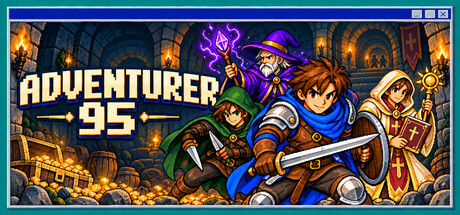
Most of the game's visual art and sound was pre-generated with AI tools and then selected, edited and placed by the developer: the dungeon panoramas, room props, floors, town and building plates, character portraits, walk and combat sprite sheets, monster, boss and villager sprites, item, skill and stack icons, combat and reward effects, and the store page art were generated with the FLUX.1 image model through fal.ai and animated with AutoSprite; the sound effects, ambience beds, voice barks and music were generated with ElevenLabs. Every generated file, the tool that made it and the prompt that asked for it are recorded in the game's files (assets/README.md and assets/PROMPTS.md). All game text, design, rules and code are written by people. Nothing is generated while you play: the game contains no live AI generation and calls no AI service at runtime.
Generative AI was only utilized to assist with programming and coding during development. No AI-generated assets, such as images, graphics, or audio, were used in this game.
Some content in this game was made with the help of generative AI tools and then reviewed and edited by the developer: parts of the 2D artwork (backgrounds, characters, icons), some sound effects, the trailer narration voice, and first drafts of the translated text. No content is generated by AI during gameplay.
Pre-generated AI content includes equipment illustrations, skill icons, clothing surface textures, short English character-selection voice lines, and Steam capsule and library artwork. AI tools also assisted with store-page text and translations. The game does not generate AI content or connect to AI services during gameplay.
Generative AI tools were used during development to create and revise some character artwork, backgrounds, icons, visual-effect assets, and promotional images, and to assist with localization. These assets and texts are prepared before release. The game does not generate AI content during gameplay or connect to a generative AI service during gameplay.
Generative AI was used as a supporting tool for selected elements of the artwork. Most elements were extensively modified and adapted through substantial hands-on work, including repainting, rigging, and animation.
AI tools were used internally to assist with text translation. All final text was reviewed and edited by humans.
No AI-generated assets(art, audio, code) are included.
The tower and building art began as 3D models made with AI tools and inside Blender. I edited many of them by hand, then turned them into pixel art with our own pipeline. The characters are drawn by hand in Aseprite. Some in-game text and the translations were written with AI assistance.
Spirestorm uses pre-generated AI-assisted artwork for characters, enemies, environments, interface illustrations, and promotional images. These assets were selected, edited, animated, and integrated during development. No AI content is generated during gameplay.
Generative AI tools were used in the following areas of this game's development.
■ Visual assets
Image generation AI was used to create some 2D visual assets, including backgrounds, card artwork, and UI elements. These images are included in the game as fixed assets.
■ Music
The background music was created using Suno, an AI music generation tool.
■ Voice assets
The included female voice assets were created using audio generation AI. The male voice assets are pre-existing recordings provided by T-Sta.
■ Text and translation
Generative AI assisted with writing and translation for some in-game text and the store page description.
■ Program code
AI coding assistance tools were used for part of the implementation work.
■ Other assets
Sound effects are pre-existing audio assets provided by Soundeffect Lab, Kurage Kosho, T-Sta, and DOVA-SYNDROME. The font is Zen Kaku Gothic New, provided under the SIL Open Font License.
■ No live generation
All AI-generated content described above was created in advance during development. The game does not use generative AI to create new images, music, voices, or dialogue during gameplay.
Shogi: Magic & Mischief was developed with the assistance of generative AI tools in the following areas.
■ Illustrations and images
Generative AI was used to create 2D visual assets, including character portraits, backgrounds, title illustrations, and other game and promotional artwork. The developer directed the visual concepts, character designs, composition, and colors, and selected the images for inclusion, with editing, cropping, and compositing where needed.
■ Music
Background music was created using music generation AI. The developer defined the intended mood, generated candidates, and selected and edited tracks for the game.
■ Voices
The male voice assets are pre-existing human-recorded audio from T-Sta. The female voice assets were created using audio generation AI and selected and edited by the developer. These descriptions refer to the voice asset sets, rather than the gender of every character using them.
■ Text
AI writing assistance was used to draft or revise some character descriptions and store-page text, including English promotional text. The developer determines the final wording.
■ Program code
AI coding assistance tools were used during implementation, debugging, and testing.
■ Non-AI assets
Sound effects are pre-existing human-created audio assets from providers including Soundeffect Lab, Kurage Kosho, T-Sta, and DOVA-SYNDROME, rather than AI-generated sound effects. The game uses the fonts Zen Kaku Gothic New and Shippori Mincho, distributed under the SIL Open Font License 1.1.
■ How AI is used
Generative AI is used during development, not to generate new artwork, music, voices, or dialogue during gameplay. The computer-controlled shogi opponents use game logic and move-search algorithms; they are separate from the generative AI tools used to develop the game.
■ Developer responsibility
The developer is responsible for the content included in the game, reviewing it for inappropriate or potentially infringing material, and checking the applicable licenses and terms of use for third-party assets and AI tools.
Some of this game's art was stylized or created with AI image generation tools from original prompts and project reference material: character portraits, tables, backgrounds, and Steam store and community artwork. Initial translations were AI-assisted. All of it was edited and reviewed before shipping. The soundtrack is chip-synth music generated at build time by the game's own code, no audio model and no sampled audio in the shipped files. Several tracks are AI-stylized arrangements of original songs written by a member of the development team; others were composed with AI assistance to our direction. Nothing is generated by AI while you play.
This game was created as a personal challenge to myself to see if i could solo dev a game and release it the same day as GTA 6.
I wanted to see what the highest quality final release consumer ready product I could create with only 69 days and a 200 dollar per month codex pro plan as the budget.
While the majority of implementation and art assets were llm derived, the architecture, game design, card concepts and overall vision of the project remain the product of my own efforts.
Generative AI was used to assist in creating some in-game content, as well as store and library artwork. AI tools also assisted with store descriptions and translations.
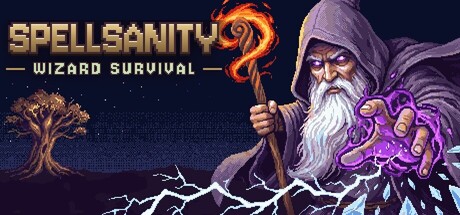
Spellsanity is made by one person and uses generative AI as a tool, not as a substitute for design.
Art: Much of the pixel art (enemies, bosses, characters, portraits, story stills, environment details) was produced with AI image generators and then reworked by hand: reduced to the game's colour palette, corrected pixel by pixel, animated and fitted into the game. Some of the art (surfaces, effects, UI frames) was drawn without AI or generated procedurally.
Text: Dialogue, descriptions and help texts were written with AI assistance and revised by the developer. The translations from English (German, Spanish, Portuguese, Russian, Chinese) were produced with AI and spot-checked; please report mistakes.
Code: AI assistants were used during programming.
Music and sound are not AI: the music is licensed work by Kevin MacLeod (incompetech.com), the sound effects are synthesized.
No AI runs inside the game. All content is shipped with the game and was reviewed before release; nothing is generated at runtime.
Generative AI tools were used during the development of the game to create and assist with certain pieces of content.
AI was used to generate some visual elements, including individual icons, as well as some sound effects. Some generated assets were further edited and adapted for use in the game.
AI was also used as an assisting tool for creating text content and localizing the game into other languages.
Pre-generated content only; nothing is generated while playing. The painted room backgrounds, the doorway arches, character and creature sprites and the key art (title picture, also the basis of the store capsules) were created with a generative image model (OpenAI gpt-image-2) and then hand-composed, cropped, colour-matched and fitted with collision by the developer. Code, level design and texts were written with AI assistance (Anthropic Claude) under human direction and testing; music is synthesised by the game's own code (no AI audio). — DE: Ausschliesslich vorgenerierte Inhalte, nichts wird während des Spielens erzeugt. Die gemalten Raumhintergründe, Torbögen, Figuren- und Kreaturen-Sprites sowie die Schlüsselgrafik (Titelbild, Grundlage der Shop-Kapseln) wurden mit einem generativen Bildmodell (OpenAI gpt-image-2) erzeugt und anschliessend vom Entwickler von Hand komponiert, beschnitten, farblich abgestimmt und mit Kollision belegt. Code, Leveldesign und Texte sind mit KI-Unterstützung (Anthropic Claude) unter menschlicher Leitung und Prüfung entstanden; die Musik wird vom Spielcode selbst synthetisiert (kein KI-Audio).
The announcement artwork was created with the help of generative AI.
I also use AI coding agents for debugging and development assistance.
A small number of early-access placeholder sprites were created with AI assistance as well, but these are planned to be replaced before the full release.
Some pre-production assets were generated with AI tools and then hand-finished by the team: 3D character bodies (Tripo) that were re-rigged, textured and animated by hand; concept and brand imagery (OpenAI image generation) redrawn or composited by hand; voice lines and sound effects (ElevenLabs); and music (Suno) under a commercial licence. No AI content is generated during gameplay, and the game connects to no AI service.
Some of the game's artwork was created with the help of an AI image model and then curated, edited and composited by the developer: companion and character portraits, boss and zone art, and the store page key art. Some in-game item and companion descriptions and patch notes were drafted with AI writing assistance and reviewed by the developer. The game does not generate content with AI while you play and does not connect to any AI service during gameplay.
During development, some of the game's art assets were created with the help of AI image-generation tools, then curated, adjusted, and integrated by hand. The game does not generate any AI content in real time during play.
Some store and marketing images were created with generative AI tools. Parts of the in-game UI artwork were also created or assisted with generative AI, then reviewed and integrated by the developer. All other game content is human-authored or from licensed third-party assets. No generative AI content is created live during gameplay.
Potion Pantry contains limited pre-generated content created with AI assistance during development. OpenAI Codex assisted with portions of the puzzle clue and narrative writing used in Chapters 2–6. Rogue Andromeda reviewed and approved the resulting campaign content and retains final creative control. OpenAI's image-generation tool also created two ingredient icons, Iron Kettle and Wooden Ladle, which the developer explicitly reviewed and approved for use. The remaining displayed artwork is human-created or commercially licensed, including pantry artwork assembled by Rogue Andromeda and PONETI ingredient icons licensed through the Unity Asset Store. Music, sound effects, and the Keeper voice performance are human-made; no audio waveform, performance, or composition was generated by AI. Development provenance, prompts where applicable, approvals, hashes, licenses, and source records are retained by Rogue Andromeda LLC.
Generative AI technology is used in a supplementary capacity during the creation of some user interface assets.
Any such assets are replaced through our production pipeline by our art and development teams, ensuring they meet our quality standards and creative direction.
Generative AI tools were used during development to assist with language translation and localization, as well as researching historical and contextual lore to ensure narrative accuracy. All final text, gameplay content, and lore were reviewed and edited by human creators.
This game contains content created with the assistance of AI tools. AI was used during development to assist with programming, visual assets, and other creative elements. All generated content was reviewed, edited, and integrated by the dev.
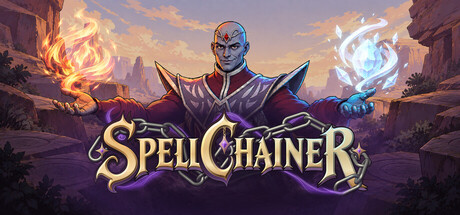
Spellchainer is made by a solo developer. I used generative AI sporadically to help fill gaps in artwork and textures, including selected in-game and marketing visuals. These assets were reviewed and edited before inclusion. No content is generated by AI during gameplay.
Generative AI tools were used during development to create some artwork, music, text and translations, including promotional material. This content is prepared in advance. The game does not generate AI content or connect to AI services while you play.
Generative AI tools were used during development to assist with the creation and refinement of some visual assets and localization. All AI-assisted content is reviewed, edited, and curated by the developer before being included in the game.
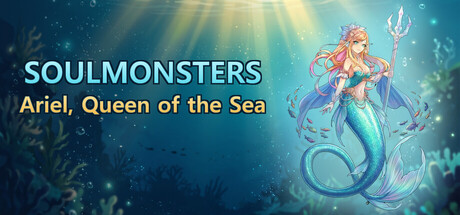
AI-assisted tools were used during development to create fixed assets that are baked into the build and the store page:
- Pixel-art sprites for the sea creatures, the guardians, battle effects and Ariel
- Store page art (capsules, library images, logo)
- Drafts of some in-game text and the EN / RU / JA localization, reviewed by the developer
Game design, code, level layouts and music are human-authored. All music and sound effects are generated procedurally by the game's own code at runtime - there are no audio files and no AI model is involved.
No AI model runs while the game is playing. The build is fully offline.
This game uses generative AI as part of the development process. ChatGPT was used for planning, specification review, and the creation of some base visual assets, while Codex was used to assist with code generation, implementation, and testing.
Some visual assets were generated as base material and then edited and refined in tools such as Photoshop. SOUNDRAW was used for some background music, and ElevenLabs was used for some sound effects.
All AI-generated content was created during development. The game does not use generative AI to create content in real time during gameplay. Final design, editing, implementation, and selection decisions were made by the developer.
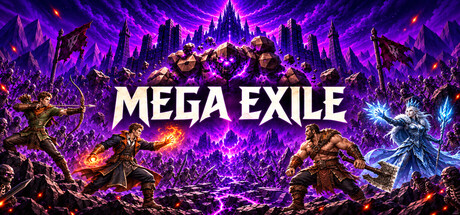
Generative AI tools were used during development to help create some 3D character assets and store page text. This content is prepared in advance. Mega Exile does not generate AI content during gameplay or connect to external AI services while you play.
Generative AI tools assisted with drafting and translating text for the store page and trailer captions. The game does not generate AI content during play.
Generative AI tools were used during development to assist in creating some pre-generated 2D game artwork, promotional artwork, and Steam store and community assets. All AI-assisted outputs were reviewed and edited by the developer. The game does not generate content using AI while it is running.
Most of the game's visual art and sound was pre-generated with AI tools and then selected, edited and placed by the developer: the dungeon panoramas, room props, floors, town and building plates, character portraits, walk and combat sprite sheets, monster, boss and villager sprites, item, skill and stack icons, combat and reward effects, and the store page art were generated with the FLUX.1 image model through fal.ai and animated with AutoSprite; the sound effects, ambience beds, voice barks and music were generated with ElevenLabs. Every generated file, the tool that made it and the prompt that asked for it are recorded in the game's files (assets/README.md and assets/PROMPTS.md). All game text, design, rules and code are written by people. Nothing is generated while you play: the game contains no live AI generation and calls no AI service at runtime.
Generative AI was only utilized to assist with programming and coding during development. No AI-generated assets, such as images, graphics, or audio, were used in this game.
Some content in this game was made with the help of generative AI tools and then reviewed and edited by the developer: parts of the 2D artwork (backgrounds, characters, icons), some sound effects, the trailer narration voice, and first drafts of the translated text. No content is generated by AI during gameplay.
Pre-generated AI content includes equipment illustrations, skill icons, clothing surface textures, short English character-selection voice lines, and Steam capsule and library artwork. AI tools also assisted with store-page text and translations. The game does not generate AI content or connect to AI services during gameplay.
Generative AI tools were used during development to create and revise some character artwork, backgrounds, icons, visual-effect assets, and promotional images, and to assist with localization. These assets and texts are prepared before release. The game does not generate AI content during gameplay or connect to a generative AI service during gameplay.
Generative AI was used as a supporting tool for selected elements of the artwork. Most elements were extensively modified and adapted through substantial hands-on work, including repainting, rigging, and animation.
AI tools were used internally to assist with text translation. All final text was reviewed and edited by humans.
No AI-generated assets(art, audio, code) are included.
The tower and building art began as 3D models made with AI tools and inside Blender. I edited many of them by hand, then turned them into pixel art with our own pipeline. The characters are drawn by hand in Aseprite. Some in-game text and the translations were written with AI assistance.
Spirestorm uses pre-generated AI-assisted artwork for characters, enemies, environments, interface illustrations, and promotional images. These assets were selected, edited, animated, and integrated during development. No AI content is generated during gameplay.
Generative AI tools were used in the following areas of this game's development.
■ Visual assets
Image generation AI was used to create some 2D visual assets, including backgrounds, card artwork, and UI elements. These images are included in the game as fixed assets.
■ Music
The background music was created using Suno, an AI music generation tool.
■ Voice assets
The included female voice assets were created using audio generation AI. The male voice assets are pre-existing recordings provided by T-Sta.
■ Text and translation
Generative AI assisted with writing and translation for some in-game text and the store page description.
■ Program code
AI coding assistance tools were used for part of the implementation work.
■ Other assets
Sound effects are pre-existing audio assets provided by Soundeffect Lab, Kurage Kosho, T-Sta, and DOVA-SYNDROME. The font is Zen Kaku Gothic New, provided under the SIL Open Font License.
■ No live generation
All AI-generated content described above was created in advance during development. The game does not use generative AI to create new images, music, voices, or dialogue during gameplay.
Shogi: Magic & Mischief was developed with the assistance of generative AI tools in the following areas.
■ Illustrations and images
Generative AI was used to create 2D visual assets, including character portraits, backgrounds, title illustrations, and other game and promotional artwork. The developer directed the visual concepts, character designs, composition, and colors, and selected the images for inclusion, with editing, cropping, and compositing where needed.
■ Music
Background music was created using music generation AI. The developer defined the intended mood, generated candidates, and selected and edited tracks for the game.
■ Voices
The male voice assets are pre-existing human-recorded audio from T-Sta. The female voice assets were created using audio generation AI and selected and edited by the developer. These descriptions refer to the voice asset sets, rather than the gender of every character using them.
■ Text
AI writing assistance was used to draft or revise some character descriptions and store-page text, including English promotional text. The developer determines the final wording.
■ Program code
AI coding assistance tools were used during implementation, debugging, and testing.
■ Non-AI assets
Sound effects are pre-existing human-created audio assets from providers including Soundeffect Lab, Kurage Kosho, T-Sta, and DOVA-SYNDROME, rather than AI-generated sound effects. The game uses the fonts Zen Kaku Gothic New and Shippori Mincho, distributed under the SIL Open Font License 1.1.
■ How AI is used
Generative AI is used during development, not to generate new artwork, music, voices, or dialogue during gameplay. The computer-controlled shogi opponents use game logic and move-search algorithms; they are separate from the generative AI tools used to develop the game.
■ Developer responsibility
The developer is responsible for the content included in the game, reviewing it for inappropriate or potentially infringing material, and checking the applicable licenses and terms of use for third-party assets and AI tools.
Some of this game's art was stylized or created with AI image generation tools from original prompts and project reference material: character portraits, tables, backgrounds, and Steam store and community artwork. Initial translations were AI-assisted. All of it was edited and reviewed before shipping. The soundtrack is chip-synth music generated at build time by the game's own code, no audio model and no sampled audio in the shipped files. Several tracks are AI-stylized arrangements of original songs written by a member of the development team; others were composed with AI assistance to our direction. Nothing is generated by AI while you play.
This game was created as a personal challenge to myself to see if i could solo dev a game and release it the same day as GTA 6.
I wanted to see what the highest quality final release consumer ready product I could create with only 69 days and a 200 dollar per month codex pro plan as the budget.
While the majority of implementation and art assets were llm derived, the architecture, game design, card concepts and overall vision of the project remain the product of my own efforts.
Generative AI was used to assist in creating some in-game content, as well as store and library artwork. AI tools also assisted with store descriptions and translations.
Spellsanity is made by one person and uses generative AI as a tool, not as a substitute for design.
Art: Much of the pixel art (enemies, bosses, characters, portraits, story stills, environment details) was produced with AI image generators and then reworked by hand: reduced to the game's colour palette, corrected pixel by pixel, animated and fitted into the game. Some of the art (surfaces, effects, UI frames) was drawn without AI or generated procedurally.
Text: Dialogue, descriptions and help texts were written with AI assistance and revised by the developer. The translations from English (German, Spanish, Portuguese, Russian, Chinese) were produced with AI and spot-checked; please report mistakes.
Code: AI assistants were used during programming.
Music and sound are not AI: the music is licensed work by Kevin MacLeod (incompetech.com), the sound effects are synthesized.
No AI runs inside the game. All content is shipped with the game and was reviewed before release; nothing is generated at runtime.
Generative AI tools were used during the development of the game to create and assist with certain pieces of content.
AI was used to generate some visual elements, including individual icons, as well as some sound effects. Some generated assets were further edited and adapted for use in the game.
AI was also used as an assisting tool for creating text content and localizing the game into other languages.
Pre-generated content only; nothing is generated while playing. The painted room backgrounds, the doorway arches, character and creature sprites and the key art (title picture, also the basis of the store capsules) were created with a generative image model (OpenAI gpt-image-2) and then hand-composed, cropped, colour-matched and fitted with collision by the developer. Code, level design and texts were written with AI assistance (Anthropic Claude) under human direction and testing; music is synthesised by the game's own code (no AI audio). — DE: Ausschliesslich vorgenerierte Inhalte, nichts wird während des Spielens erzeugt. Die gemalten Raumhintergründe, Torbögen, Figuren- und Kreaturen-Sprites sowie die Schlüsselgrafik (Titelbild, Grundlage der Shop-Kapseln) wurden mit einem generativen Bildmodell (OpenAI gpt-image-2) erzeugt und anschliessend vom Entwickler von Hand komponiert, beschnitten, farblich abgestimmt und mit Kollision belegt. Code, Leveldesign und Texte sind mit KI-Unterstützung (Anthropic Claude) unter menschlicher Leitung und Prüfung entstanden; die Musik wird vom Spielcode selbst synthetisiert (kein KI-Audio).
The announcement artwork was created with the help of generative AI.
I also use AI coding agents for debugging and development assistance.
A small number of early-access placeholder sprites were created with AI assistance as well, but these are planned to be replaced before the full release.
Some pre-production assets were generated with AI tools and then hand-finished by the team: 3D character bodies (Tripo) that were re-rigged, textured and animated by hand; concept and brand imagery (OpenAI image generation) redrawn or composited by hand; voice lines and sound effects (ElevenLabs); and music (Suno) under a commercial licence. No AI content is generated during gameplay, and the game connects to no AI service.
Some of the game's artwork was created with the help of an AI image model and then curated, edited and composited by the developer: companion and character portraits, boss and zone art, and the store page key art. Some in-game item and companion descriptions and patch notes were drafted with AI writing assistance and reviewed by the developer. The game does not generate content with AI while you play and does not connect to any AI service during gameplay.
During development, some of the game's art assets were created with the help of AI image-generation tools, then curated, adjusted, and integrated by hand. The game does not generate any AI content in real time during play.
Some store and marketing images were created with generative AI tools. Parts of the in-game UI artwork were also created or assisted with generative AI, then reviewed and integrated by the developer. All other game content is human-authored or from licensed third-party assets. No generative AI content is created live during gameplay.
Potion Pantry contains limited pre-generated content created with AI assistance during development. OpenAI Codex assisted with portions of the puzzle clue and narrative writing used in Chapters 2–6. Rogue Andromeda reviewed and approved the resulting campaign content and retains final creative control. OpenAI's image-generation tool also created two ingredient icons, Iron Kettle and Wooden Ladle, which the developer explicitly reviewed and approved for use. The remaining displayed artwork is human-created or commercially licensed, including pantry artwork assembled by Rogue Andromeda and PONETI ingredient icons licensed through the Unity Asset Store. Music, sound effects, and the Keeper voice performance are human-made; no audio waveform, performance, or composition was generated by AI. Development provenance, prompts where applicable, approvals, hashes, licenses, and source records are retained by Rogue Andromeda LLC.
Generative AI technology is used in a supplementary capacity during the creation of some user interface assets.
Any such assets are replaced through our production pipeline by our art and development teams, ensuring they meet our quality standards and creative direction.
Generative AI tools were used during development to assist with language translation and localization, as well as researching historical and contextual lore to ensure narrative accuracy. All final text, gameplay content, and lore were reviewed and edited by human creators.
This game contains content created with the assistance of AI tools. AI was used during development to assist with programming, visual assets, and other creative elements. All generated content was reviewed, edited, and integrated by the dev.
Spellchainer is made by a solo developer. I used generative AI sporadically to help fill gaps in artwork and textures, including selected in-game and marketing visuals. These assets were reviewed and edited before inclusion. No content is generated by AI during gameplay.
Generative AI tools were used during development to create some artwork, music, text and translations, including promotional material. This content is prepared in advance. The game does not generate AI content or connect to AI services while you play.
Generative AI tools were used during development to assist with the creation and refinement of some visual assets and localization. All AI-assisted content is reviewed, edited, and curated by the developer before being included in the game.
AI-assisted tools were used during development to create fixed assets that are baked into the build and the store page:
- Pixel-art sprites for the sea creatures, the guardians, battle effects and Ariel
- Store page art (capsules, library images, logo)
- Drafts of some in-game text and the EN / RU / JA localization, reviewed by the developer
Game design, code, level layouts and music are human-authored. All music and sound effects are generated procedurally by the game's own code at runtime - there are no audio files and no AI model is involved.
No AI model runs while the game is playing. The build is fully offline.
This game uses generative AI as part of the development process. ChatGPT was used for planning, specification review, and the creation of some base visual assets, while Codex was used to assist with code generation, implementation, and testing.
Some visual assets were generated as base material and then edited and refined in tools such as Photoshop. SOUNDRAW was used for some background music, and ElevenLabs was used for some sound effects.
All AI-generated content was created during development. The game does not use generative AI to create content in real time during gameplay. Final design, editing, implementation, and selection decisions were made by the developer.
Generative AI tools were used during development to help create some 3D character assets and store page text. This content is prepared in advance. Mega Exile does not generate AI content during gameplay or connect to external AI services while you play.
Generative AI tools assisted with drafting and translating text for the store page and trailer captions. The game does not generate AI content during play.
Generative AI tools were used during development to assist in creating some pre-generated 2D game artwork, promotional artwork, and Steam store and community assets. All AI-assisted outputs were reviewed and edited by the developer. The game does not generate content using AI while it is running.