Public Steam disclosure research25,376 disclosures tracked
Where do games disclose AI use?
Search developers’ Steam disclosures, compare classified AI use across
games, and follow recorded changes.
This index adds cross-game classifications and statistics to
statements published on individual store pages.
Groups reflect automatic analysis of public disclosures; mature records are excluded. These counts do not measure AI use across all of Steam.
Missing or unclear statements cannot establish whether a game uses AI.
The Moment of Panic uses generative artificial intelligence during gameplay to power its AI advisor characters. These locally running, open-source LLM-based advisors respond to intelligence signals, argue from assigned personalities, and attempt to influence the player’s decisions. Core game logic, threat truth, scoring, win/loss conditions, and outcomes are controlled by the game itself, not by the language model. Generative AI is used for dynamic in-game text responses only, and for some images shown alongside that text. Images are not generated at runtime.
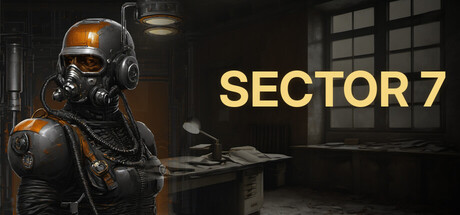
Some of Sector 7's artwork — including its store and marketing images — and its narrative text were created with AI assistance and then reviewed and edited by the developer. Localization into additional languages used AI translation with human review.
Generative AI tools were used during development for ideation, development assistance, and promotional exploration. All final gameplay systems, game logic, and in-game content were created and reviewed by the developer.
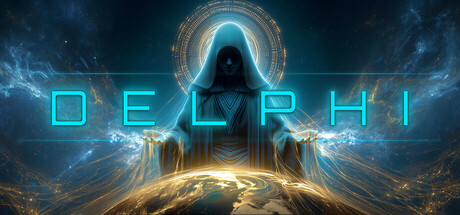
Delphi uses Midjourney for illustrated artwork (cards, events, key art, capsule art) and Kling for image-to-video trailer animation, all curated and edited by the developer. UI artwork is hand-made by a credited human artist.
No AI is used in design, writing, narrative or gameplay, and no AI runs at runtime — all in-game content is human-written static data.
This game uses generative AI to create live in-game dialogue, AI character responses, personality details, and evaluation feedback during gameplay. The generated content is text-based and is produced dynamically through an external AI API.
AI assisted assets and text are developer edited. The core game is playable without AI. Optional advisor commentary can use local Ollama or Anthropic only if the player enables it and provides their own key.
The music featured in the trailer was composed using generative AI tools.
Crucially, all game characters and animations are entirely hand-drawn and manually animated by the developer.
This game uses generative AI tools during development to assist with certain assets such as artwork, text, and design elements. All AI-assisted content has been reviewed, edited, and curated by the developer to ensure quality and appropriateness.
The game does not use AI to generate content during gameplay, and no external AI services are accessed while playing.
Generative AI tools were used during the development of Final Life Simulator to create various static graphic assets. This includes promotional store images, marketing artwork, and certain UI icons and visual elements. All AI-generated content has been reviewed and curated by the developer to ensure it aligns with the game's artistic direction and quality standards. No live-generated AI content is used during gameplay.
EQUILIBRIUM uses generative AI to power its core gameplay mechanic: the Policy Terminal.
LIVE-GENERATED CONTENT
When a player types a directive or law in natural language (e.g., "Abolish the luxury car tax"), the AI Engine analyzes the request in real time and generates a structured governmental dossier, including:
- Legislative feasibility analysis
- Budget impact and financial coverage
- Macroeconomic effects (GDP, debt, inflation)
- Social and political consensus projections
- Parliamentary vote simulation
Model used: Anthropic Claude, accessed via API.
Guardrails: AI output is constrained to a fixed set of structured fields defined by the developer. All numeric effects are clamped within bounds enforced by the simulation engine, so no AI output can produce values outside the game's defined ranges. The model operates only on the simulation state provided to it and cannot invent game data: commands that cannot be mapped to a valid government action are refused, and the player is offered bounded policy alternatives instead. No image, audio, or user-data generation is involved, and no player data is used to train any model.
Because responses are generated at runtime, outputs vary between playthroughs: the same directive may produce different wording and different outcomes.
PRE-GENERATED CONTENT
The game's background music track was generated using AI tools during development and ships with the game.
AI disclosure: AI assistants were used during development to help write and refine the game's source code and to edit narrative text (board memos, news headlines, event copy). All AI-assisted output was reviewed, edited, and approved by a human before shipping.
Generative AI is used to assist with localization/translation. All localized text is reviewed and edited by the developer.
Generative AI is used to generate steam capsule image and asset. Act as placeholder
Generative AI tools are used to translate text into different languages and to create visual assets. All content is reviewed and manually edited before being included in the game.
The images used in the game, as well as the promotional visuals shown in the store, are generated using AI. In addition, translations are also performed using large language models.
Generative AI was used to assist in the creation of the game's codebase and logic. AI tools were also used to generate environmental art, background assets, and promotional marketing materials (including the Library Hero, Logo, and store page assets). All AI-generated content was reviewed and curated to ensure it meets quality standards and does not contain illegal or infringing material.
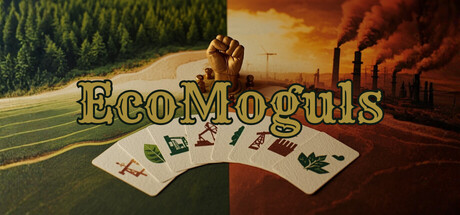
EcoMoguls uses generative AI as part of a small-studio production workflow for some player-facing content, including visual assets, written material, and audio. All final content included in the game and on the store page has been selected, edited, and integrated by the developer to fit the game's design, tone, and educational goals.
World maps in National Transit are created with procedural (algorithmic) generation — not AI. Terrain, rivers, coastlines, and city placement are generated algorithmically at the start of each playthrough.
Generative AI is used in the following place(s):
• Some of the in-game icons/2D art — a portion are AI-generated; the rest are hand-drawn.
In-game text is written by hand; localisation into other languages was produced with the help of machine/AI translation.
This is a solo-developed project created with limited time and resources. Some assets (such as visuals or audio) were partially generated or assisted using AI tools to make development feasible.
All such content has been manually reviewed and adjusted to fit the game's atmosphere and design.
This game is created by a solo developer. Generative AI tools were utilized to enhance the music, sound effects, and localization for a better atmosphere and overall experience. All AI-assisted content has been personally reviewed and finalized by the developer. All visual assets and the narrative are entirely handcrafted.
Some CG artwork, visual assets, and audio assets in this game were created with the assistance of AI generation tools and then manually refined and integrated by the developer.
This game includes AI-assisted visual content, including character portraits and promotional assets. All content has been significantly modified, reviewed, and curated by the developer to ensure originality and avoid resemblance to any real individuals. The game does not depict or reference real persons.
The promotional video visuals, character portrait concepts, and trailer voiceovers for this game were assisted by generative AI tools (such as Midjourney and ElevenLabs). All AI-generated assets have been strictly curated, manually edited, and composited by the developer to ensure they match the game's creative vision.
AI is used to create codes for the game, also used to create some graphical elements, like usage of upscayl to create larger map, some character may also created with ai. Texture etc is hand made, (see full disclosure in credits page within the game, this page also available in demo)
An AI was consulted for ideas on how an AI would act if taking over the world. Game logo image was generated using generative artificial intelligence. Music before remixing/producing created with generative AI.
Fictional character portraits used in the game's default database were hand-drawn by the developer, then colored and aged using a customized AI workflow.
We use generative AI only for temporary placeholder images during development. All AI-generated placeholders will be removed and replaced with human-created artwork before release.
AI was used to generate art pieces for the Steam Store Page as placeholder. As the developing continues and feedback from the community comes, those placeholders will be changed to real art done by real persons.
Generative AI was used during the development process to enhance and diversify the variety of card assets and narrative content. This technology allowed for the creation of a more expansive and unique library of scenarios, ensuring a richer and more varied gameplay experience for the player.
After I personally finalized the design phase, some art assets were first rendered using generative AI tools, and I then manually refined and detailed them.
Similarly, certain background music pieces were developed with the help of generative AI tools.
Should you have any concerns about these methods, please feel free to experience the game according to your own preferences. Thank you for your understanding and consideration.
The Moment of Panic uses generative artificial intelligence during gameplay to power its AI advisor characters. These locally running, open-source LLM-based advisors respond to intelligence signals, argue from assigned personalities, and attempt to influence the player’s decisions. Core game logic, threat truth, scoring, win/loss conditions, and outcomes are controlled by the game itself, not by the language model. Generative AI is used for dynamic in-game text responses only, and for some images shown alongside that text. Images are not generated at runtime.
Some of Sector 7's artwork — including its store and marketing images — and its narrative text were created with AI assistance and then reviewed and edited by the developer. Localization into additional languages used AI translation with human review.
Generative AI tools were used during development for ideation, development assistance, and promotional exploration. All final gameplay systems, game logic, and in-game content were created and reviewed by the developer.
Delphi uses Midjourney for illustrated artwork (cards, events, key art, capsule art) and Kling for image-to-video trailer animation, all curated and edited by the developer. UI artwork is hand-made by a credited human artist.
No AI is used in design, writing, narrative or gameplay, and no AI runs at runtime — all in-game content is human-written static data.
This game uses generative AI to create live in-game dialogue, AI character responses, personality details, and evaluation feedback during gameplay. The generated content is text-based and is produced dynamically through an external AI API.
AI assisted assets and text are developer edited. The core game is playable without AI. Optional advisor commentary can use local Ollama or Anthropic only if the player enables it and provides their own key.
The music featured in the trailer was composed using generative AI tools.
Crucially, all game characters and animations are entirely hand-drawn and manually animated by the developer.
This game uses generative AI tools during development to assist with certain assets such as artwork, text, and design elements. All AI-assisted content has been reviewed, edited, and curated by the developer to ensure quality and appropriateness.
The game does not use AI to generate content during gameplay, and no external AI services are accessed while playing.
Generative AI tools were used during the development of Final Life Simulator to create various static graphic assets. This includes promotional store images, marketing artwork, and certain UI icons and visual elements. All AI-generated content has been reviewed and curated by the developer to ensure it aligns with the game's artistic direction and quality standards. No live-generated AI content is used during gameplay.
EQUILIBRIUM uses generative AI to power its core gameplay mechanic: the Policy Terminal.
LIVE-GENERATED CONTENT
When a player types a directive or law in natural language (e.g., "Abolish the luxury car tax"), the AI Engine analyzes the request in real time and generates a structured governmental dossier, including:
- Legislative feasibility analysis
- Budget impact and financial coverage
- Macroeconomic effects (GDP, debt, inflation)
- Social and political consensus projections
- Parliamentary vote simulation
Model used: Anthropic Claude, accessed via API.
Guardrails: AI output is constrained to a fixed set of structured fields defined by the developer. All numeric effects are clamped within bounds enforced by the simulation engine, so no AI output can produce values outside the game's defined ranges. The model operates only on the simulation state provided to it and cannot invent game data: commands that cannot be mapped to a valid government action are refused, and the player is offered bounded policy alternatives instead. No image, audio, or user-data generation is involved, and no player data is used to train any model.
Because responses are generated at runtime, outputs vary between playthroughs: the same directive may produce different wording and different outcomes.
PRE-GENERATED CONTENT
The game's background music track was generated using AI tools during development and ships with the game.
AI disclosure: AI assistants were used during development to help write and refine the game's source code and to edit narrative text (board memos, news headlines, event copy). All AI-assisted output was reviewed, edited, and approved by a human before shipping.
Generative AI is used to assist with localization/translation. All localized text is reviewed and edited by the developer.
Generative AI is used to generate steam capsule image and asset. Act as placeholder
Generative AI tools are used to translate text into different languages and to create visual assets. All content is reviewed and manually edited before being included in the game.
The images used in the game, as well as the promotional visuals shown in the store, are generated using AI. In addition, translations are also performed using large language models.
Generative AI was used to assist in the creation of the game's codebase and logic. AI tools were also used to generate environmental art, background assets, and promotional marketing materials (including the Library Hero, Logo, and store page assets). All AI-generated content was reviewed and curated to ensure it meets quality standards and does not contain illegal or infringing material.
EcoMoguls uses generative AI as part of a small-studio production workflow for some player-facing content, including visual assets, written material, and audio. All final content included in the game and on the store page has been selected, edited, and integrated by the developer to fit the game's design, tone, and educational goals.
World maps in National Transit are created with procedural (algorithmic) generation — not AI. Terrain, rivers, coastlines, and city placement are generated algorithmically at the start of each playthrough.
Generative AI is used in the following place(s):
• Some of the in-game icons/2D art — a portion are AI-generated; the rest are hand-drawn.
In-game text is written by hand; localisation into other languages was produced with the help of machine/AI translation.
This is a solo-developed project created with limited time and resources. Some assets (such as visuals or audio) were partially generated or assisted using AI tools to make development feasible.
All such content has been manually reviewed and adjusted to fit the game's atmosphere and design.
This game is created by a solo developer. Generative AI tools were utilized to enhance the music, sound effects, and localization for a better atmosphere and overall experience. All AI-assisted content has been personally reviewed and finalized by the developer. All visual assets and the narrative are entirely handcrafted.
Some CG artwork, visual assets, and audio assets in this game were created with the assistance of AI generation tools and then manually refined and integrated by the developer.
This game includes AI-assisted visual content, including character portraits and promotional assets. All content has been significantly modified, reviewed, and curated by the developer to ensure originality and avoid resemblance to any real individuals. The game does not depict or reference real persons.
The promotional video visuals, character portrait concepts, and trailer voiceovers for this game were assisted by generative AI tools (such as Midjourney and ElevenLabs). All AI-generated assets have been strictly curated, manually edited, and composited by the developer to ensure they match the game's creative vision.
AI is used to create codes for the game, also used to create some graphical elements, like usage of upscayl to create larger map, some character may also created with ai. Texture etc is hand made, (see full disclosure in credits page within the game, this page also available in demo)
An AI was consulted for ideas on how an AI would act if taking over the world. Game logo image was generated using generative artificial intelligence. Music before remixing/producing created with generative AI.
Fictional character portraits used in the game's default database were hand-drawn by the developer, then colored and aged using a customized AI workflow.
We use generative AI only for temporary placeholder images during development. All AI-generated placeholders will be removed and replaced with human-created artwork before release.
AI was used to generate art pieces for the Steam Store Page as placeholder. As the developing continues and feedback from the community comes, those placeholders will be changed to real art done by real persons.
Generative AI was used during the development process to enhance and diversify the variety of card assets and narrative content. This technology allowed for the creation of a more expansive and unique library of scenarios, ensuring a richer and more varied gameplay experience for the player.
After I personally finalized the design phase, some art assets were first rendered using generative AI tools, and I then manually refined and detailed them.
Similarly, certain background music pieces were developed with the help of generative AI tools.
Should you have any concerns about these methods, please feel free to experience the game according to your own preferences. Thank you for your understanding and consideration.