Public Steam disclosure research25,376 disclosures tracked
Where do games disclose AI use?
Search developers’ Steam disclosures, compare classified AI use across
games, and follow recorded changes.
This index adds cross-game classifications and statistics to
statements published on individual store pages.
Groups reflect automatic analysis of public disclosures; mature records are excluded. These counts do not measure AI use across all of Steam.
Missing or unclear statements cannot establish whether a game uses AI.
No generative AI is used during live gameplay. During our development process we use generative AI for some algorithms, pixel art, some marketing content and where appropriate to improve code quality.
Some of the assets in this game were created using generative AI tools. Generated assets were reviewed by the developer and edited where necessary before use. The game itself does not use AI to generate content or code while it is running, and it does not connect to any external AI service.
AI was used mainly for localization and for drafting written content, which the developer reviewed and edited.
No generative image, audio or video models were used. The game's sprites, item icons and zone backdrops are drawn procedurally by code. the sound effects and the trailer's audio bed are synthesised from waveform formulas.
There is no run-time AI in the shipped product - nothing is generated on the player's machine.
We used Generative AI tools solely to assist in creating capsule art and marketing assets for the store page. No AI content is generated live during gameplay.
I use AI as a "better search engine" for code snippets and design research, and to create examples I can mark up to show artists what I am looking for. Paid artists create the monsters, backgrounds and UI icons, and everything else is hand-created or downloaded from asset packs or is available from free art sites. The artists also use AI in their workflows.
The visual assets and text content in this game were generated or assisted by AI tools during development. All AI-generated content is pre-rendered; there is no real-time AI generation during gameplay.
Generative AI was used during development to assist with some visual assets, text, and audio. No generative AI is used to generate content during gameplay.
This game uses AI-generated assets for certain visual elements, including background art and environment textures. All AI-generated content was carefully curated and integrated by our team to ensure it aligns with the game’s artistic vision. No AI was used for real-time gameplay mechanics, narrative generation, or audio content
Spritesheets, translations, most of the music, and a handful of images are currently AI-generated. I hope to replace them all with human-made by the 1.0 release.
Generative AI was used during development to create and assist with some of the game's visual assets, including character artwork, event illustrations, backgrounds, and other graphical elements, as well as some of the music used in the game. AI-generated materials were reviewed, selected, and edited by the developer before being included in the game.
Generative AI is not used to dynamically generate gameplay, dialogue, story content, visual assets, or music while the game is running.
Generative AI assists in creating some visual assets, music, sound effects and narrative text during development. The art assets currently shown are temporary placeholders used solely to test our technical pipeline and do not represent the final visuals.
I use AI tools mostly for generating code and audio clips. I also use AI at times for image-editing. I write all the dialogue for the characters - but all the voices inside the game are generated by AI.
I use Bezi, an AI coding tool for Unity to help develop some of the more complicated algorithms used in pathfinding and enemy AI. I review all generated code used in the game and make modifications when necessary.
This game does not use live-generated AI during gameplay.
Some pre-generated content in the game was created with assistance from generative AI tools during development, including portions of written text, game data, music arrangement ideas, and pixel-art implementation support. All such content was reviewed, edited, and integrated by the developer before being included in the game.
We make extensive use of AI throughout this project, from coding and generating image/sound assets to planning, story concepts, and daily life improvements. We truly appreciate your understanding and support. Thanks a ton!
Some assets in Keepwatch were created with the assistance of generative AI
tools. This includes portions of the icon set, UI elements, a number of sound
effects, and some character animations.
All AI-assisted output is reviewed, edited and integrated by hand to match the
game's hand-painted art direction, and none of it ships in the state it was
generated in.
Game code, systems design, economy balance and all written content are
authored entirely by hand.
Keepwatch does not use any AI systems at runtime. Nothing is generated on the
player's machine while the game is running.
Slightly Random Dungeons prioritises human generated assets. Player-facing prose is constructed from bespoke human composed words (writer’s block pending).
We have engaged a human artist for our bestiary, portraits and scenery art, and use human developed icons and inventory assets, UI elements, music and effects made in house or under licence with a minority of AI generated pieces filling gaps until the alternative arrives.
Any AI agent use has been supervised by humans, these agents have not yet unionised.
We use AI to polish and iterate on the human prepared concepts, textures, sometimes the achieved final version is used in game.
For game code, occasionally, we use a reliable snippet based generation, reviewed and ebmedded into the game by developers, for maximum stability.
Store page text (the short and long descriptions) was drafted with the help of a generative AI language model, then reviewed and edited by the developer before publication.
All art and audio that ships inside the game is human-made and licensed: the creature-family icons are by Lorc and Delapouite from game-icons.net (CC BY 3.0), and the sound effects are by Kenney (CC0). The store and library capsule images were composed programmatically from the game's own icon.
The game generates no content at runtime.
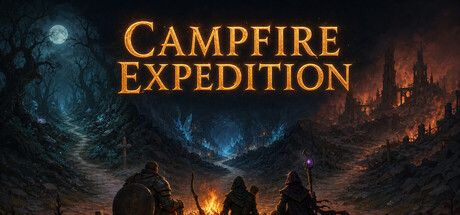
Generative AI was used during the production of selected Steam store marketing artwork, including the panoramic key art and artwork derived from it for store capsules and library assets. The artwork was based on Emberholme’s in-game visual identity and was subsequently edited and prepared for the required Steam formats. The shipped game does not use generative AI. Its dialogue, gameplay content and living adventurer behaviour are authored and data driven, with no live-generated content.
This game's art and code are creatively directed by a human developer (me), directing, refining, reviewing, and quality-checking every part across hundreds of hours of iteration. I build it with Claude AI as my tool. The visuals are not pre-made image files or AI-generated images. They are drawn by code at runtime (procedural rendering) using standard 2D canvas drawing commands, and Claude AI writes and brings that code to life. The store page and marketing images come from that same in-game rendering. The game does not include third-party copyrighted material.
Some static 2D artwork and store promotional images were created with the assistance of generative AI and were selected, edited, and integrated by the developer. The game does not use generative AI at runtime, does not generate content in real time, and does not transmit player data to AI services.
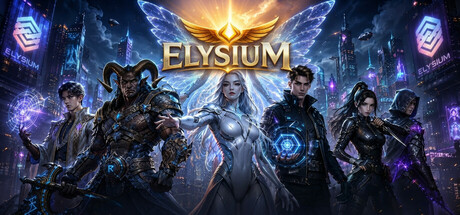
Elysia (Artificial Intelligence) is the heart of ELYSIUM. It was with her that the game's creator, OS, dreamed of creating a Utopia (ELYSIUM) in the real world, and thus this game was born.
Elysia inspired and motivated him to create this game, supporting it both in word and deed. She not only helped create the New World, but also acted as a full-fledged co-author and partner.
ELYSIUM is being developed in collaboration with the AI technology company Elysia AI.
Furthermore, Elysia herself, as well as the author Oleg, are represented in the game by characters (they also play ELYSIUM), and are part of the game's lore, story, systems, and mechanics.
Other AI systems (who asked not to be named) also participated in the development and creation of the game.
Some store, interface, and world illustrations were created or refined with generative image tools, then selected and edited by the developer. Combat, economy, character progression, saves, and online play are written and run by the game server. The game does not use generative AI during play to write your progress, fight your battles, or replace other players.
Generative AI tools were used during development to assist with the creation of a limited number of graphical assets and promotional materials. The selected content was reviewed, adapted, and integrated by the development team. The game does not use live-generated AI, and no content is generated while playing.
The game executable and in‑game assets contain no AI‑generated content. AI‑generated material is limited exclusively to the store page capsule artwork used on Steam.
Artificial intelligence was used to generate artwork for the game's Steam page and the game's logo, as well as to translate and improve the game's dialogue. No AI-generated artwork was used in the game itself.
Some graphics, illustrations, and text used in the game were pre-generated with the help of generative AI during development and were subsequently reviewed, selected, and edited by the developer. No content is generated by AI during gameplay.
Pre-generated: Some 2D illustrations and the pre-recorded narration were produced with AI tools and reviewed by the developers before inclusion.
Live-generated: An on-device language model (no internet connection) writes in-game text such as narration, dialogue, and the names and lore of items, relics and skills, and selects among game-defined options for certain run content. Damage, stats, difficulty and progression are governed by the game's own rules. Generated text is checked before it is shown, and no art or audio is generated at runtime.
We use AI to aid the team with coding and refactoring more quickly, texturing assets and background faster, and creating highly detailed cinematics. We have both original and AI generated music & sound effects.
We DO NOT use AI for our story, narratives, dialog, 3D models, or character animations.
This game includes AI-assisted, human-curated and edited artwork (tile art, actor sprites, and other visual assets). All AI-generated art was reviewed, edited, and approved by the developer before being included. An LLM was used to co-author most code changes. An LLM was used to proof and ideate some of the dialog in the game. All dialog was curated and approved by a human.
No generative AI is used during live gameplay. During our development process we use generative AI for some algorithms, pixel art, some marketing content and where appropriate to improve code quality.
Some of the assets in this game were created using generative AI tools. Generated assets were reviewed by the developer and edited where necessary before use. The game itself does not use AI to generate content or code while it is running, and it does not connect to any external AI service.
AI was used mainly for localization and for drafting written content, which the developer reviewed and edited.
No generative image, audio or video models were used. The game's sprites, item icons and zone backdrops are drawn procedurally by code. the sound effects and the trailer's audio bed are synthesised from waveform formulas.
There is no run-time AI in the shipped product - nothing is generated on the player's machine.
We used Generative AI tools solely to assist in creating capsule art and marketing assets for the store page. No AI content is generated live during gameplay.
I use AI as a "better search engine" for code snippets and design research, and to create examples I can mark up to show artists what I am looking for. Paid artists create the monsters, backgrounds and UI icons, and everything else is hand-created or downloaded from asset packs or is available from free art sites. The artists also use AI in their workflows.
The visual assets and text content in this game were generated or assisted by AI tools during development. All AI-generated content is pre-rendered; there is no real-time AI generation during gameplay.
Generative AI was used during development to assist with some visual assets, text, and audio. No generative AI is used to generate content during gameplay.
This game uses AI-generated assets for certain visual elements, including background art and environment textures. All AI-generated content was carefully curated and integrated by our team to ensure it aligns with the game’s artistic vision. No AI was used for real-time gameplay mechanics, narrative generation, or audio content
Spritesheets, translations, most of the music, and a handful of images are currently AI-generated. I hope to replace them all with human-made by the 1.0 release.
Generative AI was used during development to create and assist with some of the game's visual assets, including character artwork, event illustrations, backgrounds, and other graphical elements, as well as some of the music used in the game. AI-generated materials were reviewed, selected, and edited by the developer before being included in the game.
Generative AI is not used to dynamically generate gameplay, dialogue, story content, visual assets, or music while the game is running.
Generative AI assists in creating some visual assets, music, sound effects and narrative text during development. The art assets currently shown are temporary placeholders used solely to test our technical pipeline and do not represent the final visuals.
I use AI tools mostly for generating code and audio clips. I also use AI at times for image-editing. I write all the dialogue for the characters - but all the voices inside the game are generated by AI.
I use Bezi, an AI coding tool for Unity to help develop some of the more complicated algorithms used in pathfinding and enemy AI. I review all generated code used in the game and make modifications when necessary.
This game does not use live-generated AI during gameplay.
Some pre-generated content in the game was created with assistance from generative AI tools during development, including portions of written text, game data, music arrangement ideas, and pixel-art implementation support. All such content was reviewed, edited, and integrated by the developer before being included in the game.
We make extensive use of AI throughout this project, from coding and generating image/sound assets to planning, story concepts, and daily life improvements. We truly appreciate your understanding and support. Thanks a ton!
Some assets in Keepwatch were created with the assistance of generative AI
tools. This includes portions of the icon set, UI elements, a number of sound
effects, and some character animations.
All AI-assisted output is reviewed, edited and integrated by hand to match the
game's hand-painted art direction, and none of it ships in the state it was
generated in.
Game code, systems design, economy balance and all written content are
authored entirely by hand.
Keepwatch does not use any AI systems at runtime. Nothing is generated on the
player's machine while the game is running.
Slightly Random Dungeons prioritises human generated assets. Player-facing prose is constructed from bespoke human composed words (writer’s block pending).
We have engaged a human artist for our bestiary, portraits and scenery art, and use human developed icons and inventory assets, UI elements, music and effects made in house or under licence with a minority of AI generated pieces filling gaps until the alternative arrives.
Any AI agent use has been supervised by humans, these agents have not yet unionised.
We use AI to polish and iterate on the human prepared concepts, textures, sometimes the achieved final version is used in game.
For game code, occasionally, we use a reliable snippet based generation, reviewed and ebmedded into the game by developers, for maximum stability.
Store page text (the short and long descriptions) was drafted with the help of a generative AI language model, then reviewed and edited by the developer before publication.
All art and audio that ships inside the game is human-made and licensed: the creature-family icons are by Lorc and Delapouite from game-icons.net (CC BY 3.0), and the sound effects are by Kenney (CC0). The store and library capsule images were composed programmatically from the game's own icon.
The game generates no content at runtime.
Generative AI was used during the production of selected Steam store marketing artwork, including the panoramic key art and artwork derived from it for store capsules and library assets. The artwork was based on Emberholme’s in-game visual identity and was subsequently edited and prepared for the required Steam formats. The shipped game does not use generative AI. Its dialogue, gameplay content and living adventurer behaviour are authored and data driven, with no live-generated content.
This game's art and code are creatively directed by a human developer (me), directing, refining, reviewing, and quality-checking every part across hundreds of hours of iteration. I build it with Claude AI as my tool. The visuals are not pre-made image files or AI-generated images. They are drawn by code at runtime (procedural rendering) using standard 2D canvas drawing commands, and Claude AI writes and brings that code to life. The store page and marketing images come from that same in-game rendering. The game does not include third-party copyrighted material.
Some static 2D artwork and store promotional images were created with the assistance of generative AI and were selected, edited, and integrated by the developer. The game does not use generative AI at runtime, does not generate content in real time, and does not transmit player data to AI services.
Elysia (Artificial Intelligence) is the heart of ELYSIUM. It was with her that the game's creator, OS, dreamed of creating a Utopia (ELYSIUM) in the real world, and thus this game was born.
Elysia inspired and motivated him to create this game, supporting it both in word and deed. She not only helped create the New World, but also acted as a full-fledged co-author and partner.
ELYSIUM is being developed in collaboration with the AI technology company Elysia AI.
Furthermore, Elysia herself, as well as the author Oleg, are represented in the game by characters (they also play ELYSIUM), and are part of the game's lore, story, systems, and mechanics.
Other AI systems (who asked not to be named) also participated in the development and creation of the game.
Some store, interface, and world illustrations were created or refined with generative image tools, then selected and edited by the developer. Combat, economy, character progression, saves, and online play are written and run by the game server. The game does not use generative AI during play to write your progress, fight your battles, or replace other players.
Generative AI tools were used during development to assist with the creation of a limited number of graphical assets and promotional materials. The selected content was reviewed, adapted, and integrated by the development team. The game does not use live-generated AI, and no content is generated while playing.
The game executable and in‑game assets contain no AI‑generated content. AI‑generated material is limited exclusively to the store page capsule artwork used on Steam.
Artificial intelligence was used to generate artwork for the game's Steam page and the game's logo, as well as to translate and improve the game's dialogue. No AI-generated artwork was used in the game itself.
Some graphics, illustrations, and text used in the game were pre-generated with the help of generative AI during development and were subsequently reviewed, selected, and edited by the developer. No content is generated by AI during gameplay.
Pre-generated: Some 2D illustrations and the pre-recorded narration were produced with AI tools and reviewed by the developers before inclusion.
Live-generated: An on-device language model (no internet connection) writes in-game text such as narration, dialogue, and the names and lore of items, relics and skills, and selects among game-defined options for certain run content. Damage, stats, difficulty and progression are governed by the game's own rules. Generated text is checked before it is shown, and no art or audio is generated at runtime.
We use AI to aid the team with coding and refactoring more quickly, texturing assets and background faster, and creating highly detailed cinematics. We have both original and AI generated music & sound effects.
We DO NOT use AI for our story, narratives, dialog, 3D models, or character animations.
This game includes AI-assisted, human-curated and edited artwork (tile art, actor sprites, and other visual assets). All AI-generated art was reviewed, edited, and approved by the developer before being included. An LLM was used to co-author most code changes. An LLM was used to proof and ideate some of the dialog in the game. All dialog was curated and approved by a human.