Public Steam disclosure research25,376 disclosures tracked
Where do games disclose AI use?
Search developers’ Steam disclosures, compare classified AI use across
games, and follow recorded changes.
This index adds cross-game classifications and statistics to
statements published on individual store pages.
Groups reflect automatic analysis of public disclosures; mature records are excluded. These counts do not measure AI use across all of Steam.
Missing or unclear statements cannot establish whether a game uses AI.
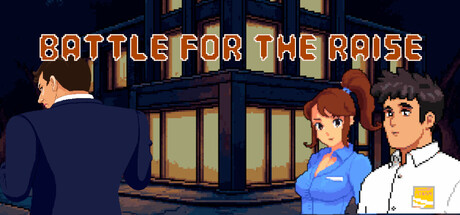
We use AI in early conceptual design, to figure out an appropriate background art. We then go through several iterations manually with artist modifications, to produce a good, highly polished background that gels well with our characters, story and intended art style.
Our characters are hand drawn by humans.
Our objects are hand drawn by humans.
All user interface (UI) elements are hand drawn by humans.
All animations are hand drawn and meticulously rigged (also by humans) using bone animation.
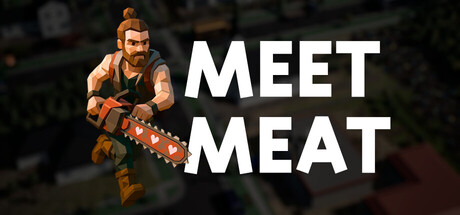
This game was made entirely with AI. The writing, code, art, music, and deployment were all created using generative AI tools — primarily Claude by Anthropic. That's not a disclaimer, it's the premise. Meet Claude is a satire about AI dependency, built with AI, by someone still figuring out where the line is.
Generative AI was trained on an original pixel art style and used to create the bases for props, which were then manually edited into their final forms.
I used AI as a helping tool for all aspects of the game, programming, art, and narration. This is the only way for me to make my vision come true in a reasonable time.
At the time of release, the final product will not contain any elements created using generative artificial intelligence. AI is used solely for the creation of demonstration graphical content. The final in-game content will be created by human authors.
The game has a single AI-generated image of deliberate low quality in it, because I wanted to have that.
It also has the "ASA-Intelligence" text generation and modification system, which is technically and pragmatically incomparable to the function of a large language model, but is technically AI. It is not trained on text from anything but the game itself, and is ran entirely locally during certain parts of gameplay.
AI is used to create creative elements such as text or visual ideas.
All gameplay systems, rules, and mechanics are handcrafted by the developer.
AI content is moderated and does not generate executable code or copyrighted material.
Some of the background concept art images are AI-generated. Examples include the character background on the right side of the main interface and the background of the puzzle mini-game.
Images in-game and marketing were designed by us, then generated with ChatGPT, then modified and edited by us. Coding support from ChatGPT Codex, that has been so much help.
Just used to help make the game.
AI was used in the coding of this game. Some placeholder assets are AI, but rest assured we have excellent human artists working hard to replace every asset with hand-made human art by release!
If you could peek inside my code or topology, you would BEG me to use AI to fix it. BUT NO. This crap is handmade and stays that way! The soundtrack, however, is a hybrid: I used generative AI to create raw textures, which I then manually arranged and mixed.
How Does It Work? The Human-Led Creative Process
Players will start their game by participating in a time traveling Ritual.
AI doesn't write our story; it writes a story within a world which our creative team has designed. The Ritual takes what you describe and the world we’ve built – its art, biomes, enemy types, magic systems and overarching lore – and turns it into gameplay that’s personal to you.
These aren't AI suggestions; they are human-designed game mechanics and rules that AI must follow. During The Ritual, you describe your hero – their name, and how they look, plus curious nuggets about what they love, hate, are known for etc.
When you describe your hero as "a punk rocker who fears spiders and loves the color red," our platform triggers a process and system instructions that work hand-in-hand with Gemini AI. We send your input along with our own carefully crafted guidelines that tell Gemini exactly how to evaluate content appropriateness.
All storytelling is orchestrated by logic the engineering team designed, not AI deciding what happens next, alongside a story bible and character descriptions, creating assets, in real time, to craft your customized gaming experience.
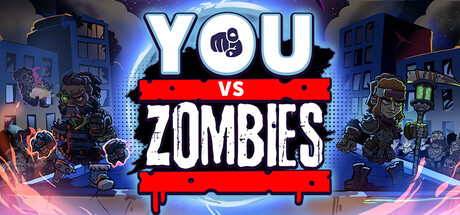
All character visuals are generated using a custom AI model (LoRA) trained exclusively on our own artwork. It understands how we draw faces, hairstyles, armour, and bodies – the rules, proportions, and style choices behind the art – rather than copying individual images or creating its own.
This means when your character gets generated, it is not generic AI art; it is our artistic DNA interpreting your imagination. The result is a caricature of your hero, rendered in our visual language.
Similarly, character abilities aren't randomly generated; they follow strict mathematical systems. When Gemini generates a Unique Spell, for example, the damage, archetype, name, colours, and parameters, come from us.
While The Ritual could find anyone at all in the past, we’ve also implemented layers of safeguards to ensure only true heroes can be recruited to the war effort.
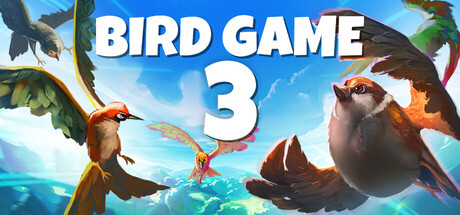
Bird Game 3 is a franchise heavily influenced by AI meme culture. Bird Game 3 will be referencing this kind of content. However for the development of Bird Game 3, especially Artworks etc. Birdgame Studios will NOT use generative AI.
Some sound effects and supplementary music tracks were created using generative AI tools. No AI-generated visuals or gameplay elements are used in the game itself.
Super Real AI reverses the traditional use of artificial intelligence.
Instead of AI serving humans, humans now serve AI.
A local LLM powers simulated users who constantly send unpredictable queries—while real players, acting as AI workers, must respond, classify, and adapt.
It’s not a game using AI; it’s a game about using AI.
Much of the enemy graphics were made with the help of generative AI. However, none of them are simply used "as is." Getting the artwork to match Hong Kong 97's SNES graphics requires downscaling resolution and adjusting contrast, saturation etc.
AI was used to assist with marketing materials and development support as a solo developer. Specifically: generated promotional artwork for trailers, helped brainstorm game concepts and mechanics, assisted with writing store descriptions and marketing copy, and provided coding assistance and debugging support. No AI-generated content appears in the actual gameplay - all core game mechanics, design, and player experience are original creations.
The music in the trailer, title screen graphics, game over screen graphics, bouncy ball graphic, and airplane graphic were all generated with AI. Everything else was produced by the people who helped develop this product.
This game does not include AI "art". Anything with an artistic quality, rather than an attempt to emulate a realistic texture, was created by a human.
Photorealistic AI-generated images were sampled to create some of the game's textures, and often heavily edited since raw output is unsuitable.
3D models, sounds, and music in this game were created by a human with zero AI assistance.
The closing segment of the promotional video utilizes AI-generated content for atmospheric rendering.
The background image of the game promotional artwork was created using AI-generated elements.
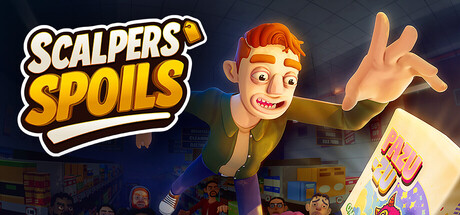
Some 2D art in Scalpers’ Spoils began as AI-assisted concepts and were then hand-edited and finalized by our artist. No AI runs during gameplay, and players do not submit prompts or generate content in-game.
We use AI in early conceptual design, to figure out an appropriate background art. We then go through several iterations manually with artist modifications, to produce a good, highly polished background that gels well with our characters, story and intended art style.
Our characters are hand drawn by humans.
Our objects are hand drawn by humans.
All user interface (UI) elements are hand drawn by humans.
All animations are hand drawn and meticulously rigged (also by humans) using bone animation.
This game was made entirely with AI. The writing, code, art, music, and deployment were all created using generative AI tools — primarily Claude by Anthropic. That's not a disclaimer, it's the premise. Meet Claude is a satire about AI dependency, built with AI, by someone still figuring out where the line is.
Generative AI was trained on an original pixel art style and used to create the bases for props, which were then manually edited into their final forms.
I used AI as a helping tool for all aspects of the game, programming, art, and narration. This is the only way for me to make my vision come true in a reasonable time.
At the time of release, the final product will not contain any elements created using generative artificial intelligence. AI is used solely for the creation of demonstration graphical content. The final in-game content will be created by human authors.
The game has a single AI-generated image of deliberate low quality in it, because I wanted to have that.
It also has the "ASA-Intelligence" text generation and modification system, which is technically and pragmatically incomparable to the function of a large language model, but is technically AI. It is not trained on text from anything but the game itself, and is ran entirely locally during certain parts of gameplay.
AI is used to create creative elements such as text or visual ideas.
All gameplay systems, rules, and mechanics are handcrafted by the developer.
AI content is moderated and does not generate executable code or copyrighted material.
Some of the background concept art images are AI-generated. Examples include the character background on the right side of the main interface and the background of the puzzle mini-game.
Images in-game and marketing were designed by us, then generated with ChatGPT, then modified and edited by us. Coding support from ChatGPT Codex, that has been so much help.
Just used to help make the game.
AI was used in the coding of this game. Some placeholder assets are AI, but rest assured we have excellent human artists working hard to replace every asset with hand-made human art by release!
If you could peek inside my code or topology, you would BEG me to use AI to fix it. BUT NO. This crap is handmade and stays that way! The soundtrack, however, is a hybrid: I used generative AI to create raw textures, which I then manually arranged and mixed.
How Does It Work? The Human-Led Creative Process
Players will start their game by participating in a time traveling Ritual.
AI doesn't write our story; it writes a story within a world which our creative team has designed. The Ritual takes what you describe and the world we’ve built – its art, biomes, enemy types, magic systems and overarching lore – and turns it into gameplay that’s personal to you.
These aren't AI suggestions; they are human-designed game mechanics and rules that AI must follow. During The Ritual, you describe your hero – their name, and how they look, plus curious nuggets about what they love, hate, are known for etc.
When you describe your hero as "a punk rocker who fears spiders and loves the color red," our platform triggers a process and system instructions that work hand-in-hand with Gemini AI. We send your input along with our own carefully crafted guidelines that tell Gemini exactly how to evaluate content appropriateness.
All storytelling is orchestrated by logic the engineering team designed, not AI deciding what happens next, alongside a story bible and character descriptions, creating assets, in real time, to craft your customized gaming experience.
All character visuals are generated using a custom AI model (LoRA) trained exclusively on our own artwork. It understands how we draw faces, hairstyles, armour, and bodies – the rules, proportions, and style choices behind the art – rather than copying individual images or creating its own.
This means when your character gets generated, it is not generic AI art; it is our artistic DNA interpreting your imagination. The result is a caricature of your hero, rendered in our visual language.
Similarly, character abilities aren't randomly generated; they follow strict mathematical systems. When Gemini generates a Unique Spell, for example, the damage, archetype, name, colours, and parameters, come from us.
While The Ritual could find anyone at all in the past, we’ve also implemented layers of safeguards to ensure only true heroes can be recruited to the war effort.
Bird Game 3 is a franchise heavily influenced by AI meme culture. Bird Game 3 will be referencing this kind of content. However for the development of Bird Game 3, especially Artworks etc. Birdgame Studios will NOT use generative AI.
Some sound effects and supplementary music tracks were created using generative AI tools. No AI-generated visuals or gameplay elements are used in the game itself.
Super Real AI reverses the traditional use of artificial intelligence.
Instead of AI serving humans, humans now serve AI.
A local LLM powers simulated users who constantly send unpredictable queries—while real players, acting as AI workers, must respond, classify, and adapt.
It’s not a game using AI; it’s a game about using AI.
Much of the enemy graphics were made with the help of generative AI. However, none of them are simply used "as is." Getting the artwork to match Hong Kong 97's SNES graphics requires downscaling resolution and adjusting contrast, saturation etc.
AI was used to assist with marketing materials and development support as a solo developer. Specifically: generated promotional artwork for trailers, helped brainstorm game concepts and mechanics, assisted with writing store descriptions and marketing copy, and provided coding assistance and debugging support. No AI-generated content appears in the actual gameplay - all core game mechanics, design, and player experience are original creations.
The music in the trailer, title screen graphics, game over screen graphics, bouncy ball graphic, and airplane graphic were all generated with AI. Everything else was produced by the people who helped develop this product.
This game does not include AI "art". Anything with an artistic quality, rather than an attempt to emulate a realistic texture, was created by a human.
Photorealistic AI-generated images were sampled to create some of the game's textures, and often heavily edited since raw output is unsuitable.
3D models, sounds, and music in this game were created by a human with zero AI assistance.
The closing segment of the promotional video utilizes AI-generated content for atmospheric rendering.
The background image of the game promotional artwork was created using AI-generated elements.
Some 2D art in Scalpers’ Spoils began as AI-assisted concepts and were then hand-edited and finalized by our artist. No AI runs during gameplay, and players do not submit prompts or generate content in-game.