Public Steam disclosure research25,376 disclosures tracked
Where do games disclose AI use?
Search developers’ Steam disclosures, compare classified AI use across
games, and follow recorded changes.
This index adds cross-game classifications and statistics to
statements published on individual store pages.
Groups reflect automatic analysis of public disclosures; mature records are excluded. These counts do not measure AI use across all of Steam.
Missing or unclear statements cannot establish whether a game uses AI.
Generative AI tools were used during development to assist with the creation of some visual assets and development materials. All AI-assisted content was reviewed and integrated by the developer. No generative AI is used during gameplay.
As an individual developer, during development of this game, AI tools were heavily used. I disclose this honestly and transparently.
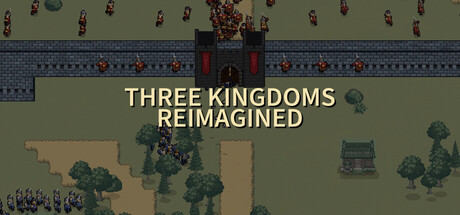
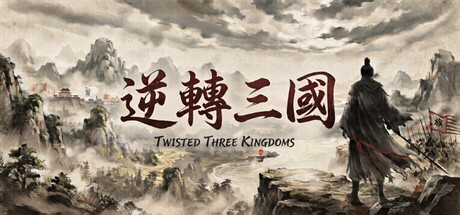
1. In-Game Assets
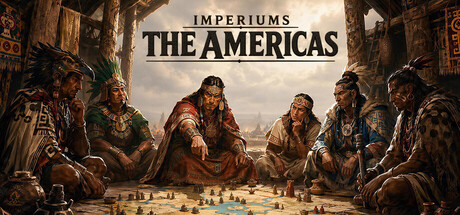
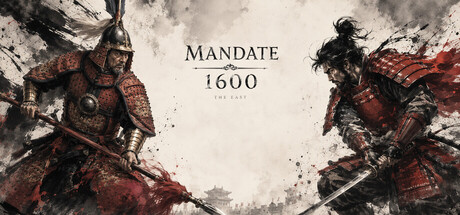
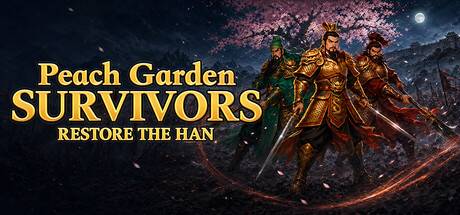
Illustrations & Art: Unit portraits and the opening cinematic illustrations were generated using AI image models, then manually curated, retouched, and unified in style. All assets were human-reviewed under strict art direction to ensure historical tone and consistency.
Opening Cinematic: Subtle motion effects on the illustrations were produced with an AI image-to-video model and assembled by using the Remotion pipeline.
Background Music: The soundtrack was generated by an AI music model in multiple takes, then human-selected, mixed, and mastered.
Telegram Voice-overs: The historical telegram voice-overs in-game were synthesized by an AI TTS system. Each character's reference voice was human-approved through listening tests before use.
2. Development Assistance
Code: Game code was written and debugged with the aid of AI coding assistants. All code was human-reviewed and validated through automated testing.
Localization: The game supports Simplified Chinese, Traditional Chinese, and English. The English text was AI-drafted and human-proofread.
3. What Is NOT AI-Generated
Historical Text: The telegrams in-game are taken from historical archives, 34 are verbatim transcriptions of the original documents, and 12 were written based on the sources. They were not AI-generated.
Terrain & Map: The battlefield map was procedurally rendered from real elevation data (SRTM), not generated by AI.
Game Balance & Statistics: Troop strength, Unit Introduction, and values were researched and set manually from historical sources, cross-checked for accuracy and play balance.
The text used in the game and on the Steam store page has currently been translated primarily with the assistance of AI tools.
Most of the graphical assets used in the game are based on real photographs or renders of 3D objects. However, AI-generated imagery was used in cases where no suitable real-world source material was available, or where the available material was insufficient to complete or supplement the required assets.
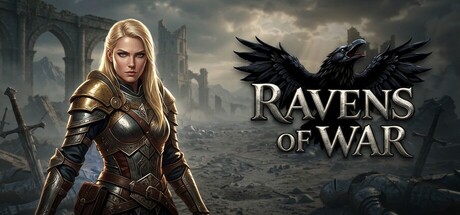
Ravens of War uses generative AI to create some of the artwork and illustrations used in the game, including card artwork. This content is pre-generated and included as part of the game; the game does not generate new AI content during gameplay.
Some visual and audio assets in this game were created with the assistance of generative AI tools, and subsequently reviewed, edited, and refined by the developer. The game does not feature live or runtime generative AI during gameplay and does not generate content based on player input.
As part of our early access work, we have used AI-generated images as placeholders for the illustrations on our cards and leader icons. This allows us to iterate quickly and see which game mechanics players like or dislike. We will replace these with human art once we've received enough feedback to finalize what we keep or discard.
Generative AI tools were used to assist in the creation and refinement of some visual assets, including illustrations, user interface elements, and marketing materials.
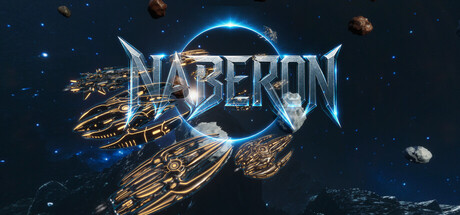
NABERON uses generative AI tools in the creation of some of its assets.
3D models and textures were generated with Meshy, then reworked, retextured
and assembled by hand for the game. Music was generated with Suno, and part
of the sound effects with ElevenLabs. Some store page artwork, including the
logo, was created with AI image tools.
All generated content was reviewed, edited and approved by the developer
before it shipped. The game does not generate any content live while you
play — nothing is created at runtime.
As a solo developer, I utilize AI to amplify my outputs. Although I never rely on or depend on the AI to do the work, it is a tool much like this computer that I am typing on, the creativity is still up to us to use it correctly. No content is generated during play.
All artwork, sprites, terrain, animations and audio are procedurally generated by our own deterministic tools or licensed/purchased from human-made sources. No generative AI images or audio are used. AI assistance was used for drafting and prototyping, all of which is reviewed and further iterated by a human. No AI models run while the game is played.
Some pre-generated artwork and audio were created with generative AI during development. These outputs are integrated as fixed assets; the game does not generate content live during gameplay or connect to a third-party AI service during gameplay.
This game features certain art assets that were generated with the assistance of AI. All such AI-assisted or AI-imitated artwork has been created with the consent of the original creator (which essentially means I fed my own drawings into the AI). All other content, including text, audio, and other materials, was produced without any AI involvement.
Generative AI was used as a development aid to create and modify program code, produce some visual assets, and draft localized text. All AI-generated content has been reviewed, edited, and adjusted by the developer. No AI content is generated while the game is running.
Generative AI was used to assist in creating some pre-rendered artwork, including environment backgrounds, menu and branding art, icons, and promotional/title-card images. These assets were reviewed and integrated by the developer. No content is generated during gameplay, and the game does not connect to external AI services.
Some visual and audio assets in this game were created with the assistance of generative AI tools
and then reviewed, edited, and curated by the developer. The game does not use live generative AI
during gameplay and does not generate content from player input.
The vast majority of assets are created by me or commercially licensed. I have used AI-generated assets for a few buildings and UI elements as a base end then modified heavily in Photoshop. I am a solo developer and know it’s a controversial topic, but I hope the 1000+ hours I have spent in Photoshop shines through, but I still want to be honest.
Some pre-rendered artwork — event illustrations, key art, and store capsule images — was created with the assistance of generative AI tools, then selected, edited, and composited by the developer. Localization drafts were produced with AI translation tools and reviewed by the developer. All in-game unit, UI, and map art uses licensed, human-made asset packs. No content is generated by AI at runtime.
Uses voice cloning by Speechify.
Uses AI generated images uploaded by other users to Pixabay when there wasn't a better alternative available.
Most such images are for character portraits and similar placeholder assets of secondary importance.
There is no prompt or direct AI usage.
Generative AI tools are used during development to assist with selected art production and localization. All AI-assisted outputs are reviewed, edited, and approved by the development team before being integrated into the game. The game does not use generative AI at runtime, and no content is generated live or delivered directly to players as unreviewed AI output.
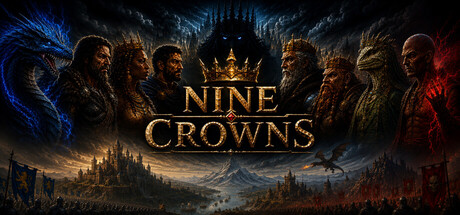
Nine Crowns uses generative AI as part of its art development process. AI-assisted tools are used to create and refine some character art, environments, sprites, and promotional artwork. These assets are selected, directed, edited, and reviewed by the development team before being included in the game. No AI content is generated during gameplay.
A lot of the artwork here was created with AI and only detailed and fixed by human hands. The voice acting, music, and soundtrack as well. The code and writing are all human-made.
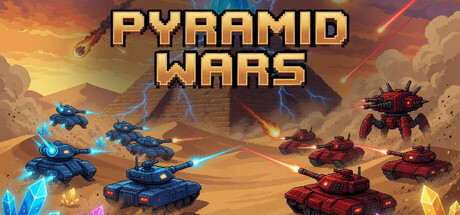
The code, menu, graphics, artwork, effects, localization, sounds and music of Pyramid Wars is vibe coded.
The cover image, shop- and library art is AI generated.
We used Claude (Anthropic) during development for the following:
- Writing the store page description
- Assisting with the translation of in-game text
- Generating some simple in-game objects
Generative AI tools were used during development to assist in the creation of certain game assets. For visual assets such as units and characters, the developer first created original line art manually, then used AI-assisted coloring as part of the workflow, followed by additional manual editing and refinement. For music, AI was used to generate an initial melodic idea, which was then manually edited, arranged, and refined by the developer in LMMS. All AI-assisted content is pre-generated and reviewed by the developer before being included in the game. The game does not use live-generated AI during gameplay.
AI was used during development to create portions of the game’s pre-generated artwork, characters, animations, music, voices, and sound effects. These assets are included in the finished game. No AI content is generated live during gameplay.
I’m a solo developer doing my first-ever coding project. With no prior coding experience, I relied heavily on tons of tutorials to write the code and used AI to assist when troubleshooting some bugs. I also used AI to generate some of the project's visual content and images but mainly tried to use actual human work. It's been a massive learning experience, so thanks for your time, and I hope you can enjoy my project :)
Generative AI was used to assist in the creation of some visual assets, UI elements, sound effects, and music featured in Warchaic. Software development was handled by our development team, while animations and visual effects (VFX) were either created by our team or sourced from licensed asset packages.
Some of the placeholder unit and terrain sprites that I'm using while the game is in development were generated with the help of AI (with a lot of manual curation and editing... I promise that you will not be confronted by any noticeably ugly slop).
Initial sales will contribute toward creating hand-drawn, unique sprites for as many units as possible.
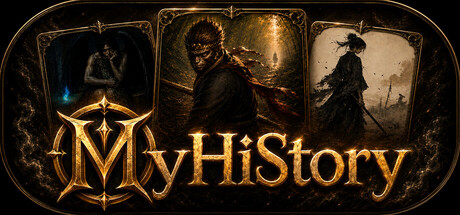
Some pre-generated artwork and audio included in MyHiStory were created with the assistance of generative AI during development. These assets were selected, reviewed, and curated by the developer before inclusion in the game. MyHiStory does not use generative AI to generate content or code while the game is running.
Generative AI was used during development as a coding assistant and to assist with drafting and translating store-page and marketing text. Some pixel-art assets were rendered by deterministic drawing code written with AI assistance; the final images were not directly output by a text-to-image or diffusion model. All shipped and published content was reviewed and edited by the developer. No generative AI runs in the game, and no content is generated from player input.
Some artwork and visual assets in this game were created with the assistance of generative AI tools during development. All such content was reviewed, edited, and integrated into the game by the developer.
Generative AI tools were used during development to assist with the creation of some visual assets and development materials. All AI-assisted content was reviewed and integrated by the developer. No generative AI is used during gameplay.
As an individual developer, during development of this game, AI tools were heavily used. I disclose this honestly and transparently.
1. In-Game Assets
Illustrations & Art: Unit portraits and the opening cinematic illustrations were generated using AI image models, then manually curated, retouched, and unified in style. All assets were human-reviewed under strict art direction to ensure historical tone and consistency.
Opening Cinematic: Subtle motion effects on the illustrations were produced with an AI image-to-video model and assembled by using the Remotion pipeline.
Background Music: The soundtrack was generated by an AI music model in multiple takes, then human-selected, mixed, and mastered.
Telegram Voice-overs: The historical telegram voice-overs in-game were synthesized by an AI TTS system. Each character's reference voice was human-approved through listening tests before use.
2. Development Assistance
Code: Game code was written and debugged with the aid of AI coding assistants. All code was human-reviewed and validated through automated testing.
Localization: The game supports Simplified Chinese, Traditional Chinese, and English. The English text was AI-drafted and human-proofread.
3. What Is NOT AI-Generated
Historical Text: The telegrams in-game are taken from historical archives, 34 are verbatim transcriptions of the original documents, and 12 were written based on the sources. They were not AI-generated.
Terrain & Map: The battlefield map was procedurally rendered from real elevation data (SRTM), not generated by AI.
Game Balance & Statistics: Troop strength, Unit Introduction, and values were researched and set manually from historical sources, cross-checked for accuracy and play balance.
The text used in the game and on the Steam store page has currently been translated primarily with the assistance of AI tools.
Most of the graphical assets used in the game are based on real photographs or renders of 3D objects. However, AI-generated imagery was used in cases where no suitable real-world source material was available, or where the available material was insufficient to complete or supplement the required assets.
Ravens of War uses generative AI to create some of the artwork and illustrations used in the game, including card artwork. This content is pre-generated and included as part of the game; the game does not generate new AI content during gameplay.
Some visual and audio assets in this game were created with the assistance of generative AI tools, and subsequently reviewed, edited, and refined by the developer. The game does not feature live or runtime generative AI during gameplay and does not generate content based on player input.
As part of our early access work, we have used AI-generated images as placeholders for the illustrations on our cards and leader icons. This allows us to iterate quickly and see which game mechanics players like or dislike. We will replace these with human art once we've received enough feedback to finalize what we keep or discard.
Generative AI tools were used to assist in the creation and refinement of some visual assets, including illustrations, user interface elements, and marketing materials.
NABERON uses generative AI tools in the creation of some of its assets.
3D models and textures were generated with Meshy, then reworked, retextured
and assembled by hand for the game. Music was generated with Suno, and part
of the sound effects with ElevenLabs. Some store page artwork, including the
logo, was created with AI image tools.
All generated content was reviewed, edited and approved by the developer
before it shipped. The game does not generate any content live while you
play — nothing is created at runtime.
As a solo developer, I utilize AI to amplify my outputs. Although I never rely on or depend on the AI to do the work, it is a tool much like this computer that I am typing on, the creativity is still up to us to use it correctly. No content is generated during play.
All artwork, sprites, terrain, animations and audio are procedurally generated by our own deterministic tools or licensed/purchased from human-made sources. No generative AI images or audio are used. AI assistance was used for drafting and prototyping, all of which is reviewed and further iterated by a human. No AI models run while the game is played.
Some pre-generated artwork and audio were created with generative AI during development. These outputs are integrated as fixed assets; the game does not generate content live during gameplay or connect to a third-party AI service during gameplay.
This game features certain art assets that were generated with the assistance of AI. All such AI-assisted or AI-imitated artwork has been created with the consent of the original creator (which essentially means I fed my own drawings into the AI). All other content, including text, audio, and other materials, was produced without any AI involvement.
Generative AI was used as a development aid to create and modify program code, produce some visual assets, and draft localized text. All AI-generated content has been reviewed, edited, and adjusted by the developer. No AI content is generated while the game is running.
Generative AI was used to assist in creating some pre-rendered artwork, including environment backgrounds, menu and branding art, icons, and promotional/title-card images. These assets were reviewed and integrated by the developer. No content is generated during gameplay, and the game does not connect to external AI services.
Some visual and audio assets in this game were created with the assistance of generative AI tools
and then reviewed, edited, and curated by the developer. The game does not use live generative AI
during gameplay and does not generate content from player input.
The vast majority of assets are created by me or commercially licensed. I have used AI-generated assets for a few buildings and UI elements as a base end then modified heavily in Photoshop. I am a solo developer and know it’s a controversial topic, but I hope the 1000+ hours I have spent in Photoshop shines through, but I still want to be honest.
Some pre-rendered artwork — event illustrations, key art, and store capsule images — was created with the assistance of generative AI tools, then selected, edited, and composited by the developer. Localization drafts were produced with AI translation tools and reviewed by the developer. All in-game unit, UI, and map art uses licensed, human-made asset packs. No content is generated by AI at runtime.
Uses voice cloning by Speechify.
Uses AI generated images uploaded by other users to Pixabay when there wasn't a better alternative available.
Most such images are for character portraits and similar placeholder assets of secondary importance.
There is no prompt or direct AI usage.
Generative AI tools are used during development to assist with selected art production and localization. All AI-assisted outputs are reviewed, edited, and approved by the development team before being integrated into the game. The game does not use generative AI at runtime, and no content is generated live or delivered directly to players as unreviewed AI output.
Nine Crowns uses generative AI as part of its art development process. AI-assisted tools are used to create and refine some character art, environments, sprites, and promotional artwork. These assets are selected, directed, edited, and reviewed by the development team before being included in the game. No AI content is generated during gameplay.
A lot of the artwork here was created with AI and only detailed and fixed by human hands. The voice acting, music, and soundtrack as well. The code and writing are all human-made.
The code, menu, graphics, artwork, effects, localization, sounds and music of Pyramid Wars is vibe coded.
The cover image, shop- and library art is AI generated.
We used Claude (Anthropic) during development for the following:
- Writing the store page description
- Assisting with the translation of in-game text
- Generating some simple in-game objects
Generative AI tools were used during development to assist in the creation of certain game assets. For visual assets such as units and characters, the developer first created original line art manually, then used AI-assisted coloring as part of the workflow, followed by additional manual editing and refinement. For music, AI was used to generate an initial melodic idea, which was then manually edited, arranged, and refined by the developer in LMMS. All AI-assisted content is pre-generated and reviewed by the developer before being included in the game. The game does not use live-generated AI during gameplay.
AI was used during development to create portions of the game’s pre-generated artwork, characters, animations, music, voices, and sound effects. These assets are included in the finished game. No AI content is generated live during gameplay.
I’m a solo developer doing my first-ever coding project. With no prior coding experience, I relied heavily on tons of tutorials to write the code and used AI to assist when troubleshooting some bugs. I also used AI to generate some of the project's visual content and images but mainly tried to use actual human work. It's been a massive learning experience, so thanks for your time, and I hope you can enjoy my project :)
Generative AI was used to assist in the creation of some visual assets, UI elements, sound effects, and music featured in Warchaic. Software development was handled by our development team, while animations and visual effects (VFX) were either created by our team or sourced from licensed asset packages.
Some of the placeholder unit and terrain sprites that I'm using while the game is in development were generated with the help of AI (with a lot of manual curation and editing... I promise that you will not be confronted by any noticeably ugly slop).
Initial sales will contribute toward creating hand-drawn, unique sprites for as many units as possible.
Some pre-generated artwork and audio included in MyHiStory were created with the assistance of generative AI during development. These assets were selected, reviewed, and curated by the developer before inclusion in the game. MyHiStory does not use generative AI to generate content or code while the game is running.
Generative AI was used during development as a coding assistant and to assist with drafting and translating store-page and marketing text. Some pixel-art assets were rendered by deterministic drawing code written with AI assistance; the final images were not directly output by a text-to-image or diffusion model. All shipped and published content was reviewed and edited by the developer. No generative AI runs in the game, and no content is generated from player input.
Some artwork and visual assets in this game were created with the assistance of generative AI tools during development. All such content was reviewed, edited, and integrated into the game by the developer.