Public Steam disclosure research25,508 disclosures tracked
Where do games disclose AI use?
Search developers’ Steam disclosures, compare classified AI use across
games, and follow recorded changes.
This index adds cross-game classifications and statistics to
statements published on individual store pages.
Groups reflect automatic analysis of public disclosures; mature records are excluded. These counts do not measure AI use across all of Steam.
Missing or unclear statements cannot establish whether a game uses AI.
Generative AI tools were used as supportive assistance in the creation of certain promotional materials, concept art, temporary text, and marketing content during development.
All final in-game content is manually reviewed, edited, and integrated by the development team.
Graphics & Art: Original asset concepts, sketches, and draft designs were created by the developer and subsequently rendered or refined using generative AI tools. While the underlying concepts and designs are original creations, generative AI may occasionally produce visual similarities to existing artistic styles or works.
Voice Acting: Character voices and audio narration were generated using ElevenLabs voice synthesis technology and are used in accordance with the applicable licensing and usage terms.
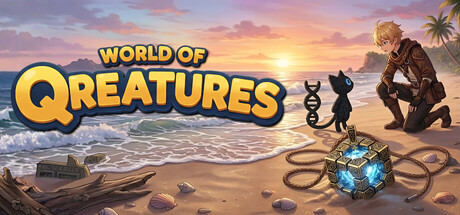
World of Qreatures features a cutting-edge 'Qreature Lab' where players can scan real-world QR codes or breed existing creatures to discover entirely new species.
The game utilizes a custom generative AI pipeline to create these unique assets at runtime, including 3D meshes, textures, procedural audio cries, and combat statistics. Additionally, some wild monsters found in the handcrafted world are pre-generated using this same pipeline and carefully curated by the developer to ensure high-quality gameplay and visual consistency. Every Qreature generated is a unique biological signature within the game's ecosystem.
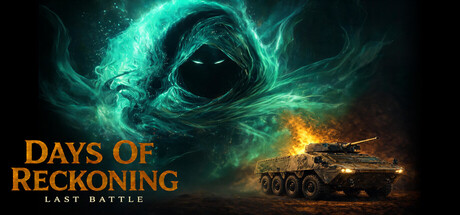
During the development of Days Of Reckoning, generative artificial intelligence is used as a supportive tool in certain parts of production.
AI has been used primarily for:
creating visual references and concept ideas
assisting with marketing materials (e.g., text, scripts)
experimenting with certain audio or atmospheric elements
All content included in the final version of the game is reviewed, refined, and approved by the developer.
Generative AI is not used to generate content in real time during gameplay and does not directly influence gameplay mechanics or in-game systems.
Some visual assets in this game, including certain textures and illustrative elements, were initially created using generative AI tools and then manually edited, refined, and integrated by the developer as part of the final game production.
Generative AI was used in the creation of promotional store page artwork, achievement icons, and the game icon. No gameplay content, code, or game mechanics were generated using AI. AI is also not used to make decisions, generate real-time content, or display content within the game.
Some visual and audio assets in this game were created with the assistance of generative AI tools and then reviewed, edited, and integrated by the development team.
All game design decisions, including gameplay systems, boss mechanics, quests, NPC dialogue, progression, and balancing, were created by the human developers.
AI is not used during gameplay.
This game use generative AI to setup theming, characters and monsters sprites and sounds to speed-up and fill the gap I don't capable of. After generated they're well test and tune to ensure player can have fun with it.
For now there are some placeholder assets that we generated by AI to fill in some of the UI but we do not intend to include these assets in the final build on release.
This game was developed with AI assistance. Some visual assets, icons, promotional artwork, in-game text content, and portions of the source code were generated or refined using AI tools. Core game design, mechanics balancing, and final creative direction were handled by a human developer.
- Pre-generated: "3D character/monster models generated via Tripo3D from concept art, textures via Ludo AI. All assets reviewed and integrated by developer. No live AI generation at runtime."
- Guardrails: Human review of all generated assets before shipping.
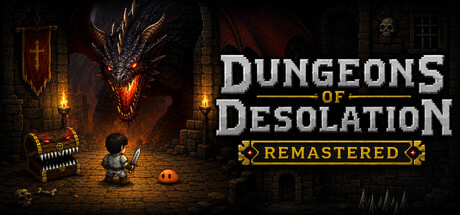
Dungeons of Desolation Remastered is based on my original 2012 Xbox Live Indie Games release. The original artwork, music, sound effects, code, game design, story, systems, and overall creative direction were created by me as an individual developer.
For this remastered PC version, I have used generative AI tools as part of the development process to assist with asset upscaling/enhancement and with porting/refactoring the original XNA codebase to a modern MonoGame version. AI-assisted work is reviewed, edited, and integrated by me.
Generative AI is not used to dynamically generate gameplay, story, dialogue, items, levels, or player-facing content at runtime.
Generative AI tools were used to assist with selected static visual assets, such as artwork, store/library assets, and some icon-style graphics. These assets were reviewed, edited, and manually integrated by the developer. No generative AI is used during gameplay, and no content is generated by AI while the game is running.
Generative AI tools were used as part of the development workflow for programming assistance, debugging support, implementation planning, and visual refinement.
AI-assisted visual workflows were used to explore, refine, or produce some visual elements. All such content was reviewed and integrated manually by the developer.
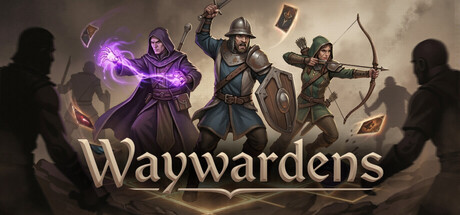
Waywardens does not use live generative AI during gameplay. The game does not generate AI content at runtime and does not send player input to AI services.
I believe in being fully transparent with my players regarding the tools used to bring this project to life. As a solo developer and non-native English speaker, I have utilized AI as a supportive tool to enhance the experience, though the core vision and logic of the game remain my own.
Art & Visuals: To ensure the game has a polished aesthetic, I used AI to refine my hand-drawn concepts into final assets. This allowed me to translate my original sketches into high-quality visuals that I otherwise could not have afforded as an independent creator.
Language & Localization: With over 1,500 unique glyphs and numerous Rune combinations, I used AI to assist with naming and linguistic consistency. This ensures that the English translation is natural and clear for all players.
Real-Time Community Chat: To foster an inclusive community, the game features an integrated translation tool. This allows players to chat in their native languages while providing instant translations for others, ensuring everyone can participate in the conversation.
Development & Optimization: AI assisted in proofing my original combat code and expanding on my base mechanics to create more diverse gameplay options. It also serves as a diagnostic tool to help me identify and patch bugs quickly, ensuring a stable and fair experience for everyone.
AI is a tool to empower my creativity, not a replacement for it. My goal is to use these technologies to deliver a deeper, more polished game than a solo project would typically allow.
During the development of Beyond the Soil: Farming & Tales Prologue, generative AI technologies were used to optimize localization texts and assist in the design phase of certain visual marketing materials.
AI tools were used as a support during development.
- Assistance with coding and English localization
- Some character artwork was initially sketched by the developer, then refined using AI tools and further manually adjusted
All final content was reviewed and edited by the developer.
Some visual assets and concept art were created or assisted using AI tools during development. Everything has been reviewed and refined by the developer to match the game’s style and quality.
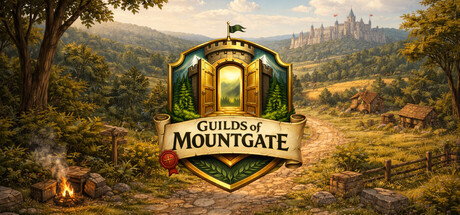
Guilds of Mountgate currently uses AI-generated visual assets during Early Access, primarily for environmental backgrounds and UI-related imagery.
All assets are individually selected and refined to ensure visual consistency within the game world.
This approach allows development to focus on the core systems that define the game — including progression, economy and world simulation.
As development continues, many of these assets — especially location backgrounds — are planned to be replaced with handcrafted, pre-rendered 3D scenes created in Blender for the full release (v1.0).
The game was made with the help of generative AI tools for visual assets, store artwork, music, localization support, and development assistance. AI-assisted materials were reviewed, selected, edited where necessary, and integrated by the developer.
In order to provide accessibility, AI was used to create the narration for the tutorial and encyclopaedia. Also some of the background and encyclopaedia images were generated using AI, but will be replaced for 1.0 launch.
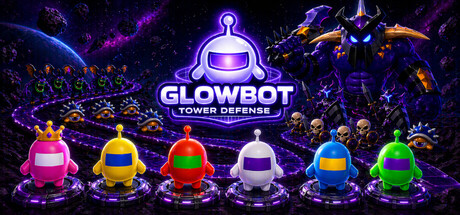
Some store assets (such as capsules and promotional images) were created with the assistance of AI tools due to limited resources during development. All gameplay, design, and core content of Glowbot Tower Defense are fully original and developed by me.
As future projects grow, I plan to collaborate with artists to further enhance the visual presentation.
Since I’m mostly developing this game on my own, I couldn’t have done it without a little help from AI. Portraits, some sound effects, and UI elements were refined or generated using AI. Still, most of the game is old-school manual work! I ran around with a microphone recording individual sounds, wrote entire music tracks, modeled and textured objects, and of course designed levels and much more, all with my own hands using the full range of available NO-AI classic tools. Over time, I’ve been removing more and more AI-generated content with the help of some talented friends.
AI tools were used to assist in creating certain promotional/store assets such as capsule images and marketing artwork.
No AI-generated content is included in gameplay, game assets, or user interactions.
This game uses generative AI tools as part of the creative process, primarily during the creation of certain visual and musical elements.
All assets have been manually edited, adapted and integrated by the developer to ensure artistic consistency and quality within the game.
AI was used as a support tool across various aspects of development, particularly to assist with visuals and animations. The goal is not to replace human work, but to allow creative efforts to be focused where they matter most, ensuring the highest possible quality for the final game.
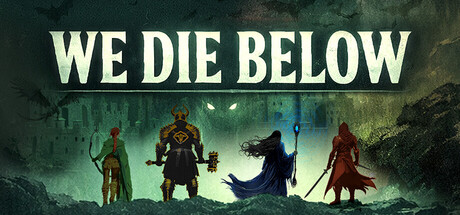
Some visual, audio, and narrative assets in We Die Below were created using AI-assisted tools as part of the development process. All such content was reviewed, edited, and refined by the development team to ensure consistency and quality.
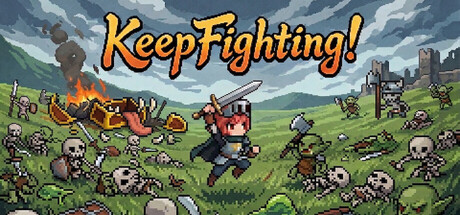
Some visual assets and promotional materials for KeepFighting were created with the assistance of generative AI tools.
All AI-generated content was reviewed, refined, and integrated by the developer to ensure consistency with the game's artistic direction and quality standards.
Music and character/dialogue voice lines in the game were created with the assistance of generative AI tools. These AI-generated assets are used for background music, atmosphere, character dialogue, and narrative audio.
Generative AI tools were used as supportive assistance in the creation of certain promotional materials, concept art, temporary text, and marketing content during development.
All final in-game content is manually reviewed, edited, and integrated by the development team.
Graphics & Art: Original asset concepts, sketches, and draft designs were created by the developer and subsequently rendered or refined using generative AI tools. While the underlying concepts and designs are original creations, generative AI may occasionally produce visual similarities to existing artistic styles or works.
Voice Acting: Character voices and audio narration were generated using ElevenLabs voice synthesis technology and are used in accordance with the applicable licensing and usage terms.
World of Qreatures features a cutting-edge 'Qreature Lab' where players can scan real-world QR codes or breed existing creatures to discover entirely new species.
The game utilizes a custom generative AI pipeline to create these unique assets at runtime, including 3D meshes, textures, procedural audio cries, and combat statistics. Additionally, some wild monsters found in the handcrafted world are pre-generated using this same pipeline and carefully curated by the developer to ensure high-quality gameplay and visual consistency. Every Qreature generated is a unique biological signature within the game's ecosystem.
During the development of Days Of Reckoning, generative artificial intelligence is used as a supportive tool in certain parts of production.
AI has been used primarily for:
creating visual references and concept ideas
assisting with marketing materials (e.g., text, scripts)
experimenting with certain audio or atmospheric elements
All content included in the final version of the game is reviewed, refined, and approved by the developer.
Generative AI is not used to generate content in real time during gameplay and does not directly influence gameplay mechanics or in-game systems.
Some visual assets in this game, including certain textures and illustrative elements, were initially created using generative AI tools and then manually edited, refined, and integrated by the developer as part of the final game production.
Generative AI was used in the creation of promotional store page artwork, achievement icons, and the game icon. No gameplay content, code, or game mechanics were generated using AI. AI is also not used to make decisions, generate real-time content, or display content within the game.
Some visual and audio assets in this game were created with the assistance of generative AI tools and then reviewed, edited, and integrated by the development team.
All game design decisions, including gameplay systems, boss mechanics, quests, NPC dialogue, progression, and balancing, were created by the human developers.
AI is not used during gameplay.
This game use generative AI to setup theming, characters and monsters sprites and sounds to speed-up and fill the gap I don't capable of. After generated they're well test and tune to ensure player can have fun with it.
For now there are some placeholder assets that we generated by AI to fill in some of the UI but we do not intend to include these assets in the final build on release.
This game was developed with AI assistance. Some visual assets, icons, promotional artwork, in-game text content, and portions of the source code were generated or refined using AI tools. Core game design, mechanics balancing, and final creative direction were handled by a human developer.
- Pre-generated: "3D character/monster models generated via Tripo3D from concept art, textures via Ludo AI. All assets reviewed and integrated by developer. No live AI generation at runtime."
- Guardrails: Human review of all generated assets before shipping.
Dungeons of Desolation Remastered is based on my original 2012 Xbox Live Indie Games release. The original artwork, music, sound effects, code, game design, story, systems, and overall creative direction were created by me as an individual developer.
For this remastered PC version, I have used generative AI tools as part of the development process to assist with asset upscaling/enhancement and with porting/refactoring the original XNA codebase to a modern MonoGame version. AI-assisted work is reviewed, edited, and integrated by me.
Generative AI is not used to dynamically generate gameplay, story, dialogue, items, levels, or player-facing content at runtime.
Generative AI tools were used to assist with selected static visual assets, such as artwork, store/library assets, and some icon-style graphics. These assets were reviewed, edited, and manually integrated by the developer. No generative AI is used during gameplay, and no content is generated by AI while the game is running.
Generative AI tools were used as part of the development workflow for programming assistance, debugging support, implementation planning, and visual refinement.
AI-assisted visual workflows were used to explore, refine, or produce some visual elements. All such content was reviewed and integrated manually by the developer.
Waywardens does not use live generative AI during gameplay. The game does not generate AI content at runtime and does not send player input to AI services.
I believe in being fully transparent with my players regarding the tools used to bring this project to life. As a solo developer and non-native English speaker, I have utilized AI as a supportive tool to enhance the experience, though the core vision and logic of the game remain my own.
Art & Visuals: To ensure the game has a polished aesthetic, I used AI to refine my hand-drawn concepts into final assets. This allowed me to translate my original sketches into high-quality visuals that I otherwise could not have afforded as an independent creator.
Language & Localization: With over 1,500 unique glyphs and numerous Rune combinations, I used AI to assist with naming and linguistic consistency. This ensures that the English translation is natural and clear for all players.
Real-Time Community Chat: To foster an inclusive community, the game features an integrated translation tool. This allows players to chat in their native languages while providing instant translations for others, ensuring everyone can participate in the conversation.
Development & Optimization: AI assisted in proofing my original combat code and expanding on my base mechanics to create more diverse gameplay options. It also serves as a diagnostic tool to help me identify and patch bugs quickly, ensuring a stable and fair experience for everyone.
AI is a tool to empower my creativity, not a replacement for it. My goal is to use these technologies to deliver a deeper, more polished game than a solo project would typically allow.
During the development of Beyond the Soil: Farming & Tales Prologue, generative AI technologies were used to optimize localization texts and assist in the design phase of certain visual marketing materials.
AI tools were used as a support during development.
- Assistance with coding and English localization
- Some character artwork was initially sketched by the developer, then refined using AI tools and further manually adjusted
All final content was reviewed and edited by the developer.
Some visual assets and concept art were created or assisted using AI tools during development. Everything has been reviewed and refined by the developer to match the game’s style and quality.
Guilds of Mountgate currently uses AI-generated visual assets during Early Access, primarily for environmental backgrounds and UI-related imagery.
All assets are individually selected and refined to ensure visual consistency within the game world.
This approach allows development to focus on the core systems that define the game — including progression, economy and world simulation.
As development continues, many of these assets — especially location backgrounds — are planned to be replaced with handcrafted, pre-rendered 3D scenes created in Blender for the full release (v1.0).
The game was made with the help of generative AI tools for visual assets, store artwork, music, localization support, and development assistance. AI-assisted materials were reviewed, selected, edited where necessary, and integrated by the developer.
In order to provide accessibility, AI was used to create the narration for the tutorial and encyclopaedia. Also some of the background and encyclopaedia images were generated using AI, but will be replaced for 1.0 launch.
Some store assets (such as capsules and promotional images) were created with the assistance of AI tools due to limited resources during development. All gameplay, design, and core content of Glowbot Tower Defense are fully original and developed by me.
As future projects grow, I plan to collaborate with artists to further enhance the visual presentation.
Since I’m mostly developing this game on my own, I couldn’t have done it without a little help from AI. Portraits, some sound effects, and UI elements were refined or generated using AI. Still, most of the game is old-school manual work! I ran around with a microphone recording individual sounds, wrote entire music tracks, modeled and textured objects, and of course designed levels and much more, all with my own hands using the full range of available NO-AI classic tools. Over time, I’ve been removing more and more AI-generated content with the help of some talented friends.
AI tools were used to assist in creating certain promotional/store assets such as capsule images and marketing artwork.
No AI-generated content is included in gameplay, game assets, or user interactions.
This game uses generative AI tools as part of the creative process, primarily during the creation of certain visual and musical elements.
All assets have been manually edited, adapted and integrated by the developer to ensure artistic consistency and quality within the game.
AI was used as a support tool across various aspects of development, particularly to assist with visuals and animations. The goal is not to replace human work, but to allow creative efforts to be focused where they matter most, ensuring the highest possible quality for the final game.
Some visual, audio, and narrative assets in We Die Below were created using AI-assisted tools as part of the development process. All such content was reviewed, edited, and refined by the development team to ensure consistency and quality.
Some visual assets and promotional materials for KeepFighting were created with the assistance of generative AI tools.
All AI-generated content was reviewed, refined, and integrated by the developer to ensure consistency with the game's artistic direction and quality standards.
Music and character/dialogue voice lines in the game were created with the assistance of generative AI tools. These AI-generated assets are used for background music, atmosphere, character dialogue, and narrative audio.