Public Steam disclosure research25,508 disclosures tracked
Where do games disclose AI use?
Search developers’ Steam disclosures, compare classified AI use across
games, and follow recorded changes.
This index adds cross-game classifications and statistics to
statements published on individual store pages.
Groups reflect automatic analysis of public disclosures; mature records are excluded. These counts do not measure AI use across all of Steam.
Missing or unclear statements cannot establish whether a game uses AI.
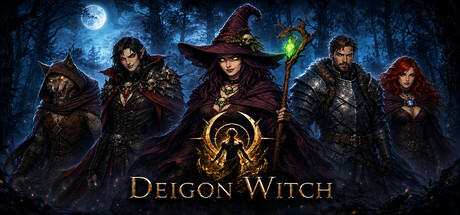
This game uses pre-generated AI-assisted content for some visual assets, promotional images, localization support, and marketing materials. All AI-assisted content has been reviewed and edited by the developer before inclusion in the game or store page.
Artificial intelligence was not used in writing the game’s story; the writing process was completed by the developer over approximately 4 months.
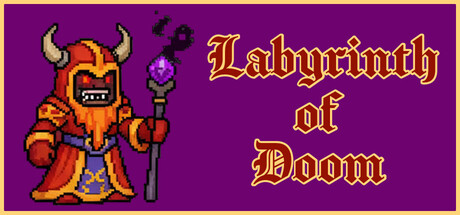
Character, monster, and object sprites, as well as the app icon, were created using AI image generation tools and subsequently hand-edited and refined by the developer. Some in-game text was written with AI assistance.
Deep In The Mine was developed by a single person. Artificial intelligence was used to save time and correct certain shortcomings, particularly in audio creation and mesh generation.
The feedback on the in-game world state and the dynamic dialogues with NPCs are generated in real time during the game's operation by integrating a large language model (LLM).
This game uses AI-assisted tools for certain in-game assets and promotional images. All gameplay, mechanics, and story content were designed by the development team.
This game used generative AI as an auxiliary tool during development, mainly for early concept references, draft store assets, text drafts, and code-related development assistance. All final content used in the game and on the store page has been reviewed, edited, integrated, and approved by the development team. The game does not use generative AI services during gameplay and does not generate images, audio, text, code, or other content in real time based on player input.
Some visual and written content in this game was created with the assistance of generative AI during development, then reviewed, edited, and integrated by the developer. The game does not include live-generated AI features, and players cannot generate content during gameplay.
Parts of the localization and most character portraits were created with the assistance of AI. All relevant content was manually reviewed and edited by me where possible and necessary.
Given I am a solo developer, Generative AI tools were utilized as development assistants to optimize workflows.
Also, some of the backgrounds are based on images created with AI, as well as a few items. They were only used as a basis to start from and have been heavily edited manually afterwards to make them fit with the rest of the game's pixel art artstyle.
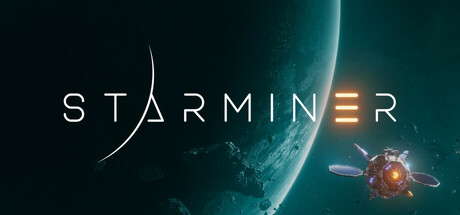
Some NPC portraits and player character face options in Starminer were created with the assistance of generative AI image tools during development. Generative AI was also used to help generate some informational dialogue, help texts, and tooltips. All AI-generated assets and text were reviewed, curated, and edited by our team before being integrated into the final build. No generative AI is used at runtime. All content shipped in the game is static and pre-authored.
VainGraphics is a local AI workspace application. Its core functionality heavily utilizes live-generated AI content, allowing users to run Large Language Models (LLMs) to generate text, stories, and code snippets, as well as image generation models to create local artwork. All generative processes run locally on the user's hardware.
Some of the 2D user interface (UI) elements and 3D models in the game were generated using AI tools. These assets have been carefully reviewed, edited, and integrated by the developer to fit the game's art style and ensure they comply with copyright standards.
During development, we may use AI-assisted tools to prototype and iterate on content.
All assets in the final game are reviewed, refined, or recreated by our team.
If you spot something that looks like an unfinished AI placeholder, please let us know - we take that seriously.
The game's artwork and music content are partially generated by AI. However, extensive manual adjustments have been made to ensure a comfortable experience for you.
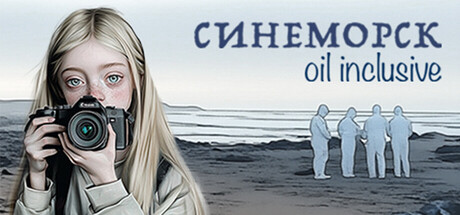
Artificial intelligence was used to create the game. With the help of ChatGPT, we were able to analyze and organize several thousand messages from eco-volunteer chat groups, as well as dozens of media articles, podcasts, and vlogs about the spill. All of this was necessary to identify key events, troubling themes, and the moods of people involved in disaster response, and was used by a human author to further develop the plot and dialogue. The images were created using Midjourney. Photos of real landscapes, but not people, were used to generate prompts. The game’s music was generated in Stability AI. The code to adapt the existing game structure to the Ren’py framework was written using Cursor AI.
This game includes pre-generated content made with the assistance of generative AI tools, including some visual assets, audio/sound effects, text, localization, and other production materials. AI tools were also used during development to support programming and production workflows. All AI-assisted content included in the game has been manually reviewed and refined by the development team. The game does not generate AI content during gameplay.
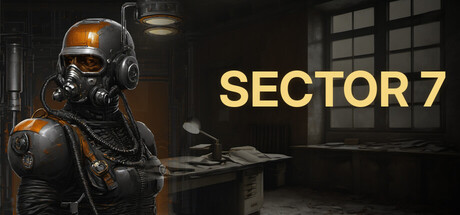
Some of Sector 7's artwork — including its store and marketing images — and its narrative text were created with AI assistance and then reviewed and edited by the developer. Localization into additional languages used AI translation with human review.
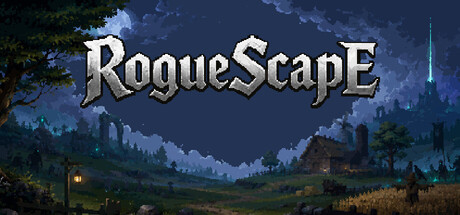
RogueScape may use generative AI tools as part of the development workflow, primarily to assist with programming, debugging, prototyping, workflow automation, and occasional asset or copy iteration. Any AI-assisted content used in the game, store page, or related marketing materials is reviewed, edited, and approved by the developer before publication.
Generative AI tools were used during the creation of marketing and promotional materials for the game's Steam Store page and Community Hub assets. Specifically, the game's official community avatars, group banner backgrounds, and concept art presentations were generated using AI imagery tools to establish the game's retro space pixel-art aesthetic. No AI-generated assets are contained directly within the game code or build itself.
This title makes assistive use of generative AI tools in the following areas. All AI-generated outputs are manually reviewed, edited, and curated by the development team before being incorporated as final assets, and we have taken care to ensure that they do not infringe on the rights of third parties. No real-time AI generation occurs during gameplay.[Pre-Rendered Content — AI-Assisted Areas]- Production support for a portion of the in-game visual assets- Production support for a portion of the in-game music (BGM) and sound effects- Translation support for store page localization across supported languages (with human proofreading)[Live Generation]The game does not invoke generative AI in real time at any point during gameplay.
!! AI translations only !!
Explanation:
As an indie developer, I want my game to be accessible to as many players around the world as possible. Unfortunately, I don't have the resources to hire professional translators for every language I would like to support.
In the past, developers often relied on tools like Google Translate to make their games available in more languages. Today, AI translation is another option, and it can produce better results than traditional machine translation.
Everything else in the game, including the original text, artwork, sounds, music, game design and code, was created by humans. AI is used only for translation.
Some character dance music tracks were created using generative AI tools. These tracks are pre-generated audio assets and are not generated dynamically during gameplay.
Some visual assets, concept art, and creative materials used in the game and store page were assisted by generative AI tools. All generated content was reviewed, edited, and integrated by the developer.
This game makes use of generative AI as a creative assistant during development. All AI-assisted output is reviewed, edited, and approved by the developer before being included in the final game. No content is generated live during gameplay.
Source code: Drafted with AI coding tools, then reviewed, tested, and integrated by the developer.
Visual assets: All main character designs and key visuals are based on the developer's hand-drawn illustrations. Some assets combine the developer's artwork with AI-assisted generation or refinement.
Scenario text: Story, dialogue, and worldbuilding are written by the developer, with AI used for drafting support, rewriting, and consistency checks.
Music: A portion of the in-game music is produced with AI assistance; the developer selects, edits, and finalizes all tracks used in the game.
Localization: The English translation is produced with AI assistance and reviewed by the developer.
This game uses pre-generated AI-assisted content for some visual assets, promotional images, localization support, and marketing materials. All AI-assisted content has been reviewed and edited by the developer before inclusion in the game or store page.
Artificial intelligence was not used in writing the game’s story; the writing process was completed by the developer over approximately 4 months.
Character, monster, and object sprites, as well as the app icon, were created using AI image generation tools and subsequently hand-edited and refined by the developer. Some in-game text was written with AI assistance.
Deep In The Mine was developed by a single person. Artificial intelligence was used to save time and correct certain shortcomings, particularly in audio creation and mesh generation.
The feedback on the in-game world state and the dynamic dialogues with NPCs are generated in real time during the game's operation by integrating a large language model (LLM).
This game uses AI-assisted tools for certain in-game assets and promotional images. All gameplay, mechanics, and story content were designed by the development team.
This game used generative AI as an auxiliary tool during development, mainly for early concept references, draft store assets, text drafts, and code-related development assistance. All final content used in the game and on the store page has been reviewed, edited, integrated, and approved by the development team. The game does not use generative AI services during gameplay and does not generate images, audio, text, code, or other content in real time based on player input.
Some visual and written content in this game was created with the assistance of generative AI during development, then reviewed, edited, and integrated by the developer. The game does not include live-generated AI features, and players cannot generate content during gameplay.
Parts of the localization and most character portraits were created with the assistance of AI. All relevant content was manually reviewed and edited by me where possible and necessary.
Given I am a solo developer, Generative AI tools were utilized as development assistants to optimize workflows.
Also, some of the backgrounds are based on images created with AI, as well as a few items. They were only used as a basis to start from and have been heavily edited manually afterwards to make them fit with the rest of the game's pixel art artstyle.
Some NPC portraits and player character face options in Starminer were created with the assistance of generative AI image tools during development. Generative AI was also used to help generate some informational dialogue, help texts, and tooltips. All AI-generated assets and text were reviewed, curated, and edited by our team before being integrated into the final build. No generative AI is used at runtime. All content shipped in the game is static and pre-authored.
VainGraphics is a local AI workspace application. Its core functionality heavily utilizes live-generated AI content, allowing users to run Large Language Models (LLMs) to generate text, stories, and code snippets, as well as image generation models to create local artwork. All generative processes run locally on the user's hardware.
Some of the 2D user interface (UI) elements and 3D models in the game were generated using AI tools. These assets have been carefully reviewed, edited, and integrated by the developer to fit the game's art style and ensure they comply with copyright standards.
During development, we may use AI-assisted tools to prototype and iterate on content.
All assets in the final game are reviewed, refined, or recreated by our team.
If you spot something that looks like an unfinished AI placeholder, please let us know - we take that seriously.
The game's artwork and music content are partially generated by AI. However, extensive manual adjustments have been made to ensure a comfortable experience for you.
Artificial intelligence was used to create the game. With the help of ChatGPT, we were able to analyze and organize several thousand messages from eco-volunteer chat groups, as well as dozens of media articles, podcasts, and vlogs about the spill. All of this was necessary to identify key events, troubling themes, and the moods of people involved in disaster response, and was used by a human author to further develop the plot and dialogue. The images were created using Midjourney. Photos of real landscapes, but not people, were used to generate prompts. The game’s music was generated in Stability AI. The code to adapt the existing game structure to the Ren’py framework was written using Cursor AI.
This game includes pre-generated content made with the assistance of generative AI tools, including some visual assets, audio/sound effects, text, localization, and other production materials. AI tools were also used during development to support programming and production workflows. All AI-assisted content included in the game has been manually reviewed and refined by the development team. The game does not generate AI content during gameplay.
Some of Sector 7's artwork — including its store and marketing images — and its narrative text were created with AI assistance and then reviewed and edited by the developer. Localization into additional languages used AI translation with human review.
RogueScape may use generative AI tools as part of the development workflow, primarily to assist with programming, debugging, prototyping, workflow automation, and occasional asset or copy iteration. Any AI-assisted content used in the game, store page, or related marketing materials is reviewed, edited, and approved by the developer before publication.
Generative AI tools were used during the creation of marketing and promotional materials for the game's Steam Store page and Community Hub assets. Specifically, the game's official community avatars, group banner backgrounds, and concept art presentations were generated using AI imagery tools to establish the game's retro space pixel-art aesthetic. No AI-generated assets are contained directly within the game code or build itself.
This title makes assistive use of generative AI tools in the following areas. All AI-generated outputs are manually reviewed, edited, and curated by the development team before being incorporated as final assets, and we have taken care to ensure that they do not infringe on the rights of third parties. No real-time AI generation occurs during gameplay.[Pre-Rendered Content — AI-Assisted Areas]- Production support for a portion of the in-game visual assets- Production support for a portion of the in-game music (BGM) and sound effects- Translation support for store page localization across supported languages (with human proofreading)[Live Generation]The game does not invoke generative AI in real time at any point during gameplay.
!! AI translations only !!
Explanation:
As an indie developer, I want my game to be accessible to as many players around the world as possible. Unfortunately, I don't have the resources to hire professional translators for every language I would like to support.
In the past, developers often relied on tools like Google Translate to make their games available in more languages. Today, AI translation is another option, and it can produce better results than traditional machine translation.
Everything else in the game, including the original text, artwork, sounds, music, game design and code, was created by humans. AI is used only for translation.
Some character dance music tracks were created using generative AI tools. These tracks are pre-generated audio assets and are not generated dynamically during gameplay.
Some visual assets, concept art, and creative materials used in the game and store page were assisted by generative AI tools. All generated content was reviewed, edited, and integrated by the developer.
This game makes use of generative AI as a creative assistant during development. All AI-assisted output is reviewed, edited, and approved by the developer before being included in the final game. No content is generated live during gameplay.
Source code: Drafted with AI coding tools, then reviewed, tested, and integrated by the developer.
Visual assets: All main character designs and key visuals are based on the developer's hand-drawn illustrations. Some assets combine the developer's artwork with AI-assisted generation or refinement.
Scenario text: Story, dialogue, and worldbuilding are written by the developer, with AI used for drafting support, rewriting, and consistency checks.
Music: A portion of the in-game music is produced with AI assistance; the developer selects, edits, and finalizes all tracks used in the game.
Localization: The English translation is produced with AI assistance and reviewed by the developer.