Public Steam disclosure research25,508 disclosures tracked
Where do games disclose AI use?
Search developers’ Steam disclosures, compare classified AI use across
games, and follow recorded changes.
This index adds cross-game classifications and statistics to
statements published on individual store pages.
Groups reflect automatic analysis of public disclosures; mature records are excluded. These counts do not measure AI use across all of Steam.
Missing or unclear statements cannot establish whether a game uses AI.
Generative AI tools were used to create some pre-rendered visual assets, including promotional artwork and certain in-game images. These assets are created in advance and integrated into the game. No AI-generated content is created dynamically during gameplay, and all game systems, mechanics, and code are created manually.
This game uses live-generated AI to power the dialogue of the suspects. When you type a question, the response is generated in real-time, ensuring that suspects react dynamically to your specific accusations and evidence. An active internet connection is required to play.
- AI evaluates player-entered text to determine story branching and outcomes.
- Generative AI is used in the creation of certain graphic and music assets.
I used BEZI and AI to help write scripts because im literally only one person and it would take 15 years and potentially cost hundreds of thousands of dollars to create this if i didnt have AI assistants.
See the description for an extended discussion about the tools used to produce this game.
AI use in this game includes Claude and Claude Code for assisting with implementing complex systems and bug fixing. The codex's image-examination assets are pre-rendered during development: in-game screenshots are composited via ChatGPT and then some are stylistically processed by a model running locally on my laptop. I experimented a bit with Adobe Podcast to make recordings on my not-very-good mic sound a little better but I wasn't so impressed with the results so I don't think much of this made it in. Most sound effects were found in online libraries but in some cases they were generated using ElevenLabs and other sound generation models when suitable alternatives could not be found. Some 3D models and textures were created using Meshy. Text was checked for spelling and grammar with Grammarly and Claude.
To ensure that players from diverse cultural backgrounds can fully immerse themselves in the narrative, AI-assisted tools were utilized for localization purposes. This allows us to bridge language barriers and make the game accessible to a global audience.
There are two characters in the game that give a comedic running commentary of things that are happening in-game, things the player is doing and also as part of the tutorial to teach the player how to cook in the kitchen. The voices for these two characters are using pre-made AI generated sentences.
We use AI to power dynamic conversations with hand-crafted NPCs. Each character has a unique personality, backstory, and knowledge base. Their dialogue is generated in real-time based on your questions, creating authentic interview experiences that feel natural and unpredictable.
The AI runs completely offline on your machine. No internet connection required, and your conversations remain private.
The game has a single AI-generated image of deliberate low quality in it, because I wanted to have that.
It also has the "ASA-Intelligence" text generation and modification system, which is technically and pragmatically incomparable to the function of a large language model, but is technically AI. It is not trained on text from anything but the game itself, and is ran entirely locally during certain parts of gameplay.
Generative AI was used during the development process to create static background textures, minor prop details (e.g., labels), and voiceovers. Voice assets were created using AI voice synthesis/changer tools based on the developer's original vocal recordings. All AI-generated assets were manually reviewed and implemented. No AI is used to generate content in real-time while the game is running.
We have utilized generative AI tools during the development process to assist in the creation of various 2D and 3D assets. This includes certain environmental textures, 2D UI elements, and some base 3D models. All AI-generated content has been manually reviewed, edited, and refined by our team to ensure quality and originality. These assets are pre-generated and are not created in real-time during gameplay.
Please note: DreamForge uses generative AI to create characters, environments, and storylines for all player-created games. We take reasonable precautions to reduce offensive and inaccurate content; however, we do not guarantee the accuracy, appropriateness, or completeness of any generated content. You may not use DreamForge to create, reproduce, or distribute content that infringes on third-party copyrights or other intellectual property rights. Violations may result in removal of content and/or account suspension.
Generative AI was used only in limited cases: for a few UI elements and temporary draft translation. Before release, all machine-translated text will be replaced with human localization.
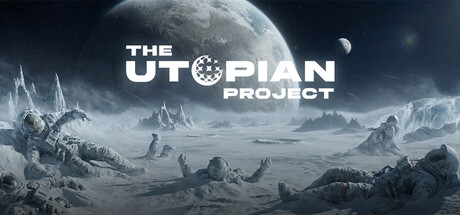
The development of The Utopian Project makes limited use of AI-assisted tools during early production, primarily for concept exploration and background asset iteration. All final content is curated, reviewed, and integrated by the development team.
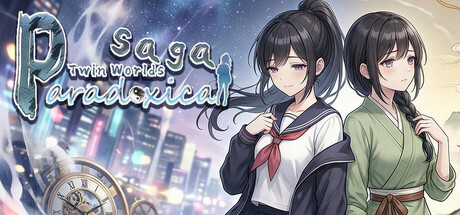
Please note that the audiovisual materials in this game (character illustrations, backgrounds, CG, BGM, voice acting) and some clips in the promotional video are AI-assisted creations.
Here, I sincerely ask for your forgiveness and understanding. However, please rest assured that in this work, AI serves merely as a production tool, not as the creator of the work itself.
This means that everything—from the initial concept and the collection of stylistic references, to repeated refinements in aspects such as character outfits, scene atmospheres, and continuous adjustments to the emotional delivery of voice acting—was independently handled by me. AI was only responsible for the final production phase.
I also dislike fast-food-like workflows. For me, AI is a powerful production tool that compensates for my shortcomings, but the soul of the work always originates from human creativity.
In any case, thank you for your attention and understanding. If you have any questions, feel free to message me anytime~
Artificial intelligence tools were used to generate some in-game images displayed on paintings and environmental props. These images are used as part of the visual atmosphere and do not affect gameplay, story progression, or player interactions.
Generative AI tools were used exclusively in the creation of certain store page visual assets (such as promotional images and graphical materials).
All gameplay elements, in-game content, mechanics, design, and implementation were created and finalized by the developer. No generative AI was used in the development of the game itself.
Generative AI was used solely as a visual asset creation tool for marketing materials displayed on the store page.
Artificial intelligence, in particular ChatGPT, was used to create visual elements based on the author's ideas, since the team does not have professional artistic skills. AI also actively helped in the programming process, greatly simplifying and speeding up development.
From the entire FANTOM INK team, thank him so much! We wish ChatGPT further development and new heights.
Generative artificial intelligence has been used only for marketing and promotional materials, such as concept imagery and visual assets created for external marketing purposes.
No generative AI tools are used within the game itself. All in-game content, including gameplay systems, environments, characters, narrative elements, audio, and animations, is entirely handcrafted by the development team.
The store page description, gameplay experience, and all playable content do not rely on live-generated or pre-rendered AI-generated assets.
During the development of Gloom, generative AI technologies were used to create promotional images, concept designs, and marketing videos. Additionally, certain in-game visual assets and cinematic videos displayed during gameplay were also developed using generative AI. All AI-generated content has been thoroughly reviewed, manually edited, and refined by the developer to ensure it meets the game's quality standards and atmospheric requirements.
Currently, AI was used to localize the store page and in-game text from English into other languages. We plan to verify and refine these translations with human speakers soon to ensure the highest quality possible.
AI Usage in Visual Assets and Audio
All AI-generated content has been manually reviewed, edited, and integrated by the developer to ensure quality and coherence.
The visual assets were manually composited and detailed using Photoshop. Algorithmic tools were utilized only to generate initial base textures and references, which were then significantly transformed and overpainted to match the game's specific style.
AI Content Disclosure
Some visual assets in this game were generated using AI tools and then curated, edited, and integrated by the developer. All characters, locations, and artwork are original and fictional.
Generative AI was used during development to help create some pre-rendered audio, store/marketing visuals, and concept art. All such content is curated by the developer, and the game does not generate AI content at runtime. Some store page text was also drafted with AI assistance and edited by the developer.
In the development of this work,
-Some of the still backgrounds include AI-generated materials that have been added and corrected.
・In addition to free illustrations and assets, AI-generated materials are included for reference for some still compositions.
・About 3 of the 19 songs included in the soundtrack,
After composing by the creator himself, some of the arrangements are based on AI-generated material.
We use AI in early conceptual design, to figure out an appropriate background art. We then go through several iterations manually with artist modifications, to produce a good, highly polished background that gels well with our characters, story and intended art style.
Our characters are hand drawn by humans.
Our objects are hand drawn by humans.
All user interface (UI) elements are hand drawn by humans.
All animations are hand drawn and meticulously rigged (also by humans) using bone animation.
Generative AI tools were used to create some pre-rendered visual assets, including promotional artwork and certain in-game images. These assets are created in advance and integrated into the game. No AI-generated content is created dynamically during gameplay, and all game systems, mechanics, and code are created manually.
This game uses live-generated AI to power the dialogue of the suspects. When you type a question, the response is generated in real-time, ensuring that suspects react dynamically to your specific accusations and evidence. An active internet connection is required to play.
- AI evaluates player-entered text to determine story branching and outcomes.
- Generative AI is used in the creation of certain graphic and music assets.
I used BEZI and AI to help write scripts because im literally only one person and it would take 15 years and potentially cost hundreds of thousands of dollars to create this if i didnt have AI assistants.
See the description for an extended discussion about the tools used to produce this game.
AI use in this game includes Claude and Claude Code for assisting with implementing complex systems and bug fixing. The codex's image-examination assets are pre-rendered during development: in-game screenshots are composited via ChatGPT and then some are stylistically processed by a model running locally on my laptop. I experimented a bit with Adobe Podcast to make recordings on my not-very-good mic sound a little better but I wasn't so impressed with the results so I don't think much of this made it in. Most sound effects were found in online libraries but in some cases they were generated using ElevenLabs and other sound generation models when suitable alternatives could not be found. Some 3D models and textures were created using Meshy. Text was checked for spelling and grammar with Grammarly and Claude.
To ensure that players from diverse cultural backgrounds can fully immerse themselves in the narrative, AI-assisted tools were utilized for localization purposes. This allows us to bridge language barriers and make the game accessible to a global audience.
There are two characters in the game that give a comedic running commentary of things that are happening in-game, things the player is doing and also as part of the tutorial to teach the player how to cook in the kitchen. The voices for these two characters are using pre-made AI generated sentences.
We use AI to power dynamic conversations with hand-crafted NPCs. Each character has a unique personality, backstory, and knowledge base. Their dialogue is generated in real-time based on your questions, creating authentic interview experiences that feel natural and unpredictable.
The AI runs completely offline on your machine. No internet connection required, and your conversations remain private.
The game has a single AI-generated image of deliberate low quality in it, because I wanted to have that.
It also has the "ASA-Intelligence" text generation and modification system, which is technically and pragmatically incomparable to the function of a large language model, but is technically AI. It is not trained on text from anything but the game itself, and is ran entirely locally during certain parts of gameplay.
Generative AI was used during the development process to create static background textures, minor prop details (e.g., labels), and voiceovers. Voice assets were created using AI voice synthesis/changer tools based on the developer's original vocal recordings. All AI-generated assets were manually reviewed and implemented. No AI is used to generate content in real-time while the game is running.
We have utilized generative AI tools during the development process to assist in the creation of various 2D and 3D assets. This includes certain environmental textures, 2D UI elements, and some base 3D models. All AI-generated content has been manually reviewed, edited, and refined by our team to ensure quality and originality. These assets are pre-generated and are not created in real-time during gameplay.
Please note: DreamForge uses generative AI to create characters, environments, and storylines for all player-created games. We take reasonable precautions to reduce offensive and inaccurate content; however, we do not guarantee the accuracy, appropriateness, or completeness of any generated content. You may not use DreamForge to create, reproduce, or distribute content that infringes on third-party copyrights or other intellectual property rights. Violations may result in removal of content and/or account suspension.
Generative AI was used only in limited cases: for a few UI elements and temporary draft translation. Before release, all machine-translated text will be replaced with human localization.
The development of The Utopian Project makes limited use of AI-assisted tools during early production, primarily for concept exploration and background asset iteration. All final content is curated, reviewed, and integrated by the development team.
Please note that the audiovisual materials in this game (character illustrations, backgrounds, CG, BGM, voice acting) and some clips in the promotional video are AI-assisted creations.
Here, I sincerely ask for your forgiveness and understanding. However, please rest assured that in this work, AI serves merely as a production tool, not as the creator of the work itself.
This means that everything—from the initial concept and the collection of stylistic references, to repeated refinements in aspects such as character outfits, scene atmospheres, and continuous adjustments to the emotional delivery of voice acting—was independently handled by me. AI was only responsible for the final production phase.
I also dislike fast-food-like workflows. For me, AI is a powerful production tool that compensates for my shortcomings, but the soul of the work always originates from human creativity.
In any case, thank you for your attention and understanding. If you have any questions, feel free to message me anytime~
Artificial intelligence tools were used to generate some in-game images displayed on paintings and environmental props. These images are used as part of the visual atmosphere and do not affect gameplay, story progression, or player interactions.
Generative AI tools were used exclusively in the creation of certain store page visual assets (such as promotional images and graphical materials).
All gameplay elements, in-game content, mechanics, design, and implementation were created and finalized by the developer. No generative AI was used in the development of the game itself.
Generative AI was used solely as a visual asset creation tool for marketing materials displayed on the store page.
Artificial intelligence, in particular ChatGPT, was used to create visual elements based on the author's ideas, since the team does not have professional artistic skills. AI also actively helped in the programming process, greatly simplifying and speeding up development.
From the entire FANTOM INK team, thank him so much! We wish ChatGPT further development and new heights.
Generative artificial intelligence has been used only for marketing and promotional materials, such as concept imagery and visual assets created for external marketing purposes.
No generative AI tools are used within the game itself. All in-game content, including gameplay systems, environments, characters, narrative elements, audio, and animations, is entirely handcrafted by the development team.
The store page description, gameplay experience, and all playable content do not rely on live-generated or pre-rendered AI-generated assets.
During the development of Gloom, generative AI technologies were used to create promotional images, concept designs, and marketing videos. Additionally, certain in-game visual assets and cinematic videos displayed during gameplay were also developed using generative AI. All AI-generated content has been thoroughly reviewed, manually edited, and refined by the developer to ensure it meets the game's quality standards and atmospheric requirements.
Currently, AI was used to localize the store page and in-game text from English into other languages. We plan to verify and refine these translations with human speakers soon to ensure the highest quality possible.
AI Usage in Visual Assets and Audio
All AI-generated content has been manually reviewed, edited, and integrated by the developer to ensure quality and coherence.
The visual assets were manually composited and detailed using Photoshop. Algorithmic tools were utilized only to generate initial base textures and references, which were then significantly transformed and overpainted to match the game's specific style.
AI Content Disclosure
Some visual assets in this game were generated using AI tools and then curated, edited, and integrated by the developer. All characters, locations, and artwork are original and fictional.
Generative AI was used during development to help create some pre-rendered audio, store/marketing visuals, and concept art. All such content is curated by the developer, and the game does not generate AI content at runtime. Some store page text was also drafted with AI assistance and edited by the developer.
In the development of this work,
-Some of the still backgrounds include AI-generated materials that have been added and corrected.
・In addition to free illustrations and assets, AI-generated materials are included for reference for some still compositions.
・About 3 of the 19 songs included in the soundtrack,
After composing by the creator himself, some of the arrangements are based on AI-generated material.
We use AI in early conceptual design, to figure out an appropriate background art. We then go through several iterations manually with artist modifications, to produce a good, highly polished background that gels well with our characters, story and intended art style.
Our characters are hand drawn by humans.
Our objects are hand drawn by humans.
All user interface (UI) elements are hand drawn by humans.
All animations are hand drawn and meticulously rigged (also by humans) using bone animation.