Public Steam disclosure research25,508 disclosures tracked
Where do games disclose AI use?
Search developers’ Steam disclosures, compare classified AI use across
games, and follow recorded changes.
This index adds cross-game classifications and statistics to
statements published on individual store pages.
Groups reflect automatic analysis of public disclosures; mature records are excluded. These counts do not measure AI use across all of Steam.
Missing or unclear statements cannot establish whether a game uses AI.
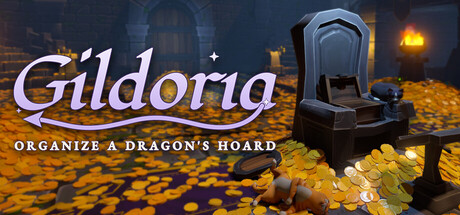
Gildoria uses AI-assisted tools in parts of its development: some UI icons were made with AI image generation, the in-game text was translated with AI translation tools. All of it was reviewed and edited by the developer. 3D art, level design, game design and codes are human-made or licensed. No content is generated by AI while the game runs.
Generative AI was used as part of the development pipeline for selected 2D icons and some 3D model source assets. All included assets were reviewed, edited, optimized, and integrated by the developer.
Pre-generated content only. Some 2D artwork (menu and loading-screen key art) and UI sound effects were created or processed with generative AI tools, then reviewed and edited by the developer. No content is AI-generated at runtime.
Some of the visual assets in this game including character key art, promotional images, and certain 3D art were created with the assistance of generative AI tools during development. All AI-generated content was reviewed, edited, and integrated by the developer. No generative AI is used at runtime; nothing is generated live while you play. All gameplay, code, and design are hand-crafted by a developer.
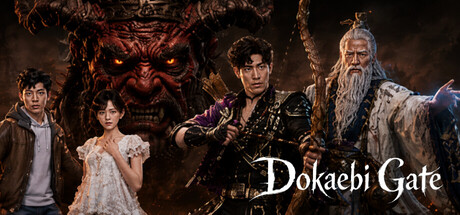
Some of the art and audio assets in Dokaebi Gate were created using generative AI tools, then processed and edited by hand before shipping. This covers equipment and item icons, some VFX textures, sound effects and background music, and a portion of the 3D enemy and environment models. Artwork used on this store page is included as well.
No AI runs while you play. Nothing is generated live during gameplay, and no player input or data is sent to any AI service. Game design, code, balance, and all writing are human-authored.
AI-Generated code has been used to help speed up development, debug code, and optimize core systems. All engine architecture, structural logic, and tool designs remain fully custom-built from scratch. The final compiled software consists entirely of human-written and human-reviewed code to ensure strict stability, performance, and integrity.
Some in-game art - including relic icons, character/enemy art, and background imagery - was created with the assistance of generative AI tools during development. Some written content, such as boss dialogue and relic/item flavor text, was drafted with the assistance of generative AI and then reviewed and edited by the development team before being included in the game.
Generative artificial intelligence was used to create the artwork for HexLight’s Steam achievement icons. The resulting images were reviewed and prepared for use by the developer.
Generative AI tools were used during development to assist in creating and refining certain pre-generated visual, audio, localization, and promotional materials. All AI-assisted content was reviewed, edited, and curated by the development team before being included in the game or its marketing materials. The game does not generate AI content in real time during gameplay.
The game contains a few voice lines that where generated using a text-to-speech service. I assume this service used some sort of gen-AI. For some translations an AI was used for proofreading.
Generative AI tools were used to assist in the creation of marketing artwork and store page assets. All game content is procedurally generated through Thalyn's proprietary algorithms
Yeah, I used some AI music. Big woop wanna fight about it? All other in-game assets are made by hoomans much more talented than myself.
Images on the store page are also currently AI generated placeholders. These will be replaced during Early Access with art by people.
"AI tools (LLMs and image generators) were used to assist in writing/optimizing C# scripts and generating minor 2D visual assets (e.g., UI or achievement icons). All AI-assisted content was strictly reviewed, modified, and integrated manually by the developer."
Pre-generated AI content: Character voice-over audio was generated using ElevenLabs, and the crow image used in the game's logo was generated using Google Flow. These assets are pre-generated and included in the game; no AI content is generated dynamically during gameplay.
This whole game exists because I wondered whether, with these tools, I could actually make one.
Generative AI tools were used to create assets that ship with the game. The 3D ship and enemy models were generated with Meshy AI from my own 2D concept art, and AI tools assisted with in-game text, audio, and parts of the store page and marketing materials.
The design, code and balance are mine — the wave generation, the ship and weapon tuning, the modification link-set system, the campaign structure. Seventeen worlds' worth of hand-tuned numbers.
I'm a solo developer with a full-time job and three kids. The answer to the question turned out to be yes, and this is it.
Some assets in this game were created using generative AI tools. The theme song and its stem tracks were generated with Suno and edited by the developer. Some 3D models (the pursuer, corpse and flower props) were generated with Meshy. Some in-game images, such as photographs and posters, were created with image-generation AI. All program code was designed and implemented by the developer, with AI coding assistance. The game contains no live AI-generated content.
This game contains pre-generated AI-assisted visual assets. Specifically, the background HDRI environment texture used for lighting/background purposes was created using generative AI. No live-generated AI content is presented to players during gameplay.
Parts of this game's source code and in-game text were produced with the assistance of generative AI tools during development.
The planet itself is not AI-generated. It is built by conventional deterministic algorithms : noise functions, Voronoi tessellation, plate tectonics, erosion and climate simulation (the same family of techniques used in procedural generation for decades. Every world is reproducible from its seed).
No AI runs while you play, and the game never connects to an external AI service.
Some image assets (such as the apparitions and the hanging scroll artwork) and some audio assets (music and sound effects) in this game were created using generative AI. All generated material was selected and edited by the developer before use, and only models licensed for commercial use were used.
No generative AI runs while you play. Everything shipped in the game is pre-generated and fixed, and the game never sends your input to an AI service.
Some visual art assets and music used in this game were created with the assistance of generative AI tools. These materials are used as part of the game's visual presentation and soundtrack. No content is generated by AI during gameplay.
Some BGM are AI-generated. Additionally, some textures were AI-generated based on human designs and fully refined by hand. AI tools were also used for translation and general development assistance.
Generative AI was used to assist in creating certain promotional artwork and the game's logo/title. These assets were manually edited, composited, and refined by the developer. All gameplay, code, vehicles, environments, UI, level design, and core game content were created manually by the developer.
Some visual assets and promotional artwork used in DuoControl were created or assisted using generative AI and were further refined by our development team. No generative AI is used during gameplay, and players cannot generate AI content within the game.
Generative AI was utilized to compose the background music for this game. I instructed the AI to use string instruments, explained the overall mood of the game, and requested royalty-free music
Within the game, we only used AI to assist with translations into different languages and to create the names and designs of the bottle brands.
We use AI solely as a supportive tool. We do not let AI handle the entire process for any task.
Generative AI was used as a base/concept for creating store page capsule graphics, which were subsequently hand-edited and post-processed in image editing software. No AI content is present in the game itself.
AI is used only to generate elements for the trailer and promotional media. AI is not used in any part of the game itself, including gameplay, mechanics, or runtime systems.
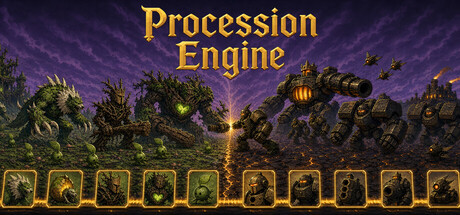
Procession Engine is a hand-designed game that uses AI tools to speed up development. Every card, faction, and system was designed, balanced, and playtested by its developer. Generative AI tools were used under human direction as part of the production pipeline: 2D artwork (card illustrations and icons) and 3D model bases were generated to the developer's specifications and then reviewed, curated, and integrated by hand. Sound effects were produced with AI audio tools and individually selected and mixed. Portions of the game code were written with AI assistance and reviewed by a human. No AI content is generated at runtime.
Generative AI technology is used in a supplementary capacity during the creation of some user interface assets.
Any such assets are replaced through our production pipeline by our art and development teams, ensuring they meet our quality standards and creative direction.
As an indie dev, I leveraged AI to create this game. Some voices are AI-generated. Concept art was generated for inspiration and then built from scratch.
The drone images on the website and Steam game page, (not used in the actual game), were generated by AI. The Symbology of the in-game tactical display was generated by AI under close human supervision and iteration. The music in this game was not generated by AI.
Gildoria uses AI-assisted tools in parts of its development: some UI icons were made with AI image generation, the in-game text was translated with AI translation tools. All of it was reviewed and edited by the developer. 3D art, level design, game design and codes are human-made or licensed. No content is generated by AI while the game runs.
Generative AI was used as part of the development pipeline for selected 2D icons and some 3D model source assets. All included assets were reviewed, edited, optimized, and integrated by the developer.
Pre-generated content only. Some 2D artwork (menu and loading-screen key art) and UI sound effects were created or processed with generative AI tools, then reviewed and edited by the developer. No content is AI-generated at runtime.
Some of the visual assets in this game including character key art, promotional images, and certain 3D art were created with the assistance of generative AI tools during development. All AI-generated content was reviewed, edited, and integrated by the developer. No generative AI is used at runtime; nothing is generated live while you play. All gameplay, code, and design are hand-crafted by a developer.
Some of the art and audio assets in Dokaebi Gate were created using generative AI tools, then processed and edited by hand before shipping. This covers equipment and item icons, some VFX textures, sound effects and background music, and a portion of the 3D enemy and environment models. Artwork used on this store page is included as well.
No AI runs while you play. Nothing is generated live during gameplay, and no player input or data is sent to any AI service. Game design, code, balance, and all writing are human-authored.
AI-Generated code has been used to help speed up development, debug code, and optimize core systems. All engine architecture, structural logic, and tool designs remain fully custom-built from scratch. The final compiled software consists entirely of human-written and human-reviewed code to ensure strict stability, performance, and integrity.
Some in-game art - including relic icons, character/enemy art, and background imagery - was created with the assistance of generative AI tools during development. Some written content, such as boss dialogue and relic/item flavor text, was drafted with the assistance of generative AI and then reviewed and edited by the development team before being included in the game.
Generative artificial intelligence was used to create the artwork for HexLight’s Steam achievement icons. The resulting images were reviewed and prepared for use by the developer.
Generative AI tools were used during development to assist in creating and refining certain pre-generated visual, audio, localization, and promotional materials. All AI-assisted content was reviewed, edited, and curated by the development team before being included in the game or its marketing materials. The game does not generate AI content in real time during gameplay.
The game contains a few voice lines that where generated using a text-to-speech service. I assume this service used some sort of gen-AI. For some translations an AI was used for proofreading.
Generative AI tools were used to assist in the creation of marketing artwork and store page assets. All game content is procedurally generated through Thalyn's proprietary algorithms
Yeah, I used some AI music. Big woop wanna fight about it? All other in-game assets are made by hoomans much more talented than myself.
Images on the store page are also currently AI generated placeholders. These will be replaced during Early Access with art by people.
"AI tools (LLMs and image generators) were used to assist in writing/optimizing C# scripts and generating minor 2D visual assets (e.g., UI or achievement icons). All AI-assisted content was strictly reviewed, modified, and integrated manually by the developer."
Pre-generated AI content: Character voice-over audio was generated using ElevenLabs, and the crow image used in the game's logo was generated using Google Flow. These assets are pre-generated and included in the game; no AI content is generated dynamically during gameplay.
This whole game exists because I wondered whether, with these tools, I could actually make one.
Generative AI tools were used to create assets that ship with the game. The 3D ship and enemy models were generated with Meshy AI from my own 2D concept art, and AI tools assisted with in-game text, audio, and parts of the store page and marketing materials.
The design, code and balance are mine — the wave generation, the ship and weapon tuning, the modification link-set system, the campaign structure. Seventeen worlds' worth of hand-tuned numbers.
I'm a solo developer with a full-time job and three kids. The answer to the question turned out to be yes, and this is it.
Some assets in this game were created using generative AI tools. The theme song and its stem tracks were generated with Suno and edited by the developer. Some 3D models (the pursuer, corpse and flower props) were generated with Meshy. Some in-game images, such as photographs and posters, were created with image-generation AI. All program code was designed and implemented by the developer, with AI coding assistance. The game contains no live AI-generated content.
This game contains pre-generated AI-assisted visual assets. Specifically, the background HDRI environment texture used for lighting/background purposes was created using generative AI. No live-generated AI content is presented to players during gameplay.
Parts of this game's source code and in-game text were produced with the assistance of generative AI tools during development.
The planet itself is not AI-generated. It is built by conventional deterministic algorithms : noise functions, Voronoi tessellation, plate tectonics, erosion and climate simulation (the same family of techniques used in procedural generation for decades. Every world is reproducible from its seed).
No AI runs while you play, and the game never connects to an external AI service.
Some image assets (such as the apparitions and the hanging scroll artwork) and some audio assets (music and sound effects) in this game were created using generative AI. All generated material was selected and edited by the developer before use, and only models licensed for commercial use were used.
No generative AI runs while you play. Everything shipped in the game is pre-generated and fixed, and the game never sends your input to an AI service.
Some visual art assets and music used in this game were created with the assistance of generative AI tools. These materials are used as part of the game's visual presentation and soundtrack. No content is generated by AI during gameplay.
Some BGM are AI-generated. Additionally, some textures were AI-generated based on human designs and fully refined by hand. AI tools were also used for translation and general development assistance.
Generative AI was used to assist in creating certain promotional artwork and the game's logo/title. These assets were manually edited, composited, and refined by the developer. All gameplay, code, vehicles, environments, UI, level design, and core game content were created manually by the developer.
Some visual assets and promotional artwork used in DuoControl were created or assisted using generative AI and were further refined by our development team. No generative AI is used during gameplay, and players cannot generate AI content within the game.
Generative AI was utilized to compose the background music for this game. I instructed the AI to use string instruments, explained the overall mood of the game, and requested royalty-free music
Within the game, we only used AI to assist with translations into different languages and to create the names and designs of the bottle brands.
We use AI solely as a supportive tool. We do not let AI handle the entire process for any task.
Generative AI was used as a base/concept for creating store page capsule graphics, which were subsequently hand-edited and post-processed in image editing software. No AI content is present in the game itself.
AI is used only to generate elements for the trailer and promotional media. AI is not used in any part of the game itself, including gameplay, mechanics, or runtime systems.
Procession Engine is a hand-designed game that uses AI tools to speed up development. Every card, faction, and system was designed, balanced, and playtested by its developer. Generative AI tools were used under human direction as part of the production pipeline: 2D artwork (card illustrations and icons) and 3D model bases were generated to the developer's specifications and then reviewed, curated, and integrated by hand. Sound effects were produced with AI audio tools and individually selected and mixed. Portions of the game code were written with AI assistance and reviewed by a human. No AI content is generated at runtime.
Generative AI technology is used in a supplementary capacity during the creation of some user interface assets.
Any such assets are replaced through our production pipeline by our art and development teams, ensuring they meet our quality standards and creative direction.
As an indie dev, I leveraged AI to create this game. Some voices are AI-generated. Concept art was generated for inspiration and then built from scratch.
The drone images on the website and Steam game page, (not used in the actual game), were generated by AI. The Symbology of the in-game tactical display was generated by AI under close human supervision and iteration. The music in this game was not generated by AI.