Public Steam disclosure research27,951 disclosures tracked
Where do games disclose AI use?
Search developers’ Steam disclosures, compare classified AI use across
games, and follow recorded changes.
This index adds cross-game classifications and statistics to
statements published on individual store pages.
Groups reflect automatic analysis of public disclosures; mature records are excluded. These counts do not measure AI use across all of Steam.
Missing or unclear statements cannot establish whether a game uses AI.
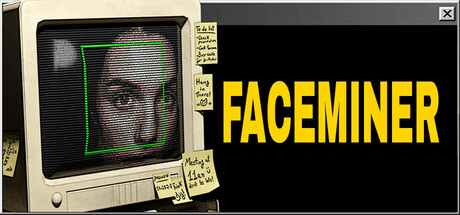
FACEMINER is a concept-driven game that directly engages with the ethics of AI. For thematic purposes, the game features faces which have been generated by a GAN (Generative Adversarial Network) trained on the FFHQ dataset, a research dataset released by NVIDIA that is the backbone of many real-world facial recognition applications. Per NVIDIA, only images under permissive licenses were collected.
The 'AI training' in this game is fictional and has been simulated for entertainment purposes. The game can be interpreted as a critique of AI specifically relating to the ecological impact of mass data hoarding, surveillance concerns, and way it is used to compound corporate power.
This game contains pre-generated AI-created 2D images and textures developed during production. All AI-generated assets were reviewed and manually integrated by the development team. No AI-generated content is created during gameplay.
AI generated concept art may end up in the game in some derivative form. AI may be used to debug, improve, or prototype code. This applies only to a small subset of content. The majority of content in the game does not involve AI generated content.
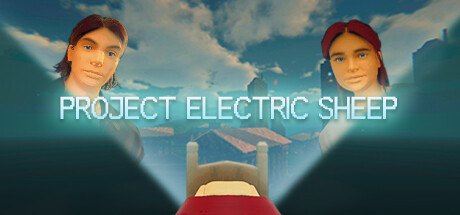
Project Electric Sheep uses generative AI to create character conversations inspired by your dream prompts, as well as to tailor dream worlds to your chosen topics. Below is some more information about which generative AI services we're using in PES, and how:
1. We use ChatGPT to generate NPC dialogue when dream worlds are created and when you reply to an NPC. We use AWS to generate voices for our NPCs.
2. We also use ChatGPT to write in-game world building details, such as graffiti and advertisements, as well as to create the dream description that displays on the dream loading screen.
3. We use DALL·E 2 to paint in-game murals inspired by your dream prompt.
4. Lastly, during the dream generation phase, we use ChatGPT to make creative decisions about world design based on the given dream prompt.
(Newcomer uses AI in a variety of contexts. If you have moral conundrums about AI usage or you do not want to use a resource with AI translations, I recommend finding learner/teacher curated non-AI resources. Thankyou!)
Text to speech (TTS): Newcomer uses text to speech to generate voices for anything the user or NPC might say.
Translations: Newcomer uses Google's Gemini to generate translations across all content (dialogue, stories, etc.) for all language pair combinations.
Grammar Explanations: Newcomer uses Google's Gemini to allow users to click on any word to receive a localized grammar explanation.
NPC Response Generation: Beginner mode dialogue is handcrafted and planned. However, the majority of NPC responses in intermediate mode are generated using Google Gemini. This allows Newcomer to handle any type of response the player might communicate.
Developer response: I am using AI primarily to help me provide the best RPG experience I can for as many language learners as possible while I continue to build the game. Thankyou! - Jason
Edwaldo creates a fake restaurant review early in the game. Said review was made by ChatGPT
In addition, Grendel's motivational speech before the bank robbery (because she's lazy)
The use of AI in Vice Undercover was strictly limited to enhancing a limited number of database images, such as some faces, objects, and locations. All images began with original photographs taken by the team, which were then used to create datasets for generating initial concepts. These AI-generated images were not used as-is—instead, they served as a starting point for detailed, creative transformation. Every final image was extensively painted, composited, and refined using original photographs and artistic elements, ensuring that all visuals align with the game's unique style and authenticity. AI was simply one tool in a much larger creative process driven by human artistry.
The in-game assets/content do not involve AI generation. The use of generative AI in this game is solely limited to assisting in the creation of concept art for community items, including trading cards and badges, which are subsequently refined and adjusted by artists.
This game uses a Large Language Model to help parse out in-game player character data (quests, allied factions, in-game world events, NPCs the player has interacted with, etc.) to customize quest objectives and reword hand written dialogue to fit that particular player character's playthrough.
1. Artistic assets are generated with the assistance of AI. (Can be completely removed from the inside mod page)
2. The localized text is translated with the assistance of artificial intelligence.
3. Steam Community Items and Points Shop assets are created with AI assistance.
This game used AI to help quickly iterate through designs for some UI elements using our own artwork as a baseline. AI is also used to help translate the game.
Tutorial character (Kim) and voiceovers were created with the help of AI and then retouched by our team to fit the game. AI tools have been used solely to assist our small indie dev team. Please be assured that the game's content represents our team's creativity and dedication.
My game uses AI quite frequently. Every logo you see is a product of the collaboration between a human and an AI. Every song you hear is a product of human-AI collaboration. Every player report card uses AI generated text modularly pieced together from smaller chunks.
The match commentator is using an AI generated voice.
This is a modern game that uses modern technology to its full potential.
Regarding AI usage: The game employs AI in only two areas
1. Character voice lines (disabled by default)
The ultra-large script (800k words) makes authentic voice acting financially unaffordable for our small studio.
2. "Seek Answers" function in the game lobby’s Sosoth (NPC) interaction interface
For entertainment purposes, we used AI chat.
What we can guarantee: Beyond these, translation, scripts, design, art, animation, and other game components absolutely did not use AI.
Connects to 3rd-Party Service for AI Content Generation: kimi
AI use is quite limited to speech-to-speech models, allowing us to voice act many characters.
Fortunately, this voice is highly realistic since we actually do the acting ourselves, and use the AI to enhance it.
Additionally, AI is sparingly used for some images, and then manually cleaned up and modified by a professional artist.
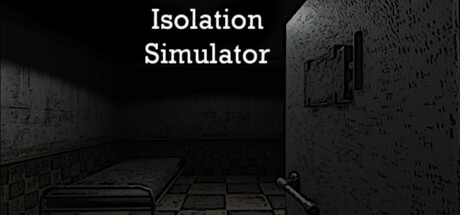
Isolation Simulator is a one-person passion project. To be fully transparent:
I recorded all the voice lines myself, then used AI voice filters to create different character voices.
Some background wall art and a few music tracks/instrumentals were created or enhanced with AI tools.
Everything else — gameplay systems, level design, ARG mechanics, most 2D assets, lore, writing, and core experience — was made manually by me.
I used AI only where it helped me focus on what matters most to me: deep storytelling, player observation mechanics, and a complex ARG. I know some players have strong feelings about AI in games — I respect that. This is simply how I was able to finish the game as a solo developer.
In-game patient responses are generated in real time with offline local language model. Game logo animation and part of game music samples/loops have been produced with tools utilizing generative technology.