Public Steam disclosure research25,512 disclosures tracked
Where do games disclose AI use?
Search developers’ Steam disclosures, compare classified AI use across
games, and follow recorded changes.
This index adds cross-game classifications and statistics to
statements published on individual store pages.
Groups reflect automatic analysis of public disclosures; mature records are excluded. These counts do not measure AI use across all of Steam.
Missing or unclear statements cannot establish whether a game uses AI.
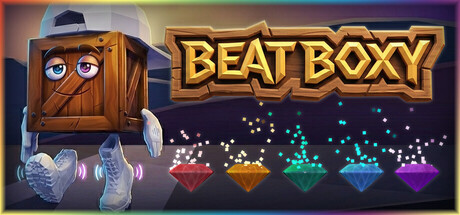
Generative AI tools were used solely to assist in the creation of the background music for Beat Boxy. All other game assets, sound effects, UI elements and level designs were either created directly by the developer, or acquired through Creative Commons Licensing.
Pre-generated generative AI was used to create selected Steam store-page and library marketing images based on original in-game screenshots, character designs and branding supplied by the developers.
Some of the game's visual assets — both 2D and 3D — are built from AI-generated drafts that our artists rework and refine by hand into their final form. Localization was drafted with AI tools and edited by the team. The final look, content, and quality of every element of the game are defined and approved by humans.
The hero image, small capsule, main capsule, vertical capsule, library capsule, library hero image, library logo and library home page art were created with AI assistance.
The in-game warning UI and spray decals are AI-generated.
Besides this, all gameplay videos and screenshots you see in the store are captured from actual gameplay footage, with no retouching or AI generation applied.
Generative AI tools were used to assist with the localization of store page text and the creation or refinement of certain marketing materials. All AI-assisted content was reviewed and edited by the development team before publication. No content is generated by AI during gameplay.
Generative AI tools were used to produce the game's source code and assist with music, localisation, store artwork, and some in-game text. The developer created the original concept, defined the intended gameplay and voxel-based presentation, and continuously reviewed, tested, corrected, refined, and approved the implementation. The game does not generate AI content during gameplay.
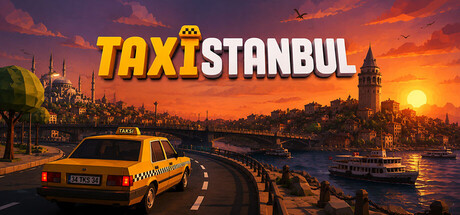
Some sound effects were created with AI tools, and a small number of background 3D assets were initially AI-generated, then manually optimized. Parts of the promotional artwork were made with AI assistance. Everything else, including all gameplay systems, the driving and economy mechanics, and the street-by-street recreation of Istanbul's historic peninsula, is hand-crafted by a solo developer.
This game was developed with the assistance of generative AI tools.
Generative AI tools assisted with the creation of skill icons, terrain textures, some in-game 3D assets and visual effects, and translated localization text. All final assets and translations included in the game were selected, edited, and reviewed by the developer before integration.
The game does not use any AI features that generate images, text, audio, or other content in real time in response to player input.
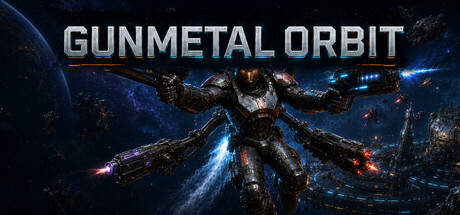
Some of Gunmetal Orbit's art and audio assets - including concept art used to build 3D models, UI icons, sound effects, and the store page key art - were created during development with the help of generative AI tools, then curated, edited, and integrated by the developers. All gameplay code and game design are human-made, and the game does not generate any AI content while you play.
Generative AI was used to assist with the creation of code-based 3D geometry built in Three.js, as well as some sound assets included in the game. These assets are reviewed, adjusted, and integrated by the developer, and may be revised or replaced throughout development.
Generative AI tools were used to assist with drafting and editing Steam store page text and marketing copy. The game does not use generative AI to create live gameplay content.
Generative AI was used as a supporting tool during solo development, mainly to find technical information faster, compare possible solutions, check code, organize notes, and explore early ideas. It saves a lot of time that would otherwise be spent searching through browser tabs and documentation. I also use it to help with translations. The game’s design, development decisions, implementation, and final content remain entirely under my control.. The game does not generate AI content during gameplay.
Some icons and pictures in the game or store page are generated using AI. During gameplay AI does not render anything. AI items are pre-rendered and hard-coded into the game.
This game may use AI tools to help create some map and UI assets used inside the game, along with sound effects, since the small development team does not include a dedicated UI or sound designer. All content assisted by AI is reviewed and adjusted by the developer before being included in the game. No AI is used to generate content in real time during gameplay, and core visual art is created without AI. We are working to remove all AI visuals before the full release.
AI tools were used to assist in creating some promotional artwork and supporting language localization. All outputs were reviewed and edited by the developer before use. The game does not use AI to generate gameplay or in-game content.
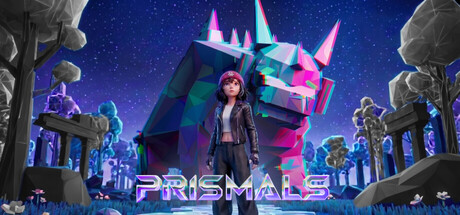
Prismals is a hand-crafted project built by a dedicated one-man band. To bring this project to life, AI tools were utilized strictly as a collaborative assistant, refining original coding, polishing hand-drawn artwork and mastering the soundtrack. Every core idea, story beat and artistic vision is entirely human-made.
Some objects, textures, images, and audio assets in this game were created or enhanced using generative artificial intelligence. All AI-generated content has been reviewed, edited, and integrated by the developer as part of the game's artistic vision.
During the process of production, generative AI may be used in following processes: coding and debugging, production of conceptual art of game assets, production of rough models of game assets, production of simple animation effects, restoration of image, audio or video quality, localization and translation. All AI generated game assets that appear directly in game are revised and finalized by real human artists.
This game uses AI-generated music (Suno) and AI-generated voice acting (ElevenLabs). All AI-generated content has been reviewed and curated by the developer before inclusion in the game.
Art Assets: We use generative AI tools to assist in the creation of store page assets (capsules).
Localization: We use AI-powered tools to assist in translating and localizing game text into various languages.
Background Music (BGM): Some in-game background music tracks were generated using AI tools.
Localization: The game's text localization (translations into various languages) was produced or assisted by AI.
All AI-generated content was reviewed and curated by the developer before inclusion in the game.
Some of the 2D artwork for this game was created with the assistance of
generative AI image tools. This includes the Steam store page capsule and
library images, the game logo, and some small 2D product icons used in-game.
All AI-generated output was manually reviewed, edited and composited by the
developer before use. All 3D models, environments, gameplay systems and code
were created without generative AI. No content is generated by AI while the
game is running.
This game used AI to help quickly iterate through designs for some UI elements using our own artwork as a baseline. AI is used to generate sound effects AI is also used to help translate the game.
AI was used to create some promotional assets, including store capsule images, banners, and other marketing artwork. AI-generated content was reviewed and edited by the developer before use.
Generative AI was used to create selected voice performances (including the in-game commentator) as well as concept artwork and promotional illustrations. All AI-generated assets were reviewed, edited, and integrated by the developer.
Generative AI tools were used as supportive measures during the development process in the following areas:
- Localization: AI was used to assist with text translation and editing across supported languages.
- Sound Design: AI tools may be used for generating foundational sound elements.
Generative AI tools were used solely to assist in the creation of the background music for Beat Boxy. All other game assets, sound effects, UI elements and level designs were either created directly by the developer, or acquired through Creative Commons Licensing.
Pre-generated generative AI was used to create selected Steam store-page and library marketing images based on original in-game screenshots, character designs and branding supplied by the developers.
Some of the game's visual assets — both 2D and 3D — are built from AI-generated drafts that our artists rework and refine by hand into their final form. Localization was drafted with AI tools and edited by the team. The final look, content, and quality of every element of the game are defined and approved by humans.
The hero image, small capsule, main capsule, vertical capsule, library capsule, library hero image, library logo and library home page art were created with AI assistance.
The in-game warning UI and spray decals are AI-generated.
Besides this, all gameplay videos and screenshots you see in the store are captured from actual gameplay footage, with no retouching or AI generation applied.
Generative AI tools were used to assist with the localization of store page text and the creation or refinement of certain marketing materials. All AI-assisted content was reviewed and edited by the development team before publication. No content is generated by AI during gameplay.
Generative AI tools were used to produce the game's source code and assist with music, localisation, store artwork, and some in-game text. The developer created the original concept, defined the intended gameplay and voxel-based presentation, and continuously reviewed, tested, corrected, refined, and approved the implementation. The game does not generate AI content during gameplay.
Some sound effects were created with AI tools, and a small number of background 3D assets were initially AI-generated, then manually optimized. Parts of the promotional artwork were made with AI assistance. Everything else, including all gameplay systems, the driving and economy mechanics, and the street-by-street recreation of Istanbul's historic peninsula, is hand-crafted by a solo developer.
This game was developed with the assistance of generative AI tools.
Generative AI tools assisted with the creation of skill icons, terrain textures, some in-game 3D assets and visual effects, and translated localization text. All final assets and translations included in the game were selected, edited, and reviewed by the developer before integration.
The game does not use any AI features that generate images, text, audio, or other content in real time in response to player input.
Some of Gunmetal Orbit's art and audio assets - including concept art used to build 3D models, UI icons, sound effects, and the store page key art - were created during development with the help of generative AI tools, then curated, edited, and integrated by the developers. All gameplay code and game design are human-made, and the game does not generate any AI content while you play.
Generative AI was used to assist with the creation of code-based 3D geometry built in Three.js, as well as some sound assets included in the game. These assets are reviewed, adjusted, and integrated by the developer, and may be revised or replaced throughout development.
Generative AI tools were used to assist with drafting and editing Steam store page text and marketing copy. The game does not use generative AI to create live gameplay content.
Generative AI was used as a supporting tool during solo development, mainly to find technical information faster, compare possible solutions, check code, organize notes, and explore early ideas. It saves a lot of time that would otherwise be spent searching through browser tabs and documentation. I also use it to help with translations. The game’s design, development decisions, implementation, and final content remain entirely under my control.. The game does not generate AI content during gameplay.
Some icons and pictures in the game or store page are generated using AI. During gameplay AI does not render anything. AI items are pre-rendered and hard-coded into the game.
This game may use AI tools to help create some map and UI assets used inside the game, along with sound effects, since the small development team does not include a dedicated UI or sound designer. All content assisted by AI is reviewed and adjusted by the developer before being included in the game. No AI is used to generate content in real time during gameplay, and core visual art is created without AI. We are working to remove all AI visuals before the full release.
AI tools were used to assist in creating some promotional artwork and supporting language localization. All outputs were reviewed and edited by the developer before use. The game does not use AI to generate gameplay or in-game content.
Prismals is a hand-crafted project built by a dedicated one-man band. To bring this project to life, AI tools were utilized strictly as a collaborative assistant, refining original coding, polishing hand-drawn artwork and mastering the soundtrack. Every core idea, story beat and artistic vision is entirely human-made.
Some objects, textures, images, and audio assets in this game were created or enhanced using generative artificial intelligence. All AI-generated content has been reviewed, edited, and integrated by the developer as part of the game's artistic vision.
During the process of production, generative AI may be used in following processes: coding and debugging, production of conceptual art of game assets, production of rough models of game assets, production of simple animation effects, restoration of image, audio or video quality, localization and translation. All AI generated game assets that appear directly in game are revised and finalized by real human artists.
This game uses AI-generated music (Suno) and AI-generated voice acting (ElevenLabs). All AI-generated content has been reviewed and curated by the developer before inclusion in the game.
Art Assets: We use generative AI tools to assist in the creation of store page assets (capsules).
Localization: We use AI-powered tools to assist in translating and localizing game text into various languages.
Background Music (BGM): Some in-game background music tracks were generated using AI tools.
Localization: The game's text localization (translations into various languages) was produced or assisted by AI.
All AI-generated content was reviewed and curated by the developer before inclusion in the game.
Some of the 2D artwork for this game was created with the assistance of
generative AI image tools. This includes the Steam store page capsule and
library images, the game logo, and some small 2D product icons used in-game.
All AI-generated output was manually reviewed, edited and composited by the
developer before use. All 3D models, environments, gameplay systems and code
were created without generative AI. No content is generated by AI while the
game is running.
This game used AI to help quickly iterate through designs for some UI elements using our own artwork as a baseline. AI is used to generate sound effects AI is also used to help translate the game.
AI was used to create some promotional assets, including store capsule images, banners, and other marketing artwork. AI-generated content was reviewed and edited by the developer before use.
Generative AI was used to create selected voice performances (including the in-game commentator) as well as concept artwork and promotional illustrations. All AI-generated assets were reviewed, edited, and integrated by the developer.
Generative AI tools were used as supportive measures during the development process in the following areas:
- Localization: AI was used to assist with text translation and editing across supported languages.
- Sound Design: AI tools may be used for generating foundational sound elements.