Public Steam disclosure research25,512 disclosures tracked
Where do games disclose AI use?
Search developers’ Steam disclosures, compare classified AI use across
games, and follow recorded changes.
This index adds cross-game classifications and statistics to
statements published on individual store pages.
Groups reflect automatic analysis of public disclosures; mature records are excluded. These counts do not measure AI use across all of Steam.
Missing or unclear statements cannot establish whether a game uses AI.
This title uses generative artificial intelligence in software development, the creation of art assets, and foreign-language localization.
Given the constraints of our production schedule, the size of our team, and the professional responsibilities of our members outside this project, we chose to incorporate generative AI into certain parts of development in pursuit of a more complete and polished game. However, our team firmly believes that generative AI should help creators produce better work. It should never become an excuse for cutting corners, disregarding the creative process, or replacing skilled professionals.
While working to deliver the most complete experience possible, these technologies enabled our engineers to explore directions that had previously been difficult to pursue because of limited time and manpower. These efforts include machine-learning-based image segmentation and depth mapping using motion-aware techniques, as well as redesigning low-level director systems and asset-management systems for art and text beyond the assistance provided by conventional game-engine tooling.
We also recognize that the experience and judgment of professional creators cannot be replicated. Throughout the production of our artistic assets, the team has actively sought guidance from artists, engineers, and experienced professionals in relevant fields, and has continuously reviewed the final content in accordance with their professional advice. All generated output is subject to human review, selection, and adjustment. No generated material is included in the game without first being inspected.
With regard to our art assets, we take copyright and creators’ rights in connection with generative AI very seriously. We believe that artists’ creative work and aesthetic expertise deserve stronger copyright protection. We have never trained models on others’ work without authorization, nor have we used LoRA models of unknown or unverifiable origin. We will not use an artist’s name, work, or distinctive style to train models or create imitations without permission, and we will never claim another creator’s work as our own.
We understand that players may hold different views regarding generative AI, and we are committed to being transparent about how and where it has been used in this title, as well as the principles that guide our use of it.
We will continue striving to ensure that both our own technology and generative AI serve as tools for creating a more complete work—not as excuses for avoiding creative responsibility, undermining the trust between creators and consumers, or producing inexpensive imitations.
Finally, we sincerely thank you for your understanding and for holding us accountable.
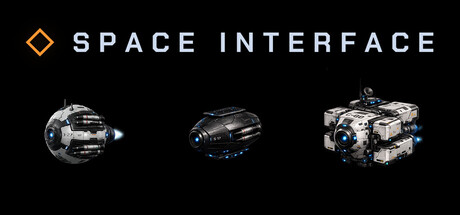
The drone images on the website and Steam game page, (not used in the actual game), were generated by AI. The Symbology of the in-game tactical display was generated by AI under close human supervision and iteration. The music in this game was not generated by AI.
Generative AI tools were used during development to assist with the refinement of certain visual assets and to improve the quality and consistency of translations. All AI-assisted content was reviewed and edited by the developer before being included in the final game. No generative AI is used to create content dynamically during gameplay.
BattleDeck uses AI tools in the following areas:
Artwork, audio and as a development assistant during coding. All AI generated content has been reviewed and refined by the developer.
Dungeon Cooking uses generative AI tools for some of its content, created during development (pre-generated, not generated in real time):
- Part of the creature art: 6 of the game's 18 monsters were made with AI image tools, then edited and integrated by the developer.
- Some in-game dungeon event content was drafted with AI assistance and edited by the developer.
- The announcement trailer was produced using AI tools.
The rest of the game's art comes from licensed asset packs and the developer's own work. All AI-generated content was reviewed and curated by the developer before shipping.
Some character portrait sprite sheets and brand/division imagery shipped with Bankr are produced with generative AI tools during development, then reviewed and edited by the team before inclusion. All game text, simulation code, balance-sheet math, ratio logic, and gameplay systems are human-authored. No content is AI-generated at runtime — every asset is pre-rendered and pinned in the build.
Generative AI tools were used to create and refine some pre-generated 2D artwork and Steam store graphical assets. All outputs were reviewed, curated, and edited by the developer before inclusion. The game does not generate AI content at runtime or connect to external AI services.
Generative AI was used to create some base assets, which were subsequently heavily edited by hand. All final assets included in the game have undergone substantial manual editing.
Generative AI tools were used during development to assist with selected 3D assets, music, promotional artwork, and parts of the game code. All AI-assisted content was reviewed, modified where necessary, tested, and integrated by the developer. No content or code is generated by AI during gameplay.
I used generative AI tools to help create some of the game's art — including certain UI elements (buttons and icons), backgrounds, story illustrations, and marketing images — which I then edited and finished by hand in Photoshop.
Generative AI tools were used during development to assist in creating pre-rendered 2D artwork and graphical assets (including cowboy character portraits and background visuals), as well as generating select background music tracks for the game.
Generative AI tools were used during development to create portions of the game’s artwork,sound and localization. Each AI-assisted asset was reviewed, edited, palette-matched, and curated by the developer.
Some in-game text and code were written with AI assistance during development. All content was reviewed, edited and approved by the developer before shipping. The game does not generate any content using AI at runtime and does not connect to any AI service.
AI tools were used during development to help compose the soundtrack, draw the pixel art, and draft text (including localization and this store page), all under human direction — every piece was reviewed, curated, and approved by the developer. All content is fixed at build time; the game contains no live or runtime AI generation.
Generative AI was used throughout nearly every aspect of this game's development and production. AI and a human developer formed an unholy union of sound and mind (a merge, if you will) to birth this production.
No generative AI runs during gameplay. Its contributions were created during development.
This game's store page description and some marketing/visual assets were created with the assistance of generative AI tools. AI is not used to generate gameplay content, puzzles, or code during play - Sudoku puzzles are generated using standard, deterministic algorithms, not AI.
Some of this game's assets were made with the assistance of generative AI tools and were reviewed, curated and hand-finished by the developer. No content is generated while you play.
During the development of this game, pre-generated AI tools were utilized to assist with text translations, programming scripts and optimization, and the creation of 2D artwork assets. All AI-generated content was directly reviewed, refined, and applied to the game by the developer.
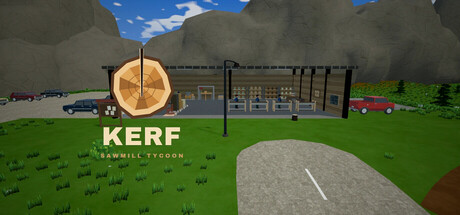
Kerf - Sawmill Tycoon was made almost entirely with AI tools. The developer directed the work, chose what went into the game and approved every result, but did not model, rig or write code by hand. What that means for the content that ships in the game:
- Code: written by an AI coding assistant.
- Characters: generated by an AI 3D tool from AI-generated reference images, then rigged and set up in the game by the AI assistant.
- Other 3D models: some came from an AI 3D tool - a vehicle and environment props such as rocks, mountains and bushes. The rest, including the valley, the buildings, the machines and the trees, were built in 3D software by the AI assistant writing scripts.
- Animation: all character animation was generated with an AI motion tool.
- Music: all of the in-game music was generated with an AI music tool.
- Sound: some sound effects were generated with an AI sound tool; the rest were sourced from sound libraries by the developer.
- Text: the in-game text was written with AI assistance, and the translations from English and Polish into the other 13 supported languages were made with AI.
Everything was reviewed and approved by the developer before release.
No content is generated by AI while the game is running. The Twitch integration only displays messages typed by real viewers.
"We utilized generative AI tools to assist in the creation of 2D art assets, including in-game enemy portraits, familiar graphics, and the background illustrations, banners, and logo artwork displayed on our Steam Store page and library graphics."
Generative AI tools were used during development to assist in creating selected pre-generated 2D artwork used in the game and on the store page, including promotional illustrations and some visual assets. AI-assisted localization drafts were also used and subsequently reviewed and integrated by the developer. All included content was selected, edited, and prepared before release. The game does not generate AI content while running.
This game was developed with the assistance of generative AI tools during production. AI-generated 2D artwork (building icons, unit portraits, background illustrations, and UI elements) was created and curated by the development team as part of the game's visual assets. AI is not used to generate content dynamically during gameplay -- all art assets are fixed and shipped with the game. In-game opponent behavior uses traditional programmed game logic, not generative AI.
Generative AI tools were used during development to generate some 3D model assets, textures, and sounds. All AI-generated content was pre-rendered and reviewed before being included in the game build. No live generative AI is used during gameplay.
Some of Last Gambit's content was created with the help of generative AI tools. Specifically, part of the artwork for the pieces and skins was generated with AI and then reviewed and refined by us. We also used AI to assist with some cross-platform code porting.
All of this content is generated during development. The game does not use generative AI during matches and does not create content in real time.
Hot Seat Triage uses AI tools during development only; the game contains no live AI generation at runtime.
Code: The game's code was written with the assistance of Claude (Anthropic). All AI-assisted code was directed, reviewed and tested by the developer.
Art: The in-game background image was initially generated with Nano Banana 2, then manually edited and finalized by the developer. All other art and UI assets are human-made.
Text: Clinical case scenarios were drafted with AI assistance and then reviewed, corrected and medically approved by the developer, an emergency medicine physician.
Audio: The theme music and some sound effects were created by the developer using Suno.
All AI-assisted content was human-reviewed before inclusion.
Some of the game's 2D artwork (illustrations, icons, and backgrounds) was created with the assistance of generative AI tools and then curated and edited by the development team. Some non-English text is translated with AI assistance and reviewed before shipping. No AI content is generated live during gameplay.
AI tools were used as assistive tools during development, specifically for code writing and text proofreading. No AI-generated content is used in the game's art assets, sound effects, or music.
This game uses content created or assisted by generative AI. Generative AI was used to help create and edit some visual assets, music/sound materials, and scripts. All final content was reviewed, selected, and adjusted by the developer before being included in the game.
This game uses content created or assisted by generative AI. Generative AI was used to help create and edit some visual assets, music/sound materials, and scripts. All final content was reviewed, selected, and adjusted by the developer before being included in the game.
Holiday Alliance uses generative AI to help produce character art, map backgrounds, and music/SFX. All game design, level design, balance, dialogue, and final art/audio selection were done by the developer, with every AI-generated asset reviewed and revised before inclusion.
Generative AI tools were used in parts of this game's development, always under human creative direction.
Art: The game's visual design is led by a classically trained 2D artist acting as art director. The UI style, overall color palette, character art, and environment style are all conceived and directed by a human, starting from hand-drawn sketches and detailed art direction. Generative AI is used only as an execution tool carrying out that direction—the distinctive style and texture of the game come from human artistic judgment, and every asset is directed, selected, and refined by the artist.
Music: The main melodies are composed by us by ear. Generative AI is then directed—with specific guidance on mood, instrumentation, and arrangement—to help realize the finished tracks.
Code: The game's code was generated using AI coding tools.
All content is reviewed and integrated by the developers before inclusion. The game contains no content generated live by AI during gameplay.
This game uses generative AI for some of its content.
- 2D artwork: Some illustrations and icons, including the character portraits, were created with image-generation AI, then selected and hand-retouched by the developer before being included. The same applies to the images used on this store page.
- Text: Languages other than Japanese (English, Simplified Chinese, Traditional Chinese, Korean) are based on translations produced with a large language model.
Generative AI was not used for the music, sound effects, character voices, or 3D models. Those are licensed tracks and sound effects, recordings by voice actors, and models we made ourselves.
Generative AI is used only during development. The game never generates content with AI while you play, and it never connects to an external AI service.
Generative AI was used during development to support early concept exploration and rapid prototyping, including testing visual directions, compositions, and placeholder ideas. All AI-assisted material was reviewed and refined by the development team, with final creative and design decisions made by humans. The game does not generate content using AI during gameplay.
Generative AI tools were used as development assistants for portions of game code, UI text, localization, and the preparation of some store-page copy and marketing layouts. All results were reviewed and edited by the developer. No generative AI is used during gameplay, and the game does not connect to external AI services.
This title uses generative artificial intelligence in software development, the creation of art assets, and foreign-language localization.
Given the constraints of our production schedule, the size of our team, and the professional responsibilities of our members outside this project, we chose to incorporate generative AI into certain parts of development in pursuit of a more complete and polished game. However, our team firmly believes that generative AI should help creators produce better work. It should never become an excuse for cutting corners, disregarding the creative process, or replacing skilled professionals.
While working to deliver the most complete experience possible, these technologies enabled our engineers to explore directions that had previously been difficult to pursue because of limited time and manpower. These efforts include machine-learning-based image segmentation and depth mapping using motion-aware techniques, as well as redesigning low-level director systems and asset-management systems for art and text beyond the assistance provided by conventional game-engine tooling.
We also recognize that the experience and judgment of professional creators cannot be replicated. Throughout the production of our artistic assets, the team has actively sought guidance from artists, engineers, and experienced professionals in relevant fields, and has continuously reviewed the final content in accordance with their professional advice. All generated output is subject to human review, selection, and adjustment. No generated material is included in the game without first being inspected.
With regard to our art assets, we take copyright and creators’ rights in connection with generative AI very seriously. We believe that artists’ creative work and aesthetic expertise deserve stronger copyright protection. We have never trained models on others’ work without authorization, nor have we used LoRA models of unknown or unverifiable origin. We will not use an artist’s name, work, or distinctive style to train models or create imitations without permission, and we will never claim another creator’s work as our own.
We understand that players may hold different views regarding generative AI, and we are committed to being transparent about how and where it has been used in this title, as well as the principles that guide our use of it.
We will continue striving to ensure that both our own technology and generative AI serve as tools for creating a more complete work—not as excuses for avoiding creative responsibility, undermining the trust between creators and consumers, or producing inexpensive imitations.
Finally, we sincerely thank you for your understanding and for holding us accountable.
The drone images on the website and Steam game page, (not used in the actual game), were generated by AI. The Symbology of the in-game tactical display was generated by AI under close human supervision and iteration. The music in this game was not generated by AI.
Generative AI tools were used during development to assist with the refinement of certain visual assets and to improve the quality and consistency of translations. All AI-assisted content was reviewed and edited by the developer before being included in the final game. No generative AI is used to create content dynamically during gameplay.
BattleDeck uses AI tools in the following areas:
Artwork, audio and as a development assistant during coding. All AI generated content has been reviewed and refined by the developer.
Dungeon Cooking uses generative AI tools for some of its content, created during development (pre-generated, not generated in real time):
- Part of the creature art: 6 of the game's 18 monsters were made with AI image tools, then edited and integrated by the developer.
- Some in-game dungeon event content was drafted with AI assistance and edited by the developer.
- The announcement trailer was produced using AI tools.
The rest of the game's art comes from licensed asset packs and the developer's own work. All AI-generated content was reviewed and curated by the developer before shipping.
Some character portrait sprite sheets and brand/division imagery shipped with Bankr are produced with generative AI tools during development, then reviewed and edited by the team before inclusion. All game text, simulation code, balance-sheet math, ratio logic, and gameplay systems are human-authored. No content is AI-generated at runtime — every asset is pre-rendered and pinned in the build.
Generative AI tools were used to create and refine some pre-generated 2D artwork and Steam store graphical assets. All outputs were reviewed, curated, and edited by the developer before inclusion. The game does not generate AI content at runtime or connect to external AI services.
Generative AI was used to create some base assets, which were subsequently heavily edited by hand. All final assets included in the game have undergone substantial manual editing.
Generative AI tools were used during development to assist with selected 3D assets, music, promotional artwork, and parts of the game code. All AI-assisted content was reviewed, modified where necessary, tested, and integrated by the developer. No content or code is generated by AI during gameplay.
I used generative AI tools to help create some of the game's art — including certain UI elements (buttons and icons), backgrounds, story illustrations, and marketing images — which I then edited and finished by hand in Photoshop.
Generative AI tools were used during development to assist in creating pre-rendered 2D artwork and graphical assets (including cowboy character portraits and background visuals), as well as generating select background music tracks for the game.
Generative AI tools were used during development to create portions of the game’s artwork,sound and localization. Each AI-assisted asset was reviewed, edited, palette-matched, and curated by the developer.
Some in-game text and code were written with AI assistance during development. All content was reviewed, edited and approved by the developer before shipping. The game does not generate any content using AI at runtime and does not connect to any AI service.
AI tools were used during development to help compose the soundtrack, draw the pixel art, and draft text (including localization and this store page), all under human direction — every piece was reviewed, curated, and approved by the developer. All content is fixed at build time; the game contains no live or runtime AI generation.
Generative AI was used throughout nearly every aspect of this game's development and production. AI and a human developer formed an unholy union of sound and mind (a merge, if you will) to birth this production.
No generative AI runs during gameplay. Its contributions were created during development.
This game's store page description and some marketing/visual assets were created with the assistance of generative AI tools. AI is not used to generate gameplay content, puzzles, or code during play - Sudoku puzzles are generated using standard, deterministic algorithms, not AI.
Some of this game's assets were made with the assistance of generative AI tools and were reviewed, curated and hand-finished by the developer. No content is generated while you play.
During the development of this game, pre-generated AI tools were utilized to assist with text translations, programming scripts and optimization, and the creation of 2D artwork assets. All AI-generated content was directly reviewed, refined, and applied to the game by the developer.
Kerf - Sawmill Tycoon was made almost entirely with AI tools. The developer directed the work, chose what went into the game and approved every result, but did not model, rig or write code by hand. What that means for the content that ships in the game:
- Code: written by an AI coding assistant.
- Characters: generated by an AI 3D tool from AI-generated reference images, then rigged and set up in the game by the AI assistant.
- Other 3D models: some came from an AI 3D tool - a vehicle and environment props such as rocks, mountains and bushes. The rest, including the valley, the buildings, the machines and the trees, were built in 3D software by the AI assistant writing scripts.
- Animation: all character animation was generated with an AI motion tool.
- Music: all of the in-game music was generated with an AI music tool.
- Sound: some sound effects were generated with an AI sound tool; the rest were sourced from sound libraries by the developer.
- Text: the in-game text was written with AI assistance, and the translations from English and Polish into the other 13 supported languages were made with AI.
Everything was reviewed and approved by the developer before release.
No content is generated by AI while the game is running. The Twitch integration only displays messages typed by real viewers.
"We utilized generative AI tools to assist in the creation of 2D art assets, including in-game enemy portraits, familiar graphics, and the background illustrations, banners, and logo artwork displayed on our Steam Store page and library graphics."
Generative AI tools were used during development to assist in creating selected pre-generated 2D artwork used in the game and on the store page, including promotional illustrations and some visual assets. AI-assisted localization drafts were also used and subsequently reviewed and integrated by the developer. All included content was selected, edited, and prepared before release. The game does not generate AI content while running.
This game was developed with the assistance of generative AI tools during production. AI-generated 2D artwork (building icons, unit portraits, background illustrations, and UI elements) was created and curated by the development team as part of the game's visual assets. AI is not used to generate content dynamically during gameplay -- all art assets are fixed and shipped with the game. In-game opponent behavior uses traditional programmed game logic, not generative AI.
Generative AI tools were used during development to generate some 3D model assets, textures, and sounds. All AI-generated content was pre-rendered and reviewed before being included in the game build. No live generative AI is used during gameplay.
Some of Last Gambit's content was created with the help of generative AI tools. Specifically, part of the artwork for the pieces and skins was generated with AI and then reviewed and refined by us. We also used AI to assist with some cross-platform code porting.
All of this content is generated during development. The game does not use generative AI during matches and does not create content in real time.
Hot Seat Triage uses AI tools during development only; the game contains no live AI generation at runtime.
Code: The game's code was written with the assistance of Claude (Anthropic). All AI-assisted code was directed, reviewed and tested by the developer.
Art: The in-game background image was initially generated with Nano Banana 2, then manually edited and finalized by the developer. All other art and UI assets are human-made.
Text: Clinical case scenarios were drafted with AI assistance and then reviewed, corrected and medically approved by the developer, an emergency medicine physician.
Audio: The theme music and some sound effects were created by the developer using Suno.
All AI-assisted content was human-reviewed before inclusion.
Some of the game's 2D artwork (illustrations, icons, and backgrounds) was created with the assistance of generative AI tools and then curated and edited by the development team. Some non-English text is translated with AI assistance and reviewed before shipping. No AI content is generated live during gameplay.
AI tools were used as assistive tools during development, specifically for code writing and text proofreading. No AI-generated content is used in the game's art assets, sound effects, or music.
This game uses content created or assisted by generative AI. Generative AI was used to help create and edit some visual assets, music/sound materials, and scripts. All final content was reviewed, selected, and adjusted by the developer before being included in the game.
This game uses content created or assisted by generative AI. Generative AI was used to help create and edit some visual assets, music/sound materials, and scripts. All final content was reviewed, selected, and adjusted by the developer before being included in the game.
Holiday Alliance uses generative AI to help produce character art, map backgrounds, and music/SFX. All game design, level design, balance, dialogue, and final art/audio selection were done by the developer, with every AI-generated asset reviewed and revised before inclusion.
Generative AI tools were used in parts of this game's development, always under human creative direction.
Art: The game's visual design is led by a classically trained 2D artist acting as art director. The UI style, overall color palette, character art, and environment style are all conceived and directed by a human, starting from hand-drawn sketches and detailed art direction. Generative AI is used only as an execution tool carrying out that direction—the distinctive style and texture of the game come from human artistic judgment, and every asset is directed, selected, and refined by the artist.
Music: The main melodies are composed by us by ear. Generative AI is then directed—with specific guidance on mood, instrumentation, and arrangement—to help realize the finished tracks.
Code: The game's code was generated using AI coding tools.
All content is reviewed and integrated by the developers before inclusion. The game contains no content generated live by AI during gameplay.
This game uses generative AI for some of its content.
- 2D artwork: Some illustrations and icons, including the character portraits, were created with image-generation AI, then selected and hand-retouched by the developer before being included. The same applies to the images used on this store page.
- Text: Languages other than Japanese (English, Simplified Chinese, Traditional Chinese, Korean) are based on translations produced with a large language model.
Generative AI was not used for the music, sound effects, character voices, or 3D models. Those are licensed tracks and sound effects, recordings by voice actors, and models we made ourselves.
Generative AI is used only during development. The game never generates content with AI while you play, and it never connects to an external AI service.
Generative AI was used during development to support early concept exploration and rapid prototyping, including testing visual directions, compositions, and placeholder ideas. All AI-assisted material was reviewed and refined by the development team, with final creative and design decisions made by humans. The game does not generate content using AI during gameplay.
Generative AI tools were used as development assistants for portions of game code, UI text, localization, and the preparation of some store-page copy and marketing layouts. All results were reviewed and edited by the developer. No generative AI is used during gameplay, and the game does not connect to external AI services.