Public Steam disclosure research25,380 disclosures tracked
Where do games disclose AI use?
Search developers’ Steam disclosures, compare classified AI use across
games, and follow recorded changes.
This index adds cross-game classifications and statistics to
statements published on individual store pages.
Groups reflect automatic analysis of public disclosures; mature records are excluded. These counts do not measure AI use across all of Steam.
Missing or unclear statements cannot establish whether a game uses AI.
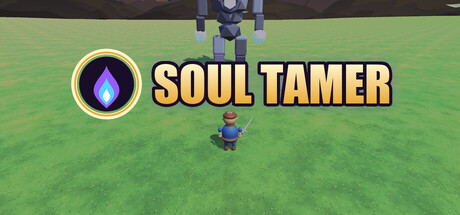
The visual assets in SoulTamer — 3D models, textures, icons, and effects — were produced
during development by procedural generation scripts (Blender/Python) authored with AI
assistance. Monster names, in-game text, the English localization, and this store page were
also written with AI assistance, then reviewed and adjusted by the developer.
No AI runs while you play. All content is generated ahead of time and ships as fixed assets.
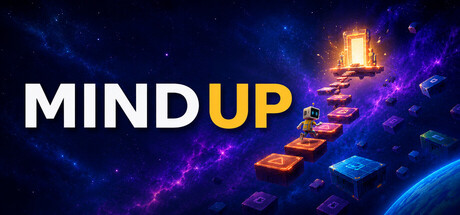
MindUP uses some pre-rendered AI-assisted visual, audio, and promotional assets. The game does not use live generative AI during gameplay, and no player prompts or AI-generated gameplay content are created at runtime.
Parts of this game's development — including some code, scene layouts, texts and translations — were created with the assistance of generative AI tools under developer supervision. No content is generated by AI at runtime; everything was prepared in advance and reviewed by hand.
Generative AI was used as an assistive tool during development to create certain visual assets and other supporting content. All AI-assisted content was reviewed, edited, and integrated by the developer. The game does not use live-generated AI.
This game utilizes pre-generated AI tools to create SFXs, music, UI images, texts, and one 3D model. Some of which are edited and all of which are selected with care.
Generative AI was used during development to create and iterate on selected pre-rendered 2D artwork, environmental textures, decals, and billboard/sign graphics. These assets were selected, edited, processed, and integrated by the developer. No AI content is generated during gameplay, and the game does not connect to external AI services.
I am a solo indie developer with little coding experience. AI has helped me with the programming in my game, which has allowed me to build this game for you all. Game Development is a big passion of mine, and I could not do it without the assistance of AI.
Generative AI was used to assist in the creation of some promotional artwork used on the Steam store page, including store and library artwork. The resulting assets were reviewed and selected by the developer before publication.
The game does not use generative AI to create content dynamically during gameplay.
Generative AI tools were used during development to assist with creating certain in-game visual assets, concept art, and UI elements. All AI-generated content has been reviewed, curated, and integrated manually by the developer.
Generative AI tools were used to assist in the creation of promotional store assets (such as store banners and visual graphics). Additionally, AI-assisted tools were used during development to help write and optimize procedural C# code for dynamic map generation and environment layout variation. The game itself does not generate content or call external AI models in real-time while running.
AI tools including ChatGPT, Lovart, and others were used during development to generate early concept art for characters, weapons, props, UI, and pet animations. All final in-game assets were manually redrawn and refined by our art team.
AI tools were used during the development of this game to assist with programming, and the creation of some sound effects and UI images. All AI-assisted content was reviewed and edited by the developer before being incorporated into the game.
This game uses AI tools (Anthropic's Claude) for localization. The game's UI text, building prompts, and store descriptions were translated from Japanese into 9 other languages with AI assistance, and all translations were reviewed by the developer. No AI-generated content is created at runtime (no live-generated AI). All other assets (art, music, sound effects) are hand-made or licensed (CC0).
Selected pre-generated visual materials used for the Steam store page, capsule artwork, promotional assets, and presentation screenshots were created or refined with the assistance of generative AI tools.
The game does not use live generative AI during gameplay. No gameplay content, dialogue, images, audio, or missions are generated in real time by AI, and the game does not connect to external AI services during play.
Generative AI was used exclusively as a programming assistant during development to help write and optimize the game's code. All creative elements, including the story, game design, and artwork, were entirely crafted by human hand.
Human solo dev made: writing, music, game design, game production, voice acting, SFX, and basically everything else. In addition, some 3D and VFX asset packs (plus additional SFX) were purchased from third-party marketplaces, where they are explicitly labeled as non-AI, human-made content, and credited in-game.
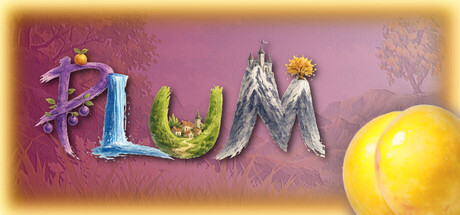
AI usage: AI helped with localization corrections, and was used to refine assets, strictly following human artistic direction and human-made examples — no generation from scratch. Example: Plum's character portraits are in-game mesh screenshots, inserted by me into pre-designed empty icon frames, then refined with AI for a more polished result.
Note: I would be happy to replace AI-refined assets with human artist's work, if this becomes financially possible in the future.
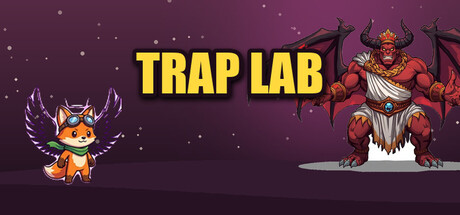
Much of the 2D artwork in TRAP LAB — character sprites, enemy and boss art, and cutscene illustrations — was created with the help of generative AI image tools. Every generated image was hand-selected, edited, and assembled by the developer before being used in the game. The game's code, level design, and audio are hand-made and are not AI-generated.
In this game AI was used to generate a few abstract textures in 4th and 5th game worlds. Game's logo was also made partially with a help of image generation tooling.
Portions of the text and visual materials on this Steam store page were partially generated with AI tools. All AI-generated content has been fully reviewed, edited and polished by our development team.
AI was used for localization, while being manually reviewed, and as a time-saving step in the development of some image and model assets, for retopology, concepting, and inbetweening.
The game contains no unmodified AI outputs.
RUSTCAN includes an optional live-generated AI guide called the Gnome. Players can ask the Gnome questions about gameplay, controls, progression, and the in-game world. The Gnome generates text responses at runtime through a server-side AI service.
Responses may be inaccurate and are provided for entertainment and gameplay guidance only. The Gnome does not provide professional, financial, medical, or legal advice.
Players access the feature after signing in, entering Hollow Pines, and selecting Ask the Gnome or speaking with the Gnome in town.
Requests require an authenticated RUSTCAN account and server-side application verification. Requests are rate-limited and monitored. Server-side input moderation blocks or flags severe illegal, exploitative, violent, self-harm, and other prohibited requests.
Generated replies are sanitized before display, and fallback responses are used when the AI service fails or produces no usable response. Players can report problems through the in-game bug/report tools.
AI Generation Disclosure
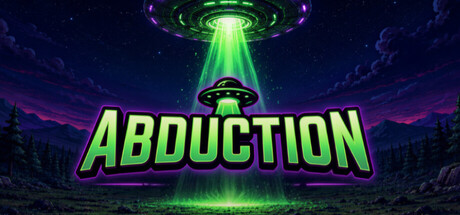
Abduction uses generative AI in limited, supporting ways during development — for example, assisting with asset preparation such as converting custom font designs into usable game fonts. All core game design, systems, art direction, and content are created and reviewed by the developer. Generative AI is a tool in the pipeline, not a substitute for the creative work behind the game.
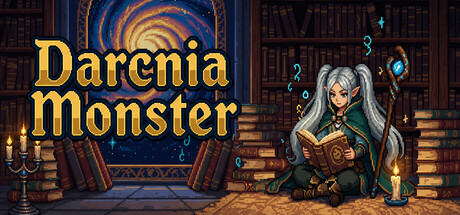
Darcnia Monster is made by a single independent developer. Some of the game's visual assets — background illustrations, cinematic scenes, and character and card artwork — were created with the help of generative AI image tools, and the in-game character voices were produced using AI voice synthesis. Every AI-assisted asset was hand-selected, edited, and integrated by the developer to match the game's art direction and story. No AI runs while you play: nothing is generated in real time, and no player data is ever sent to any AI service.
AI tools were used during development to assist with concept art, visual references, and certain promotional assets. All gameplay systems, mechanics, and core design were created and implemented by the development team.
AI was used strictly as a supportive tool and does not directly control gameplay or player experience.
Parts of this game's code were written with the assistance of AI programming tools; all output was reviewed, tested and integrated by the developer. Store page texts and localizations were also produced with AI assistance and reviewed by the developer. [Some music and sound assets were created using AI generation tools and curated by the developer.] [Some marketing artwork (e.g. capsule images) was created with AI image tools and edited by the developer.] All in-game 3D models and simulation content are authored procedurally or by hand. The game does not generate any content with AI at runtime, and it does not connect to any external AI services.
AI tools were used to assist in generating promotional artwork and store page graphics. Additionally, AI coding assistants were utilized during development to help write and optimize scripts and programming logic.
The visual assets in SoulTamer — 3D models, textures, icons, and effects — were produced
during development by procedural generation scripts (Blender/Python) authored with AI
assistance. Monster names, in-game text, the English localization, and this store page were
also written with AI assistance, then reviewed and adjusted by the developer.
No AI runs while you play. All content is generated ahead of time and ships as fixed assets.
MindUP uses some pre-rendered AI-assisted visual, audio, and promotional assets. The game does not use live generative AI during gameplay, and no player prompts or AI-generated gameplay content are created at runtime.
Parts of this game's development — including some code, scene layouts, texts and translations — were created with the assistance of generative AI tools under developer supervision. No content is generated by AI at runtime; everything was prepared in advance and reviewed by hand.
Generative AI was used as an assistive tool during development to create certain visual assets and other supporting content. All AI-assisted content was reviewed, edited, and integrated by the developer. The game does not use live-generated AI.
This game utilizes pre-generated AI tools to create SFXs, music, UI images, texts, and one 3D model. Some of which are edited and all of which are selected with care.
Generative AI was used during development to create and iterate on selected pre-rendered 2D artwork, environmental textures, decals, and billboard/sign graphics. These assets were selected, edited, processed, and integrated by the developer. No AI content is generated during gameplay, and the game does not connect to external AI services.
I am a solo indie developer with little coding experience. AI has helped me with the programming in my game, which has allowed me to build this game for you all. Game Development is a big passion of mine, and I could not do it without the assistance of AI.
Generative AI was used to assist in the creation of some promotional artwork used on the Steam store page, including store and library artwork. The resulting assets were reviewed and selected by the developer before publication.
The game does not use generative AI to create content dynamically during gameplay.
Generative AI tools were used during development to assist with creating certain in-game visual assets, concept art, and UI elements. All AI-generated content has been reviewed, curated, and integrated manually by the developer.
Generative AI tools were used to assist in the creation of promotional store assets (such as store banners and visual graphics). Additionally, AI-assisted tools were used during development to help write and optimize procedural C# code for dynamic map generation and environment layout variation. The game itself does not generate content or call external AI models in real-time while running.
AI tools including ChatGPT, Lovart, and others were used during development to generate early concept art for characters, weapons, props, UI, and pet animations. All final in-game assets were manually redrawn and refined by our art team.
AI tools were used during the development of this game to assist with programming, and the creation of some sound effects and UI images. All AI-assisted content was reviewed and edited by the developer before being incorporated into the game.
This game uses AI tools (Anthropic's Claude) for localization. The game's UI text, building prompts, and store descriptions were translated from Japanese into 9 other languages with AI assistance, and all translations were reviewed by the developer. No AI-generated content is created at runtime (no live-generated AI). All other assets (art, music, sound effects) are hand-made or licensed (CC0).
Selected pre-generated visual materials used for the Steam store page, capsule artwork, promotional assets, and presentation screenshots were created or refined with the assistance of generative AI tools.
The game does not use live generative AI during gameplay. No gameplay content, dialogue, images, audio, or missions are generated in real time by AI, and the game does not connect to external AI services during play.
Generative AI was used exclusively as a programming assistant during development to help write and optimize the game's code. All creative elements, including the story, game design, and artwork, were entirely crafted by human hand.
Human solo dev made: writing, music, game design, game production, voice acting, SFX, and basically everything else. In addition, some 3D and VFX asset packs (plus additional SFX) were purchased from third-party marketplaces, where they are explicitly labeled as non-AI, human-made content, and credited in-game.
AI usage: AI helped with localization corrections, and was used to refine assets, strictly following human artistic direction and human-made examples — no generation from scratch. Example: Plum's character portraits are in-game mesh screenshots, inserted by me into pre-designed empty icon frames, then refined with AI for a more polished result.
Note: I would be happy to replace AI-refined assets with human artist's work, if this becomes financially possible in the future.
Much of the 2D artwork in TRAP LAB — character sprites, enemy and boss art, and cutscene illustrations — was created with the help of generative AI image tools. Every generated image was hand-selected, edited, and assembled by the developer before being used in the game. The game's code, level design, and audio are hand-made and are not AI-generated.
In this game AI was used to generate a few abstract textures in 4th and 5th game worlds. Game's logo was also made partially with a help of image generation tooling.
Portions of the text and visual materials on this Steam store page were partially generated with AI tools. All AI-generated content has been fully reviewed, edited and polished by our development team.
AI was used for localization, while being manually reviewed, and as a time-saving step in the development of some image and model assets, for retopology, concepting, and inbetweening.
The game contains no unmodified AI outputs.
RUSTCAN includes an optional live-generated AI guide called the Gnome. Players can ask the Gnome questions about gameplay, controls, progression, and the in-game world. The Gnome generates text responses at runtime through a server-side AI service.
Responses may be inaccurate and are provided for entertainment and gameplay guidance only. The Gnome does not provide professional, financial, medical, or legal advice.
Players access the feature after signing in, entering Hollow Pines, and selecting Ask the Gnome or speaking with the Gnome in town.
Requests require an authenticated RUSTCAN account and server-side application verification. Requests are rate-limited and monitored. Server-side input moderation blocks or flags severe illegal, exploitative, violent, self-harm, and other prohibited requests.
Generated replies are sanitized before display, and fallback responses are used when the AI service fails or produces no usable response. Players can report problems through the in-game bug/report tools.
AI Generation Disclosure
Abduction uses generative AI in limited, supporting ways during development — for example, assisting with asset preparation such as converting custom font designs into usable game fonts. All core game design, systems, art direction, and content are created and reviewed by the developer. Generative AI is a tool in the pipeline, not a substitute for the creative work behind the game.
Darcnia Monster is made by a single independent developer. Some of the game's visual assets — background illustrations, cinematic scenes, and character and card artwork — were created with the help of generative AI image tools, and the in-game character voices were produced using AI voice synthesis. Every AI-assisted asset was hand-selected, edited, and integrated by the developer to match the game's art direction and story. No AI runs while you play: nothing is generated in real time, and no player data is ever sent to any AI service.
AI tools were used during development to assist with concept art, visual references, and certain promotional assets. All gameplay systems, mechanics, and core design were created and implemented by the development team.
AI was used strictly as a supportive tool and does not directly control gameplay or player experience.
Parts of this game's code were written with the assistance of AI programming tools; all output was reviewed, tested and integrated by the developer. Store page texts and localizations were also produced with AI assistance and reviewed by the developer. [Some music and sound assets were created using AI generation tools and curated by the developer.] [Some marketing artwork (e.g. capsule images) was created with AI image tools and edited by the developer.] All in-game 3D models and simulation content are authored procedurally or by hand. The game does not generate any content with AI at runtime, and it does not connect to any external AI services.
AI tools were used to assist in generating promotional artwork and store page graphics. Additionally, AI coding assistants were utilized during development to help write and optimize scripts and programming logic.