Public Steam disclosure research25,376 disclosures tracked
Where do games disclose AI use?
Search developers’ Steam disclosures, compare classified AI use across
games, and follow recorded changes.
This index adds cross-game classifications and statistics to
statements published on individual store pages.
Groups reflect automatic analysis of public disclosures; mature records are excluded. These counts do not measure AI use across all of Steam.
Missing or unclear statements cannot establish whether a game uses AI.
Generative AI tools were used during development to assist in creating visual promotional artwork, UI graphics, and character concept designs. All AI-generated assets were reviewed, modified, and curated by the developer to ensure quality and consistency with the game's art style. No real-time AI content generation is used during gameplay.
Some game assets were created with AI assistance under paid commercial licenses: background art and the title logo (image generation), BGM (Suno), and sound effects (ElevenLabs). All AI-generated assets are recorded in an internal license ledger, were generated on paid plans permitting commercial use, and were reviewed by the developer before inclusion.
The core mechanic uses AI at runtime: the player draws a creature and enters a name for it, and both the drawing and the player-supplied name are sent to a vision AI model, which evaluates them and produces the creature's element, size, stats, move names and descriptions, catchphrase, and flavor text. The creature always carries the name the player typed: the model returns a suggested name, but the server discards it whenever the player supplied one, and falls back to the model's name only when the player leaves the field blank. Guardrails: (1) every submission passes a server-side moderation gate before any sharing — CSAM is absolutely blocked with evidence preservation and reporting, and clearly NSFW content is auto-rejected; (2) all player-visible text generated by AI is length-clamped and moderated (names, catchphrases, flavor text, move names); (3) shared content (ghost teams) is moderated again server-side, is opt-in, expires automatically (TTL), and there is no public gallery; (4) a player report channel (notice-and-takedown) is provided in-game and on the official site; (5) battle results are computed deterministically by game rules, not by AI.
Generative AI was used to create some of the image and sound assets used in the game. These include character illustrations, card artwork, design elements, and some sound assets. All AI-generated content was reviewed and edited as necessary by the developer before being included in the game. The game does not generate AI content during gameplay and does not connect to external AI services.
OVERRIDE ships some assets that were created with generative AI tools during development and are included pre-rendered in the game: part of the 2D artwork (store and library capsules, background images, and stylized fictional character portraits) and parts of the music/soundtrack. All game design, simulation, code, and in-game text are authored by the developer. The game does not generate any content live during play and does not connect to any external AI service.
This game utilizes adaptive AI technology during gameplay to power the police interrogator's responses. Player input is evaluated live to generate dynamic, context-aware dialogue and push the interrogation forward.
Some images and sound effects were created or assisted by generative AI and were reviewed, edited, and integrated into the game by the developer. No real-time generative AI is used during gameplay.
Generative AI has been used to assist in the creation of certain promotional artwork and visual assets. AI tools have also been used during development to assist with programming, documentation, and iteration. All generated content has been reviewed, integrated, and validated by the developer before being included in the final product.
DUNGEON AI DRAGON uses generative AI in two ways. (1) Pre-generated content: some artwork (character portraits, item illustrations, decorative assets), quest text drafts and localizations were created with the assistance of AI tools and were reviewed and edited by our team before shipping. (2) Live-generated content: NPC dialogue, combat narration and dynamic quest flavor text are generated at runtime by large language models. Live generation is constrained by hand-authored character sheets, world lore and quest definitions. All game rules, stats, prices, rewards and progression are computed by a deterministic rule engine — AI output can never grant items, change prices or alter game state.
Generative AI tools were used during development to assist with pre-generated content only.
AI-assisted content includes one promotional artwork asset used in the Steam store capsule and library assets, AI-generated imagery used in the game's story description, some in-game sound assets, localization and translation, and portions of certain 3D models.
All AI-assisted outputs were reviewed, selected, edited where necessary, and integrated by the developer before being included in the game or on the Steam store page.
The game does not generate content using AI while it is running, does not connect players to any generative AI service, and does not send player input to an AI service.
Kingsfall:Chess uses pre-generated AI-generated imagery for some visual assets within the game and promotional/store materials. Other visual assets were created by artists using traditional methods. No content is generated by AI during gameplay.
AI Generation Disclosure
Abduction uses generative AI in limited, supporting ways during development — for example, assisting with asset preparation such as converting custom font designs into usable game fonts. All core game design, systems, art direction, and content are created and reviewed by the developer. Generative AI is a tool in the pipeline, not a substitute for the creative work behind the game.
I write this game's code with the help of AI coding tools, and I review everything that ships. All the art is drawn by code — no AI image generation anywhere.
The enemy is a small neural network that trains locally on how you move. It only controls the eye's behavior, and it never generates art, text, or audio.
Generative AI was used to produce the English voice-over for the in-game AI character. This was an intentional creative choice because the character itself is an artificial intelligence. AI also assisted with localization; however, responsibility for the final content rests with a human.
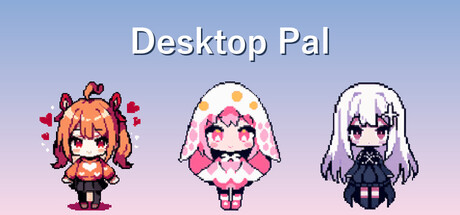
This game uses generative AI to power the pet's dialogue system. Players can choose to enable AI chat and freely select a local model (running offline) or a cloud API (requires their own API key), or completely disable AI chat and use preset or custom dialogue instead. Every AI conversation is generated in real time.
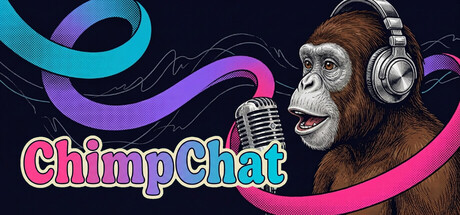
ChimpChat is an AI application. Its core feature uses a generative AI text-to-speech model, running entirely on your own device, to synthesize character voices from text you write. Generative AI was also used to produce this store page's assets, including the artwork and the trailer; the character voices in the trailer were generated with ChimpChat itself.
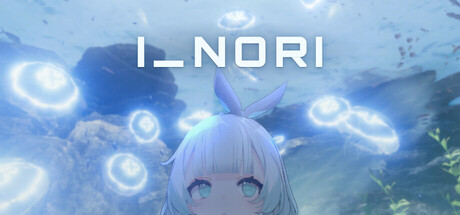
The game uses an AI system developed in-house, allowing Nori to understand and respond to what you say in real time, while remembering the conversations you’ve shared. Generative AI is used exclusively for Nori’s dialogue, voice, and interactive responses.
All artwork, models, music, and narrative text in the game are created by human artists and writers. The game contains no AI-generated artwork.
RLG:Origins uses a locally operated generative AI model during play to interpret free-form player input and generate GM narration and character dialogue. AI-generated text does not establish game facts or decide outcomes. A separate deterministic rules system validates actions and controls game-state changes. Generation takes place on the player's device, and player input is not sent to an external AI service.
Development is AI-assisted: source code, the procedural asset factories (meshes, MetaSound hero sounds, code-driven UMG) and docs are written with AI tooling under human review in-repo. No external generative-AI image/audio assets are imported; everything ships from the code-authored pipeline.
Sia's art and sound - her sprites, the outfits, the tarot cards, the item and monster icons, the sound effects - were produced with the help of generative AI tools and then edited and assembled by hand. The store images were made the same way. The game's text was written in Korean by hand; the seven other language translations were AI-assisted and reviewed by a human.
Nothing is generated while you play. The game ships as fixed image, sound and text files and never contacts an AI service.
AI was used to assist with code, art, and sfx. I have manually edited and polished all AI-assisted elements by hand to make them as unsloppy as I possibly can. If anything feels like slop, please let me know in the Community Discussions / Discord, and I'll do my best to fix it. Thanks! :)
In this game, generative AI is used for the following purposes:
・Selecting options based on voice commands input by the user
・Generating portions of the display text
・Generating portions of the narration script
・The narration audio is created using a speech synthesis engine; generative AI is not used.
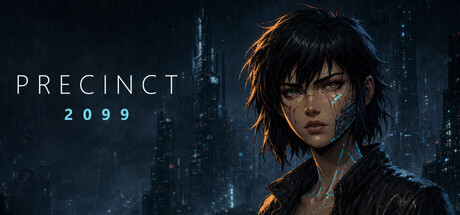
Precinct 2099 uses generative AI as a production tool. Part of the visual material (backgrounds, character art and store images) and the music were created with AI tools and then selected, edited and art-directed by hand by our team. Some of the localisation work is AI-assisted. The story, script, characters and game design are written by humans. The game does not generate any content live while you play: everything ships pre-generated with the build.
This game uses AI-generated content. The character artwork was pre-generated locally with an image model (Animagine XL 3.1) and manually curated by the developer. During gameplay, the mascot's chat replies (text only) are generated in real time by a bundled local language model (Google Gemma 3 via the Ollama runtime) running entirely on your PC. No internet connection is used and no conversation data leaves your device.
Some UI elements and 2D visual assets were created with the assistance of generative AI tools and then manually edited and refined in Photoshop. All AI-assisted content has been reviewed by the developer to ensure it does not infringe on third-party intellectual property.
This game includes optional local AI features:
Text Generation: A local language model periodically generates in-game short story events based on the player's typing activity.
Image Generation: A local image generation model may probabilistically generate illustrations for the corresponding story when a story event is triggered.
The AI features are purely an advanced option; whether you use them or not does not affect the core gameplay experience.
Selby is a desktop AI assistant tool. It generates text responses, code, and document content in real time, and performs automated tasks to streamline your workflow.
BirdBots uses generative AI tools during development to assist in the creation of certain promotional images, visual concepts, illustrations, and marketing materials. All AI-generated content has been reviewed, edited, and integrated by the developer. AI is not used during gameplay and does not affect the game's mechanics.
Generative AI was used to assist in creating certain promotional and store page artwork. All AI-generated content was reviewed, edited, and refined by the developer. No generative AI is used during gameplay.
Generative AI was used to assist in creating selected promotional capsule and library artwork for this Steam store page. These assets were reviewed and selected by the developer. No generative AI features are used during gameplay, and no content is generated at runtime.
Rip N Ship uses generative AI for some original artwork in its fictional Oddkin card collection. This artwork was generated during development, then selected, edited, and incorporated into the game by the developer. Streamer Mode chat is scripted/simulated and is not generated by AI during gameplay.
Generative AI tools assisted with parts of the development, iteration, and production process. The foundation of The Helios Accord—including its original concept, core ideas, world, systems, and narrative—was conceived, designed, and originally written by me. I direct, review, revise, and take responsibility for all AI-assisted material included in the game and its store presentation
CivEconomy: Future Leader uses locally-running AI for two optional gameplay features. All AI processing runs entirely on the player's machine — no data is sent to external servers.
Text AI (Command Processing): An on-device language model (Llama 3.2 1B via Ollama) interprets natural language player commands and classifies them into game actions. A keyword-matching fallback system works identically without AI enabled.
Image AI (Chieftain Portraits): An on-device Stable Diffusion 1.5 model generates decorative chieftain portrait images. These are purely cosmetic with no gameplay impact.
Both features are completely optional. The game is fully functional and playable without any AI features active.
This game contains pre-generated visual, audio, and text assets created with generative AI and selected, directed, edited, and integrated by the developer. It does not use live-generated AI content during gameplay.
Lo-Fi with Ruka includes optional live generative AI features. Players may provide their own DeepSeek and StepFun API keys to generate short companion chat replies, personalized study-story chapters, and synthesized voice. These features are disabled without player-provided keys. Prompts, the current focus goal or status, and limited recent non-sensitive study context are sent only to the selected providers. API keys and generated content remain local and are not uploaded to Steam Cloud.
Generative AI tools were used during development to assist in creating visual promotional artwork, UI graphics, and character concept designs. All AI-generated assets were reviewed, modified, and curated by the developer to ensure quality and consistency with the game's art style. No real-time AI content generation is used during gameplay.
Some game assets were created with AI assistance under paid commercial licenses: background art and the title logo (image generation), BGM (Suno), and sound effects (ElevenLabs). All AI-generated assets are recorded in an internal license ledger, were generated on paid plans permitting commercial use, and were reviewed by the developer before inclusion.
The core mechanic uses AI at runtime: the player draws a creature and enters a name for it, and both the drawing and the player-supplied name are sent to a vision AI model, which evaluates them and produces the creature's element, size, stats, move names and descriptions, catchphrase, and flavor text. The creature always carries the name the player typed: the model returns a suggested name, but the server discards it whenever the player supplied one, and falls back to the model's name only when the player leaves the field blank. Guardrails: (1) every submission passes a server-side moderation gate before any sharing — CSAM is absolutely blocked with evidence preservation and reporting, and clearly NSFW content is auto-rejected; (2) all player-visible text generated by AI is length-clamped and moderated (names, catchphrases, flavor text, move names); (3) shared content (ghost teams) is moderated again server-side, is opt-in, expires automatically (TTL), and there is no public gallery; (4) a player report channel (notice-and-takedown) is provided in-game and on the official site; (5) battle results are computed deterministically by game rules, not by AI.
Generative AI was used to create some of the image and sound assets used in the game. These include character illustrations, card artwork, design elements, and some sound assets. All AI-generated content was reviewed and edited as necessary by the developer before being included in the game. The game does not generate AI content during gameplay and does not connect to external AI services.
OVERRIDE ships some assets that were created with generative AI tools during development and are included pre-rendered in the game: part of the 2D artwork (store and library capsules, background images, and stylized fictional character portraits) and parts of the music/soundtrack. All game design, simulation, code, and in-game text are authored by the developer. The game does not generate any content live during play and does not connect to any external AI service.
This game utilizes adaptive AI technology during gameplay to power the police interrogator's responses. Player input is evaluated live to generate dynamic, context-aware dialogue and push the interrogation forward.
Some images and sound effects were created or assisted by generative AI and were reviewed, edited, and integrated into the game by the developer. No real-time generative AI is used during gameplay.
Generative AI has been used to assist in the creation of certain promotional artwork and visual assets. AI tools have also been used during development to assist with programming, documentation, and iteration. All generated content has been reviewed, integrated, and validated by the developer before being included in the final product.
DUNGEON AI DRAGON uses generative AI in two ways. (1) Pre-generated content: some artwork (character portraits, item illustrations, decorative assets), quest text drafts and localizations were created with the assistance of AI tools and were reviewed and edited by our team before shipping. (2) Live-generated content: NPC dialogue, combat narration and dynamic quest flavor text are generated at runtime by large language models. Live generation is constrained by hand-authored character sheets, world lore and quest definitions. All game rules, stats, prices, rewards and progression are computed by a deterministic rule engine — AI output can never grant items, change prices or alter game state.
Generative AI tools were used during development to assist with pre-generated content only.
AI-assisted content includes one promotional artwork asset used in the Steam store capsule and library assets, AI-generated imagery used in the game's story description, some in-game sound assets, localization and translation, and portions of certain 3D models.
All AI-assisted outputs were reviewed, selected, edited where necessary, and integrated by the developer before being included in the game or on the Steam store page.
The game does not generate content using AI while it is running, does not connect players to any generative AI service, and does not send player input to an AI service.
Kingsfall:Chess uses pre-generated AI-generated imagery for some visual assets within the game and promotional/store materials. Other visual assets were created by artists using traditional methods. No content is generated by AI during gameplay.
AI Generation Disclosure
Abduction uses generative AI in limited, supporting ways during development — for example, assisting with asset preparation such as converting custom font designs into usable game fonts. All core game design, systems, art direction, and content are created and reviewed by the developer. Generative AI is a tool in the pipeline, not a substitute for the creative work behind the game.
I write this game's code with the help of AI coding tools, and I review everything that ships. All the art is drawn by code — no AI image generation anywhere.
The enemy is a small neural network that trains locally on how you move. It only controls the eye's behavior, and it never generates art, text, or audio.
Generative AI was used to produce the English voice-over for the in-game AI character. This was an intentional creative choice because the character itself is an artificial intelligence. AI also assisted with localization; however, responsibility for the final content rests with a human.
This game uses generative AI to power the pet's dialogue system. Players can choose to enable AI chat and freely select a local model (running offline) or a cloud API (requires their own API key), or completely disable AI chat and use preset or custom dialogue instead. Every AI conversation is generated in real time.
ChimpChat is an AI application. Its core feature uses a generative AI text-to-speech model, running entirely on your own device, to synthesize character voices from text you write. Generative AI was also used to produce this store page's assets, including the artwork and the trailer; the character voices in the trailer were generated with ChimpChat itself.
The game uses an AI system developed in-house, allowing Nori to understand and respond to what you say in real time, while remembering the conversations you’ve shared. Generative AI is used exclusively for Nori’s dialogue, voice, and interactive responses.
All artwork, models, music, and narrative text in the game are created by human artists and writers. The game contains no AI-generated artwork.
RLG:Origins uses a locally operated generative AI model during play to interpret free-form player input and generate GM narration and character dialogue. AI-generated text does not establish game facts or decide outcomes. A separate deterministic rules system validates actions and controls game-state changes. Generation takes place on the player's device, and player input is not sent to an external AI service.
Development is AI-assisted: source code, the procedural asset factories (meshes, MetaSound hero sounds, code-driven UMG) and docs are written with AI tooling under human review in-repo. No external generative-AI image/audio assets are imported; everything ships from the code-authored pipeline.
Sia's art and sound - her sprites, the outfits, the tarot cards, the item and monster icons, the sound effects - were produced with the help of generative AI tools and then edited and assembled by hand. The store images were made the same way. The game's text was written in Korean by hand; the seven other language translations were AI-assisted and reviewed by a human.
Nothing is generated while you play. The game ships as fixed image, sound and text files and never contacts an AI service.
AI was used to assist with code, art, and sfx. I have manually edited and polished all AI-assisted elements by hand to make them as unsloppy as I possibly can. If anything feels like slop, please let me know in the Community Discussions / Discord, and I'll do my best to fix it. Thanks! :)
In this game, generative AI is used for the following purposes:
・Selecting options based on voice commands input by the user
・Generating portions of the display text
・Generating portions of the narration script
・The narration audio is created using a speech synthesis engine; generative AI is not used.
Precinct 2099 uses generative AI as a production tool. Part of the visual material (backgrounds, character art and store images) and the music were created with AI tools and then selected, edited and art-directed by hand by our team. Some of the localisation work is AI-assisted. The story, script, characters and game design are written by humans. The game does not generate any content live while you play: everything ships pre-generated with the build.
This game uses AI-generated content. The character artwork was pre-generated locally with an image model (Animagine XL 3.1) and manually curated by the developer. During gameplay, the mascot's chat replies (text only) are generated in real time by a bundled local language model (Google Gemma 3 via the Ollama runtime) running entirely on your PC. No internet connection is used and no conversation data leaves your device.
Some UI elements and 2D visual assets were created with the assistance of generative AI tools and then manually edited and refined in Photoshop. All AI-assisted content has been reviewed by the developer to ensure it does not infringe on third-party intellectual property.
This game includes optional local AI features:
Text Generation: A local language model periodically generates in-game short story events based on the player's typing activity.
Image Generation: A local image generation model may probabilistically generate illustrations for the corresponding story when a story event is triggered.
The AI features are purely an advanced option; whether you use them or not does not affect the core gameplay experience.
Selby is a desktop AI assistant tool. It generates text responses, code, and document content in real time, and performs automated tasks to streamline your workflow.
BirdBots uses generative AI tools during development to assist in the creation of certain promotional images, visual concepts, illustrations, and marketing materials. All AI-generated content has been reviewed, edited, and integrated by the developer. AI is not used during gameplay and does not affect the game's mechanics.
Generative AI was used to assist in creating certain promotional and store page artwork. All AI-generated content was reviewed, edited, and refined by the developer. No generative AI is used during gameplay.
Generative AI was used to assist in creating selected promotional capsule and library artwork for this Steam store page. These assets were reviewed and selected by the developer. No generative AI features are used during gameplay, and no content is generated at runtime.
Rip N Ship uses generative AI for some original artwork in its fictional Oddkin card collection. This artwork was generated during development, then selected, edited, and incorporated into the game by the developer. Streamer Mode chat is scripted/simulated and is not generated by AI during gameplay.
Generative AI tools assisted with parts of the development, iteration, and production process. The foundation of The Helios Accord—including its original concept, core ideas, world, systems, and narrative—was conceived, designed, and originally written by me. I direct, review, revise, and take responsibility for all AI-assisted material included in the game and its store presentation
CivEconomy: Future Leader uses locally-running AI for two optional gameplay features. All AI processing runs entirely on the player's machine — no data is sent to external servers.
Text AI (Command Processing): An on-device language model (Llama 3.2 1B via Ollama) interprets natural language player commands and classifies them into game actions. A keyword-matching fallback system works identically without AI enabled.
Image AI (Chieftain Portraits): An on-device Stable Diffusion 1.5 model generates decorative chieftain portrait images. These are purely cosmetic with no gameplay impact.
Both features are completely optional. The game is fully functional and playable without any AI features active.
This game contains pre-generated visual, audio, and text assets created with generative AI and selected, directed, edited, and integrated by the developer. It does not use live-generated AI content during gameplay.
Lo-Fi with Ruka includes optional live generative AI features. Players may provide their own DeepSeek and StepFun API keys to generate short companion chat replies, personalized study-story chapters, and synthesized voice. These features are disabled without player-provided keys. Prompts, the current focus goal or status, and limited recent non-sensitive study context are sent only to the selected providers. API keys and generated content remain local and are not uploaded to Steam Cloud.