Public Steam disclosure research25,376 disclosures tracked
Where do games disclose AI use?
Search developers’ Steam disclosures, compare classified AI use across
games, and follow recorded changes.
This index adds cross-game classifications and statistics to
statements published on individual store pages.
Groups reflect automatic analysis of public disclosures; mature records are excluded. These counts do not measure AI use across all of Steam.
Missing or unclear statements cannot establish whether a game uses AI.
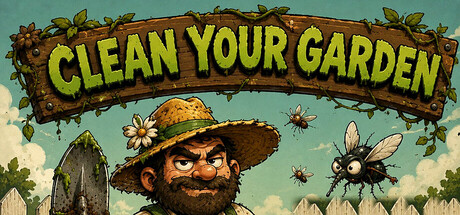
Generative AI tools were used during the development of Clean Your Garden
for part of the 2D art (bug illustrations, backgrounds, weapon and
achievement icons, and store art), to assist with writing code, and to
assist with translating the game's text into English. All of it was
reviewed, edited and integrated by hand.
The game does not generate any content with AI while you play: no model
runs at runtime.
---
Durante el desarrollo de Clean Your Garden se han usado herramientas de IA
generativa para parte del arte 2D (ilustraciones de bichos, fondos, iconos
de armas y de logros, e imágenes de la ficha), para asistir en la escritura
del código, y para asistir en la traducción de los textos al inglés. Todo
ese material ha sido revisado, editado e integrado a mano.
El juego no genera contenido con IA durante la partida: no hay ningún
modelo ejecutándose en tiempo real.
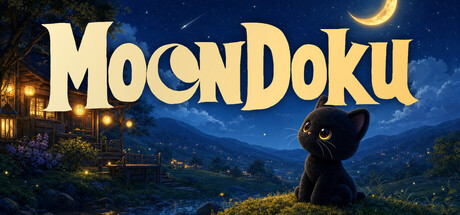
Some of MoonDoku's art and audio was made with generative AI tools while I built the game: the animated world backdrops, the MoonDoku FM music, a few sound effects, parts of the store and icon art, and a handful of smaller in-game images. I directed, edited, and composited all of it by hand.
Everything else is made without generative AI. The puzzles come from my own deterministic generator, the cat is a commissioned 3D model I animated in Blender, and the game design & layout are directly from my brain.
Nothing is generated while you play, and the game never talks to an AI service.
Some of the art, music and text in this game were created with the help of generative AI tools, then selected and edited by the developer. Nothing is generated while you play.
This game uses generative AI for the translations into all languages other than Japanese, the background music and some sound effects, and some of the artwork and icons.
In the Comeback Challenge, an external AI service is used to judge whether an answer correctly names the prompt. The only player data sent to the AI is the text of the answer, and only a correct/incorrect result is returned. The AI does not generate or display any text or images during gameplay.
Generative AI was used during development for a small number of visual assets and background music. All AI-generated content was carefully directed, reviewed, and edited by the developer to maintain the game's quality, consistency, and artistic vision. No AI-generated content is created during gameplay.
The game's original languages are Portuguese and English. Generative AI was used exclusively to translate and localize the text into the other supported languages, making the game accessible to more players worldwide at launch. All code, game design, artwork, audio, and original Portuguese and English text were created by humans.
The game's user-interface text was written in English and Thai by the developer. The other 12 language files (interface and subtitles) were machine-translated with an AI language model, then reviewed and corrected by the developer. No artwork, music, sound, characters, game rules, or store assets were generated by AI. The game does not generate any content with AI at runtime and does not connect to any AI service.
Parts of this game's content were produced with generative AI tools.
No content is generated at runtime. Every asset shipped with the game was produced, reviewed and approved prior to release.
I'm a solo developer, not an artist or musician. So I used AI to help create some of the artwork and music for this game. Everything else (code, game system, UI design, mission design, story planning, and overall creative direction) is entirely my own work. I also reused some hand-drawn pixel art from my previous game, created entirely without AI. If you prefer games made without generative AI, please check out my previous release. It's entirely human-made, with deeper mechanics and more systems to explore!
AI was used for three things only: the first draft of the character models, the two main-menu music tracks, and the game and studio logos. No AI runs while you play.
Everything you actually play was designed, built and balanced by the developer: the growing-tagger rule and the charged slap at the heart of the game; 6 game modes; 12 maps that each play by their own rules — a rolling ship, a flooding water tower, an arena that collapses ring by ring, lava that launches you skyward; 10 characters with 10 distinct powers, tuned one by one; bots with three difficulty levels that make the game fully playable solo; 2–10 player online play; a level and shop progression; match photos, match history and replays; and a 15-language localization. The character models were then hand-edited, rigged, height-matched and animated by the developer. The trailer and all screenshots are real gameplay. Sound effects and fonts come from CC0 / open-licensed sources.
Artwork: created with generative AI, pre-rendered, hand-curated and edited.
Code and design: 100% human-written, built on a match-3 framework I've developed and shipped five games with since 2012.
Runtime: no AI is used while the game is running.
Some of the images used in the game were created with generative AI tools. However, all questions, answer choices, facts, and other written content were created and edited by humans.
Generative AI tools were used in parts of the developer's workflow: some texture source images (such as water splash sprites and certain ground materials) originate from AI image tools, and the dragon character's base mesh was initially created with AI assistance. All of this content was then extensively hand-edited, sculpted, rigged and integrated by the developer. Some music tracks were generated with Suno (licensed under a paid subscription). The world itself, the environment models and the game's art direction are hand-made. The game does not generate any content at runtime.
Some of the pre-made content in this game (such as artwork, audio and/or text) was created with the help of generative AI tools and was reviewed and edited by the developer. No AI content is generated during gameplay.
Card and key art generated with AI tools to a studio style guide, then hand-composited in Photoshop; all text, UI, code and music are original or purchased assets.
All graphics in the game are hand-pixelled. The soundtrack was created with generative AI. Some images for the Steam store and library were expanded using AI to fit the required aspect ratios. No content is generated by AI during gameplay.
Artificial intelligence has been used to create localisations in languages other than Polish and English.
If you spot any errors in the translation, please let us know on our Steam discussion forums so that we can correct them!
Whilst working on the game in Early Access, we occasionally use AI technology to generate a small number of missing graphical elements in order to speed up game updates.
This is a temporary solution, and we will replace all generated images by the time the full version of the game is released.
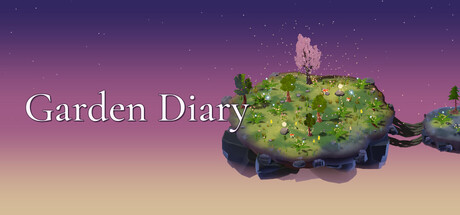
Garden Diary uses generative AI in these places, all reviewed and edited by me:
• Code - written with an AI coding assistant.
• Text - the interface text, hints and the game's written lines were drafted with AI help and edited by hand. This store description was written the same way.
• Interface icons- the small line glyphs are hand-authored SVG produced with the same assistant.
No AI-generated 3D art, textures, voice or music. Every 3D asset comes from licensed, human-made packs; the fonts are open-licensed human work; the wind, crickets, bells and lullaby are synthesised by the game's own audio code, and the rain is a licensed recording.
Generative AI tools were used during development to assist with selected visual and promotional assets, as well as localization. All AI-assisted content is reviewed, edited, and curated by the developer before being included in the game or store materials. KEYLINGS does not generate AI content during gameplay and does not connect to external AI services.
Some of the game's 3D models were created using generative AI (Tripo3D). The English localization and store page text were also prepared with the help of an AI assistant and reviewed by hand. The audio and gameplay were made without generative AI.
Часть 3D-моделей в игре создана с помощью генеративного ИИ (Tripo3D). Английская локализация и тексты для страницы в магазине также подготовлены с помощью ИИ-ассистента и вычитаны вручную. Звук и геймплей созданы без генеративного ИИ.
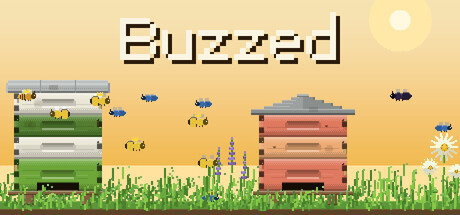
In-game text (bee facts, item descriptions, achievement lines) and store page copy were written with the assistance of an AI writing tool, under the developer's direction and review. All artwork is pixel art drawn by the game's own code, and all audio is synthesized or CC0 field recordings — no AI-generated images, audio, or music.
Intergalactic Burger Joint has been a labor of love, with a lot of time, attention, and care put into bringing this little corner of the galaxy to life.
The game’s 3D characters, environments, and props use licensed Synty assets. Generative AI helped create achievement icons, some interface and branding artwork, Steam store images, music, ambient audio, sound effects, and chef and customer voices. It also helped us write in-game text and dialogue.
Choosing what belonged, refining the details, and bringing everything together into a game took time, experimentation, and care. We hope you feel that love in the little details as you play.
All AI-generated content was created during development. Nothing is generated live while you play.
Generative AI tools were used during development to help create visual assets, interface artwork, decorative themes, and audio elements. AI tools also assisted with localization and store page text. These materials were prepared in advance under the developer’s direction. The game does not generate AI content during gameplay or connect to external AI services.
Levels, game design, boss patterns and story are entirely hand-made in a custom level editor built by the developer. The game code is written with AI coding assistants under the developer's direction. Character and environment sprites started as AI-generated sprite sheets and were hand-retouched frame by frame. Music is created with Suno. Most sound effects are synthesized procedurally by code written with an AI coding assistant, then selected and tuned by the developer; a few come from CC0 and royalty-free libraries (Kenney, OpenGameArt, Mixkit). No AI runs at play time.
AI tools were used during development to create illustrated backgrounds, decorative sprites, interface artwork and promotional images. These assets were reviewed and integrated into the finished game. Wobblebound does not generate AI content during gameplay.
Pre-generated content: some character and venue artwork, some 3D props, the cast voice lines, the intro films and the translations were created with AI tools and reviewed by the developer. No content is generated at runtime.
This game is a polished and updated version of a limited-time game released in August 2026, and only available for a single month.
The objective for the original was to create a game in as short a time as possible. Development was finished in three weeks, and to achieve this goal, Suno(AI) was used to create some of the sound assets.
If you would prefer not to support this game due to this use of AI, we fully understand. Regardless, thank you for taking the time to consider it!
Generative AI was used to assist in the creation of some promotional and marketing materials (such as key art).
All in-game content, gameplay, and screenshots are created without the use of generative AI.
Generative AI tools were used during the development of Clean Your Garden
for part of the 2D art (bug illustrations, backgrounds, weapon and
achievement icons, and store art), to assist with writing code, and to
assist with translating the game's text into English. All of it was
reviewed, edited and integrated by hand.
The game does not generate any content with AI while you play: no model
runs at runtime.
---
Durante el desarrollo de Clean Your Garden se han usado herramientas de IA
generativa para parte del arte 2D (ilustraciones de bichos, fondos, iconos
de armas y de logros, e imágenes de la ficha), para asistir en la escritura
del código, y para asistir en la traducción de los textos al inglés. Todo
ese material ha sido revisado, editado e integrado a mano.
El juego no genera contenido con IA durante la partida: no hay ningún
modelo ejecutándose en tiempo real.
Some of MoonDoku's art and audio was made with generative AI tools while I built the game: the animated world backdrops, the MoonDoku FM music, a few sound effects, parts of the store and icon art, and a handful of smaller in-game images. I directed, edited, and composited all of it by hand.
Everything else is made without generative AI. The puzzles come from my own deterministic generator, the cat is a commissioned 3D model I animated in Blender, and the game design & layout are directly from my brain.
Nothing is generated while you play, and the game never talks to an AI service.
Some of the art, music and text in this game were created with the help of generative AI tools, then selected and edited by the developer. Nothing is generated while you play.
This game uses generative AI for the translations into all languages other than Japanese, the background music and some sound effects, and some of the artwork and icons.
In the Comeback Challenge, an external AI service is used to judge whether an answer correctly names the prompt. The only player data sent to the AI is the text of the answer, and only a correct/incorrect result is returned. The AI does not generate or display any text or images during gameplay.
Generative AI was used during development for a small number of visual assets and background music. All AI-generated content was carefully directed, reviewed, and edited by the developer to maintain the game's quality, consistency, and artistic vision. No AI-generated content is created during gameplay.
The game's original languages are Portuguese and English. Generative AI was used exclusively to translate and localize the text into the other supported languages, making the game accessible to more players worldwide at launch. All code, game design, artwork, audio, and original Portuguese and English text were created by humans.
The game's user-interface text was written in English and Thai by the developer. The other 12 language files (interface and subtitles) were machine-translated with an AI language model, then reviewed and corrected by the developer. No artwork, music, sound, characters, game rules, or store assets were generated by AI. The game does not generate any content with AI at runtime and does not connect to any AI service.
Parts of this game's content were produced with generative AI tools.
No content is generated at runtime. Every asset shipped with the game was produced, reviewed and approved prior to release.
I'm a solo developer, not an artist or musician. So I used AI to help create some of the artwork and music for this game. Everything else (code, game system, UI design, mission design, story planning, and overall creative direction) is entirely my own work. I also reused some hand-drawn pixel art from my previous game, created entirely without AI. If you prefer games made without generative AI, please check out my previous release. It's entirely human-made, with deeper mechanics and more systems to explore!
AI was used for three things only: the first draft of the character models, the two main-menu music tracks, and the game and studio logos. No AI runs while you play.
Everything you actually play was designed, built and balanced by the developer: the growing-tagger rule and the charged slap at the heart of the game; 6 game modes; 12 maps that each play by their own rules — a rolling ship, a flooding water tower, an arena that collapses ring by ring, lava that launches you skyward; 10 characters with 10 distinct powers, tuned one by one; bots with three difficulty levels that make the game fully playable solo; 2–10 player online play; a level and shop progression; match photos, match history and replays; and a 15-language localization. The character models were then hand-edited, rigged, height-matched and animated by the developer. The trailer and all screenshots are real gameplay. Sound effects and fonts come from CC0 / open-licensed sources.
Artwork: created with generative AI, pre-rendered, hand-curated and edited.
Code and design: 100% human-written, built on a match-3 framework I've developed and shipped five games with since 2012.
Runtime: no AI is used while the game is running.
Some of the images used in the game were created with generative AI tools. However, all questions, answer choices, facts, and other written content were created and edited by humans.
Generative AI tools were used in parts of the developer's workflow: some texture source images (such as water splash sprites and certain ground materials) originate from AI image tools, and the dragon character's base mesh was initially created with AI assistance. All of this content was then extensively hand-edited, sculpted, rigged and integrated by the developer. Some music tracks were generated with Suno (licensed under a paid subscription). The world itself, the environment models and the game's art direction are hand-made. The game does not generate any content at runtime.
Some of the pre-made content in this game (such as artwork, audio and/or text) was created with the help of generative AI tools and was reviewed and edited by the developer. No AI content is generated during gameplay.
Card and key art generated with AI tools to a studio style guide, then hand-composited in Photoshop; all text, UI, code and music are original or purchased assets.
All graphics in the game are hand-pixelled. The soundtrack was created with generative AI. Some images for the Steam store and library were expanded using AI to fit the required aspect ratios. No content is generated by AI during gameplay.
Artificial intelligence has been used to create localisations in languages other than Polish and English.
If you spot any errors in the translation, please let us know on our Steam discussion forums so that we can correct them!
Whilst working on the game in Early Access, we occasionally use AI technology to generate a small number of missing graphical elements in order to speed up game updates.
This is a temporary solution, and we will replace all generated images by the time the full version of the game is released.
Garden Diary uses generative AI in these places, all reviewed and edited by me:
• Code - written with an AI coding assistant.
• Text - the interface text, hints and the game's written lines were drafted with AI help and edited by hand. This store description was written the same way.
• Interface icons- the small line glyphs are hand-authored SVG produced with the same assistant.
No AI-generated 3D art, textures, voice or music. Every 3D asset comes from licensed, human-made packs; the fonts are open-licensed human work; the wind, crickets, bells and lullaby are synthesised by the game's own audio code, and the rain is a licensed recording.
Generative AI tools were used during development to assist with selected visual and promotional assets, as well as localization. All AI-assisted content is reviewed, edited, and curated by the developer before being included in the game or store materials. KEYLINGS does not generate AI content during gameplay and does not connect to external AI services.
Some of the game's 3D models were created using generative AI (Tripo3D). The English localization and store page text were also prepared with the help of an AI assistant and reviewed by hand. The audio and gameplay were made without generative AI.
Часть 3D-моделей в игре создана с помощью генеративного ИИ (Tripo3D). Английская локализация и тексты для страницы в магазине также подготовлены с помощью ИИ-ассистента и вычитаны вручную. Звук и геймплей созданы без генеративного ИИ.
In-game text (bee facts, item descriptions, achievement lines) and store page copy were written with the assistance of an AI writing tool, under the developer's direction and review. All artwork is pixel art drawn by the game's own code, and all audio is synthesized or CC0 field recordings — no AI-generated images, audio, or music.
Intergalactic Burger Joint has been a labor of love, with a lot of time, attention, and care put into bringing this little corner of the galaxy to life.
The game’s 3D characters, environments, and props use licensed Synty assets. Generative AI helped create achievement icons, some interface and branding artwork, Steam store images, music, ambient audio, sound effects, and chef and customer voices. It also helped us write in-game text and dialogue.
Choosing what belonged, refining the details, and bringing everything together into a game took time, experimentation, and care. We hope you feel that love in the little details as you play.
All AI-generated content was created during development. Nothing is generated live while you play.
Generative AI tools were used during development to help create visual assets, interface artwork, decorative themes, and audio elements. AI tools also assisted with localization and store page text. These materials were prepared in advance under the developer’s direction. The game does not generate AI content during gameplay or connect to external AI services.
Levels, game design, boss patterns and story are entirely hand-made in a custom level editor built by the developer. The game code is written with AI coding assistants under the developer's direction. Character and environment sprites started as AI-generated sprite sheets and were hand-retouched frame by frame. Music is created with Suno. Most sound effects are synthesized procedurally by code written with an AI coding assistant, then selected and tuned by the developer; a few come from CC0 and royalty-free libraries (Kenney, OpenGameArt, Mixkit). No AI runs at play time.
AI tools were used during development to create illustrated backgrounds, decorative sprites, interface artwork and promotional images. These assets were reviewed and integrated into the finished game. Wobblebound does not generate AI content during gameplay.
Pre-generated content: some character and venue artwork, some 3D props, the cast voice lines, the intro films and the translations were created with AI tools and reviewed by the developer. No content is generated at runtime.
This game is a polished and updated version of a limited-time game released in August 2026, and only available for a single month.
The objective for the original was to create a game in as short a time as possible. Development was finished in three weeks, and to achieve this goal, Suno(AI) was used to create some of the sound assets.
If you would prefer not to support this game due to this use of AI, we fully understand. Regardless, thank you for taking the time to consider it!
Generative AI was used to assist in the creation of some promotional and marketing materials (such as key art).
All in-game content, gameplay, and screenshots are created without the use of generative AI.