Public Steam disclosure research25,380 disclosures tracked
Where do games disclose AI use?
Search developers’ Steam disclosures, compare classified AI use across
games, and follow recorded changes.
This index adds cross-game classifications and statistics to
statements published on individual store pages.
Groups reflect automatic analysis of public disclosures; mature records are excluded. These counts do not measure AI use across all of Steam.
Missing or unclear statements cannot establish whether a game uses AI.
This game uses generative artificial intelligence for FMV video communications (video and audio), sound effects, sprite images, textures, 3D models. You'd be hard pressed to find a corner of this game AI hasn't touched. I made this because I enjoy it.
SMASH & GRAB uses generative AI for pre-generated content that is reviewed and edited by the team before it ships. Card portraits and their collectible variants, the rival figures and props, the key art, and the store capsules were produced with image and 3D generation tools (Meshy, OpenArt) from our own prompts and references. Voice lines use synthetic voices from ElevenLabs; no real person's voice was cloned. The music beds were generated with ElevenLabs, and the store trailer was assembled from AI-generated clips (Kling via OpenArt). Card names, bios, and other in-game text were drafted with a large language model and edited by the team. Nothing is generated while you play: the game does not create content live.
All the Localization, voiceovers/music, and many of the in-game textures were generated using AI.
The store page trailer and images are rendered inside the game itself, so indirectly they also contains those AI generated textures.
A note on why.
RaviWar 1 is the first part of a story that takes eight games to tell: RaviWar 1 & 2, and six shorter games set inside the same universe, under the name Tales of Takarek.
I am one person, with no studio and no funding behind me. Built the traditional way, a project that size would outlast me. These tools are the only way I can attempt it at all, and I would rather finish the whole story imperfectly than finish a fraction of it perfectly.
It is also why this game is free. I am not asking anyone to pay for AI generated work.
The design, the writing, the puzzles and the world are mine. As the project grows I intend to replace generated assets with commissioned ones.
Once again I am sorry.
This game uses generative AI as part of the development process. ChatGPT was used for planning, specification review, and the creation of some base visual assets, while Codex was used to assist with code generation, implementation, and testing.
Some visual assets were generated as base material and then edited and refined in tools such as Photoshop. SOUNDRAW was used for some background music, and ElevenLabs was used for some sound effects.
All AI-generated content was created during development. The game does not use generative AI to create content in real time during gameplay. Final design, editing, implementation, and selection decisions were made by the developer.
This game was vibe coded in C++ with Claude Code Opus 5, and some GPT-6 Astra while I operated Unreal Engine 5.7. Many of the assets were purchased at fab.com, and the voices are from elevenlabs.io. Call it shovelware if you like, I had fun shoveling.
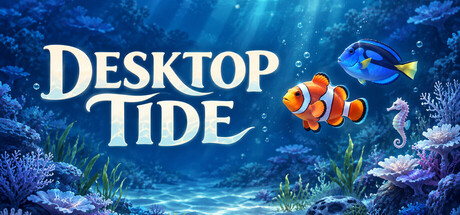
Generative AI was used to assist in creating artwork for marine creatures, plants, decorations, underwater environments, and Steam store and marketing images, as well as portions of descriptive text. This content is pre-generated and included as fixed assets or text. The game does not generate content during play and does not connect to external AI services.
Generative AI was used for some of the artwork and text: the 3D representation
of the motorcycles, the achievement icons, the artwork on this page, and text in
the game and store, including the English version. All of it is pre-rendered -
created during development, not while you play.
No AI runs while the game is running: the race simulation and vehicle physics
are computed on the server, the engine sound is synthesised in the game itself,
and the circuit layouts are based on real geodata from OpenStreetMap
contributors (ODbL).
① Describe pre‑rendered /pre‑generated AI content
plaintext
No generative‑AI‑created content is included in this game, store page assets and marketing materials. All art, audio, narrative and other player‑facing content are original works created by our development team.
② Describe content generated during gameplay
plaintext
There are no live‑generated AI features in this game. No content will be dynamically generated during gameplay.
Some game assets, such as ship and crew images, were created with the help of generative AI tools and subsequently reviewed and edited by the development team.
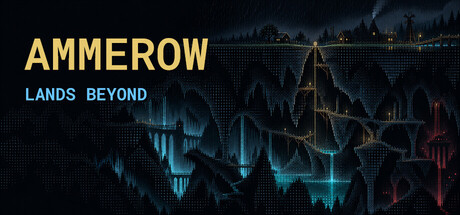
The music in Ammerow: Lands Beyond was created with Claude Compose, a bespoke composition system built for this project. Rather than a generative music model, it works like a tireless studio composer: an AI assistant (Anthropic's Claude) writes and runs code that composes each piece note by note — melody, harmony, counterpoint and orchestration derived from music theory — and performs it through real, licensed virtual instruments in a professional DAW (Ableton Live). It then "listens back" by analysing the rendered audio to refine the balance. No generative audio/music model was used, no AI was trained on other artists' recordings, and no track was produced from a prompt. Every note is placed deliberately, and every piece is directed, reviewed and approved by a human. The result is authored, not generated.
The sound effects are an original, human-directed procedural synthesis library. Claude Code assisted in writing custom Python DSP software and individual cue recipes; every waveform was deterministically rendered from mathematical models and recorded seeds. No recordings, performers, samples, stock audio, sample libraries or generative-audio service were used.
Ammerow is designed primarily as a coloured ASCII game. Selected creature, item and shopkeeper illustrations began as AI-generated source images and are converted through a deterministic ASCII-art pipeline. The optional tile mode is a work-in-progress secondary presentation. Its small atlases were programmatically drawn in a custom SDL application using natural-language Codex direction. No generative-image model, inherited tileset, traced artwork or third-party graphical asset was used.
Some narrative, gameplay data and other player-facing material were also developed with AI assistance under human direction and review.
Some Steam marketing backgrounds were created using OpenAI image-generation tools and then selected, reviewed and combined with deterministic Ammerow branding by the developer.
No AI runs while the game is being played.
1. This game uses AI to interact with the input text commands.
2. Some of the art resources and music assets in the game are generated by AI during the development stage.
Generative AI was used to create portions of the Steam store capsule and library artwork and the achievement icon artwork. The final assets were reviewed, composed, cropped, and branded by the developer. The game itself does not generate AI content during gameplay.
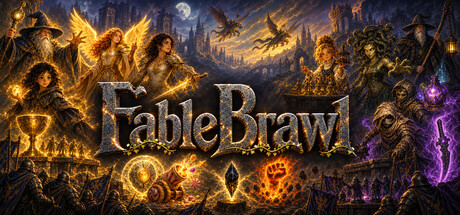
FableBrawl uses pre-generated AI content for Storybook artwork, store artwork, some music and sound effects, and translations. These assets are created during development and shipped as finished files. No content or code is generated by AI during gameplay, and the game does not call an external generative AI service while you play.
Storybook mode art is AI-generated; if you prefer no AI art, you can use Rough Draft mode art. Community Mode is a work-in-progress version supported by the generous donations of our community.
Generative AI was used during development for visual assets, music, and small portions of text, as well as the store artwork. These are pre-generated assets included with the game. No content is generated by AI during play, and the game does not connect to an AI service.
The background music in this game was pre-generated with a generative AI tool. No AI-generated content is used for visuals, characters, environments, icons, store artwork, or text, and the game does not generate content at runtime or connect to external AI services.
All core assets originate from the creativity of our human artists. The use of AI tools is strictly limited to assisting and refining the environmental background designs.
Some of the 2D art in Cidle Online was created with the help of generative AI
image tools. This includes parts of the sprite work for buildings, points of
interest and item icons, as well as some store page artwork. Every generated
image was reviewed, edited and adjusted by hand before it went into the game,
and assets are checked so they do not reproduce existing works.
All of this art is produced during development. Nothing is generated by AI
while you play, and the game does not send any of your data to an AI service.
Some content was pre-generated with AI tools during development and reviewed by the developer before shipping: the store key art and capsule images, a number of surface textures used as decorative materials in the environments, and the narration, which is synthesized offline from the developer's original script with the Piper text-to-speech engine (a public-domain-derived voice). No content is generated by AI during gameplay, and the game does not connect to any external AI service. World layouts, equipment, mission logic, writing and code are project-authored.
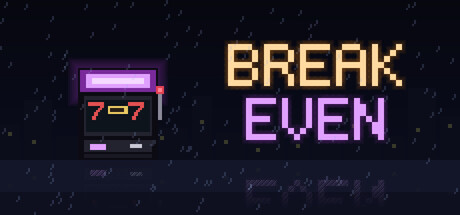
Break Even was built with an AI coding assistant working under the developer's direction and review. That includes the game's code and, with it, the pixel maps its sprites are drawn from, its synthesized sound, its dialogue and ending text, the scripts that draw the store images, and drafts of this store page. The game ships no image or audio files of its own — every picture is drawn and every sound synthesized by its own code while you play — and the one bundled file is an open-licence pixel font. No AI runs during play, and the game contacts no AI service.
All output was reviewed and hand-edited by our artists before shipping. Every 3D model and character in the game was sculpted by human artists. We also use AI coding assistants during development; no AI-generated content is produced while the game is running.
This game uses AI-generated content for some background music, sound effects, and artwork/visual assets. All other content, including game design and code, was created by the developer.
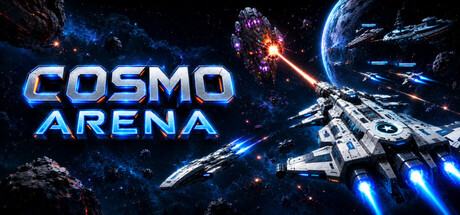
Cosmo Arena uses generative AI tools during development to assist with the creation and refinement of certain visual assets, concept art, UI elements, textures, and other game content. All AI-assisted content is reviewed, edited, and integrated by the developer. Generative AI is not used to create content dynamically during gameplay.
While AI tools were used to assist with the creation of select assets for our game's store page, all featured assets are fully original designs developed by our internal team.
We may use AI to speed up creation of marketing materials and how even we should do that "marketing". And we may use AI for finding new ways to write better code, AI may analyze our code and so on. That's pretty ok that days, especially for free project that runs by enthusiasts.
So please review our final work, that's what matters.
This game and its store page use generative AI-assisted content, including artwork, music, sound, and other creative assets. Assets are created or assisted with AI tools, then curated and implemented by the developer. No live AI-generated player content is used during gameplay.
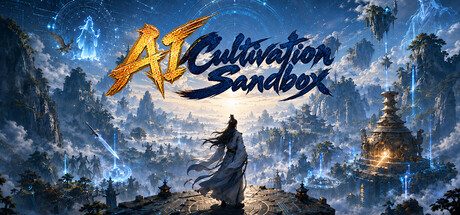
AI Cultivation Sandbox uses generative AI technology to assist in creating game content.
The AI systems in the game may generate or assist with generating character backgrounds, character dialogue, world events, story content, and visual assets.
AI-generated content is guided by game systems and safety mechanisms to create a more dynamic and personalized cultivation world experience.
This game uses generative artificial intelligence for FMV video communications (video and audio), sound effects, sprite images, textures, 3D models. You'd be hard pressed to find a corner of this game AI hasn't touched. I made this because I enjoy it.
SMASH & GRAB uses generative AI for pre-generated content that is reviewed and edited by the team before it ships. Card portraits and their collectible variants, the rival figures and props, the key art, and the store capsules were produced with image and 3D generation tools (Meshy, OpenArt) from our own prompts and references. Voice lines use synthetic voices from ElevenLabs; no real person's voice was cloned. The music beds were generated with ElevenLabs, and the store trailer was assembled from AI-generated clips (Kling via OpenArt). Card names, bios, and other in-game text were drafted with a large language model and edited by the team. Nothing is generated while you play: the game does not create content live.
All the Localization, voiceovers/music, and many of the in-game textures were generated using AI.
The store page trailer and images are rendered inside the game itself, so indirectly they also contains those AI generated textures.
A note on why.
RaviWar 1 is the first part of a story that takes eight games to tell: RaviWar 1 & 2, and six shorter games set inside the same universe, under the name Tales of Takarek.
I am one person, with no studio and no funding behind me. Built the traditional way, a project that size would outlast me. These tools are the only way I can attempt it at all, and I would rather finish the whole story imperfectly than finish a fraction of it perfectly.
It is also why this game is free. I am not asking anyone to pay for AI generated work.
The design, the writing, the puzzles and the world are mine. As the project grows I intend to replace generated assets with commissioned ones.
Once again I am sorry.
This game uses generative AI as part of the development process. ChatGPT was used for planning, specification review, and the creation of some base visual assets, while Codex was used to assist with code generation, implementation, and testing.
Some visual assets were generated as base material and then edited and refined in tools such as Photoshop. SOUNDRAW was used for some background music, and ElevenLabs was used for some sound effects.
All AI-generated content was created during development. The game does not use generative AI to create content in real time during gameplay. Final design, editing, implementation, and selection decisions were made by the developer.
This game was vibe coded in C++ with Claude Code Opus 5, and some GPT-6 Astra while I operated Unreal Engine 5.7. Many of the assets were purchased at fab.com, and the voices are from elevenlabs.io. Call it shovelware if you like, I had fun shoveling.
Generative AI was used to assist in creating artwork for marine creatures, plants, decorations, underwater environments, and Steam store and marketing images, as well as portions of descriptive text. This content is pre-generated and included as fixed assets or text. The game does not generate content during play and does not connect to external AI services.
Generative AI was used for some of the artwork and text: the 3D representation
of the motorcycles, the achievement icons, the artwork on this page, and text in
the game and store, including the English version. All of it is pre-rendered -
created during development, not while you play.
No AI runs while the game is running: the race simulation and vehicle physics
are computed on the server, the engine sound is synthesised in the game itself,
and the circuit layouts are based on real geodata from OpenStreetMap
contributors (ODbL).
① Describe pre‑rendered /pre‑generated AI content
plaintext
No generative‑AI‑created content is included in this game, store page assets and marketing materials. All art, audio, narrative and other player‑facing content are original works created by our development team.
② Describe content generated during gameplay
plaintext
There are no live‑generated AI features in this game. No content will be dynamically generated during gameplay.
Some game assets, such as ship and crew images, were created with the help of generative AI tools and subsequently reviewed and edited by the development team.
The music in Ammerow: Lands Beyond was created with Claude Compose, a bespoke composition system built for this project. Rather than a generative music model, it works like a tireless studio composer: an AI assistant (Anthropic's Claude) writes and runs code that composes each piece note by note — melody, harmony, counterpoint and orchestration derived from music theory — and performs it through real, licensed virtual instruments in a professional DAW (Ableton Live). It then "listens back" by analysing the rendered audio to refine the balance. No generative audio/music model was used, no AI was trained on other artists' recordings, and no track was produced from a prompt. Every note is placed deliberately, and every piece is directed, reviewed and approved by a human. The result is authored, not generated.
The sound effects are an original, human-directed procedural synthesis library. Claude Code assisted in writing custom Python DSP software and individual cue recipes; every waveform was deterministically rendered from mathematical models and recorded seeds. No recordings, performers, samples, stock audio, sample libraries or generative-audio service were used.
Ammerow is designed primarily as a coloured ASCII game. Selected creature, item and shopkeeper illustrations began as AI-generated source images and are converted through a deterministic ASCII-art pipeline. The optional tile mode is a work-in-progress secondary presentation. Its small atlases were programmatically drawn in a custom SDL application using natural-language Codex direction. No generative-image model, inherited tileset, traced artwork or third-party graphical asset was used.
Some narrative, gameplay data and other player-facing material were also developed with AI assistance under human direction and review.
Some Steam marketing backgrounds were created using OpenAI image-generation tools and then selected, reviewed and combined with deterministic Ammerow branding by the developer.
No AI runs while the game is being played.
1. This game uses AI to interact with the input text commands.
2. Some of the art resources and music assets in the game are generated by AI during the development stage.
Generative AI was used to create portions of the Steam store capsule and library artwork and the achievement icon artwork. The final assets were reviewed, composed, cropped, and branded by the developer. The game itself does not generate AI content during gameplay.
FableBrawl uses pre-generated AI content for Storybook artwork, store artwork, some music and sound effects, and translations. These assets are created during development and shipped as finished files. No content or code is generated by AI during gameplay, and the game does not call an external generative AI service while you play.
Storybook mode art is AI-generated; if you prefer no AI art, you can use Rough Draft mode art. Community Mode is a work-in-progress version supported by the generous donations of our community.
Generative AI was used during development for visual assets, music, and small portions of text, as well as the store artwork. These are pre-generated assets included with the game. No content is generated by AI during play, and the game does not connect to an AI service.
The background music in this game was pre-generated with a generative AI tool. No AI-generated content is used for visuals, characters, environments, icons, store artwork, or text, and the game does not generate content at runtime or connect to external AI services.
All core assets originate from the creativity of our human artists. The use of AI tools is strictly limited to assisting and refining the environmental background designs.
Some of the 2D art in Cidle Online was created with the help of generative AI
image tools. This includes parts of the sprite work for buildings, points of
interest and item icons, as well as some store page artwork. Every generated
image was reviewed, edited and adjusted by hand before it went into the game,
and assets are checked so they do not reproduce existing works.
All of this art is produced during development. Nothing is generated by AI
while you play, and the game does not send any of your data to an AI service.
Some content was pre-generated with AI tools during development and reviewed by the developer before shipping: the store key art and capsule images, a number of surface textures used as decorative materials in the environments, and the narration, which is synthesized offline from the developer's original script with the Piper text-to-speech engine (a public-domain-derived voice). No content is generated by AI during gameplay, and the game does not connect to any external AI service. World layouts, equipment, mission logic, writing and code are project-authored.
Break Even was built with an AI coding assistant working under the developer's direction and review. That includes the game's code and, with it, the pixel maps its sprites are drawn from, its synthesized sound, its dialogue and ending text, the scripts that draw the store images, and drafts of this store page. The game ships no image or audio files of its own — every picture is drawn and every sound synthesized by its own code while you play — and the one bundled file is an open-licence pixel font. No AI runs during play, and the game contacts no AI service.
All output was reviewed and hand-edited by our artists before shipping. Every 3D model and character in the game was sculpted by human artists. We also use AI coding assistants during development; no AI-generated content is produced while the game is running.
This game uses AI-generated content for some background music, sound effects, and artwork/visual assets. All other content, including game design and code, was created by the developer.
Cosmo Arena uses generative AI tools during development to assist with the creation and refinement of certain visual assets, concept art, UI elements, textures, and other game content. All AI-assisted content is reviewed, edited, and integrated by the developer. Generative AI is not used to create content dynamically during gameplay.
While AI tools were used to assist with the creation of select assets for our game's store page, all featured assets are fully original designs developed by our internal team.
We may use AI to speed up creation of marketing materials and how even we should do that "marketing". And we may use AI for finding new ways to write better code, AI may analyze our code and so on. That's pretty ok that days, especially for free project that runs by enthusiasts.
So please review our final work, that's what matters.
This game and its store page use generative AI-assisted content, including artwork, music, sound, and other creative assets. Assets are created or assisted with AI tools, then curated and implemented by the developer. No live AI-generated player content is used during gameplay.
AI Cultivation Sandbox uses generative AI technology to assist in creating game content.
The AI systems in the game may generate or assist with generating character backgrounds, character dialogue, world events, story content, and visual assets.
AI-generated content is guided by game systems and safety mechanisms to create a more dynamic and personalized cultivation world experience.