Public Steam disclosure research27,951 disclosures tracked
Where do games disclose AI use?
Search developers’ Steam disclosures, compare classified AI use across
games, and follow recorded changes.
This index adds cross-game classifications and statistics to
statements published on individual store pages.
Groups reflect automatic analysis of public disclosures; mature records are excluded. These counts do not measure AI use across all of Steam.
Missing or unclear statements cannot establish whether a game uses AI.
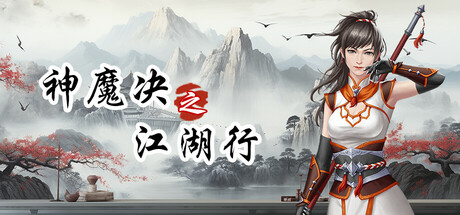
The videos and images content of this game is created through 3D model action production and recorded into a video, followed by style transfer using AI, and further post production synthesis and rendering by personnel. The music, dubbing, and other elements are all created by the creator and assisted by AI, and processed by personnel in post production.
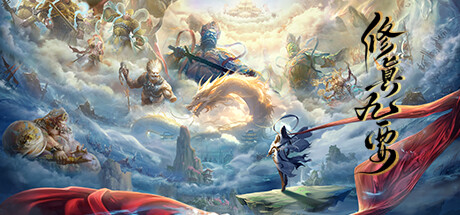
I have used AI for generating some of the UI elements such as Buttons, Icons and Shapes in the Game. In addition, I have used AI for generating some of the visuals (Like Capsule Image, etc...) of Store Page.
Our game does not use AI in gameplay, character behavior, or system design.
A small portion of the game's artwork was created using AI-assisted tools during the development process.
All other assets and content were manually created by our team.
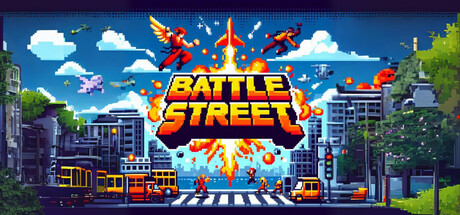
We utilized AI tools to generate internal references for composition and framing. These outputs were then used as a base to manually create handcrafted pixel art assets, ensuring all final in-game visuals follow our custom palettes and artistic standards.
AI Voice changing software was used for voice overs to change the voice actors voice into character voices.
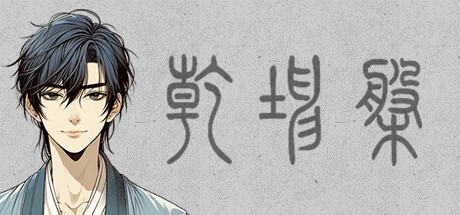
Character portraits were drafted by AI and repainted/remastered by an artist.
Some visual assets, such as store capsule images and in-game card illustrations, were created with the assistance of generative AI tools. All gameplay and code are original.
I am currently using ElevenLabs synthetic voices for my eight characters. The synthetic voices are generated from scratch. They are not clones of any real people. I look forward hiring professional voice actors once the game is successful.
RaceOnLife uses AI-driven NPC systems to create more dynamic interactions inside the game world.
Some NPCs are designed to remember previous conversations, react to the player’s behavior, and respond differently depending on how the player communicates with them. These interactions may affect how NPCs guide, assist, ignore, challenge, or oppose the player during gameplay.
Our goal is to make the island feel more alive, where conversations with non-player characters are not just static dialogue lines, but part of the player’s personal journey through the story and open world.
AI features are used to support NPC behavior, dialogue variation, and player interaction systems. Core gameplay, world design, missions, vehicles, races, combat, progression, and major story content are created and directed by our development team.
For live AI interactions, we are working with safety rules and moderation limits to reduce the risk of inappropriate, harmful, or illegal generated content.
Connects to 3rd-Party Service for AI Content Generation: openai.com
Due to limited development costs, in this game, we use AI to generate the map background and 2D buildings on the large map when building the map. We will replace all hand drawn materials within the official version in one year.
This game uses AI-generated content during its development. Some of the 2D artwork and promotional images were created with the assistance of AI tools. All such content is pre-generated, curated by the developer, and remains static within the final product. The game does not feature real-time AI content generation during gameplay.
Part of the art assets were generated using AI tools to create initial concept sketches, which were then manually adjusted and revised by artists. The final work combines AI-generated foundational designs with human artistic revisions.
The translation process for languages other than Chinese utilized AI & human revision.
This game uses AI to generate character avatars and a little CG. The AI models used are Anything and QTea, and the generation tool StableDiffusion is used
I will not directly provide any AI services, but plan to only retain the interface for external AI to take over the game logic in the game. Users can use their own trained language models, and they can only solve problems such as computing power by themselves. I plan to not allow users to enter text in the game, so that users have no chance of inducing language model generation. However, some overfitting language models will ignore the prompts and output nfsw. At the same time, I used two methods: 1. Limit the output length and suppress it from the root. 2. Keyword check to see if nfsw content exists. If someone tries to report it, he should report it to the person who gave him the language model. If the user enables AI, I will change the name of the enabled AI service into a game watermark to prove that it is the user's own problem.