Public Steam disclosure research25,512 disclosures tracked
Where do games disclose AI use?
Search developers’ Steam disclosures, compare classified AI use across
games, and follow recorded changes.
This index adds cross-game classifications and statistics to
statements published on individual store pages.
Groups reflect automatic analysis of public disclosures; mature records are excluded. These counts do not measure AI use across all of Steam.
Missing or unclear statements cannot establish whether a game uses AI.
This game uses generative artificial intelligence tools during development to assist in the creation of some game content, including certain visual assets, icons, and promotional materials. All AI-generated content has been reviewed, modified, and refined by the development team, and integrated with human-created content to ensure that the final presentation meets the game's overall artistic direction and quality standards.
Generative AI tools were used during development to assist with some pre-generated 2D artwork and UI imagery, 3D models and animations, instrumental music and sound effects, localization drafts, and portions of the game code. As a solo developer, I selected, edited, integrated, and reviewed all of these outputs before inclusion. The game does not generate content at runtime and does not send player input to generative AI services.
استُخدمت أدوات الذكاء الاصطناعي أثناء التطوير للمساعدة في كتابة أجزاء من كود اللعبة وبعض النصوص داخلها، مثل التلميحات ورسائل الواجهة، وكذلك في إنشاء بعض النماذج ثلاثية الأبعاد والخامات (التكستشر). جميع المحتوى المُنجز بمساعدة الذكاء الاصطناعي تمت مراجعته وتعديله واعتماده من المطوّر. قصة اللعبة وتصميمها وإخراجها من صنع الإنسان بالكامل، ولا يتم توليد أي محتوى بالذكاء الاصطناعي أثناء اللعب.
OpenAI Codex was used during development to assist with writing, reviewing, and debugging portions of the game’s code. All AI-assisted output was reviewed, edited, and integrated by the developer. The game does not use generative AI during gameplay, and no player input is sent to a generative AI service.
Generative AI was used strictly to create temporary concept art and placeholder assets during early development. All of these placeholders are being systematically replaced with custom or commissioned assets prior to the game's final release.
This game uses generative AI tools during development to assist in creating some 2D textures and 3D models. These AI-generated assets have been manually reviewed, edited, and integrated into the final game build.
Some pre-rendered UI art (menu borders and decorative icons) was created with the assistance of generative AI tools during development. No content is generated live during gameplay.
Used AI to generate concept ideas and take care of tedious tasks to speed up preproduction.
All assets, including store images and thumbnails, are NOT AI generated.
Images provided to us by Patron supporters may or may not have been created using artificial intelligence.
Our Policy on AI & Procedural Generation
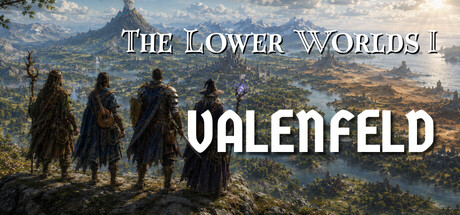
Valenfeld is built by one person, on a shoestring budget, with an Elder Scrolls–sized ambition. Here is exactly how, and why, AI fits into that.
Why we use it
Valenfeld is a solo indie project chasing a scope that normally takes a studio of dozens: a massive, hand-lorekept world you can wander for years without hitting an edge. That scope is not achievable by one person typing every tree, every ruin, and every line of dialogue by hand on a shoestring budget and an ambitious timeline. So we lean on AI-enabled workflows and, more importantly, cutting-edge procedural algorithms to scale content production and world scale to match the ambition — not to replace it.
What always stays human
Every piece of content in the game — every place, character, creature, item, quest, and line of lore — is built and overseen by a human creator and judge, grounded in our own ideas, our own lore, and our own systems design. AI does not decide what Valenfeld is. It never originates the world's canon, its themes, or its design intent on its own; it accelerates producing what we've already decided the world should be, and everything it touches is reviewed before it ships.
Not AI slop — procedural generation is the point
We're not interested in dumping raw model output into the game and calling it done. Our actual goal is an experimental, large-scale world built on cutting-edge procedural algorithms — terrain, dungeons, towns, ecosystems, even history — designed to be massively replayable for years, not a one-and-done AI slideshow. AI-assisted tooling is one part of the production pipeline that gets us there faster on a small budget; the procedural systems and the authored lore they run on are the actual craft, and that's where our attention to detail goes.
Our bet
We believe that if we focus relentlessly on delivering the best game possible — with a genuinely obsessive eye for detail on everything we ship — we can produce something great on a low budget and a small team of one. That is the bar we hold ourselves to, not "shipped fast" or "shipped cheap."
As we grow
This is how we build today, as a solo project with an ambitious scope and timeline. If and when Valenfeld earns a bigger budget for this game or for future releases, we intend to keep building just as ambitiously — with a team of art, lore, and gameplay experts working alongside these same tools, not replaced by them. Thinking about the best possible game comes first; everything else, including how we scale to build it, follows from that.
— Metatransformer Studios
One promotional artwork seen on the store page has been created with the help of AI tools. We are actively working on replacing it within the coming days.
Currently, the game uses around 10% conceptual/placeholder AI-generated textures. All of these placeholders will be completely replaced prior to the 1.0 full release.
The following are temporary AI placeholder textures:
- Most UI buttons
- Vehicle textures
- The home screen
- The mouse cursor
- Most of the shop scene
- All bridges
The following are NOT AI textures (100% custom-made):
- All enemy models and textures (minus the boss "evil reforged bot mk9001")
- All item icons and textures
- All levels (except for the underground bunker and frozen ridge, which temporarily share the home screen texture)
Some of concept art and in-game promotional materials on the game's Steam store page were created using generative artificial intelligence tools. The game's coding and script were entirely written by developer.
Some parts of the game were created with the help of generative AI tools. The music was made using Suno, and a few pieces of text were assisted by AI during development. Everything included in the game has been reviewed and approved by me before shipping.
The music featured in the game is AI-generated.
Sound effects, UI audio, and other audio assets are not AI-generated; they are manually edited or sourced from royalty-free sound libraries.
The game's programming, gameplay mechanics, system design, and overall game logic were developed by me using the Unity game engine. Generative AI tools were used only as an assistive resource for coding suggestions, debugging, optimization, and technical explanations. All AI-generated code was reviewed, modified, tested, and manually integrated into the project by me. The final implementation, design decisions, and gameplay systems were created and validated by the developer.
Some visual assets, audio, and written content used in this game were created or assisted by generative AI and have been reviewed, edited, and integrated by the developer. The game does not use AI to generate content during gameplay.
This game uses prerendered visual content, store assets, and translations assisted by generative AI. All AI-assisted content is created before release. It is not generated dynamically during gameplay. The game does not connect to external AI services during gameplay.
Backswamps contains some pre-generated visual assets created with the assistance of generative AI, including certain textures and interface artwork. All AI-assisted content has been reviewed, curated, and integrated by the developer. The game does not generate AI content during gameplay.
To create realistic interrogation scenarios in this detective game, this game packages a local, offline LLM to serve as the brain of the NPC suspects. This allows the user to lead the investigation however they like. Generative AI was NOT used to create this game, but an LLM is featured as a main game mechanic in the form of freeform NPC conversation.
Syncline is developed by me — AI tools were used to assist with parts of development, including code, some text content (UI copy, tutorial hints, level descriptions, store page copy), localization/translations, and some audio. All such content was directed by me and reviewed/edited before being included. No content is generated by AI at runtime — everything players see, hear, and play is fixed at build time.
Some of this game's shipped assets were created with the assistance of generative AI tools, all reviewed and curated by our team: 3D models and their textures (generated from our team's original concept designs), 2D illustrations and UI artwork, music and sound effects, and AI-assisted translations of in-game text for some supported languages. All AI-generated assets are used under commercial licenses with full usage rights. No content is generated while the game is running, and the game does not connect to any external AI service.
Generative AI was used during development to assist with selected fictional product labels, packaging textures, item icons, and visual reference materials.
This game uses generative AI tools in parts of its development. Some code was written with AI coding assistants, and some marketing and store artwork — including the capsule art and logo — was produced with AI assistance, based on and matched to in-game assets we created ourselves. Some 3D assets were created with AI-assisted tools All screenshots show real gameplay, all AI-assisted output is reviewed by a human before it ships, and no AI-generated content is produced live during play.
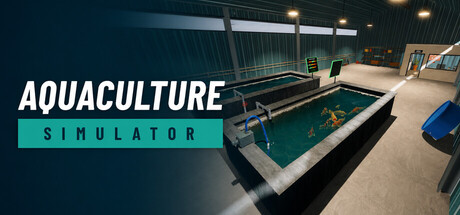
Some of this game's assets were created with generative AI tools and then integrated by hand: the fish models, the facility hall, and the tanks. Some in-game text, the tutorial and the customer emails, was written with the help of an AI language model. All other assets (music, sound, icons, textures, remaining UI) are hand-made or CC0. Every game system, the water simulation, koi grading, economy, customer and calendar logic, is hand-written code. No generative AI runs at runtime; nothing is generated live while you play.
Ai is used to create some loading-screens and other branding materials, also can be used in descriptive texts of the game.
All game code/assets are 100% made by humans.
Generative AI tools were used during development to assist with portions of the game’s code. All AI-assisted code was reviewed, edited, and tested by the developer. The game does not generate AI content during gameplay and does not connect to external AI services.
Some of the graphical assets in this game were created using generative AI tools. This includes certain 3D models (characters and props), textures, background illustrations, and UI images; some of the key art on this store page was created the same way. All AI-generated assets were curated, edited, and placed by the developer, and no AI content is generated in real time during gameplay.
Some in-game text, store page copy, and 2D marketing assets were created with the assistance of AI tools. All AI-assisted content was reviewed and curated by the developer. The game does not generate any content using AI during gameplay.
Generative AI was used for some game assets, music, and promotional materials. All content was manually reviewed and selected. No AI is used during gameplay.
AI tools were used to assist development, including code, Chinese/Spanish localization text and store page copy. All AI-assisted content was reviewed and curated by the developer. The game does not generate any content with AI at runtime.
This game is built by a two-member team: a human developer and an AI assistant working under his direction. Large parts of the game code and many pre-rendered assets (enemy creatures, towers, environment props, marketing artwork) were created with the assistance of generative AI — always based on human design decisions, and reviewed, tested and curated by the developer. The game does not generate any content at runtime using AI.
AI was used strictly to block out a few initial base meshes, which I then manually reworked to fit the game's style & performance.
No AI runs at runtime.
Some visual and audio assets in this game were created with the assistance of generative AI tools, then selected, edited, and integrated by the developer.
Gameplay, visuals, and code were built by hand. Only the bundled soundtrack used AI-assisted music tools, all of which I reviewed. Soundway is made for your own music — the built-in tracks just get you started.
In the development process of this game, we utilized pre-generated AI tools as follows:
* 2D Assets (Backgrounds, Photos, Various Images): After generating base images using AI, we manually added, modified, and processed them before implementing them in the game.
* 3D Assets: AI generation was used for some 3D models, and the output models were then manually adjusted and processed before use.
* Audio: Generation AI tools (text-to-speech and speech synthesis) were used for some sound effects (SE) and character voices.
Please note that we did not use any live-generated AI systems that generate content in real time during game execution.
Generative AI was used during the development of this game. Specifically, AI tools were utilized to assist in the creation and optimization of [some art assets / text localization / narrative polish]. All AI-generated content has been thoroughly reviewed and manually refined by the development team to ensure quality.
This game uses generative artificial intelligence tools during development to assist in the creation of some game content, including certain visual assets, icons, and promotional materials. All AI-generated content has been reviewed, modified, and refined by the development team, and integrated with human-created content to ensure that the final presentation meets the game's overall artistic direction and quality standards.
Generative AI tools were used during development to assist with some pre-generated 2D artwork and UI imagery, 3D models and animations, instrumental music and sound effects, localization drafts, and portions of the game code. As a solo developer, I selected, edited, integrated, and reviewed all of these outputs before inclusion. The game does not generate content at runtime and does not send player input to generative AI services.
استُخدمت أدوات الذكاء الاصطناعي أثناء التطوير للمساعدة في كتابة أجزاء من كود اللعبة وبعض النصوص داخلها، مثل التلميحات ورسائل الواجهة، وكذلك في إنشاء بعض النماذج ثلاثية الأبعاد والخامات (التكستشر). جميع المحتوى المُنجز بمساعدة الذكاء الاصطناعي تمت مراجعته وتعديله واعتماده من المطوّر. قصة اللعبة وتصميمها وإخراجها من صنع الإنسان بالكامل، ولا يتم توليد أي محتوى بالذكاء الاصطناعي أثناء اللعب.
OpenAI Codex was used during development to assist with writing, reviewing, and debugging portions of the game’s code. All AI-assisted output was reviewed, edited, and integrated by the developer. The game does not use generative AI during gameplay, and no player input is sent to a generative AI service.
Generative AI was used strictly to create temporary concept art and placeholder assets during early development. All of these placeholders are being systematically replaced with custom or commissioned assets prior to the game's final release.
This game uses generative AI tools during development to assist in creating some 2D textures and 3D models. These AI-generated assets have been manually reviewed, edited, and integrated into the final game build.
Some pre-rendered UI art (menu borders and decorative icons) was created with the assistance of generative AI tools during development. No content is generated live during gameplay.
Used AI to generate concept ideas and take care of tedious tasks to speed up preproduction.
All assets, including store images and thumbnails, are NOT AI generated.
Images provided to us by Patron supporters may or may not have been created using artificial intelligence.
Our Policy on AI & Procedural Generation
Valenfeld is built by one person, on a shoestring budget, with an Elder Scrolls–sized ambition. Here is exactly how, and why, AI fits into that.
Why we use it
Valenfeld is a solo indie project chasing a scope that normally takes a studio of dozens: a massive, hand-lorekept world you can wander for years without hitting an edge. That scope is not achievable by one person typing every tree, every ruin, and every line of dialogue by hand on a shoestring budget and an ambitious timeline. So we lean on AI-enabled workflows and, more importantly, cutting-edge procedural algorithms to scale content production and world scale to match the ambition — not to replace it.
What always stays human
Every piece of content in the game — every place, character, creature, item, quest, and line of lore — is built and overseen by a human creator and judge, grounded in our own ideas, our own lore, and our own systems design. AI does not decide what Valenfeld is. It never originates the world's canon, its themes, or its design intent on its own; it accelerates producing what we've already decided the world should be, and everything it touches is reviewed before it ships.
Not AI slop — procedural generation is the point
We're not interested in dumping raw model output into the game and calling it done. Our actual goal is an experimental, large-scale world built on cutting-edge procedural algorithms — terrain, dungeons, towns, ecosystems, even history — designed to be massively replayable for years, not a one-and-done AI slideshow. AI-assisted tooling is one part of the production pipeline that gets us there faster on a small budget; the procedural systems and the authored lore they run on are the actual craft, and that's where our attention to detail goes.
Our bet
We believe that if we focus relentlessly on delivering the best game possible — with a genuinely obsessive eye for detail on everything we ship — we can produce something great on a low budget and a small team of one. That is the bar we hold ourselves to, not "shipped fast" or "shipped cheap."
As we grow
This is how we build today, as a solo project with an ambitious scope and timeline. If and when Valenfeld earns a bigger budget for this game or for future releases, we intend to keep building just as ambitiously — with a team of art, lore, and gameplay experts working alongside these same tools, not replaced by them. Thinking about the best possible game comes first; everything else, including how we scale to build it, follows from that.
— Metatransformer Studios
One promotional artwork seen on the store page has been created with the help of AI tools. We are actively working on replacing it within the coming days.
Currently, the game uses around 10% conceptual/placeholder AI-generated textures. All of these placeholders will be completely replaced prior to the 1.0 full release.
The following are temporary AI placeholder textures:
- Most UI buttons
- Vehicle textures
- The home screen
- The mouse cursor
- Most of the shop scene
- All bridges
The following are NOT AI textures (100% custom-made):
- All enemy models and textures (minus the boss "evil reforged bot mk9001")
- All item icons and textures
- All levels (except for the underground bunker and frozen ridge, which temporarily share the home screen texture)
Some of concept art and in-game promotional materials on the game's Steam store page were created using generative artificial intelligence tools. The game's coding and script were entirely written by developer.
Some parts of the game were created with the help of generative AI tools. The music was made using Suno, and a few pieces of text were assisted by AI during development. Everything included in the game has been reviewed and approved by me before shipping.
The music featured in the game is AI-generated.
Sound effects, UI audio, and other audio assets are not AI-generated; they are manually edited or sourced from royalty-free sound libraries.
The game's programming, gameplay mechanics, system design, and overall game logic were developed by me using the Unity game engine. Generative AI tools were used only as an assistive resource for coding suggestions, debugging, optimization, and technical explanations. All AI-generated code was reviewed, modified, tested, and manually integrated into the project by me. The final implementation, design decisions, and gameplay systems were created and validated by the developer.
Some visual assets, audio, and written content used in this game were created or assisted by generative AI and have been reviewed, edited, and integrated by the developer. The game does not use AI to generate content during gameplay.
This game uses prerendered visual content, store assets, and translations assisted by generative AI. All AI-assisted content is created before release. It is not generated dynamically during gameplay. The game does not connect to external AI services during gameplay.
Backswamps contains some pre-generated visual assets created with the assistance of generative AI, including certain textures and interface artwork. All AI-assisted content has been reviewed, curated, and integrated by the developer. The game does not generate AI content during gameplay.
To create realistic interrogation scenarios in this detective game, this game packages a local, offline LLM to serve as the brain of the NPC suspects. This allows the user to lead the investigation however they like. Generative AI was NOT used to create this game, but an LLM is featured as a main game mechanic in the form of freeform NPC conversation.
Syncline is developed by me — AI tools were used to assist with parts of development, including code, some text content (UI copy, tutorial hints, level descriptions, store page copy), localization/translations, and some audio. All such content was directed by me and reviewed/edited before being included. No content is generated by AI at runtime — everything players see, hear, and play is fixed at build time.
Some of this game's shipped assets were created with the assistance of generative AI tools, all reviewed and curated by our team: 3D models and their textures (generated from our team's original concept designs), 2D illustrations and UI artwork, music and sound effects, and AI-assisted translations of in-game text for some supported languages. All AI-generated assets are used under commercial licenses with full usage rights. No content is generated while the game is running, and the game does not connect to any external AI service.
Generative AI was used during development to assist with selected fictional product labels, packaging textures, item icons, and visual reference materials.
This game uses generative AI tools in parts of its development. Some code was written with AI coding assistants, and some marketing and store artwork — including the capsule art and logo — was produced with AI assistance, based on and matched to in-game assets we created ourselves. Some 3D assets were created with AI-assisted tools All screenshots show real gameplay, all AI-assisted output is reviewed by a human before it ships, and no AI-generated content is produced live during play.
Some of this game's assets were created with generative AI tools and then integrated by hand: the fish models, the facility hall, and the tanks. Some in-game text, the tutorial and the customer emails, was written with the help of an AI language model. All other assets (music, sound, icons, textures, remaining UI) are hand-made or CC0. Every game system, the water simulation, koi grading, economy, customer and calendar logic, is hand-written code. No generative AI runs at runtime; nothing is generated live while you play.
Ai is used to create some loading-screens and other branding materials, also can be used in descriptive texts of the game.
All game code/assets are 100% made by humans.
Generative AI tools were used during development to assist with portions of the game’s code. All AI-assisted code was reviewed, edited, and tested by the developer. The game does not generate AI content during gameplay and does not connect to external AI services.
Some of the graphical assets in this game were created using generative AI tools. This includes certain 3D models (characters and props), textures, background illustrations, and UI images; some of the key art on this store page was created the same way. All AI-generated assets were curated, edited, and placed by the developer, and no AI content is generated in real time during gameplay.
Some in-game text, store page copy, and 2D marketing assets were created with the assistance of AI tools. All AI-assisted content was reviewed and curated by the developer. The game does not generate any content using AI during gameplay.
Generative AI was used for some game assets, music, and promotional materials. All content was manually reviewed and selected. No AI is used during gameplay.
AI tools were used to assist development, including code, Chinese/Spanish localization text and store page copy. All AI-assisted content was reviewed and curated by the developer. The game does not generate any content with AI at runtime.
This game is built by a two-member team: a human developer and an AI assistant working under his direction. Large parts of the game code and many pre-rendered assets (enemy creatures, towers, environment props, marketing artwork) were created with the assistance of generative AI — always based on human design decisions, and reviewed, tested and curated by the developer. The game does not generate any content at runtime using AI.
AI was used strictly to block out a few initial base meshes, which I then manually reworked to fit the game's style & performance.
No AI runs at runtime.
Some visual and audio assets in this game were created with the assistance of generative AI tools, then selected, edited, and integrated by the developer.
Gameplay, visuals, and code were built by hand. Only the bundled soundtrack used AI-assisted music tools, all of which I reviewed. Soundway is made for your own music — the built-in tracks just get you started.
In the development process of this game, we utilized pre-generated AI tools as follows:
* 2D Assets (Backgrounds, Photos, Various Images): After generating base images using AI, we manually added, modified, and processed them before implementing them in the game.
* 3D Assets: AI generation was used for some 3D models, and the output models were then manually adjusted and processed before use.
* Audio: Generation AI tools (text-to-speech and speech synthesis) were used for some sound effects (SE) and character voices.
Please note that we did not use any live-generated AI systems that generate content in real time during game execution.
Generative AI was used during the development of this game. Specifically, AI tools were utilized to assist in the creation and optimization of [some art assets / text localization / narrative polish]. All AI-generated content has been thoroughly reviewed and manually refined by the development team to ensure quality.