Public Steam disclosure research25,380 disclosures tracked
Where do games disclose AI use?
Search developers’ Steam disclosures, compare classified AI use across
games, and follow recorded changes.
This index adds cross-game classifications and statistics to
statements published on individual store pages.
Groups reflect automatic analysis of public disclosures; mature records are excluded. These counts do not measure AI use across all of Steam.
Missing or unclear statements cannot establish whether a game uses AI.
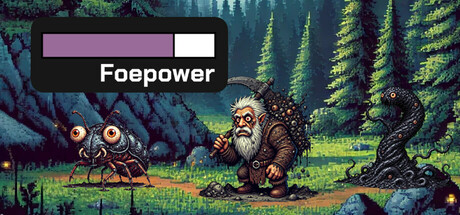
UPDATE: Foepower now offers a 100% human, 0% AI art pack drawn by the developer's daughter. The "Aspiring Artist" art pack is included in the base game for everyone.
For the default art pack, Foepower Game Studio utilized generative AI to assist in development of the game's pre-rendered art and marketing assets. All art assets have been reviewed and finalized by the developer, and considerable care has been taken to craft a consistent and compelling game universe.
Due to the limitation of development funds, the game's equipment icons, item icons, objects on the scene, and animation sequence frames of characters are generated with AI-assisted generation. This game only uses pre-rendered art assets, not real-time generation AI. If the financial conditions permit, we will gradually replace these art assets.
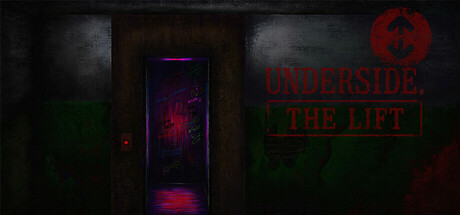
Some elements of Underside: The Lift were partially created using generative artificial intelligence tools:
Several environment artworks and the project logo were generated with the help of AI tools and later refined manually.
A portion of the in-game notes and lore texts were drafted with the help of AI and then edited by the developer.
The game's Steam store page and marketing materials do not include AI-generated content. Only minor editorial assistance from AI was used when writing the store description.
There is no generative AI operating in real time within the game itself.
This game uses pre-generated AI only for certain 2D background images and promotional store visuals. These assets were created before release and remain fixed. The game does not include any live AI generation during gameplay.
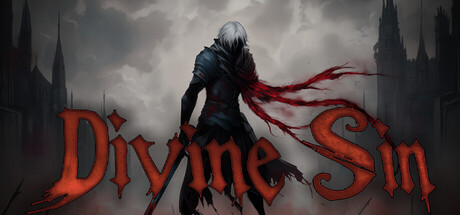
During the development of this game, I used AI to generate some of the art assets, primarily the monster illustrations and background concept art. Although I initially tried to avoid using AI, the reality is that, given my limited budget and capabilities, I simply couldn’t afford a large amount of high quality hand drawn artwork.
For this, I am truly sorry.
I fully recognize that AI can never replace the creativity and uniqueness of real artists.
At the same time, I hope you’ll allow me to express this clearly: Divine Sin is by no means a soulless project. I’ve poured an immense amount of time into refining its innovative mechanics, designing diverse content, and constantly tweaking balance. From the earliest concept sketches to the current demo release, over the course of more than three years, I’ve remained dedicated to creating a game that fans of the genre can genuinely enjoy.
If you can understand my decision and are willing to support the game, I would be deeply grateful.
Regardless, I will keep doing my best, and I truly hope that in the future, I’ll have the means to replace all AI-generated assets with original artwork created by real artists.
AI is used for all game translation and store page translation. The game is first written in our native language, then translated to all supported languages. If you find any mistranslation, contact us.
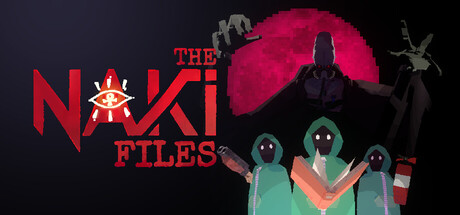
Also, specific for the store page only: the female voice from the trailer (explaining the Anunnaki) was created using AI.
Besides that, the team uses AI like any other human being: for helping with brainstorm, internal concept art, reference images (not used directly in the final product), summarizing documentation, and sometimes it helps us catch some bugs.
Images were created with an AI and then edited by me to speed up the development process.
These AI generated images are included in the game (user interface, beginning and end plot).
On the shop page, the cover photo was also generated with AI and then edited by me.
As a solo developer, I had no other choice and I ask for your understanding.
This game use pre-rendered generative artificial intelligence:
- storepage: trailer music, enso art, main picture enhanced screenshot
- main character textures: hair, shorts
I am well aware that AI cannot replace the creativity and uniqueness of a true artist.
However, as a one-man indie game, the amount of money I can put into it is really limited, so in order to show a kind of characteristic gameplay, and reflect the creativity of the design, I used AI to generate the art content.
After completion, the AI references a free funny skit I once made, and corrects it manually.
I hope you understand my decision and continue to support our game.
As a solo indie developer, my resources are very limited, and English is not my native language. Therefore, I used AI as assistance to translate the game content and the Steam page (both created by me) into other languages.
AI was used for some icons, all music and the loading screen. These are just placeholders until I either learn to create content that can replace or gain enough funding to hire someone to.
Some images and backgrounds in the game are AI-assisted assets that have been carefully edited and refined by me. The artwork is a blend of self-designed visuals and AI-generated elements, with adjustments made to harmonize color patterns.
**Areas of AI Usage in the Game:**
1. Game icons, including icons for heroes, hero skins, mercenaries, mercenary skins, monsters, skills, attributes, items, and more;
2. Game illustrations, including illustrations for heroes, hero skins, mercenaries, and mercenary skins.
"Artificial intelligence was used as a creative tool in various stages of the game's visual and audio development. For visual design, AI-generated images served as the foundation for compositions edited in GIMP, where they were cropped, adjusted, and combined with other elements to create unique landscapes and promotional backgrounds. Additionally, AI was also employed in voiceover creation, providing stylized and tailored voices for key narrative moments."
AI technology was used for select visual assets and localization. Character illustrations and in-game designs began as AI drafts and were refined manually to match our style.
The game uses multiple AI characters, each with unique memories and re-collections to participate in a group conversation where they try to deduce who is the killer (the player). Essentially a reverse Turing-test with bells and whistles.
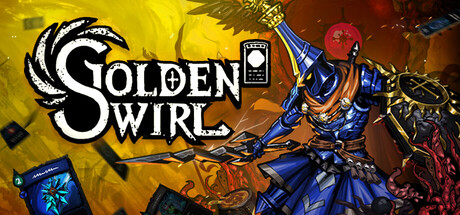
Some of the visual elements in the game, including the skill card images, game logo, and other artwork, were created using AI-generated content. This technology helped us enhance the game's aesthetic appeal and provide a unique visual experience.
Generative AI tools were used as part of the development workflow for programming assistance, debugging support, implementation planning, and visual refinement.
AI-assisted visual workflows were used to explore, refine, or produce some visual elements. All such content was reviewed and integrated manually by the developer.
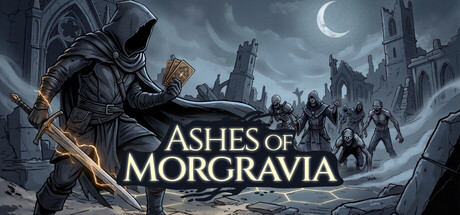
Ashes of Morgravia does not use live generative AI during gameplay. The game does not generate AI content at runtime and does not send player input to AI services.
UPDATE: Foepower now offers a 100% human, 0% AI art pack drawn by the developer's daughter. The "Aspiring Artist" art pack is included in the base game for everyone.
For the default art pack, Foepower Game Studio utilized generative AI to assist in development of the game's pre-rendered art and marketing assets. All art assets have been reviewed and finalized by the developer, and considerable care has been taken to craft a consistent and compelling game universe.
Due to the limitation of development funds, the game's equipment icons, item icons, objects on the scene, and animation sequence frames of characters are generated with AI-assisted generation. This game only uses pre-rendered art assets, not real-time generation AI. If the financial conditions permit, we will gradually replace these art assets.
Some elements of Underside: The Lift were partially created using generative artificial intelligence tools:
Several environment artworks and the project logo were generated with the help of AI tools and later refined manually.
A portion of the in-game notes and lore texts were drafted with the help of AI and then edited by the developer.
The game's Steam store page and marketing materials do not include AI-generated content. Only minor editorial assistance from AI was used when writing the store description.
There is no generative AI operating in real time within the game itself.
This game uses pre-generated AI only for certain 2D background images and promotional store visuals. These assets were created before release and remain fixed. The game does not include any live AI generation during gameplay.
During the development of this game, I used AI to generate some of the art assets, primarily the monster illustrations and background concept art. Although I initially tried to avoid using AI, the reality is that, given my limited budget and capabilities, I simply couldn’t afford a large amount of high quality hand drawn artwork.
For this, I am truly sorry.
I fully recognize that AI can never replace the creativity and uniqueness of real artists.
At the same time, I hope you’ll allow me to express this clearly: Divine Sin is by no means a soulless project. I’ve poured an immense amount of time into refining its innovative mechanics, designing diverse content, and constantly tweaking balance. From the earliest concept sketches to the current demo release, over the course of more than three years, I’ve remained dedicated to creating a game that fans of the genre can genuinely enjoy.
If you can understand my decision and are willing to support the game, I would be deeply grateful.
Regardless, I will keep doing my best, and I truly hope that in the future, I’ll have the means to replace all AI-generated assets with original artwork created by real artists.
AI is used for all game translation and store page translation. The game is first written in our native language, then translated to all supported languages. If you find any mistranslation, contact us.
Also, specific for the store page only: the female voice from the trailer (explaining the Anunnaki) was created using AI.
Besides that, the team uses AI like any other human being: for helping with brainstorm, internal concept art, reference images (not used directly in the final product), summarizing documentation, and sometimes it helps us catch some bugs.
Images were created with an AI and then edited by me to speed up the development process.
These AI generated images are included in the game (user interface, beginning and end plot).
On the shop page, the cover photo was also generated with AI and then edited by me.
As a solo developer, I had no other choice and I ask for your understanding.
This game use pre-rendered generative artificial intelligence:
- storepage: trailer music, enso art, main picture enhanced screenshot
- main character textures: hair, shorts
I am well aware that AI cannot replace the creativity and uniqueness of a true artist.
However, as a one-man indie game, the amount of money I can put into it is really limited, so in order to show a kind of characteristic gameplay, and reflect the creativity of the design, I used AI to generate the art content.
After completion, the AI references a free funny skit I once made, and corrects it manually.
I hope you understand my decision and continue to support our game.
As a solo indie developer, my resources are very limited, and English is not my native language. Therefore, I used AI as assistance to translate the game content and the Steam page (both created by me) into other languages.
AI was used for some icons, all music and the loading screen. These are just placeholders until I either learn to create content that can replace or gain enough funding to hire someone to.
Some images and backgrounds in the game are AI-assisted assets that have been carefully edited and refined by me. The artwork is a blend of self-designed visuals and AI-generated elements, with adjustments made to harmonize color patterns.
**Areas of AI Usage in the Game:**
1. Game icons, including icons for heroes, hero skins, mercenaries, mercenary skins, monsters, skills, attributes, items, and more;
2. Game illustrations, including illustrations for heroes, hero skins, mercenaries, and mercenary skins.
"Artificial intelligence was used as a creative tool in various stages of the game's visual and audio development. For visual design, AI-generated images served as the foundation for compositions edited in GIMP, where they were cropped, adjusted, and combined with other elements to create unique landscapes and promotional backgrounds. Additionally, AI was also employed in voiceover creation, providing stylized and tailored voices for key narrative moments."
AI technology was used for select visual assets and localization. Character illustrations and in-game designs began as AI drafts and were refined manually to match our style.
The game uses multiple AI characters, each with unique memories and re-collections to participate in a group conversation where they try to deduce who is the killer (the player). Essentially a reverse Turing-test with bells and whistles.
Some of the visual elements in the game, including the skill card images, game logo, and other artwork, were created using AI-generated content. This technology helped us enhance the game's aesthetic appeal and provide a unique visual experience.
Generative AI tools were used as part of the development workflow for programming assistance, debugging support, implementation planning, and visual refinement.
AI-assisted visual workflows were used to explore, refine, or produce some visual elements. All such content was reviewed and integrated manually by the developer.
Ashes of Morgravia does not use live generative AI during gameplay. The game does not generate AI content at runtime and does not send player input to AI services.