Public Steam disclosure research27,951 disclosures tracked
Where do games disclose AI use?
Search developers’ Steam disclosures, compare classified AI use across
games, and follow recorded changes.
This index adds cross-game classifications and statistics to
statements published on individual store pages.
Groups reflect automatic analysis of public disclosures; mature records are excluded. These counts do not measure AI use across all of Steam.
Missing or unclear statements cannot establish whether a game uses AI.
The following features were created with the help of AI:
- Text Snippets: Some text snippets were created with the help of AI
- Troubleshooting: AI was also used to help with troubleshooting efforts
Disclaimer:
I'm a solo developer, this is my first project. I have no external funding, but have spent money out of my own pocket to acquire assets created by very talented people.
Additionally, free assets were used that are either in the public domain (CC0), or require attribution (credits provided in game files). AI was used in the creation process of this game that helped me overcome issues and problems that I encountered, as well as providing certain text summaries and general ideas for text displays.
Translations done by humans, but aided by DeepL; most graphics used Leonardo and SD as tools; a few of the audio files were generated with the help of Suno and Udio, while most were made by human artists without AI help. 11.ai was used to improve the voices of the human voice actors.
The application uses AI for editing. Specifically:
* AI to demux sounds to parts
* AI to create karaoke sound effects
* AI to transcribe text from speech
* AI to create speech from text
* AI to separate speech
* AI to enhance speech
* AI to reduce music noise
* AI to upscale images
* AI to stabilize videos
* AI to resize images
* AI for content-aware erasing
* AI for image object detection
* AI for face restoration
* AI for file compression
All AI models are MIT-licensed and no image or video is automatically generated.
The picture clue in the office scene is generated by AI. It shows no real people's face nor impersonate any real people.
The cover picture of the bakery book in the bedroom scene is generated by AI. It contains some bread.
Terrain textures, elevations and biomes in game are ML generated. Most of the work on the terrain also uses machine learning techniques both offline (pre rendered) and at runtime.
We train our own models with our own sourced data, and it is rigorously vetted for legal concerns.
Club Koala uses AI integration regarding NPCs (non-playable characters). Our NPCS are intelligent, adaptable and will grow alongside players to enhance gaming experience. Think of Club Koala’s AI NPCs as your pals as they will foster unique interactions and dialogues. This results in personalized experiences tailored to each player's unique play style, maximizing engagement and enjoyment.
They are there to assist you and offer personalised challenges and quests, elevating the overall gaming experience. NPCs dynamically evolve and contribute to intricate narratives through AI. This allows players to shape their own stories, immersing themselves in a fantasy world where choices and actions shape the evolving plot. In Club Koala you are bound to experience gameplay like never before.
AI generated diagram explanation:
1. The title screen of the game
2. Image of promotional images
3. Library homepage image
4. Use Ai to generate in-game plot events and illustrations
AI is exclusively utilized in the pre-generated assets, with no live-generated AI employed. Following tools are used:
Photoshop AI (main tool): Utilized for improving art, inpainting, and outpainting.
Magnific AI: Employed for creative upscaling.
Midjourney: Utilized for concept art generation of some assets. Subsequently, assets undergo a manual improvement process in Photoshop by combining different elements from the concept art to maintain a consistent art style. For robot hand animations, the process involves Spine and Adobe After Effects. Additionally, vehicles usually undergo the creation of a 3D model in Blender.
GPT technology is used in the development of Hysteria in Howlsbend to power conversations between players and the cast of characters. The technology generates responses based on the input provided by the player, and a tailored AI context carefully crafted by the team. This enables the characters to generate natural dialogues, and evolve over the game experience by having emotional curves.
The content for the game (images of objects, ships, UI elements) was generated by artificial intelligence at the game development stage. The content does not change in any way during the game.
Some card illustrations in the game are AI-generated and post-processed in Photoshop, including those based on original images and commercially licensed resources purchased in the assets store. All AI generated images are all carefully manually modified.
RaceOnLife uses AI-driven NPC systems to create more dynamic interactions inside the game world.
Some NPCs are designed to remember previous conversations, react to the player’s behavior, and respond differently depending on how the player communicates with them. These interactions may affect how NPCs guide, assist, ignore, challenge, or oppose the player during gameplay.
Our goal is to make the island feel more alive, where conversations with non-player characters are not just static dialogue lines, but part of the player’s personal journey through the story and open world.
AI features are used to support NPC behavior, dialogue variation, and player interaction systems. Core gameplay, world design, missions, vehicles, races, combat, progression, and major story content are created and directed by our development team.
For live AI interactions, we are working with safety rules and moderation limits to reduce the risk of inappropriate, harmful, or illegal generated content.
Connects to 3rd-Party Service for AI Content Generation: openai.com
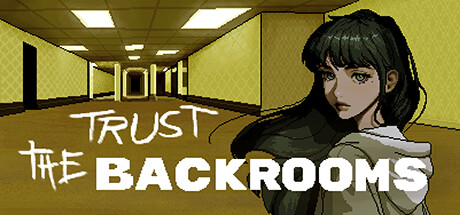
Generative AI was only used to create image references during the creation of promotionnal artworks :
The main promotional artwork shows a hallway where the pillars and the lights are arranged to form the word : DON'T.
The artist who drew these promotional artworks used generative AI to get reference images on how to integrate text with natural elements of a scene so that the elements of the scene seems to be forming letters.
The final artwork is purely derivative and original and was made by the artist from zero, with the help of the AI generated images as inspiration for placing the letters on the final drawing.
During the early development of Astro Felix, limited AI generated visuals were used specifically for select Steam artwork and a few temporary in-game placeholders. These assets were used solely to support of prototyping and vision shaping.
Our goal is to replace all placeholder material with original art as development progresses.
AI tools were utilized during development to assist in creating various art and audio assets, including concept art, icons, textures, and temporary content. These tools helped speed up production and explore creative options, but all final assets were selected, refined, and implemented by the developer.
Raiverb is a Computer-Assisted Translation tool that organizes translation data from source content, tries to integrate as much context from this data to improve the acuracy of the end result.
This game utilizes the GPT interface provided by OpenAI to generate text. Specifically, in the text adventure, it generates game objectives, story backgrounds, and character information. In the journey mode, it generates game events, interactive items, all real-time dialogue content, and descriptions for generated images. The pre-rendered image resources are generated using stable diffusion and DALL·E.
We used generative AI for: art on the store page, and some in-game textures. Each AI-generated content was then manually adjusted by our in-house artist to ensure the presence of human input in the art and high quality of the game.
This game uses a locally-run language model to power live, on-device conversations with an AI character — no data leaves your computer. All visual and audio assets are human-made or commercially licensed. A small number of assets used AI generation as an early drafting tool; each was subsequently revised and finalized by human artists to meet our visual and quality standards.