Public Steam disclosure research25,514 disclosures tracked
Where do games disclose AI use?
Search developers’ Steam disclosures, compare classified AI use across
games, and follow recorded changes.
This index adds cross-game classifications and statistics to
statements published on individual store pages.
Groups reflect automatic analysis of public disclosures; mature records are excluded. These counts do not measure AI use across all of Steam.
Missing or unclear statements cannot establish whether a game uses AI.
I started this project completely from scratch and have spent a lot of time developing and refining it.
Claude Code AI was used to help me with certain tasks, such as implementing the save system, menus, and scoring system. However, the AI did not build the game for me. I was responsible for the overall development, design, integration, testing, debugging, and all the decisions made throughout the project.
The entire project was developed in Unreal Engine 5.8, primarily using C++ with a few Blueprints.
Despite what you may sometimes hear, using AI does not mean that the work is done for you. It can be a useful tool, but you still need to understand what you are doing, integrate the code into your project, fix issues, test everything, and spend many hours making the final result work properly.
Some of this game's assets and content were created with the help of generative AI tools during development. This includes certain graphical assets (such as store and marketing art and athlete portraits) and was also used to help generate and populate in-game content such as races, athletes and equipment. All AI-assisted content is created during development, reviewed and curated by the developer, and ships as fixed, pre-made content — the game does not generate any content with AI in real time, and does not connect to any AI service during play.
Generative AI tools were used to create store graphical assets, promotional images, capsule artwork, and in-game card visual assets. AI was not used to generate live in-game content.
Generative AI was used solely to assist with localization and translation of developer-written text. No visual assets, models, textures, animations, music, sound effects, voice acting, or gameplay content were generated with AI.
Generative AI is used as a support tool during development, mainly to assist with the creation and iteration of some visual assets and promotional materials. All content is selected, edited, adapted, composed and implemented by the developer. No AI-generated content is created in real time during gameplay.
Artificial intelligence was used to generate artwork for the game's Steam page and the game's logo, as well as to translate and improve the game's dialogue. No AI-generated artwork was used in the game itself.
Program code, UI text, the thirteen-language interface localization and store page copy were produced with the assistance of generative AI tools. The character model was hand-made by a 3D artist; environment models, music and sound effects come from credited human authors and licensed asset packs; all screenshots and promotional images are rendered in-engine. No AI-generated imagery or audio is included.
The area background artwork in this game is based on images created with a generative AI tool. This covers 96 images across six themes; the generated images were reviewed, selected, and processed into the game's format during development. Some title logos were produced the same way and then post-processed.
All other assets — cell graphics, clouds, sound effects, background music, planet textures, and the app icon — are generated procedurally in code and do not use AI.
No AI runs while the game is playing.
3D character and prop models, their textures, and pre-rendered cutscene video clips were created with generative AI tools. Character voice lines were synthesized with AI text-to-speech. Dialogue and story text were written with AI assistance. All AI-generated content is pre-rendered; nothing is generated during gameplay.
Some graphics, illustrations, and text used in the game were pre-generated with the help of generative AI during development and were subsequently reviewed, selected, and edited by the developer. No content is generated by AI during gameplay.
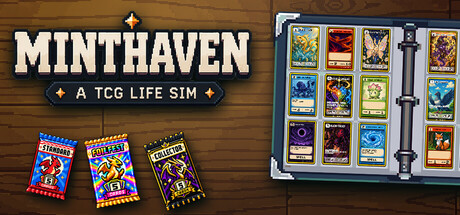
Generative AI tools were used during the development of MINTHAVEN to assist with creating and iterating visual assets, including concept art and card artwork. AI-generated content is reviewed, edited, and integrated by the development team. No generative AI content is created in real time during gameplay.
Generative AI tools were used to assist in the creation of some pre-generated visual assets, character elements, voice-over, music, localization and promotional text. Some of these assets were further edited and refined by the developer before being included in the final game.
All final visuals of the game are created and finalized by our art team. AI-assisted tools are used only during the early concept and ideation stages. All visual assets in the final version are manually created, refined, and finalized by our artists.
Generative AI tools were used during development: to assist with writing the game code, to draft in-game and store text, and to produce store graphics (capsules, icons). The simulation itself runs on deterministic algorithms; no content is generated by AI at runtime.
During development, placeholder music has been created using AI. This music is being used temporarily during development and I plan on dedicating time into producing my own music when the games main mechanics are complete.
Some pre-rendered art assets (enemy and background artwork) and localization were created with generative AI tools under human direction, then manually cleaned up and integrated by the developers. Development used AI-assisted coding tools. No content is AI-generated at runtime.
Generative AI tools were used during development to assist in the creation of some systems, 3D models, textures, and localized translations included in the game.
Used AI to over optimize the performance of the game as it is very painful to have thousands of enemies on your screen at the same time and 100 projectiles per seconds without turning your pc into an oven.
Also used AI for localization. (Added different languages besides English)
We are a small studio with only six people actively involved in development. For teams like ours, generative AI is a supportive tool that helps us realize a creative vision that would otherwise be completely out of reach within our budget. It allows us to focus on what we love doing most: creating games. We view AI strictly as a practical toolset.
Here is how we utilized generative AI in our game:
• Visual Assets: We use generative AI for both concept art and in-game graphics. The vast majority of these AI-generated images are manually modified, iterated upon, and finalized by our artist. We have not replaced any jobs; our games simply feature richer visual assets.
• Audio & Voice-over: Voice-over (VO) lines and several music tracks were generated using AI.
• Proofreading: We utilize AI to proofread our texts and scripts.
Props to you for checking this out! I used AI to help code some of the newer features and port this from my original mobile build as it saved a lot of dev time. Everything else—sounds, amateur vector art, and the remaining 85%+ of the code is completely human-crafted.
Artificial intelligence tools are used only for concept art/design references and text translations. No AI-generated content is used directly in the final in-game assets.
Parts of this product were produced with the help of generative AI. The HTML, CSS, JavaScript and shader code of the bundled wallpapers, the store page text and its translations were drafted with AI assistance and reviewed by a person before release.
The application itself does not use generative AI at runtime. It generates no content while you use it, and nothing you do in Wallpaper — hardware readings, settings, your own photos and videos — is sent to any AI model or to any server. Everything stays on your PC.
Some visual assets and music featured in this game were initially created with the assistance of generative AI tools. All AI-assisted content has been carefully reviewed, selected, and substantially refined by the developer to ensure consistent artistic direction, cohesive style, and a high standard of quality throughout the game.
This game uses generative artificial intelligence to assist with story planning, writing, and editing, as well as to create character artwork, backgrounds, event illustrations, music, and selected sound effects. All generated content was reviewed, selected, revised, and edited by the developer before being incorporated into the game.
All AI-generated content was created in advance during development. The game does not generate new content while you play, and no player input or personal information is sent to any generative AI service.
Some of the artwork in this game — including character portraits, user
interface elements, map and battle backgrounds, unit sprites, and visual
effects — was created with the help of generative AI image tools, then
reviewed, corrected, and assembled by hand before being included in the
game. Some sound effects were produced with AI audio tools in the same way.
All of this content is generated ahead of time and is fixed in the shipped
build. The game does not generate any content while you play, and it does
not connect to any external AI service during gameplay.
Some of the game’s visual assets were created with the assistance of AI tools.
All music featured in the game was created by human artists and is not AI-generated.
AI tools were used to assist with localizing the interface text into the game's 11 supported languages. All artwork, music, sound and game design are human-made.
Generative AI tools were used for pre-rendered character portraits, title/key artwork and other game illustrations, portions of promotional video and audio, marketing artwork, and assistance with localized text. These assets and text were reviewed and edited for the game. Orderfall does not generate AI content during gameplay or connect to an external AI service. The live-action-style Captain Cook teaser is dramatized promotional footage; the game itself uses pixel-art graphics.
The developer of The Grotto Index used generative AI tools during development to help create some of the game's visual assets, including specimen pixel art and illustrations. All AI-assisted content was reviewed, edited, and curated by the developer before being included in the game. No content is generated by AI during gameplay — every puzzle, image, and piece of text in the shipped game is fixed and was finalized before release.
Generative AI tools were used during development to assist with brainstorming and editing some mission and other written content. All generated suggestions were reviewed and edited by me before inclusion in the game.
Some visual, localization, store page, and marketing materials may be created with the assistance of generative AI tools. All AI-assisted content is reviewed, edited, and polished by our team before use. No AI content is generated during gameplay.
Generative AI was used during development to assist in creating some pre-generated visual assets, character artwork, backgrounds, and promotional images. All AI-assisted content was reviewed and selected by the developer before inclusion in the game. No generative AI is used during gameplay, and the game does not connect to any external AI service.
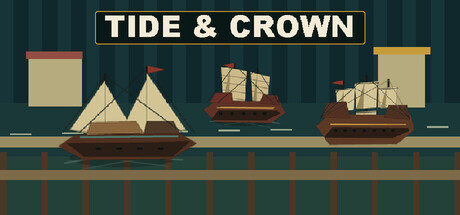
Generative AI tools were used during development to assist with portions of the game’s interface and narrative text, programming, procedurally constructed 2D visual elements, and marketing materials. All included content was reviewed, edited, and integrated by the developer. Tide & Crown does not generate AI content during gameplay and does not connect to external AI services.
I started this project completely from scratch and have spent a lot of time developing and refining it.
Claude Code AI was used to help me with certain tasks, such as implementing the save system, menus, and scoring system. However, the AI did not build the game for me. I was responsible for the overall development, design, integration, testing, debugging, and all the decisions made throughout the project.
The entire project was developed in Unreal Engine 5.8, primarily using C++ with a few Blueprints.
Despite what you may sometimes hear, using AI does not mean that the work is done for you. It can be a useful tool, but you still need to understand what you are doing, integrate the code into your project, fix issues, test everything, and spend many hours making the final result work properly.
Some of this game's assets and content were created with the help of generative AI tools during development. This includes certain graphical assets (such as store and marketing art and athlete portraits) and was also used to help generate and populate in-game content such as races, athletes and equipment. All AI-assisted content is created during development, reviewed and curated by the developer, and ships as fixed, pre-made content — the game does not generate any content with AI in real time, and does not connect to any AI service during play.
Generative AI tools were used to create store graphical assets, promotional images, capsule artwork, and in-game card visual assets. AI was not used to generate live in-game content.
Generative AI was used solely to assist with localization and translation of developer-written text. No visual assets, models, textures, animations, music, sound effects, voice acting, or gameplay content were generated with AI.
Generative AI is used as a support tool during development, mainly to assist with the creation and iteration of some visual assets and promotional materials. All content is selected, edited, adapted, composed and implemented by the developer. No AI-generated content is created in real time during gameplay.
Artificial intelligence was used to generate artwork for the game's Steam page and the game's logo, as well as to translate and improve the game's dialogue. No AI-generated artwork was used in the game itself.
Program code, UI text, the thirteen-language interface localization and store page copy were produced with the assistance of generative AI tools. The character model was hand-made by a 3D artist; environment models, music and sound effects come from credited human authors and licensed asset packs; all screenshots and promotional images are rendered in-engine. No AI-generated imagery or audio is included.
The area background artwork in this game is based on images created with a generative AI tool. This covers 96 images across six themes; the generated images were reviewed, selected, and processed into the game's format during development. Some title logos were produced the same way and then post-processed.
All other assets — cell graphics, clouds, sound effects, background music, planet textures, and the app icon — are generated procedurally in code and do not use AI.
No AI runs while the game is playing.
3D character and prop models, their textures, and pre-rendered cutscene video clips were created with generative AI tools. Character voice lines were synthesized with AI text-to-speech. Dialogue and story text were written with AI assistance. All AI-generated content is pre-rendered; nothing is generated during gameplay.
Some graphics, illustrations, and text used in the game were pre-generated with the help of generative AI during development and were subsequently reviewed, selected, and edited by the developer. No content is generated by AI during gameplay.
Generative AI tools were used during the development of MINTHAVEN to assist with creating and iterating visual assets, including concept art and card artwork. AI-generated content is reviewed, edited, and integrated by the development team. No generative AI content is created in real time during gameplay.
Generative AI tools were used to assist in the creation of some pre-generated visual assets, character elements, voice-over, music, localization and promotional text. Some of these assets were further edited and refined by the developer before being included in the final game.
All final visuals of the game are created and finalized by our art team. AI-assisted tools are used only during the early concept and ideation stages. All visual assets in the final version are manually created, refined, and finalized by our artists.
Generative AI tools were used during development: to assist with writing the game code, to draft in-game and store text, and to produce store graphics (capsules, icons). The simulation itself runs on deterministic algorithms; no content is generated by AI at runtime.
During development, placeholder music has been created using AI. This music is being used temporarily during development and I plan on dedicating time into producing my own music when the games main mechanics are complete.
Some pre-rendered art assets (enemy and background artwork) and localization were created with generative AI tools under human direction, then manually cleaned up and integrated by the developers. Development used AI-assisted coding tools. No content is AI-generated at runtime.
Generative AI tools were used during development to assist in the creation of some systems, 3D models, textures, and localized translations included in the game.
Used AI to over optimize the performance of the game as it is very painful to have thousands of enemies on your screen at the same time and 100 projectiles per seconds without turning your pc into an oven.
Also used AI for localization. (Added different languages besides English)
We are a small studio with only six people actively involved in development. For teams like ours, generative AI is a supportive tool that helps us realize a creative vision that would otherwise be completely out of reach within our budget. It allows us to focus on what we love doing most: creating games. We view AI strictly as a practical toolset.
Here is how we utilized generative AI in our game:
• Visual Assets: We use generative AI for both concept art and in-game graphics. The vast majority of these AI-generated images are manually modified, iterated upon, and finalized by our artist. We have not replaced any jobs; our games simply feature richer visual assets.
• Audio & Voice-over: Voice-over (VO) lines and several music tracks were generated using AI.
• Proofreading: We utilize AI to proofread our texts and scripts.
Props to you for checking this out! I used AI to help code some of the newer features and port this from my original mobile build as it saved a lot of dev time. Everything else—sounds, amateur vector art, and the remaining 85%+ of the code is completely human-crafted.
Artificial intelligence tools are used only for concept art/design references and text translations. No AI-generated content is used directly in the final in-game assets.
Parts of this product were produced with the help of generative AI. The HTML, CSS, JavaScript and shader code of the bundled wallpapers, the store page text and its translations were drafted with AI assistance and reviewed by a person before release.
The application itself does not use generative AI at runtime. It generates no content while you use it, and nothing you do in Wallpaper — hardware readings, settings, your own photos and videos — is sent to any AI model or to any server. Everything stays on your PC.
Some visual assets and music featured in this game were initially created with the assistance of generative AI tools. All AI-assisted content has been carefully reviewed, selected, and substantially refined by the developer to ensure consistent artistic direction, cohesive style, and a high standard of quality throughout the game.
This game uses generative artificial intelligence to assist with story planning, writing, and editing, as well as to create character artwork, backgrounds, event illustrations, music, and selected sound effects. All generated content was reviewed, selected, revised, and edited by the developer before being incorporated into the game.
All AI-generated content was created in advance during development. The game does not generate new content while you play, and no player input or personal information is sent to any generative AI service.
Some of the artwork in this game — including character portraits, user
interface elements, map and battle backgrounds, unit sprites, and visual
effects — was created with the help of generative AI image tools, then
reviewed, corrected, and assembled by hand before being included in the
game. Some sound effects were produced with AI audio tools in the same way.
All of this content is generated ahead of time and is fixed in the shipped
build. The game does not generate any content while you play, and it does
not connect to any external AI service during gameplay.
Some of the game’s visual assets were created with the assistance of AI tools.
All music featured in the game was created by human artists and is not AI-generated.
AI tools were used to assist with localizing the interface text into the game's 11 supported languages. All artwork, music, sound and game design are human-made.
Generative AI tools were used for pre-rendered character portraits, title/key artwork and other game illustrations, portions of promotional video and audio, marketing artwork, and assistance with localized text. These assets and text were reviewed and edited for the game. Orderfall does not generate AI content during gameplay or connect to an external AI service. The live-action-style Captain Cook teaser is dramatized promotional footage; the game itself uses pixel-art graphics.
The developer of The Grotto Index used generative AI tools during development to help create some of the game's visual assets, including specimen pixel art and illustrations. All AI-assisted content was reviewed, edited, and curated by the developer before being included in the game. No content is generated by AI during gameplay — every puzzle, image, and piece of text in the shipped game is fixed and was finalized before release.
Generative AI tools were used during development to assist with brainstorming and editing some mission and other written content. All generated suggestions were reviewed and edited by me before inclusion in the game.
Some visual, localization, store page, and marketing materials may be created with the assistance of generative AI tools. All AI-assisted content is reviewed, edited, and polished by our team before use. No AI content is generated during gameplay.
Generative AI was used during development to assist in creating some pre-generated visual assets, character artwork, backgrounds, and promotional images. All AI-assisted content was reviewed and selected by the developer before inclusion in the game. No generative AI is used during gameplay, and the game does not connect to any external AI service.
Generative AI tools were used during development to assist with portions of the game’s interface and narrative text, programming, procedurally constructed 2D visual elements, and marketing materials. All included content was reviewed, edited, and integrated by the developer. Tide & Crown does not generate AI content during gameplay and does not connect to external AI services.